Sino Biopharmaceutical Announces 18 First-in-Class Investigational New Drugs Granted IND Approval in 2025

Sino Biopharm
Pharmaceutical R&D Developer

Johnson & Johnson
Medical Device R&D and Manufacturer

LaNova Medicines
Innovative Drug Developer
Insight database shows that, since 2025, Sino Biopharm has already18 New Category 1 DrugsFirst approved for clinical use in China. In terms of drug types, including 3 ADCs.(including 1 bispecific ADC), 3 monoclonal antibodies, 4 bispecific antibodies, and 8 chemical drugs.
This article will introduce 10 of these biopharmaceuticals for readers' reference.
TQB2922 (Subcutaneous Injection):EGFR/c-Met Bispecific Antibody
On November 18, TQB2922 Injection (subcutaneous injection) submitted by Sino Biopharmaceutical Co., Ltd. received implied permission for clinical trials, with the indication beingMonotherapy and Combination with 3rd Generation EGFR-TKI Drugs for the Treatment of Advanced Malignant Tumors。
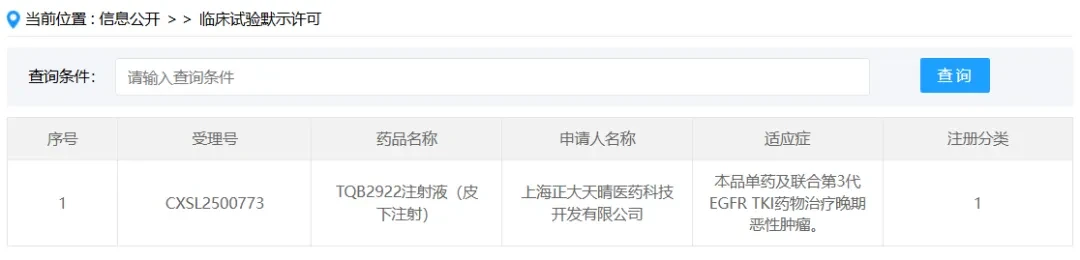
Screenshot source: CDE official website
TQB2922 is a humanized bispecific antibody that simultaneously targets EGFR and c-Met. Previously, the intravenous formulation of TQB2922 has been approved for clinical trials in China and is currently undergoing two clinical studies.

Screenshot source: Insight database
Insight database shows that, in the EGFR/c-Met bispecific antibody track, globally, there are currently onlyJohnson & Johnson's Amivantamab IV and Subcutaneous Formulations Approved。In China, the intravenous form of Amivantamab has been approved, and the subcutaneous form has been submitted for marketing approval.
Currently, multiple EGFR/c-Met bispecific antibodies have entered the clinical stage in China, from Primus/Hansoh Pharma.(Phase III), EpimAb Biotherapeutics(Phase II)Merus/Beta Pharma(Phase II)、Hengrui(Phase Ⅰ/Ⅱ), Sino Biopharm(Phase Ⅰ/Ⅱ)And other companies.
LM-350 for Injection: CDH17 ADC
November 12,Lixin PharmaceuticalClass 1 New DrugLM-350 Approved for clinical use in China, applicable toAdvanced solid tumors (such as colorectal cancer, etc.).

Screenshot source: CDE official website
LM-350 is a targeted drug developed based on Lixin Pharmaceutical's next-generation ADC platform, LM-ADCTM.ADC for CDH17, which can highly selectively bind to CDH17 and has a strong internalization capability. LM-350 adopts the wild-type IgG1 configuration and also exhibits antibody-dependent cell-mediated cytotoxicity.(ADCC)Activity.
Preclinical studies have shown that LM-350 demonstrated significant anti-tumor activity in multiple xenograft models, particularly inResistance to MMAE or IrinotecanThe effect was remarkable in the colorectal cancer xenograft model.
Currently, the drug is undergoing a trial in Australia.A Phase I/II, First-in-Human, Open-Label, Multi-Center Clinical Study to Evaluate the Safety, Tolerability, Pharmacokinetics, Immunogenicity, and Preliminary Efficacy of LM-350 in Patients with Advanced Solid Tumors.
TQB2934 (Subcutaneous Injection):BCMA/CD3 Bispecific Antibody
August 28, Sino BiopharmClass 1 New DrugTQB2934 (Subcutaneous Injection)Approved for clinical use in China,Intended forTreatment of Patients with Malignant Plasma Cell Tumors。

Screenshot source: CDE official website
TQB2934 for Injection is an innovative anti- product independently developed by Sino Biopharm.BCMA/CD3 Bispecific AntibodyCD3 is an important membrane molecule on the surface of T cells, and BCMA is a B-cell maturation antigen. Previously, Sino Biopharmaceutical Co., Ltd. has developed an intravenous injection for this drug, which is currently undergoing a trial targeting...Multiple MyelomaPhase I Clinical Study.
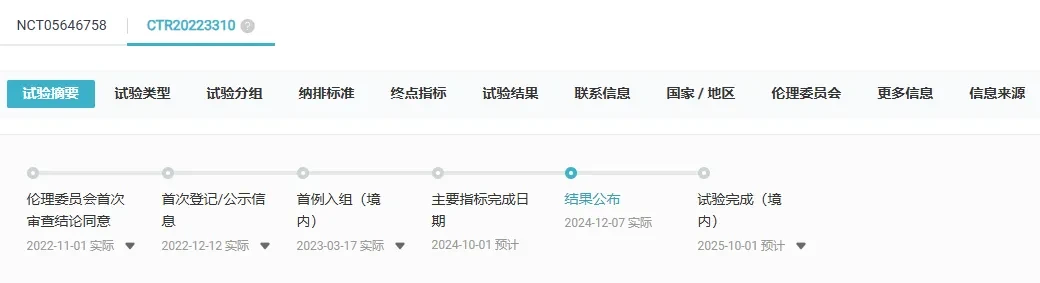
Screenshot source: Insight database
Insight database shows that currently, there are 23BCMA/CD3 bispecific antibody under research, 3 have been approved for marketing, respectively fromRegeneron, Pfizer, and Johnson & Johnson/Genmab。
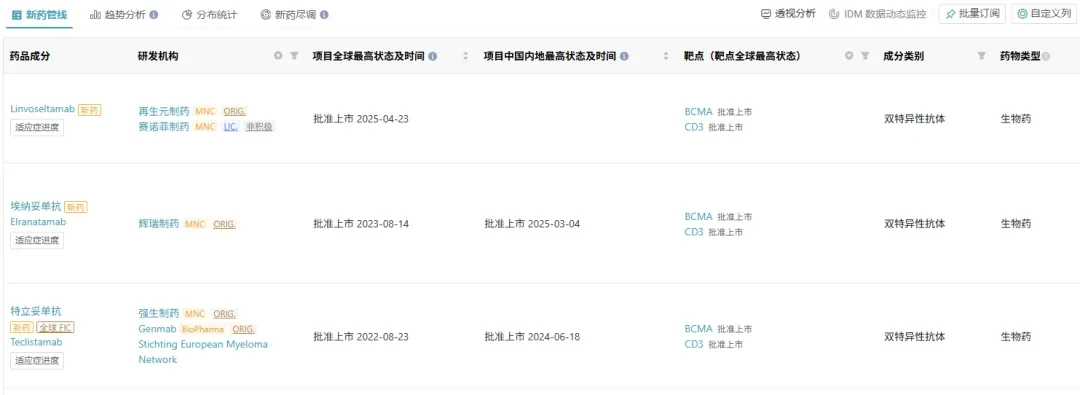
Screenshot source: Insight Database
LM-24C5:4-1BB/CEACAM5 Bispecific Antibody
August 7, Lixin Pharmaceutical Technology (Shanghai) Co., Ltd.Class 1 New DrugLM-24C5 Approved for clinical use in China, applicable toCEACAM5-positive advanced solid tumors (non-small cell lung cancer, colorectal cancer, etc.).

Screenshot source: CDE official website
LM-24C5 is a bispecific antibody developed by Lixin Pharmaceutical Technology (Shanghai) Co., Ltd. based on a conditionally activated 4-1BB platform. By specifically binding to CEACAM5 on the surface of tumor cells and 4-1BB on the surface of immune cells, it directs immune cells specifically to the tumor microenvironment, activating and enhancing their anti-tumor activity. The unique structure of LM-24C5 can selectively activate the 4-1BB signaling pathway in a CEACAM5-dependent manner, avoiding the risk of toxicity caused by non-specific peripheral immune system activation.
Preclinical studies have shown that LM-24C5 can induce durable anti-tumor immune memory and produce synergistic effects with other immunotherapy drugs."First-in-class"(first-in-class)The Potential of ImmunotherapyCurrently, LM-24C5 is undergoing Phase I/II clinical trials in the United States and Phase II clinical trials in China.
LM-168:CTLA-4 Monoclonal Antibody
June 12, Lixin Pharmaceutical Technology (Shanghai) Co., Ltd.Class 1 New DrugLM-168 InjectionApproved for clinical use in China,Intended for the treatment ofAdvanced Solid Tumors。

Screenshot source: CDE official website
LM-168 is a tumor microenvironment-selective anti-CTLA-4 monoclonal antibody currently undergoing a Phase I/II clinical trial in China and Australia.(NCT06868199)。
At the 2025 AACR Annual Meeting, Lixin Pharmaceutical Technology (Shanghai) Co., Ltd. presented the preclinical results of this drug for the first time.LM-168 By conditionally targeting CTLA-4, it aims to address the issues of insufficient efficacy and poor tolerance faced by existing anti-CTLA-4 antibodies, with the potential to becomeCombining Clinical Efficacy with Lower ToxicityThe next generation of CTLA-4 targeted therapy. In addition, the drug is expected to have a synergistic effect with anti-PD-1/PD-L1 therapy.
TQB2825 (Subcutaneous Injection):CD3/CD20 Bispecific Antibody
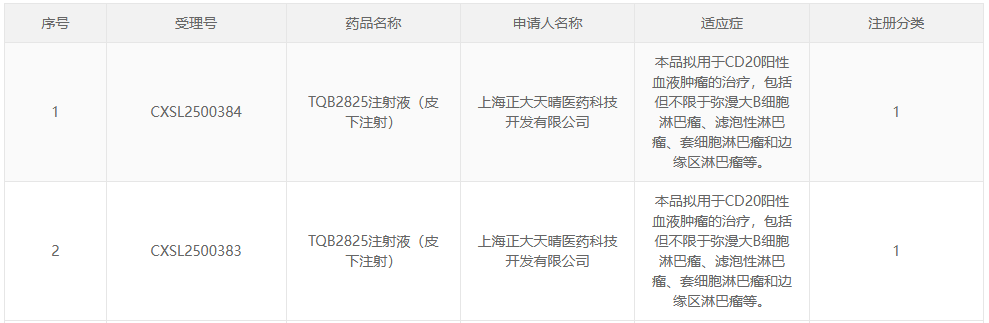
Screenshot source: CDE official website
TQB2825 is aGlobally innovative CD3/CD20 bispecific antibody, previously developed by Sino Biopharm as an intravenous injection, received its first clinical approval in July 2021 and was first publicly announced in clinical trials in November of the same year.
Among the 34 patients evaluable for efficacy,Objective Response Rate(ORR)Up to 71%, complete remission(CR)Reaching 53%; 20 evaluable patients in the 50mg dose group,ORR up to 80%, CR rate up to 60%; With Large Mass Lesions(Diameter ≥ 6cm)Four patients,ORR was 100%, and CR rate was 75%.; Both patients who had previously received CD19 CAR-T treatment achieved CR; 12-Month Progression-Free Survival Rate(PFS)Estimated to reach 76.5%, 12-month duration of remission(DOR)The rate is estimated to reach 90%.
In terms of safety, cytokine release syndrome(CRS)The incidence rate was 35.9%, with 4.9% being grade 3.(No Grade 4-5)After pretreatment with rituximab, the incidence and severity of CRS were significantly reduced.(Incidence rate was only 18%, all Grade 1-2), significantly lower than similar drugs; no immune effector cell-associated neurotoxicity syndrome occurred.(ICANS)Grade 3 or higher treatment-related adverse events(TRAE)The incidence rate was 36.6%, mainly characterized by neutropenia.(22%)And lymphocytopenia(17.1%)。
TQB6411:EGFR/c-Met Bispecific Antibody ADC
June 13,TQB6411 Clinical Trial Application Approved for TreatmentAdvanced Malignant TumorPatient.

Screenshot source: CDE official website
TQB6411 is a targetedEGFR, c-Met Bispecific ADC Drug, after intravenous injection, the antibody portion can bind to EGFR and c-Met on the surface of tumor cells, thereby blocking the activation of EGFR and c-Met signaling pathways. The linker will release small molecule drugs after enzymatic cleavage, thereby inducing apoptosis of tumor cells.
TQB6411 has completed systematic pharmacology, pharmacokinetics, and safety validation. Preclinical studies show that TQB6411 has clearMechanism of Antitumor Action,Inhibitory effect on tumor cells positive for EGFR, c-Met with different expressions and resistance., consistent with the pharmacokinetic characteristics of ADC drugs. The main toxic reactions are caused by the pharmacological effects of the target and small-molecule toxins, and the toxicity risk is controllable.
NTB003:IGF-1R Monoclonal Antibody
May 30,NTB003Clinical trial application approved in China.NTB003 is an anti-IGF-1R Antibody, developed for the treatment ofThyroid Eye Disease。

Screenshot source: CDE official website
NTB003 is jointly developed by Biocytogen and Nanjing Chia Tai Tianqing.Second-Generation Fully Human IGF-1R Monoclonal Antibody, with its antibody discovery and optimization work completed by Biocytogen, while the CMC process development, GLP safety evaluation, and IND registration were handled by Nanjing Chia Tai Tian Qing.
Compared with the first generation of approved and marketed drugs, NTB003 injectionKey indicators such as molecular affinity, drugability, and half-life have all been optimized and upgraded.In vitro experimental results show that the drug has potent signal-blocking capabilities and can effectively inhibit hyaluronic acid.(HA)The release shows broad development prospects.
On June 13, Nanjing Chia Tai Tianqing registered aEvaluation of the Safety, Tolerability, and Pharmacokinetic/Pharmacodynamic Characteristics of NTB003 Injection in Healthy VolunteersPhase I Clinical Trial。
TQB2210:FGFR2b Monoclonal Antibody

Screenshot source: CDE official website
TQB2210 Injection is aNovel Monoclonal Antibody Drug Targeting FGFR2b ReceptorBy precisely blocking the key signaling pathways for tumor cell growth and simultaneously activating the body's immune system to kill tumors, it is regarded as a potential drug for treating FGFR2b-overexpressing tumors such as gastric cancer, breast cancer, and ovarian cancer.
TQB2210 has completed systematic preclinical pharmacology, pharmacokinetics, and safety validation, with controllable toxicity risks. Preclinical data shows that the drug can dose-dependentlySignificant InhibitionGastric cancer SNU-16, Gastric cancer KATO Ⅲ, Breast cancer MDA-MB-231/FGFR2Ⅲb, Esophageal squamous cell carcinoma KYSE-180 miceGrowth of Subcutaneous Xenograft Tumors.
Its tumor-inhibiting effect is superior to or comparable with that of the same-target drug, Bevacizumab.(Bemarituzumab)Equivalent, The efficacy of the combination with PD-1 antibody on subcutaneous xenograft tumors of gastric cancer KATO Ⅲ in nude mice was improved compared to monotherapy, offering a promising potential for expanding new combination therapy approaches in the future.
TQB2101:ROR1 ADC
March 13,TQB2101Approved for clinical use in China, with the indication beingAdvanced Malignant Tumor。TQB2101 is a targeted receptor tyrosine kinase-like orphan receptor 1(ROR1)ADC.

Screenshot source: CDE official website
In recent years, ROR1 has become a hotspot in cancer therapy research due to its unique expression pattern and crucial role in tumor biology. Normally, ROR1 is expressed at low levels in normal adult tissues but highly expressed in various malignant tumors, such as chronic lymphocytic leukemia, acute lymphocytic leukemia, breast cancer, ovarian cancer, melanoma, and lung adenocarcinoma. A large amount of data shows that ROR1 plays a significant role in promoting tumor growth and metastasis, inducing drug resistance in tumor cells, and inhibiting apoptosis.
Preclinical study data shows that TQB2101Demonstrates Anti-Tumor Activity in Multiple ROR1-Positive Tumor Models, and has good safety characteristics.
On April 7, Sino Biopharmaceutical Co., Ltd. has initiated a Phase I clinical trial to evaluate the tolerability and pharmacokinetics of TQB2101 injection in subjects with advanced malignant tumors.