SkyNova® Peripheral Vascular Stent by Skynor Medical: Clinical Case Series from the First Affiliated Hospital of Xi'an Jiaotong University

Skynor Medical
Vascular Minimally Invasive Intervention Product Developer

▲Click to Play Video
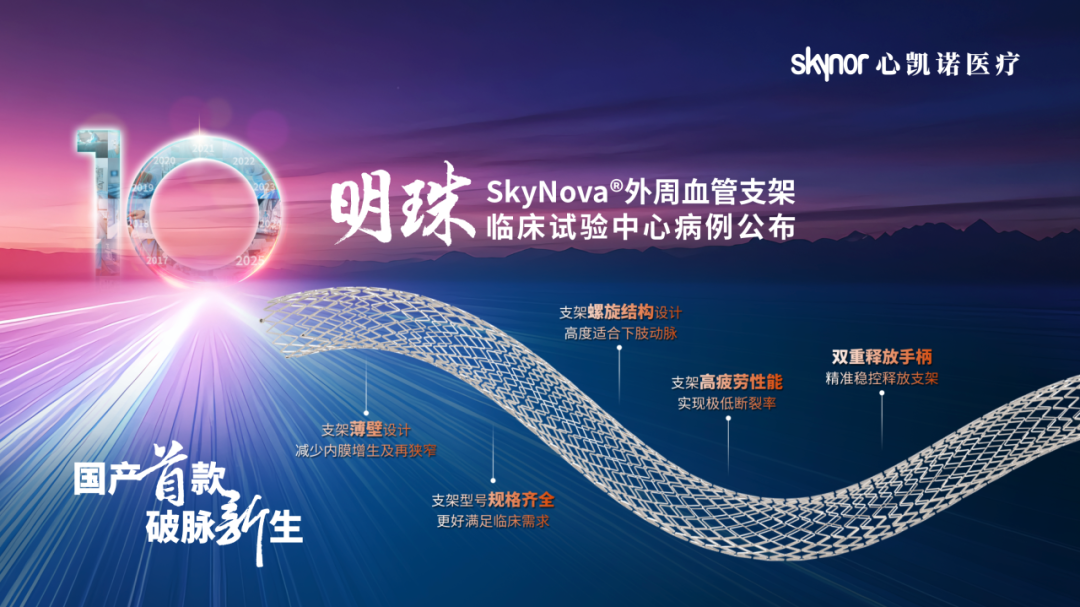
Nova: A Decade of Excellence · The New Star Dawns
Made in ChinaFirst Long Stent for Peripheral Lower Limb Arteries
——Skynor Medical's Gem SkyNova®Official Launch
Clinical research before marketing
Its safety and efficacy have been fully validated.
This issue bringsPearlSkyNova®Pre-market
Single-center Typical Cases in Clinical Trials
The First Affiliated Hospital of Xi'an Jiaotong University
Professor Tian Hongyan's Team
Let us witness the Skynor Medical SkyNova together.® The Rising Star!


Pre-market Clinical Study Single-center Follow-up
The First Affiliated Hospital of Xi'an Jiaotong University

Professor Tian Hongyan's Team

Case 1: Iliac Artery Atherosclerosis Occlusion
Medical History Introduction
Patient:Male, 66 years old.
Chief Complaint:Left lower limb pain for more than a few months.
History of Present Illness:Recently, the pain in the left lower limb has significantly worsened, leading to a medical visit.
Past Medical History:History of hypertension, cerebral infarction, and carotid artery occlusion.
Smoking History:With a history of smoking for over ten years.
Lesion Diagnosis
Occlusion of the left lower limb iliac artery, with a lesion diameter of approximately 8mm and a target lesion length of 150mm (both are occlusive lesions).
Rutherford Grade 2.
ABI Left 0.59, Right 0.93.
Surgical Procedure
The patient was placed in the supine position, and under local anesthesia, the right femoral artery was punctured. Angiography showed occlusion of the left iliac artery.

Pre-dilation:Balloon pre-dilation was performed progressively on the target lesion using 4*80mm, 5*150mm, 6*100mm, and 7*100mm balloons. After dilation, significant stenosis remained.
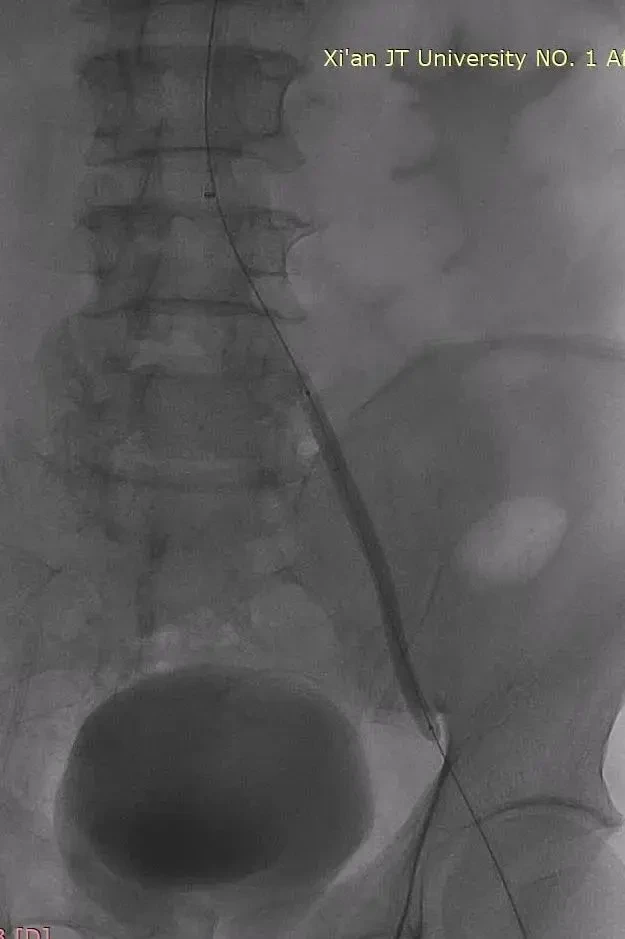
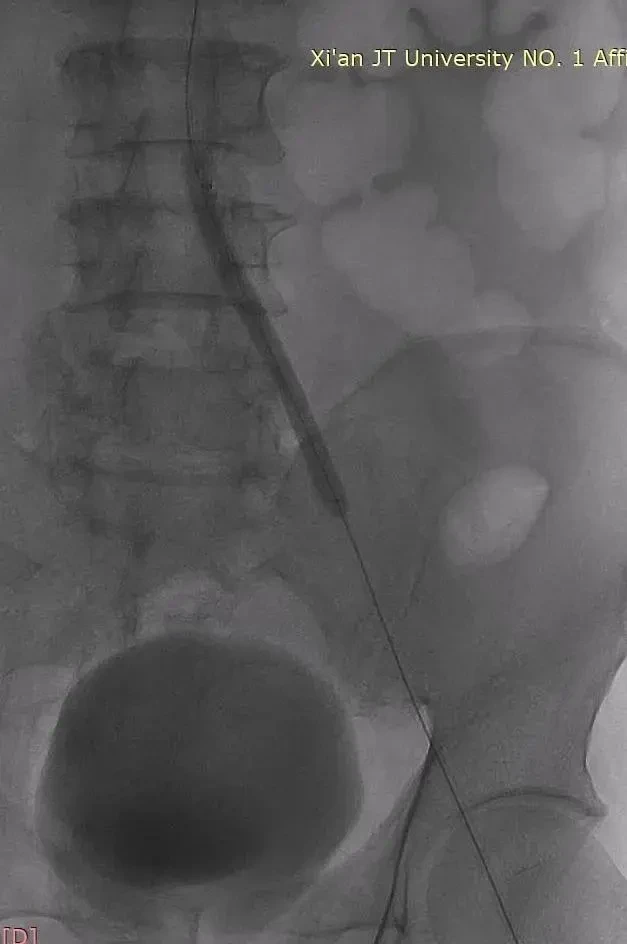
4*80mm, 5*150mm, 6*100mm, and 7*100mm balloon pre-dilation

Significant stenosis remains after balloon pre-dilation.
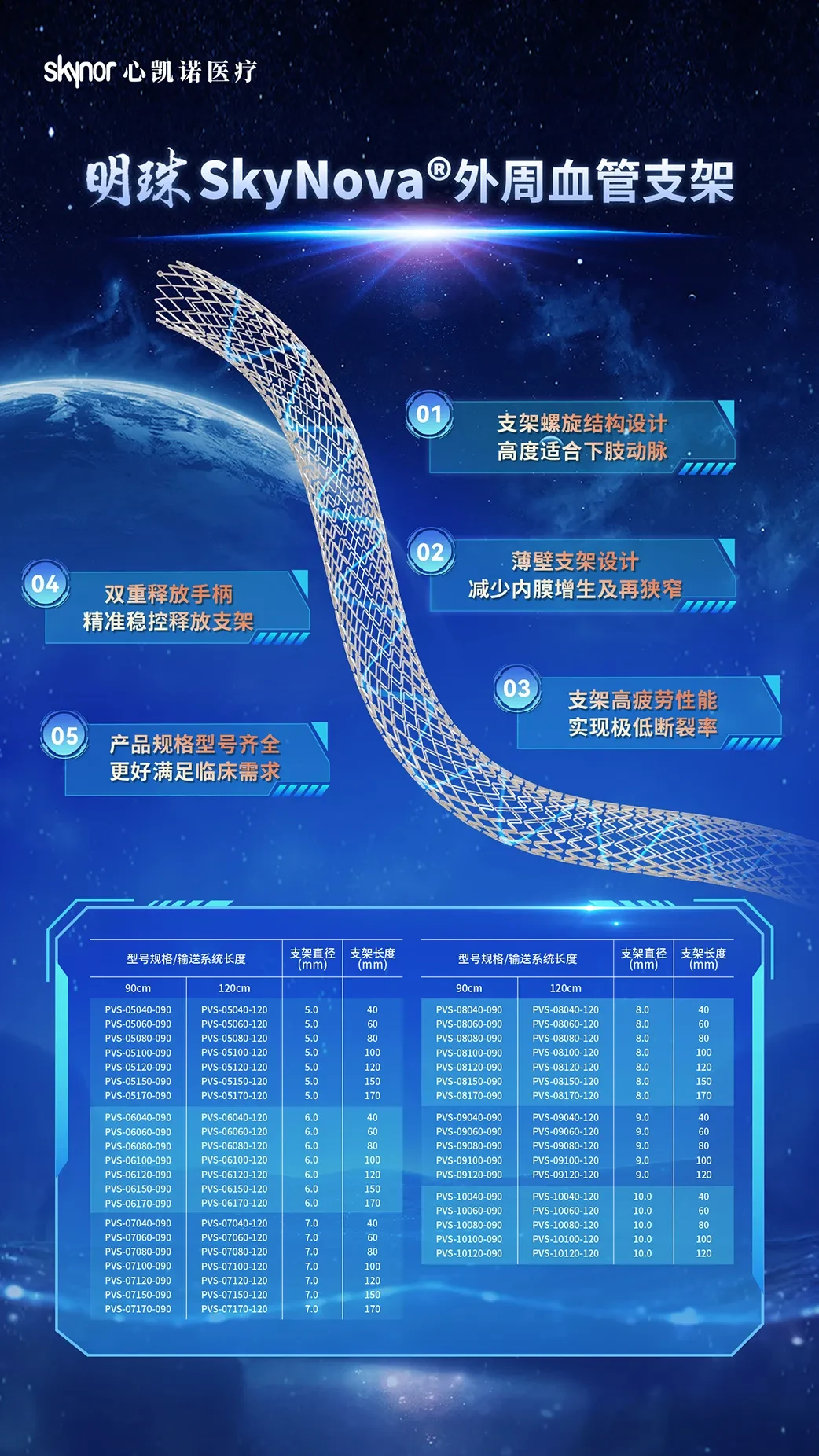
Stent Implantation:Subsequently implanted8*80mm, 8*100mm Two SkyNova Pearls®Peripheral Vascular Stent, with a stent overlap length of approximately 20mm.
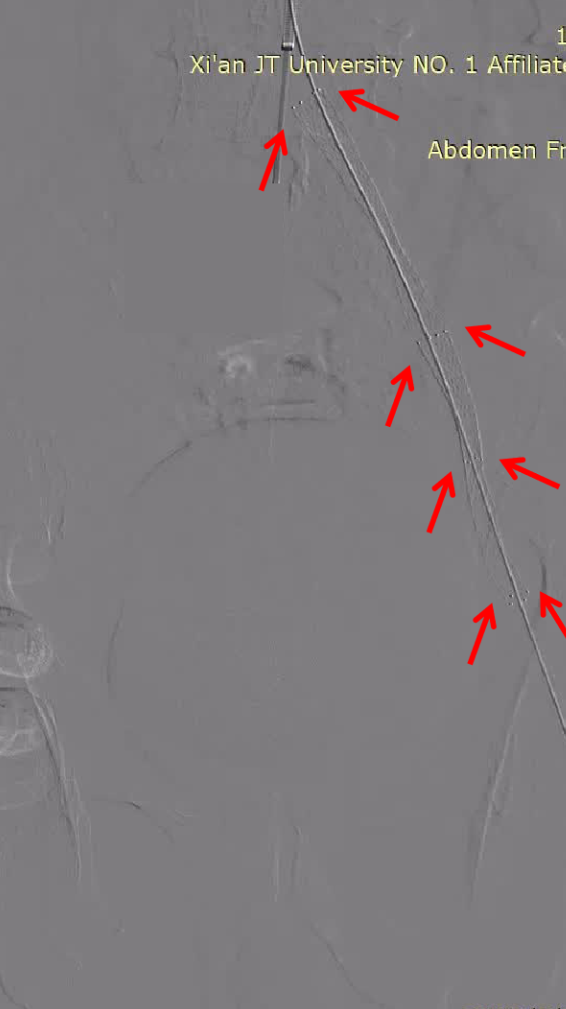
Post-dilation:A 6*100mm balloon was used for post-dilation within the stent, and the stent was well apposed after balloon dilation.
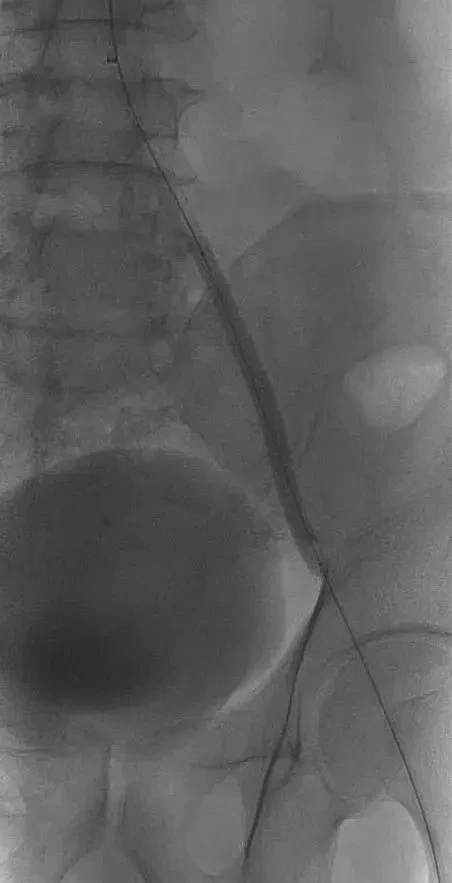
Postoperative Angiography:The stent is well apposed, the stenosis has disappeared, and the blood flow in the left lower extremity iliac artery is unobstructed.

Follow-up Results
Before discharge after surgery:Rutherford Grade 2, ABI Left 0.86, Right 0.57;
One-month postoperative follow-up:Rutherford Grade 0;
Six-month postoperative follow-up:Rutherford Grade 1, ABI Left 0.95, Right 0.98; Ultrasound Systolic Peak Velocity Ratio (PSVR) 1.43, Blood Flow Patent, No Target Lesion Revascularization Performed;
12-Month Postoperative Follow-Up:Rutherford Grade 0, ABI Left 0.99, Right 1.00; Ultrasound Peak Systolic Velocity Ratio (PSVR) 0.4, Blood Flow Patent, No Target Lesion Revascularization Performed; No Stent Fracture.
Case 2: Iliac Artery Atherosclerosis Occlusion
Medical History Introduction
Patient:Male, 57 years old.
Chief Complaint:Pain in the right lower limb accompanied by limping for several months.
Past Medical History:History of hypertension, cerebral infarction, and vertebral artery stenosis.
Smoking History:With a history of smoking for over thirty years.
Lesion Diagnosis
Severe stenosis of the right lower limb iliac artery, with a lesion diameter of approximately 7mm, target lesion length of 40mm, and calcification.
Rutherford Grade 2.
ABI Left 1.18 Right 0.45.
Surgical Procedure
The patient was placed in the supine position, and under local anesthesia, the left femoral artery was punctured. Angiography showed severe stenosis of the right iliac artery.

Pre-dilation:Pre-dilation of the target lesion was performed stepwise using 4*60mm and 6*60mm balloons. Residual stenosis remained after dilation.
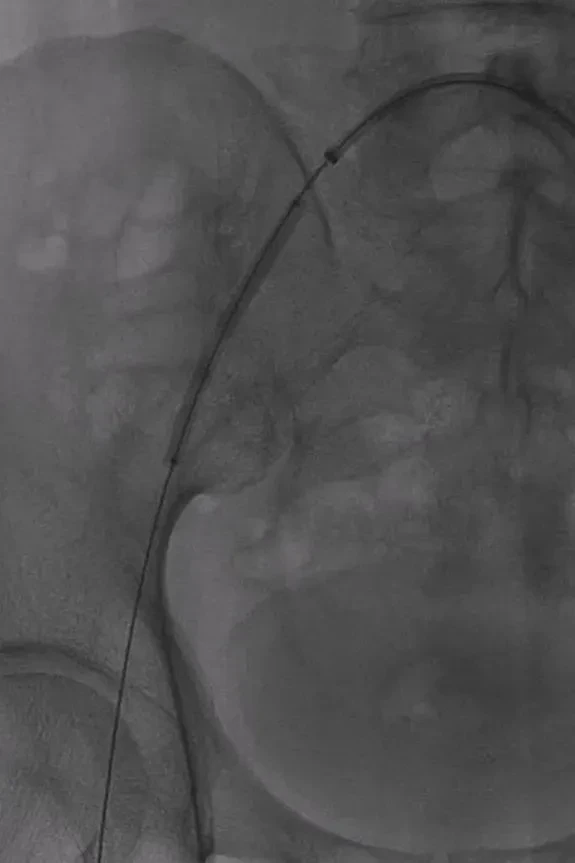
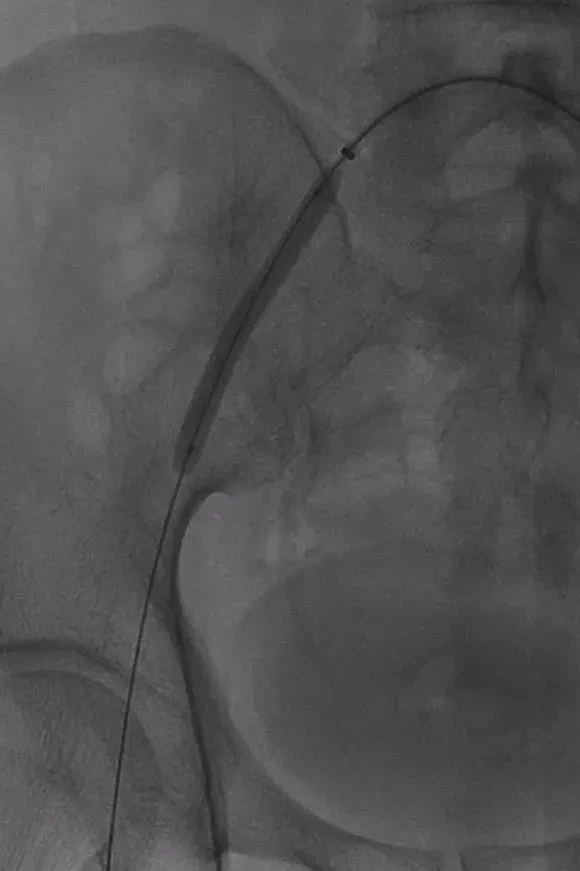
4*60mm and 6*60mm balloon pre-dilation

Residual stenosis remains after balloon pre-dilation.
Stent Implantation:Implantation8mm*60mm Mingzhu SkyNova®Peripheral Vascular Stent。
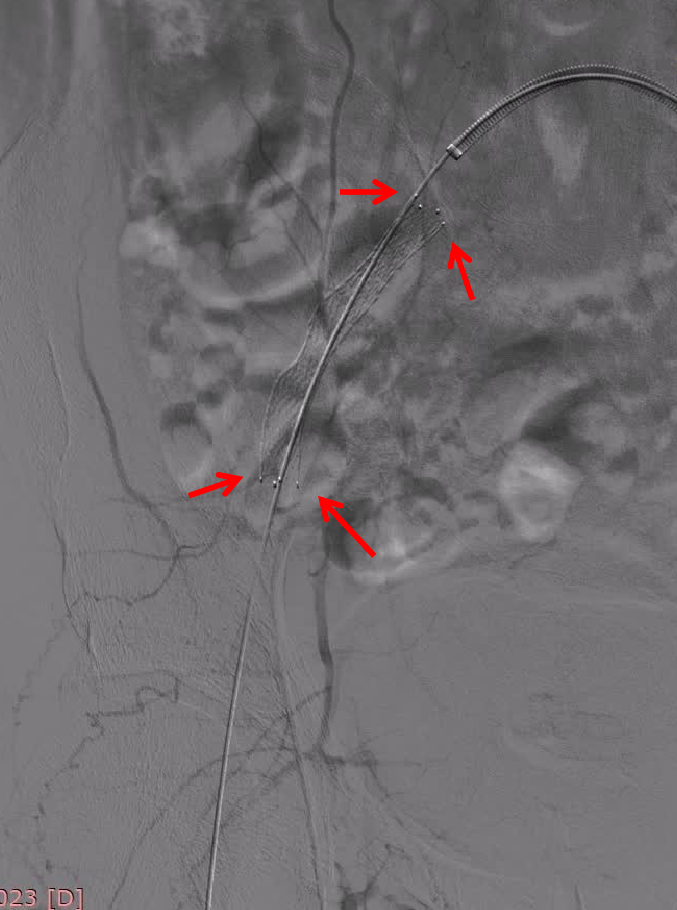
Post-dilation:A 7*60mm balloon was used for post-dilation within the stent, and the stent was well apposed after balloon expansion.
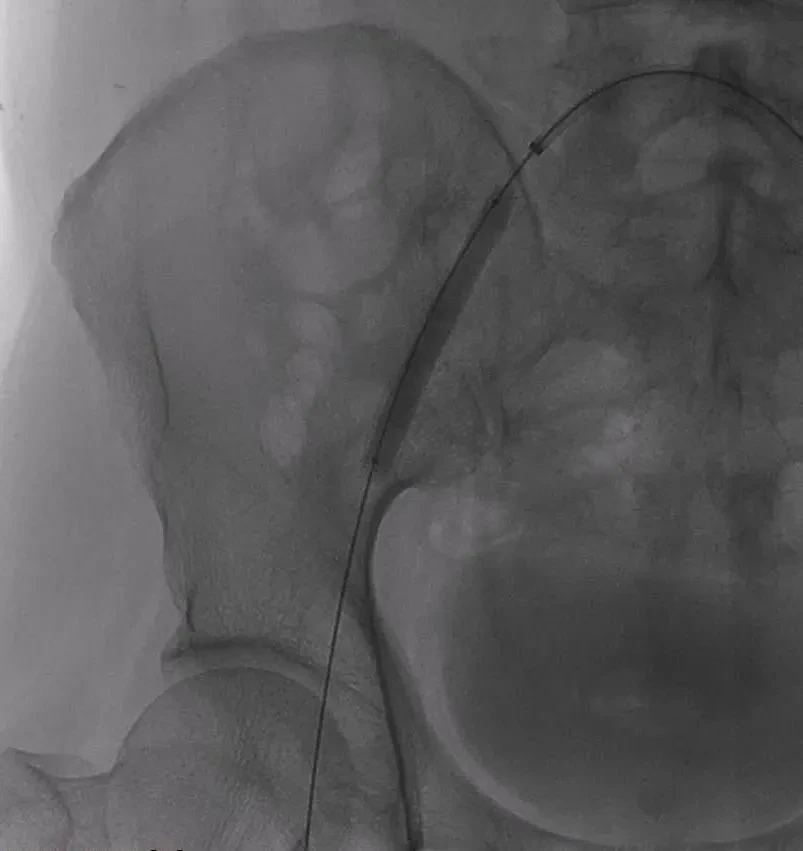
Postoperative angiography:The stent was deployed successfully, residual stenosis disappeared, and blood flow in the right lower limb iliac artery was smooth.

Follow-up Results
Before discharge after surgery:Rutherford Grade 2, ABI Left 1.17, Right 1.13;
One-month postoperative follow-up:Rutherford Grade 0;
Six-month postoperative follow-up:Rutherford Grade 0, ABI Left 1.09, Right 1.03; Ultrasound Systolic Peak Velocity Ratio (PSVR) 1.38, Blood Flow Patent; No Target Lesion Revascularization Performed;
12-Month Postoperative Follow-up:Rutherford Grade 0, ABI Left 1.11, Right 1.08; Ultrasound Peak Systolic Velocity Ratio (PSVR) 1.54, Blood Flow Patent, No Target Lesion Revascularization Performed; No Stent Fracture.

Participating in Clinical Center PI Experience

Lower extremity arterial stenosis is mainly caused by atherosclerosis-induced vascular narrowing. Risk factors include smoking, diabetes, hypertension, hyperlipidemia, etc. Without intervention over time, it can lead to progressively worsening vascular blockage, eventually resulting in occlusion.
The two cases shared this time both have a history of smoking and hypertension, as well as a history of cerebral infarction, carotid artery stenosis or occlusion. When they came to our hospital for treatment, their lower limb iliac arteries were already severely narrowed or occluded, one of which...The occlusion length reached 150mm, and 2 Skynor Medical SkyNova stents were implanted.®Peripheral vascular stent, with two stents overlapping approximately 20mm,Even so, the follow-up results at 6 months and 12 months post-operation were still impressive, with smooth blood flow and no target lesion revascularization performed, and no stent fracture, which fully demonstratesSkyNova®Peripheral Vascular StentExcellent fatigue resistance and long-term stability in long-segment occlusive lesions of the iliac arteries in the lower limbs.
SkyNova®Peripheral Vascular StentThe reason for such excellent clinical performance lies in Skynor Medical's strict control over product details. This stent adopts the new generation of thin-wall stent technology, with a wall thickness 20-30% smaller than traditional stents. A thinner wall brings a lower rate of intimal hyperplasia, so even after 12 months of clinical implantation, the stent lumen can still maintain its patency.

Professor Tian Hongyan
The First Affiliated Hospital of Xi'an Jiaotong University
Director of the Department of Peripheral Vascular Medicine, First Affiliated Hospital of Xi'an Jiaotong University, Academic Leader, Chief Physician, Professor, Doctoral Supervisor
Vice Chairman of the Endovascular Surgery Professional Committee of the Chinese Medical Doctor Association
Deputy Group Leader of the Pulmonary Vascular Disease Group, Cardiovascular Disease Branch of the Chinese Medical Association
Chairman of the China Pulmonary Embolism Rescue Team Alliance
Director of the Peripheral Vascular Interventional Technology Medical Quality Control Center of Shaanxi Province
Member of the Expert Committee of the National Pulmonary Embolism and Deep Vein Thrombosis Prevention and Treatment Capacity Building Project
Vice Chairman of the Interventional Radiology Branch of Shaanxi Medical Association
Chairman of the Shaanxi Province Pulmonary Embolism and Venous Thrombosis Prevention and Treatment Specialty Alliance
Director of the Vascular Inflammatory Diseases Committee of the Endovascular Specialty Committee of the Chinese Medical Association
Chairman of the Endovascular Specialty Committee of the Shaanxi Province Physician Association
Chairman of the Peripheral Vascular Committee of Shaanxi Health Care Association
Director of the Peripheral Vascular Professional Committee of the Shaanxi Province Association of Integrative Medicine
Member of the Vascular Surgery Branch of the Chinese Medical Doctor Association



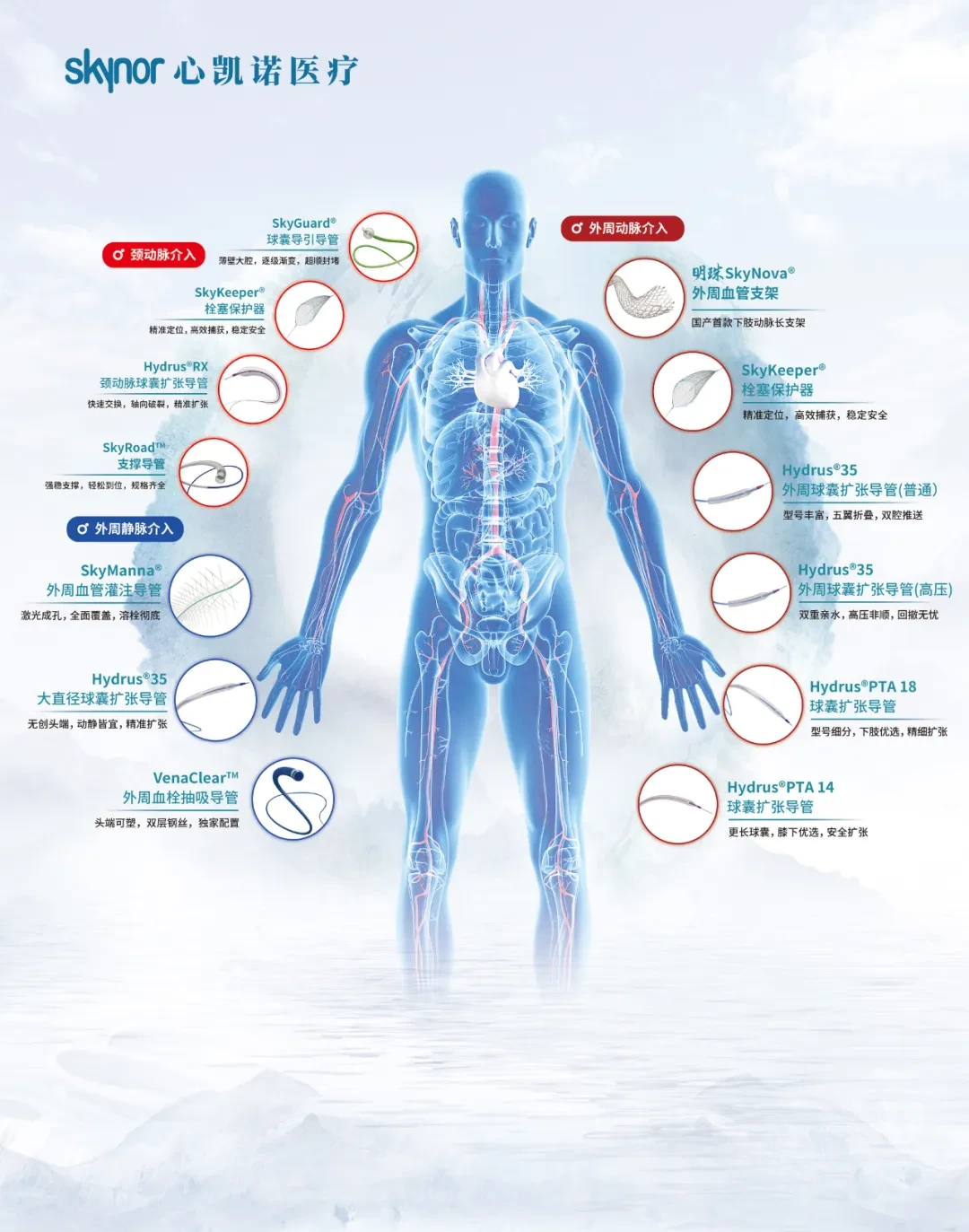
Skynor Medical (Shanghai) Co., Ltd. (Skynor Medical) was established in August 2014 and is located in the International Medical Park of Zhangjiang Science City. It is a high-tech enterprise specializing in the research, development, and manufacturing of medical devices for stroke and peripheral vascular interventions. The company is committed to providing high-quality, integrated surgical instrument solutions for doctors and patients. Skynor Medical’s product portfolio includes neuro-interventional devices for treating intracranial artery thrombectomy and stenosis, aneurysms, and peripheral interventional devices for lower limb arterial and venous stenosis and thrombosis. Currently, the company has obtained 16 Class III medical device product registration certificates in China and more than 26 international certifications. Its intracranial stent has received "priority review for innovative devices" status, with over 60 patents applied for its products. Product sales have covered 29 provinces in China and more than 10 countries overseas.

Copyright Statement: This platform aims to help medical and health professionals better understand the latest developments in related disease areas. The information content published on this platform does not imply agreement with its descriptions or viewpoints, but is merely for providing more information. If there are any copyright issues involved, we kindly request the rights holders to contact us, and we will handle it as soon as possible. The information provided is solely for medical and health professionals to stay informed, and such information cannot replace professional medical guidance in any way, nor should it be regarded as medical advice. If such information is used for purposes other than understanding the provided updates, this platform and the author shall not bear any related responsibilities.Contact email for cooperation:vascular@edoctor.work。