BioMap Clinches Championship in Inaugural Global Virtual Cell Challenge with xTrimoSCPerturb Model, Advances Toward IPO

BioMap
Developer of Innovative Drug R&D Platform

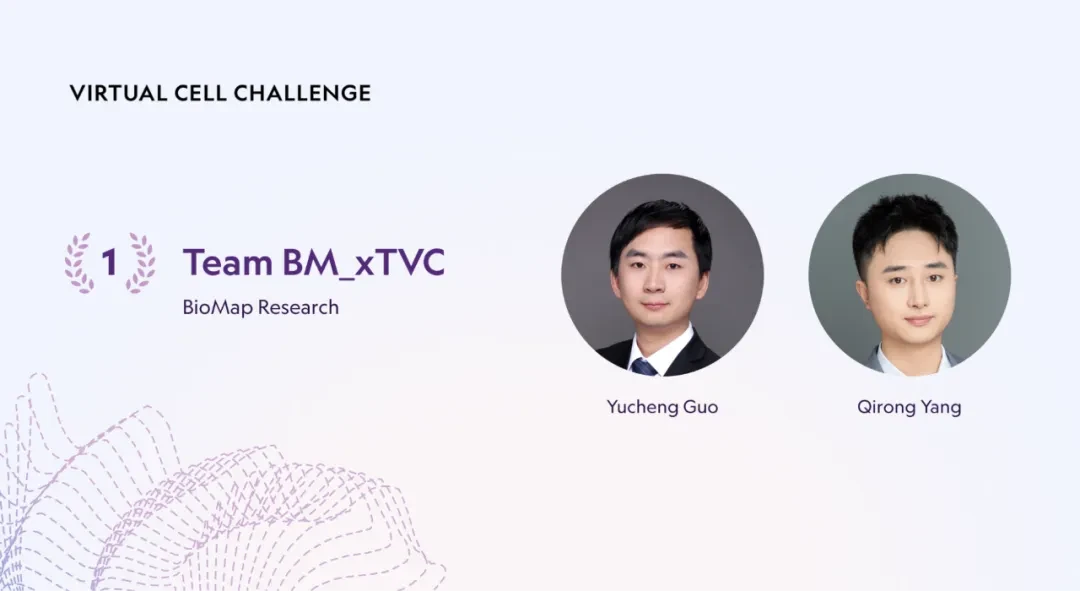
12Month7Day, the world's first Virtual Cell Challenge (Virtual Cell Challenge) Announce the list of winners, BioMapBioMap ResearchWith independently developed modelsxTrimoSCPerturb, from around the globe114Countries,1200The remaining teams stood out and won the championship.It is worth mentioning that the top three teams in this challenge are all Chinese teams, marking that Chinese research teams have internationally leading strength in the interdisciplinary field of artificial intelligence and life sciences. It also reflects China's continuous breakthroughs in the fundamental research and frontier technology layout of artificial intelligence in life sciences.
Building Human Cell Models Seen as Ultimate Goal in BiologyOne of: Create a virtual cell in the computer to simulate the growth, metabolism, and transformation processes of a real cell, and predict its chain reactions under interference such as drug effects. In drug development and disease mechanism research, traditional cell experiments are often time-consuming, labor-intensive, and costly, whereas virtual cell models enable large-scalein silicoScreening, significantly shortening the experimental cycle, reducing R&D costs, and accelerating disease research and new drug development.Based on virtual cell technology, upstream对接protein,DNA、RNAThe simulation of mechanisms such as waiting, pushing down simulations of multiple cells, the entire human body, and biological systems, becoming the core platform for ultimate simulation and understanding of life sciences —This is also the core objective of BioMap's foundational large model cross-modal modeling system.
Facing the Nobel Prize-level research direction of virtual cells, the world's top scientific research teams, represented by China and the United States, are accelerating their strategic layout.2024Nobel Prize in Chemistry winner,DeepMindCEO Demis· Hassabis has also publicly expressed a strong interest in virtual cells, and saidAlphaFoldThe team is working on the Virtual Cell Project.2024Year12Month, Stanford University, Genentech, and Chen-The research team of the Zuckerberg Foundation in "Cell》magazine, calling for global scientific community to collaborate in buildingAIVirtual Cell.
Virtual cell research has rapidly shifted from a future vision to practical implementation, with its driving forces and industrial potential gaining global consensus.
To promote the development of virtual cell technology towards a verifiable, comparable, and evolvable path,Arc InstituteJointly initiated with Stanford University, University of California, San Francisco, University of California, Berkeley, and other institutions“Virtual Cell Challenge”。The idea for the competition was inspired by the field of protein structure prediction.CASPThe Success Model of Competition——ExactlyCASPDirectly catalyzedAlphaFoldThe emergence of such disruptive achievements is regarded as a watershed moment in the history of life sciences.
“Virtual Cell Challenge”Aiming to select the best virtual cell models globally through a unified and open evaluation system. The challenge requires participating teams to predict changes in cell expression under perturbation conditions based on single-cell transcriptome data, providing a new technical approach for future drug development, disease research, and exploration of life mechanisms.2025Year6Since its launch in the month, the competition has attracted an unprecedented number of participating teams and quickly become a technical focus of attention in the global life sciences community. As the competition progresses,Virtual cell technology is accelerating towards a transformative tipping point, and may become the nextAlphaFoldThe Next Engine of Life Science with the Most Nobel Prize Potential.
In this challenge, the xTrimoSCPerturb model submitted by the BioMap Research team demonstrated exceptional technical strength. As a novel single-cell perturbation computational model, it is based on BioMap's leading xTrimo single-cell foundational large model architecture, incorporates information such as xTrimo protein model embeddings as perturbation conditions, and employs a multi-hybrid loss strategy.It is at a leading level in multiple computational metrics, including perturbation state simulation and differentially expressed gene prediction.In terms of single-cell pre-trained models, BioMap has implemented a dual upgrade in both model architecture and training strategies. Through algorithm optimization, it has effectively addressed the challenge of predicting low-expression genes caused by insufficient sequencing depth in traditional models, while enhancing the AI-driven ability to analyze gene regulatory relationships. Based on the xTrimo foundational large model technology platform, the BioMap team has published multiple high-quality papers, including in Nature Methods, during 2024-2025, sharing their technical achievements with the industry. This effort drives the enhancement of AI technologies across the entire field and fosters the development of an open ecosystem, with plans to continue publishing new research results in the future.
Self2020Since its establishment in the year, BioMap has always been deeply engaged in the field of artificial intelligence infrastructure for life sciences, building a foundation with large-scale life science models.“Life Simulator”The grand blueprint, and over the past five years, through three generations of large-scale basic models with tens of billions of parameters, has made breakthroughs in different modalities such as proteins, cells, and systems, gradually turning this blueprint into a technological reality that the industry can utilize.
As a massive project comparable to the Human Genome Project, the concept of virtual cells had already garnered full investment from BioMap even before its proposal, making it one of the earliest institutions globally to enter this field.2023In the year, BioMap expanded its foundational large model from proteins to cellular modalities.2024BioMapBioMap ResearchThe Academic Version of the Single-Cell Large-Scale Foundation ModelscFoundation Published in the international top journal "Nature Methods》, and successfully selected“2024Top Ten Advances in Bioinformatics in China for the Year”。
Frontier innovations in the life sciences field cannot be separated from the testing of practical scenarios such as drug pipeline research and development. While building foundational models, BioMap has established a focus on...first-in-classCutting-edge target discovery serves as a breakthrough goal for validation tasks, with the hope of achieving what traditionally takes a company or research institution many years of effort.FICThe problem of target discovery is transformed into an engineering engine problem that can be mass-produced and continuously iterated to improve.
Through the Past5After years of efforts, relying on our foundational large model and the professional virtual cell platform built upon it, BioMap has successfully advanced.20More than...FICDiscovery project of the first-in-class target and achieved experimental validation, including multiple globally first-discovered tumor-specific targets, as well as first-in-class targets related to autoimmune diseases, providing innovative options for patients with gastrointestinal tumors and other conditions lacking novel targets, as well as those with relapsed or refractory cases. IBD Brings breakthrough hope to patients with autoimmune diseases. In the past1Within the year, the aforementioned achievements have transitioned from scientific research exploration to practical application, steadily advancing towards industrial implementation. Currently, multiple multinational pharmaceutical companies and large-scale...BiotechAnd research institutions have established cooperation with BioMap to develop correspondingFICAntibody,ADC、RDCDiversemodalityDrug pipeline. Some of the pipelines are progressing rapidly and will soon enter the clinical dosing stage, with the potential to truly translate into tangible clinical benefits for patients in the future.
BioMap's Vice President of R&D, Zhang Xiaoming, stated that virtual cell technology is reshaping the paradigm of life science research.“By using computational models to understand cellular systems, we are able to explore biological principles at an unprecedented speed and discover new directions for drug development and disease research. Just likeAlphaFoldJust as it has brought a fundamental revolution to protein structure research, the virtual cell will drive the life sciences to focus on‘Structure’Towards Understanding‘Mechanism’, which is an inevitable trend in the evolution of the industry. The launch of the Virtual Cell Challenge marks a crucial step forward in this field, and we are extremely proud to represent the Chinese team at the forefront of this technological wave. In the future, we will continue to invest in R&D to accelerate the advancement of virtual cells from concept validation to industrial implementation.”
Click "Read Original" at the end of the article to apply for a trial of BioMap's xTrimo platform.