Cyclic Peptide Therapeutics: From Antibiotic Origins to Next-Generation Multifaceted Modality

Syneron Bio
Novel Macrocyclic Peptide Drug Developer

AstraZeneca
Pharmaceutical Technology Research and Development Provider

On March 21, 2025, Syneron Bio, an innovator in macrocyclic peptide drug research and development, announced a strategic partnership with AstraZeneca to jointly develop first-in-class macrocyclic peptide drugs for rare diseases, autoimmune diseases, and metabolic disorders.
According to the agreement, AstraZeneca will obtain Syneron Bio.AstraZeneca has acquired the rights to use the Synova™ Macrocycle Peptide Platform, paying an upfront fee of $75 million along with other near-term milestone payments. The total amount for development and commercialization milestones could reach up to $3.4 billion. Additionally, tiered royalties will be paid based on global sales in the future. Furthermore, AstraZeneca will make an equity investment in Syneron Bio, which plans to expand its R&D center in Beijing using these funds.
This collaboration fully reflects the macrocyclic peptides (Macrocyclic peptides may become an important breakthrough for the next generation of chronic disease treatment drugs. Dr. Zhang Xiao, founder and CEO of Syneron Bio, pointed out, "This collaboration demonstrates the value of the Synova™ Macrocyclic Peptide Platform in innovative drug development."
Over the past decade, peptide drugs have rapidly emerged in the global pharmaceutical market, with increasing clinical recognition. They have grown from traditionally niche categories to become one of the fastest-growing fields of innovative medicines globally. With...The explosion of GLP-1 class metabolic peptide drugs, the maturity of long-acting and oral technologies, and the reduction in the cost of peptide synthesis processes have enabled rapid expansion across multiple fields including metabolic diseases, cardiovascular, oncology, inflammation, and dermatology.
Against this background,"Where is the next stage for peptide drugs?" has become a more pressing question for companies.Cyclic Peptide Drugs (macrocyclic / cyclic peptides)A special class of polypeptide drugs is moving to the center of the innovative drug landscape, becoming the new technological route that pharmaceutical companies at home and abroad are betting on in the next phase.
1. Cyclic Peptide Drugs (Cyclic / Macrocyclic Modality: Drug Structural Features and Advantages
The Natural Drug-like Advantages of Cyclic Peptide Drugs are Embodied in Their Unique Drug Structure. Cyclic peptide drugs are a new type of drug that lies between large-molecule and small-molecule drugs. Their structure consists of linear amino acid polypeptide chains connected in a cyclic manner, typically formed byComposed of 5-14 amino acids. Cyclic peptide drugs can be further divided into four basic structures based on different cyclization sites: head-to-tail cyclization, side chain-to-end cyclization, head-to-side chain cyclization, and side chain-to-side chain cyclization.
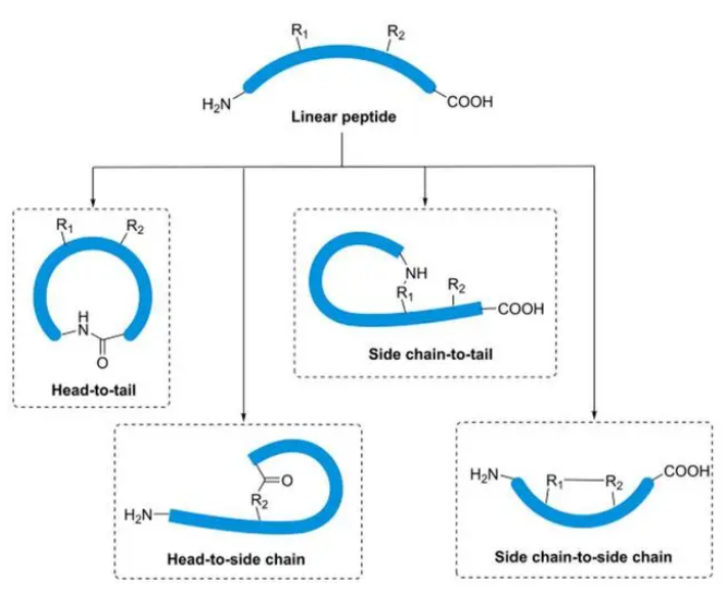
Figure1. Linear Polypeptides and Cyclic Peptides with Different Configurations
Unlike traditional linear polypeptide drugs, the unique structure of cyclic peptide drugs endows them with distinctive pharmaceutical properties and pharmacokinetic characteristics. First, the cyclization structure reduces free ends, significantly decreasing protease cleavage sites, thereby enhancing the enzymatic resistance of cyclic peptides. This results in much higher in vivo stability and half-life compared to linear peptides.
At the same time, the three-dimensional structure formed by cyclization makes the conformation of cyclic peptide drugs more stable, enabling higher precision target matching, especially suitable for proteins that are difficult for ordinary linear peptides to achieve.-Large planar target binding for protein interactions.
In terms of pharmacokinetics, cyclic peptide drugs have the advantages of slow degradation and stable exposure, making it easier to achieve long-acting or low-frequency dosing strategies. By introducing non-natural amino acids and multi-point modifications, the cyclic peptide chain can be more precisely chemically optimized, achieving higher selectivity, lower immunogenicity, andOff-target Effects.
In a horizontal comparison with other common drug configurations, such as traditional small molecules or large biological molecule antibody drugs, cyclic peptide drugs occupy a very advantageous middle ground. Compared to small molecules, the binding interface of cyclic peptides is usually larger, enabling coverage of protein interaction targets that are wider, flatter, or more conformationally flexible—targets that small molecules cannot reach. For example, targeting moderate to severe active ulcerative colitis.(UC)-Related TargetsIntegrinSmall molecules of α4β7 cannot achieve satisfactory coverage, becauseIntegrinThe ligand-binding interface is an open, broad protein interface, and byPTG-100, a macrocyclic peptide developed by Protagonist Therapeutics, achieves precise interface fitting through the use of a cyclic structure to form a stable conformation, enabling high-affinity blockade, and has successfully entered clinical trials.
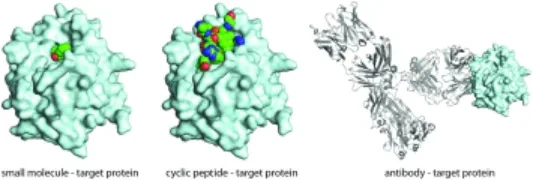
Figure2. Comparison of the Binding Structures of Cyclic Peptide Drugs, Small Molecules, Antibody Drugs with Target Proteins(Image Source:Zhang & Chen, 2021,Cyclic peptide drugs approved in the last two decades (2001–2021))
Compared with protein macromolecules or antibody drugs, cyclic peptide drug molecules are smaller in size, allowing them to penetrate tissues more deeply and reach hard-to-access tissues. The molecular weight of antibody drugs is often in the range of...Around 150 kDa, large in size, slow in diffusion, and highly dependent on the vascular system, they struggle to reach targets in solid tumors, fibrotic tissues, inflammatory microenvironments, or dense collagen-rich matrices. In contrast, cyclic peptides, typically ranging from 0.8–3 kDa, can pass through intercellular spaces, penetrate the ECM, and effectively reach locations that are difficult for antibodies to access, such as the core regions of solid tumors, sclerotic tissues, barrier structures, or localized treatment scenarios requiring deep penetration.
Secondly, the administration method of cyclic peptides is more flexible. Antibody drugs must be administered through intravenous or subcutaneous injection, and due to slow distribution and clearance mechanism dependence,Fc receptors, large molecules usually cannot be designed into topical or transdermal formulations, and oral administration is almost impossible. However, cyclic peptides can maintain high affinity while improving membrane permeability through chemical modifications. Strategies such as delivery carriers and fatty acid modifications can also enable oral absorption, local penetration, or targeted deposition. This allows cyclic peptides to adapt to more diverse therapeutic forms, such as topical application and deep tissue repair., or evenPromising to achieve oral large flat target inhibitors.
From a safety perspective, the immunogenicity risk of cyclic peptides is significantly lower than that of antibodies. Antibodies are exogenous large protein structures, and despite being highly humanized, they may still induce anti-drug antibodies, leading to reduced efficacy or allergic reactions. In contrast, cyclic peptides are short in structure, resemble natural peptides, and do not contain...Fc fragment, therefore, it often has extremely low immunogenicity, allowing for repeated administration and long-term use. It is particularly suitable for scenarios with high safety requirements for long-term medication, such as chronic diseases, autoimmune diseases, and tissue repair.
Finally, from the perspective of drug formulation processes, cyclic peptide drugs also have significant advantages. Cyclic peptides are fully chemically synthesized, with simpler and more controllable processes, higher consistency across batches, significantly reduced processing costs, and easier scalability and modular production. Additionally, cyclic peptides can be customized as monomers through additional structural design and can be formulated into precision ligand-toxin conjugates.BTC/PDC), RNA delivery ligands, or coupling with nanocarriers, etc., can be more easily integrated into multimodal drug systems.
2. Overview of the Clinical Pipeline for Cyclic Compounds: Endocrinology+ Cardiovascular Progression, Tumor Targets Become Emerging Growth Points
As of2025November Successfully approved or mature in research (enteredApproximately 34 cyclic peptide drug pipelines in Phase II and beyond can be divided into three major categories: targeting intracellular proteins (3 drugs), targeting extracellular proteins (22 drugs), and antimicrobial/antifungal macrolipopeptides (9 drugs).
Among them, the proportion of cyclic peptide drugs targeting intracellular proteins is the smallest, with onlyRomidepsin and Voclosporin, two marketed products, can effectively enter cells and act on intracellular targets in the body; cyclic peptide drugs targeting extracellular proteins constitute the main commercialized cyclic peptide drugs, with 14 pipeline products covering GPCR, complement, and ion channels., enzymes and other extracellular targets, targeting different systemic diseases such as the nervous system, digestive system, endocrine system, cardiovascular system, etc.; finally, as a representative of early cyclic peptide drugs, derived from natural product antibacterials/ Antifungal macrolipopeptide antibiotics also account for a significant market share, with a large number of products that were developed and launched relatively early, mainly between 2001 and 2014.
Table1. Cyclic Peptide Drugs Targeting Intracellular and Extracellular Proteins Approved or Under Mature Research Between 2001 and 2025
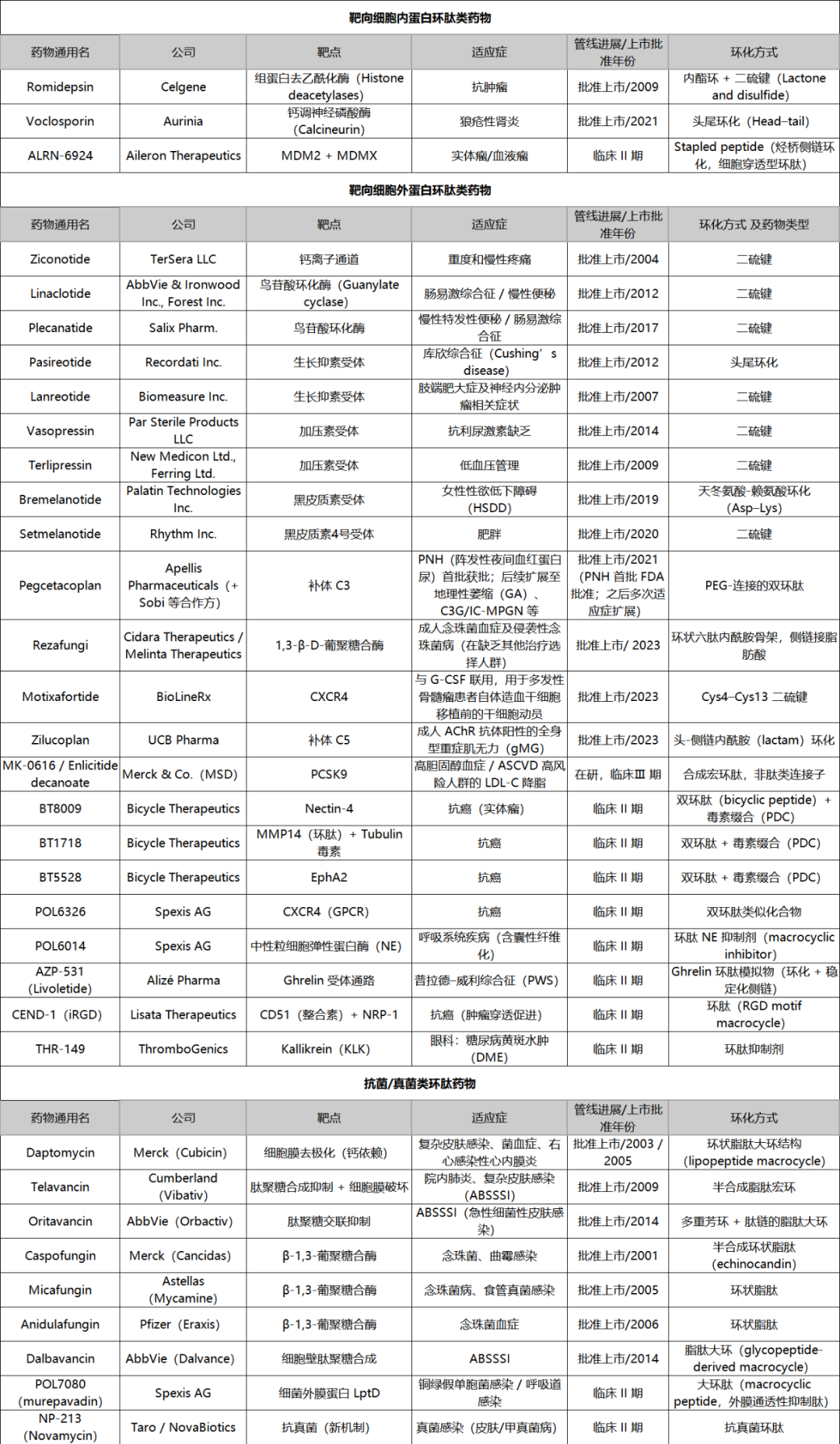
Data Source: Zhang, H., & Chen, S. (2021). Cyclic peptide drugs approved in the last two decades (2001-2021). RSC Chemical Biology, 3(1), 18–31.;Official website of the company
▲ Click to view larger image
Reviewing the R&D process of cyclic peptide drugs from the perspectives of timeline and indications, it is not difficult to find that its industrial path in the past...Over the 20 years, it has been gradually transitioning from the basic antibacterial and antifungal infection field to the diversified application of drugs targeting multiple systems and multiple targets.
Between 2000 and 2014, the earliest batch of macrocyclic peptides to reach the market were primarily concentrated in the anti-infective field, playing a role as specialized antibiotics in clinical practice. Representative cyclic lipopeptide antibacterials include Daptomycin, Telavancin, and Oritavancin, while echinocandin antifungals include Caspofungin, Micafungin, Anidulafungin, and Dalbavancin. These macrocyclic peptide drugs are mainly based on modified natural products or semi-synthetic transformations of lipopeptide macrocycles, targeting bacterial cell walls or fungal β-1,3-glucan synthase. Structurally, these drugs retain a lipopeptide macrocycle or a cyclic hexapeptide lactam backbone, embedding strongly into bacterial cell membranes or fungal cell wall synthesis complexes via large hydrophobic-hydrophilic interfaces. They exert lethal effects on key targets such as β-1,3-glucan synthase, peptidoglycan cross-linking, and cell membrane depolarization. These targets often possess large spatial dimensions and complex conformations, making stable binding difficult for traditional small-molecule drugs, whereas macrocyclic lipopeptides can provide sufficient contact area and hydrophobic interactions.
On the other hand, these cyclic peptide anti-infective drugs are mainly applicable to severe indications such as complicated skin and soft tissue infections, bacteremia, right-sided infective endocarditis, invasive candidiasis, and aspergillosis. Clinically, they are primarily used forICU and Treatment Strategies for Immunocompromised Patients. There is a need for drugs that can maintain sufficient concentration in high-burden pathogen environments while avoiding systemic toxicity.
For this reason, the anti-infective sector in the cyclic peptide drug ecosystem is not only the oldest foundation but also the most typical in structural characteristics, providing the earliest safety and efficacy validation for the subsequent application of cyclic peptide drugs in more complex disease systems such as endocrinology, immunity, complement, and cardiovascular metabolism.
From around 2014 to after 2020, with the gradual maturation of synthetic chemistry and cyclic peptide engineering technology, cyclic peptides began to move from the anti-infective field into large-scale development targeting systemic diseases such as cancer, endocrine system disorders, digestive system conditions, and central nervous system disorders.
In the field of cancer treatment, the breakthroughs achieved by cyclic peptides in the past decade have been particularly noteworthy, with approximatelyEight relevant R&D pipelines are in Phase II or above, with two approved products, Romidepsin and Motixafortide.Cyclic peptides are beginning to enter the complex solid tumor scenarios previously dominated by antibodies and small molecules, targetingNectin-4, EphA2, MMP-14 and other tumor-related receptors that are difficult to be covered by traditional drugs, and gradually expanded into a tool system that can directly participate in precise tumor killing, tumor penetration, and drug delivery.
The core technology innovation of cyclic peptide drugs has further promoted their innovation and drug efficacy in the field of oncology, with remarkable progress in related pipelines.(Detailed technical analysis can be found in the next subsection).InBT8009 and BT5528, as representative cyclic peptide-drug conjugates (BTC/PDC), are among the most groundbreaking cases in the field of cancer treatment in recent years. According to the BT8009 clinical results published in 2024, in metastatic urothelial carcinoma (mUC) patients who had not received prior Nectin-4 ADC treatment, the objective response rate (ORR) of single-agent BT8009 at 5 mg/m² reached approximately 38–45% (including complete responses + partial responses), with some patients showing a duration of response (DOR) exceeding 11 months. Preliminary data on safety also demonstrated advantages, with the incidence of grade 3 or higher treatment-related adverse events (TRAEs) for BT8009 being only 31%, significantly better than traditional ADCs.enfortumab(Padcev). Targeting tyrosine kinase family membersBT5528 targeting EphA2 also demonstrates excellent clinical outcomes. In the Phase I/II dose escalation + expansion trial, BT5528 monotherapy exhibited clinical activity in patients with various solid tumors (including urothelial cancer and other solid tumors). Patients positive for EphA2 showed a significantly higher ORR compared to those with low EphA2 expression; dose-adjusted cohorts also demonstrated acceptable tolerability and a low rate of severe adverse events.
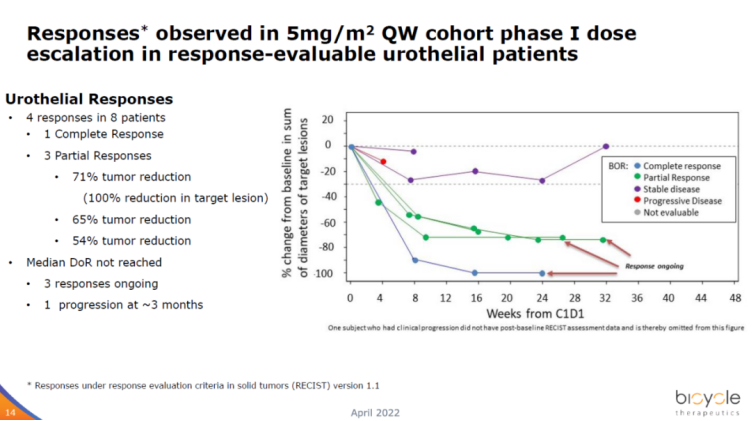
Figure3. Trial Data of 5 mg/m² BT8009 Monotherapy in Patients with Urothelial Carcinoma (Source: Bicycle Therapeutics official website)
Endocrine SystemThe pipeline of targeted cyclic peptide drugs accounts for a relatively high proportion, second only to antibacterial and antifungal categories.Products such as Lanreotide, Vasopressin, and Bremelanotide have advanced the application of cyclic peptides in precise hormone regulation, covering various endocrine system diseases including acromegaly, Cushing's syndrome, hereditary obesity, and hypoactive sexual desire. These products form a considerable series with clear clinical demand. Endogenous peptide hormones like somatostatin, vasopressin, and melanocortin naturally possess well-defined receptor targets and native peptide structures, but natural peptides often exhibit extremely short half-lives, insufficient selectivity, and poor systemic distribution, making them unsuitable as stable therapeutic tools. However, cyclic peptide technology—through disulfide bonds, head-to-tail cyclization, or local side-chain engineering—has significantly enhanced the stability and receptor specificity of endogenous hormones, enabling their integration into the realm of long-term chronic disease management drugs. One representative drug, the cyclic peptide Lanreotide for the endocrine system, was approved by the U.S. FDA in 2007 for the treatment of acromegaly and neuroendocrine tumors.(GEP-NET), within itsIn the pivotal study, approximately 72% of patients in the treatment group achieved more than a 50% reduction in growth hormone levels by week 16. With the cyclic peptide structure becoming more stable and further optimization of its long-acting properties and delivery system, cyclic peptides are expected to form a broader product ecosystem in areas such as obesity, hypothalamic-pituitary axis diseases, and rare metabolic disorders.
InCardiovascular System FieldCyclic peptide drugs mainly target lipid management and atherosclerosis risk control (ASCVD). In traditional LDL-C lipid-lowering treatments, the PCSK9 target has long been dominated by monoclonal antibodies such as Evolocumab and Alirocumab. However, limitations like injection dependency, high cost, and insufficient patient compliance have remained difficult to resolve.
And orally available macrocyclic peptides offer more convenient medication options.MK-0616 (Enlicitide) can stably block the binding of PCSK9 to LDL receptors in vivo, thereby reducing LDL-C to a level comparable to that achieved by monoclonal antibodies. The successful development of MK-0616 introduces cyclic peptide drugs into oral small-molecule treatment options, making it more suitable for the long-term, stable, and low-cost medication required for chronic diseases like cardiovascular conditions.
Except forPCSK9, cyclic peptides also have clear clinical value in the fields of vascular tone, blood pressure regulation, and renal vascular function. These cyclic peptide-based drugs make the application of cyclic peptides in the cardiovascular system not limited to chronic disease control but also cover emergency treatment and critical care support. For instance, as a representative of vasopressin-class cyclic peptides, Terlipressin, by acting on V1 receptors, is widely used for hypotension regulation caused by circulatory failure, hepatorenal syndrome, or acute hemodynamic disorders, serving as an important means to maintain cardiovascular stability in critically ill patients.
In addition to the aforementioned core areas, cyclic peptide drugs are also being developed in related fields such as digestive system diseases, central nervous system disorders, and pain management. The overall market trend shows a synchronized and diversified development across different indications and targets.
3. Innovative Technology Reconstructs the Cyclic Peptide Drug Ecosystem: Continuous Upgrading of Core Technologies
The rapid advancement of cyclic peptide drugs is not only reflected in the expansion of disease targets but also demonstrated in their continuously innovative technical forms.From the early modification and engineering of natural macrocyclic lipopeptides to the gradual advancement of cyclic peptides, and eventually leading to the development of high-throughput bicyclic peptide libraries and the integration of conjugation technologies in recent years with multi-target targeting and other core technologies, this evolutionary path has continuously upgraded the structural forms of cyclic peptide drugs, further expanded design flexibility, and significantly enhanced the coupling capabilities with heterogeneous technologies.
Traditional cyclic peptides and macrolipid peptides are mostly derived from natural products or their semi-synthetic derivatives, representing the primary production method for antibacterial and antifungal cyclic peptide drugs.After the 21st century, based on the understanding of cyclic peptide chemistry and conformational control, more companies began to develop and apply different cyclization methods through engineering modifications, such as disulfide bonds, head-to-tail cyclization, lactone/lactam cyclization, etc., to enhance drug stability, tissue permeability, targeting, and resistance to enzymatic degradation by reducing the flexibility and overall polarity of peptide molecules.
Based on this configuration,The industrialization innovation of cyclic peptide drug technology in 2025 and beyond will mainly focus on the following four directions.:1) Bicyclic Peptide Technology; 2) PDC (Peptide Drug Conjugates) / BTC (Bicycle Toxin Conjugate) Technology; 3) Cyclic Peptide Inhibitors; 4) Polycyclic Peptide High-Throughput Libraries and Computational Design。
3.1 Bicyclic Peptide Technology
The innovative core currently attracting attention in the cyclic peptide field lies in bicyclic peptides.(Bicyclic Peptide) Technology.This technology platform is mainly composed ofDriven by companies like Bicycle Therapeutics, the principle of their platform is to merge two rings onto a small molecular scaffold, highly locking the conformation of the peptide chain. This ensures that the peptide ligand maintains high affinity and selectivity while possessing a molecular weight similar to small molecule drugs, approximately 1.5–2 kDa, combining the advantages of tissue penetration and pharmacokinetic distribution typical of small molecules. Compared with linear or single-ring peptides, bicyclic peptides exhibit higher metabolic stability and enzymatic degradation resistance, enhancing their half-life and bioavailability in the body.
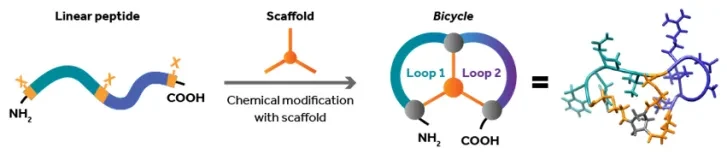
Figure4. Bicyclic Peptide Technology Principle (Image Source: Bicycle Therapeutics Official Website)
More crucially, the bicyclic peptide structure combines the properties of proteins.-Protein-protein interaction (PPI) interface recognition capability, synthesizability & modifiability.Traditional small molecules face large planar, grooved, or hydrophobic/Hydrophobic composite PPI sites often lack potency, while antibodies are too large and have poor penetration. Bicyclic peptides, on the other hand, fill the gap between the two: they are large enough to mimic antibody target binding, covering broad contact surfaces and enabling multi-point binding, yet small enough to penetrate complex structures or deep tissues.
Therefore,Bicycle is not just another variation of cyclic peptide structure, but an improved version.Middle-molecule Drug Platform.It has achieved optimization across multiple dimensions such as stability, targeting, tissue distribution, and drug-likeness, balancing the advantages of the three major drug conformations: small molecules, peptides, and antibodies. It also provides an important platform foundation for cyclic peptides to reach previously inaccessible targets, such as multi-targets, complex receptors, and the tumor microenvironment.
Currently, there are no drug pipelines based on bicyclic peptides approved for marketing in the global market.InA handful of biotechnology companies represented by Bicycle Therapeutics have already advanced bicyclic peptide drugs as their main focus. Regulatory agencies such as the FDA have shown strong interest and recognition in this new class of drugs. For instance, the bicyclic drug BT8009 was granted FTD by the FDA in 2023 for the treatment of locally advanced or metastatic urothelial cancer that has been previously treated, further accelerating the commercial development of bicyclic drugs. Meanwhile,Its structure is modular.+ The synthesizable and modifiable platform characteristics make it suitable for various diseases that require precise ligand, payload delivery, tissue or cell targeting.Once the bispecific cyclic peptide drug achieves clinical breakthroughs in the field of solid tumors, its related therapies can also be extended to infections, inflammation, autoimmune diseases, and pediatric care in the future./Rare diseases and other indications.
3.2 Cyclic Peptide-Toxin Conjugate PDC (Peptide Drug Conjugates) / BTC (Bicycle Toxin Conjugate) Technology
PDC/BTC is a new generation of targeted therapy that conjugates cyclic peptides with cytotoxic drugs (payload) through a cleavable linker.AndSimilar to ADC drugs, their essence is to integrate cyclic peptide targeting capability + drug delivery/killing capability into a single molecular structural unit. The basic structure of PDCs typically includes three parts: 1) Homing peptides (monocyclic peptide / bicyclic peptide), responsible for high-affinity, selective recognition of the target; 2) Linker, ensuring stable transport in vivo but being cleaved by enzymatic or pH conditions in the target cells or tumor microenvironment; 3) Cytotoxic payload, which will be released upon reaching the target cells to exert its killing effect.
As mentioned aboveBicycle Therapeutics' BT8009 (targeting Nectin-4; indication for metastatic urothelial carcinoma) and BT5528 (targeting EphA2; indications for multiple tumors, including lung cancer, ovarian cancer, prostate cancer, etc.) are both representative bicyclic peptide-toxin conjugate drugs. Both have demonstrated promising efficacy in clinical trials, with good safety and tolerability.
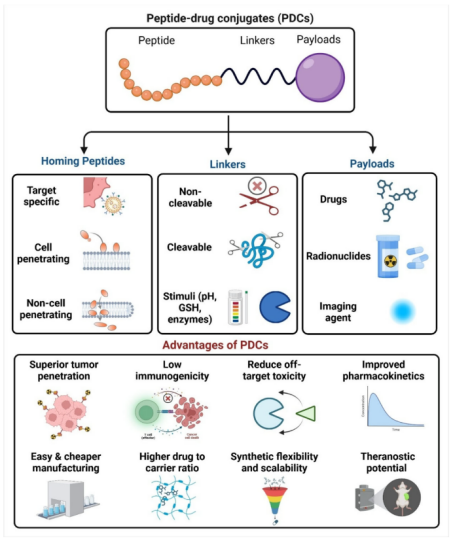
Figure 5. PDC Class Drug Structure, Drug Type Classification, and Drug Advantages(Image source:Jadhav, K., Abhang, A., Kole, E. B., Gadade, D., Dusane, A., Iyer, A., Sharma, A., Rout, S. K., Gholap, A. D., Naik, J., Verma, R. K., & Rojekar, S. (2025). Peptide–Drug Conjugates as Next-Generation Therapeutics: Exploring the Potential and Clinical Progress. Bioengineering, 12(5), 481. )
In terms of drug mechanism, because the molecular weight of bicyclic peptides is smaller compared to antibodies,PDC/BTC exhibits significantly better tissue penetration and tumor permeability in vivo compared to antibody conjugates. Due to their large size and complex structure, antibodies often only distribute around the vascular periphery in solid tumors and cannot penetrate deeply into the tumor tissue. In contrast, the small molecular size of PDC/BTC allows it to exit blood vessels more quickly, penetrate solid tumor tissues, and achieve a more uniform and deeper distribution of toxins, thereby enhancing tumor-killing efficiency.
Secondly,The synthesis and production advantages of PDC/BTC are also very significant. This is because PDC/BTC is fully chemically synthesized from chemical peptides, linkers, and payloads, without relying on a cell expression system. This purely chemical synthesis method makes the production process simpler, more controllable, with higher batch consistency, and easier to scale up for mass production. Compared to ADCs, which involve high costs and production difficulties due to complex processes such as antibody expression, purification, conjugation, and removal of impurity proteins, PDC/BTC has greater industrialization potential. Many industry analyses describe PDC as "the new conjugated drug category with the most commercial potential after ADCs."
In addition,BTC stands out more prominently in terms of immunogenicity, toxicity distribution, and tolerability. Due to their small molecular weight, simple and stable structure, and optimized peptide chains, bicyclic peptides exhibit lower immunogenicity, making them less likely to trigger antibody responses or long-term immune issues. Meanwhile, thanks to their smaller structure and simpler metabolic pathways, BTCs are typically cleared through the kidneys rather than metabolized by the liver, thereby reducing hepatotoxicity and systemic cumulative toxic side effects.
As of the currently disclosedExamples of Clinical Data from the PDC/BTC Pipeline: Nectin-4 Targeting BTC Zelenectide Pevedotin (BT8009) in Phase I Clinical Trials with 49 Patients with Advanced Solid Tumors Showed that ≥Grade 3 TRAE was Only About 39%, Mainly Hematological Toxicities Such as Neutropenia (16%). Common Any-Grade AEs Were Nausea (49%), and Only 4% Discontinued Due to AEs, with No Treatment-Related Deaths. In the Overall Evaluable Population, the Overall ORR Reached Approximately 24%, with a Clinical Benefit Rate of 48%. In the Urothelial Cancer Subgroup, the ORR Increased to 38%, with a Benefit Rate of 57%, and Median PFS was Approximately 7.4 Months. Brain-Targeting PDC ANG1005 (Paclitaxel-Trevatide) Also Showed Ideal Safety and Efficacy in a Phase II Study in Breast Cancer Brain Metastasis. In Terms of Safety, the Toxicity Profile Was Similar to Conventional Taxanes, Mainly Bone Marrow Suppression Without New Unexpected Toxicities. In Terms of Efficacy, Intracranial Disease Benefit (SD or Higher) Accounted for 77% in Heavily Pretreated Breast Cancer Brain Metastasis Patients, with an Intracranial Objective Response Rate of Approximately 8–15% (Slightly Different Among Evaluators). In the Subgroup with Concurrent Leptomeningeal Metastases, Intracranial Disease Control Rate Reached 79%, with Median OS Approximately 8 Months, Superior to Historical Controls. Other Pipelines Such as Sudocetaxel Zendusortide (TH1902) and BT5528 Also Demonstrated Promising Safety and Efficacy.
Overall,PDC/BTC not only inherits the targeted killing mechanism of traditional ADC but also integrates the advantages of cyclic peptide drugs in terms of penetration, producibility, and controllability. Therefore, it is increasingly regarded by pharmaceutical companies as the third mainstream therapeutic pathway after antibodies and small molecules. The rise of this new modality has also opened up broad treatment possibilities in areas such as oncology, inflammation, metabolism, and immunology.
3.3 Cyclic Peptide Inhibitors: Protein-Protein Interaction (PPI) and RNA-Protein Interaction Inhibitors
Innovative Applications of Cyclic Peptide Drugs as Inhibitors Focus on Proteins-Protein-protein interaction (PPI) and RNA-protein interaction inhibitors.
Protein– Protein-protein interactions (PPIs) form the basis of numerous cellular functions and signaling networks. Many pathogenic mechanisms, including those related to tumors, proliferation, apoptosis, and transcriptional regulation, are associated with abnormalities in PPIs. However, traditional small molecules often struggle to bind effectively due to the large and flat surfaces of target sites, while antibodies/large molecule drugs cannot easily penetrate cells because of their size, rendering many PPI targets considered "undruggable." In this context, cyclic peptide inhibitors have emerged as a bridge, offering new possibilities for PPI inhibition.
Based on this idea, academia and industry have targeted multiple classicsPPI Target Developed a Pipeline of Cyclic Peptide Inhibitors.For exampleALRN-6924, a stable α-helical stapled peptide, targets p53–MDM2/MDMX in the tumor suppression pathway, mimicking the binding domain of the p53 N-terminus with MDM2/MDMX. This peptide can penetrate cell membranes and exhibits high-affinity targeting of MDM2 and MDMX, inhibiting their interaction with p53, thereby restoring the tumor-suppressive function of p53. In vitro and animal models have demonstrated that ALRN-6924 possesses excellent cell permeability, stability, pharmacokinetics, and safety. It has also entered clinical research for solid tumors and hematological malignancies. The development outcomes of multiple pipelines indicate that conformationally stable cyclic peptides have proven broad potential in inhibiting PPIs.
Except forPPI, the interaction of RNA-protein (RNP), RNA secondary/tertiary structure, and RNA targets such as viral RNA, non-coding RNA, miRNA, and transcription regulatory RNA inhibition/binding, is also a field that urgently needs breakthroughs in drug development in recent years.RNA is highly flexible in structure, with a wide interface and complex surface. Traditional small molecules and oligonucleotides (aptamer/oligo) often encounter bottlenecks in affinity, selectivity, stability, or cell/tissue distribution.
In such scenarios, cyclic peptides exhibit unique drug development potential. This is because their structures are highly designable, they have a large binding surface, and their stability and membrane/cell penetration can be enhanced through additional chemical modifications./ Tissue penetration. Literature has reported that some cyclic peptides can bind to the secondary structure of RNA, achieving high affinity and selective binding through intermolecular multi-point interactions such as hydrogen bonds, electrostatic interactions, and π–π stacking.
Recent Research (Ning et al., 2023) also proposed the use of dynamic geometry design methods to optimize cyclic peptide structures, enabling high-affinity binding with specific RNA architectures, thereby blocking RNA–protein interactions.
WithWith the continuous advancement in RNA structure elucidation, computational design, and high-throughput peptide library screening technologies, the potential of cyclic peptides as RNA–protein/RNA–structure inhibitors (or modulators) is being increasingly validated by research. They may also become a new Modality for treating viral diseases, gene expression disorders, and RNA-regulation-related diseases in the future.
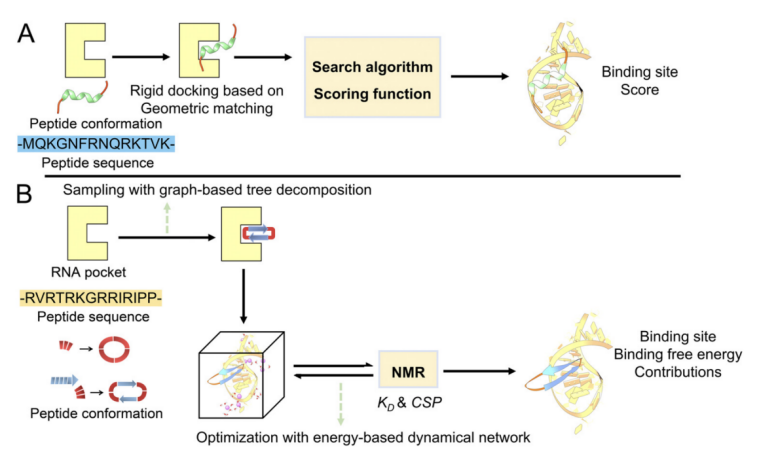
Figure 6. Dynamic Geometry (Dynamic Geometry) Design Method Optimizes Cyclic Peptide Structure for High-Affinity Binding to Specific RNA Architectures(Image Source:Ning, S., Sun, M., Dong, X., Li, A., Zeng, C., Liu, M., ... & Zhao, Y. (2023). Dynamic geometry design of cyclic peptide architectures for RNA structure. Physical Chemistry Chemical Physics, 25(41), 27967-27980.)
3.4 Polycyclic PeptidesHigh-Throughput Library Screening+ Computational Design
In recent years, the development of high-throughput polycyclic peptide libraries and computational design technologies has provided significant convenience for the screening of druggable sites in cyclic peptides. This has evolved into an efficient drug platform capable of on-demand design, rapid screening, and batch synthesis, enhancing the efficiency of cyclic peptide drug development and offering more alternatives.
First, throughTechnologies such as phage-display, mRNA-display, and chemical synthesis random cyclization have now enabled the construction of cyclic peptide libraries with billions (or even higher) diversity. These random cyclic peptide libraries, combined with display technologies, have laid an important foundation for the discovery and rapid iteration of modern cyclic peptide drugs.
At the same time, after the optimization of synthetic and chemical cyclization methods, the production of polycyclic peptide libraries is gradually moving towards automated, high-throughput, and scalable synthetic methods, such as the use of solid-phase peptide synthesis.(SPPS) combined with chemical cyclization methods, such as thioether-cyclization, disulfide, head-tail, side-chain, etc., enables the batch synthesis and generation of cyclic peptide libraries in 96-well plates. Industry companies such as GenScript Biotech and Syneron Bio have already established specialized service platforms capable of producing tens of thousands of peptides monthly to meet high-throughput screening demands.
With the continuous penetration of computational biology, structure prediction, and deep learning in the field of drug design, it is now possible to computationally design cyclic peptides.(in silico design), without relying on natural templates/natural peptides, cyclic peptide structures with target binding conformations and expected binding sites are designed through algorithms. In 2025, a deep learning method (AfCycDesign) successfully generated over 10,000 structurally diverse, reliably folded (atomic-accuracy) cyclic peptide scaffolds, and based on these scaffolds, further designed molecules targeting specific targets withnM level Peptide ligands with IC₅₀. Subsequent X-ray resolution experiments showed that the designed structure had an RMSD < 1.0 Å compared to the actual folded structure. Additionally, studies have combined molecular dynamics + MM-GBSA energy calculations to optimize the drug affinity of known peptides (or initial hits). Significant improvements in binding affinity and stability were achieved by replacing amino acids, introducing disulfide bonds, and incorporating non-natural residues. For example, a recent study (Albani et al., 2024) optimized a peptide targeting LC3B using disulfide-constrained cyclic peptides, resulting in notable enhancements in both binding affinity and conformational stability.
The future development of cyclic peptide drugs will continue to revolve around these four core technologies, constantly innovating, gradually expanding from specific indications or targets to a broader range of targets and indications; evolving from a single drug treatment model to diversified, multi-mechanism, and multiple drug delivery methods. Cyclic peptide drugs are highly likely to become the third mainstream connecting small molecule drugs and large molecule biologics.Modality, with broad market prospects.
4. Future Development Challenges and Trends: Further Enhancing the Advantages and Clinical Practicality of Cyclic Peptides in Drug Development
Despite the significant potential demonstrated by cyclic peptide drug-related technologies in the R&D pipeline, transitioning from theory and experimentation to widespread clinical application and industrialization, while further highlighting the advantages of cyclic peptide drugs, still faces several key challenges. The primary challenges focus on how to maintain the fundamental efficacy of the drug.Continuously enhance its cell or tissue permeability and drug delivery convenience (especially when converted into oral form).
First, although common cyclic peptides are more stable and have better binding affinity than linear peptides, their membrane permeability and cell penetration/ The intracellular delivery capability is still limited, and most common cyclic peptides still cannot simultaneously possess high affinity, high permeability, and maintain in vivo stability. When the target protein is located inside the cell or organelle, simple cyclization can hardly meet the three dimensions of penetrability, stability, and binding at the same time.
Secondly,For complexPPI targets, such as KRAS/c-Myc/β-catenin, etc., are limited in drug development advantages due to the ordinary cyclic peptide natural scaffold size, chemical conformation, and functional spatial constraints.Common cyclic peptides are difficult to achieve through simple cyclization and optimization for these nonEffective coverage of pockets, large planes, and protein interfaces with high conformational complexity.
To address the disadvantages of conventional cyclic peptides, some pipelines introduce macrocyclic peptides./ Macrocyclic peptide structure. These structures have larger binding surfaces, richer structural diversity, stronger conformational stability, and the potential to balance membrane permeability with in vivo stability through more diverse modifications and optimizations. However, enhancing target binding capabilities may slightly compromise the pharmacokinetic advantages of macrocyclic peptides.ChemicalThe synthesis of macrocyclic peptides is significantly more challenging than that of ordinary cyclic peptides, with complex cyclization steps, multiple conformational isomers, and unstable yields, leading to higher barriers in process scaling, quality control, and large-scale production. Therefore, the future development of macrocyclic peptide drugs will require larger-scale and more systematic conformation screening systems to simultaneously optimize binding affinity, stability, permeability, and pharmacokinetic parameters.
However, the current high-throughput configuration and pharmacokinetic databases for macrocyclic peptides still have limitations. Existing datasets are mostly small-scale, which cannot support conformational space exploration.→ Permeability prediction → A complete closed-loop process for pharmacokinetic optimization. This means that in the future, there is an urgent need to continuously build larger libraries of macrocyclic peptide structures, combined with high-throughput chemical synthesis and screening technologies, to truly unlock the potential of macrocyclic peptides in drug targeting of intracellular challenging targets.
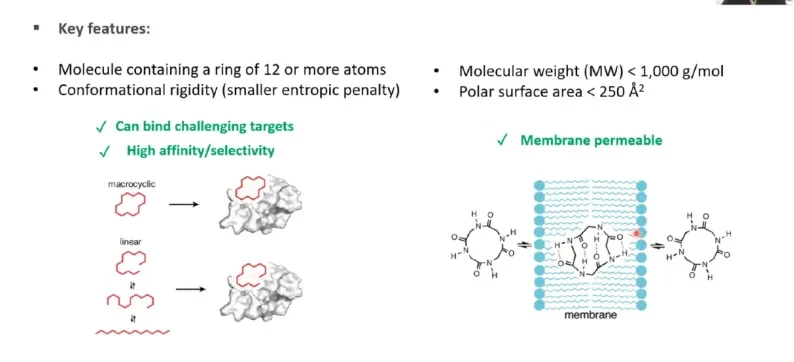
Figure 7. Macrocyclic Peptide Structural Advantages(Image source: Development of macrocyclic peptide drugs based on high-throughput synthesis screening platform)- Dr. Jixin Jian (EPFL, Switzerland) | Yuhu Han Open Class https://www.youtube.com/watch?v=mDE74ASZtJU )
In terms of drug delivery convenience, the majority of peptide drugs still face significant bottlenecks in achieving oral administration. Enzymatic degradation+ Gastrointestinal instability + Poor intestinal epithelial permeability become the three major obstacles hindering the success of oral peptides. Due to the peptide molecules being highly susceptible to degradation in the gastrointestinal environment (gastric acid, digestive enzymes, pH changes), the number of intact molecules that can enter the systemic circulation after passing through the gastrointestinal tract is very low.
On the other hand, even if peptides evade degradation, their molecules are often highly polar, with numerous hydrogen bond donors and acceptors, and a relatively large molecular weight. These characteristics result in extremely low permeation efficiency when crossing intestinal epithelial cells and entering the bloodstream, making their actual bioavailability difficult to meet pharmaceutical standards. Consequently, most cyclic peptide drugs still rely on injection, infusion, or other non-oral administration routes to this day.
To address these issues, achieving orally available cyclic peptide drugs requires breakthroughs in molecular design, chemical modification, drug delivery systems, and more. In theory, the configuration of cyclic peptides can be achieved throughBackbone modifications, such as N-methylation, use of non-natural amino acids, and design of hydrophobic/lipophilic side chains, are employed for conformational optimization to enhance oral bioavailability.
In a study conducted inIn a 2023 study (Merz et al., 2023), researchers constructed a synthetic library containing 8,448 cyclic peptides and conducted high-throughput screening. The team optimized for the target thrombin and successfully identified several cyclic peptides with high affinity, stability, and permeability. The oral bioavailability (%F) of these peptides in rats reached up to approximately 18%, demonstrating that the method of "appropriate conformational optimization + screening + validation" can indeed overcome the limitations of peptide drug oral usability. Another research team (Linker et al., 2023) pointed out that cyclic peptides with conformational switching capabilities can better penetrate lipid bilayers. When intramolecular hydrogen bonds form within cyclic peptides and reduce polar exposed surfaces, their exposure to polar surfaces decreases, facilitating entry into the hydrophobic environment of membranes. This conformational characteristic provides a mechanistic basis for cyclic peptides to achieve better membrane permeability and oral bioavailability in vivo.
However, achieving effective optimization is not easy. Any enhancement in stability or permeability may inversely affect the peptide's affinity, selectivity, or conformational adaptability with the target; it also complicates synthesis, purification, and quality control, requiring extensive testing and continuous iteration. In the future design of cyclic peptide drugs, breakthroughs in drug delivery systems and in vivo pharmacokinetic optimization will enable cyclic peptide drugs to be orally administered like traditional small molecules, improving patient compliance, further enhancing the clinical usability and commercial value of cyclic peptide drugs, and helping cyclic peptides become mainstream.Modality lays the foundation.
For the content of this article and more questions, feel free to communicate with the Probe Capital team:
Wang Yizhou, Head of Innovative Drug Business at Probe Capital. Graduated from the Faculty of Medicine at the University of Hong Kong and the School of Pharmacy at China Pharmaceutical University. Has been responsible for financing and M&A affairs for multiple biopharmaceutical companies, including Baiyi Pharmaceuticals, Hezheng Pharmaceuticals, Yihe Pharmaceuticals, Wozhen Biotech, QiJia Technology, Xinhai Biotech, and Hotong Instruments. Main areas of focus include innovative drugs, CXO, life science technologies and tools, biomanufacturing, and upstream raw materials.
Wang Yutong, an intern at Probe Capital, is currently a Ph.D. candidate in Pharmacology at the University of Toronto, affiliated with the Neurobiology of Depression and Aging Laboratory. Her research focuses on the development of small-molecule drugs and nucleic acid-based therapeutics related to cognitive disorders.