Weekly Medical Device News Roundup [Dec 8–14]: Funding, Product Approvals, and Strategic Collaborations

Mindray Scientific
Developer and Manufacturer of Medical Materials and Devices

Mindray
Medical Device R&D Manufacturer

Baheal Medical
Health Brand Commercialization Platform


01
Pegasus Medical Completes Million-Level Angel Round Financing
Recently, Suzhou Feima Medical Technology Co., Ltd., a Chinese medical device company, announced the completion of an angel round of financing worth tens of millions of RMB two years after its establishment. The investor is Yi Ruixing, and the financial advisor information was not disclosed. Feima Medical is committed to developing minimally invasive treatment devices for the male urinary system. Its core product, the thermal steam ablation system, has the potential to fill a market gap. The company is preparing for multi-center clinical trials and expects to launch the product in 2027. Benign prostatic hyperplasia (BPH) is a common urological condition among elderly men worldwide, with incidence rates significantly increasing with age. Symptoms include frequent urination, urgency, dysuria, difficulty in urination, and interrupted urine flow.
02
Hengyu Medical Secures Two Rounds of Billion-Yuan Financing in a Year
Recently, Tianjin Hengyu Medical Technology Co., Ltd. (hereinafter referred to as "Hengyu Medical") announced the completion of nearly 100 million yuan in financing. This round of financing was jointly invested by Guanghua Wutong, Chengdu Science and Technology Investment, and Zhongtian Weiyi. Xingqiao Capital served as the long-term exclusive financial advisor. This is another significant financing completed by Hengyu Medical in 2025, which will help the company further accelerate the research and development, production, and commercialization process of vascular interventional endoluminal imaging and treatment-related products. The attractiveness of Hengyu Medical lies not only in the vascular intervention track it has been focusing on but also in its dedication to building a complete technical system and its irreplicable R&D capabilities. Hengyu Medical has been deeply involved in the field of intravascular ultrasound (IVUS) and optical coherence tomography (OCT) technology for many years, forming a full-chain layout from core components to complete equipment, from single products to system solutions. Hengyu Medical is one of the few companies in China that simultaneously masters both IVUS and OCT core technologies, and this "dual-technology approach" capability gives it a unique position in the field of precise diagnosis and treatment of vascular interventions.
03
Capital Increase2 Billion, Mindray Completes Series A Financing
On December 8, 2025, Wuhan Mindray Scientific completed its Series A financing round, with Mindray taking over as the controlling shareholder. The registered capital increased from 300 million to 2.3 billion yuan. The original "Wuhan Mindray Biomedical Technology Co., Ltd." was dissolved, and the two companies merged. This round of financing did not specify the exact amount, investment institutions, or financial advisors. The purpose of the financing is for Mindray to systematically restructure its Wuhan division, reshape the governance structure, and consolidate resources across surgical, orthopedic, and cardiovascular business lines. The Wuhan Mindray division covers two core modules: R&D and manufacturing. Its operations are divided into three major segments—minimally invasive surgery, orthopedics, and cardiovascular-related technologies—which overlap with Mindray's strategic priorities. The Wuhan R&D base has integrated capabilities, and this consolidation clears obstacles for future resource deployment.
04
Robotic Radiosurgery Enters a New Phase of Large-Scale Implementation
In recent years, Baheal Medical has achieved significant progress with the ZAP-X Mars Boat radiosurgery robot, including the commissioning of a global manufacturing base, the launch of clinical studies, and the establishment of radiation therapy centers. Baheal Medical is firmly focused on precision radiotherapy, building a comprehensive strategic system for large-scale radiotherapy, and is now entering a phase of result realization. China faces significant challenges in treating brain metastases. In November 2024, Baheal invested in ZAP Surgical, taking charge of ZAP-X's commercial operations in China while planning global production. Specifically designed for cranial precision radiotherapy, ZAP-X sets benchmarks in treatment accuracy and safety, having been approved for marketing in 24 countries and regions worldwide, with over 5,000 clinical cases completed. Baheal is advancing the construction of a global production center in China, with the high-end manufacturing industrialization base commencing operations on December 6, boasting an annual capacity of 100 units (sets). Additionally, Baheal is creating third-party precision radiotherapy centers through a "hospital-enterprise co-construction" model, collaborating with Tiantan Puhua Hospital on December 9, aiming to establish 15 centers by the end of 2026.
05
Surgical Operations Quietly Step Into"Robot Age"
Recently, at the 9th Jiangsu Cancer Prevention and Treatment Conference, the Intelligent Robotic Surgery Training Base of Jiangsu Cancer Hospital was inaugurated, with "surgical robots" becoming the focal point. Professor Song Ninghong, an expert, stated that the development of AI has made the role of robotic surgery increasingly important, enabling "remote surgeries" and flexible operations. Surgical robots can address the limitations of traditional surgeries, such as restricted vision, insufficient flexibility, and stability issues, by providing high-definition 3D vision, allowing robotic arms to move freely, completing delicate maneuvers, avoiding hand fatigue, and ensuring precision and control. Moreover, medical institutions are collaborating with high-tech enterprises through "medical-engineering integration" to make surgical robots more "intelligent," such as exploring robot suturing and knot-tying programs, and using digital diagnostic and treatment technologies to compensate for the perceptual shortcomings of robots.
06
Major Breakthrough in Chinese-Made Surgical Robots
Recently, Aohua Endoscopy announced that its self-developed ERCP surgical robot has successfully completed clinical research trials at Nanjing Drum Tower Hospital, affiliated with the Medical School of Nanjing University, achieving significant interim results. The trial included 26 patients with common bile duct stones, with a 100% success rate in surgeries. The average procedure duration was 39.62 minutes, and the median cannulation time was 2.5 minutes. No adverse events were reported, indicating high safety. This robot addresses the challenge of doctors being exposed to X-ray radiation during traditional ERCP procedures, significantly reducing their radiation exposure while also alleviating physical strain and operational fatigue. Additionally, its design emphasizes "making machines operate as naturally as hands," respecting and replicating doctors' traditional operating habits, shortening the learning curve, and potentially lowering the barrier for mastering advanced technologies, thereby promoting the accessibility of quality medical resources.
07
Under MedtronicHugo™ Robotic-Assisted Urological Surgery System Receives FDA Approval for Market Launch
Medtronic's Hugo™ Robotic-Assisted Urological Surgery System Receives FDA Approval for Market Launch in the U.S., Applicable for Minimally Invasive Urological Procedures Such as Prostatectomies, with Approximately 230,000 Such Surgeries Performed Annually in the U.S. The Expand URO Trial Demonstrates It Meets Primary Safety and Efficacy Endpoints for Urological Procedures. Medtronic Plans to Expand Its Application to More Surgical Specialties, Including General and Gynecological Surgeries. Medtronic Is Confident About Revenue Growth Driven by Hugo, with Its Chairman and CEO Stating Greater Revenue Growth Will Be Achieved in the Second Half of This Year and Beyond. Additionally, the U.S. Is the World’s Largest Surgical Robotics Market, Valued at $4.6 Billion in 2020, Accounting for 55.1% of the Global Market. After the Da Vinci Surgical Robot Received FDA Approval in 2000, It Maintained a Dominant Position, with Intuitive Surgical Reporting Revenue of $2.51 Billion in Q3 2025. Medtronic's Hugo Surgical Robot Advanced in 2019 and Launched in the European Market in 2021.

08
Philips and Cofo Medical Reach Strategic Cooperation
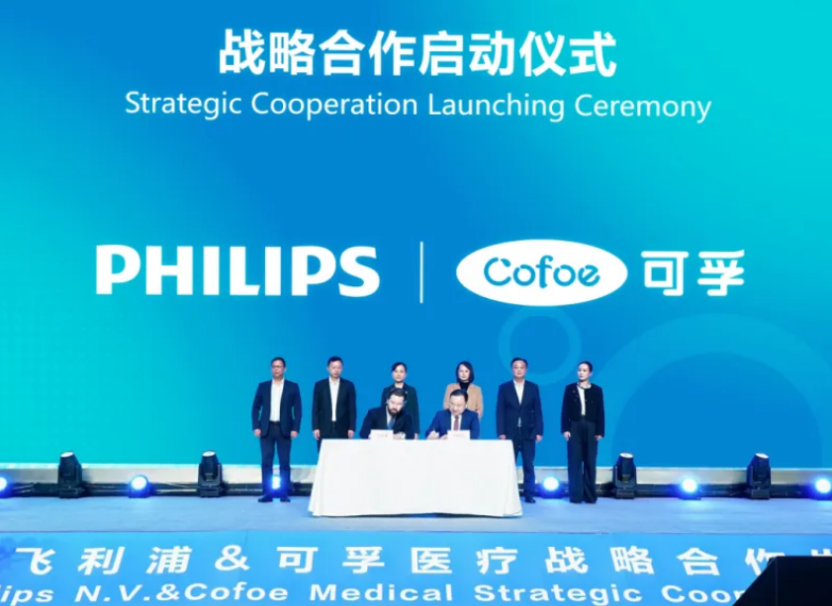
Recently, Cofoe Medical, a Chinese home medical device company, officially signed a strategic cooperation agreement with Royal Philips. The two parties will engage in in-depth cooperation around various family health monitoring devices, enabling high-quality health technology products to reach more Chinese households. According to the agreement, Cofoe Medical will obtain brand authorization for multiple family health monitoring devices from Royal Philips in China, including blood glucose meters, blood pressure monitors, continuous glucose monitoring systems (CGM), thermometers, pulse oximeters, spirometers, and weighing scales. Both parties will jointly promote the technological research and development, localized adaptation, and iterative upgrades of related products. Cofoe Medical will take full responsibility for the production and manufacturing, brand operation, channel layout, and service system construction of these products in China, achieving a deep integration of innovation in research and development and industrial capabilities.
09
Tsinghua University Clinical Medicine Science and Innovation Platform Launched
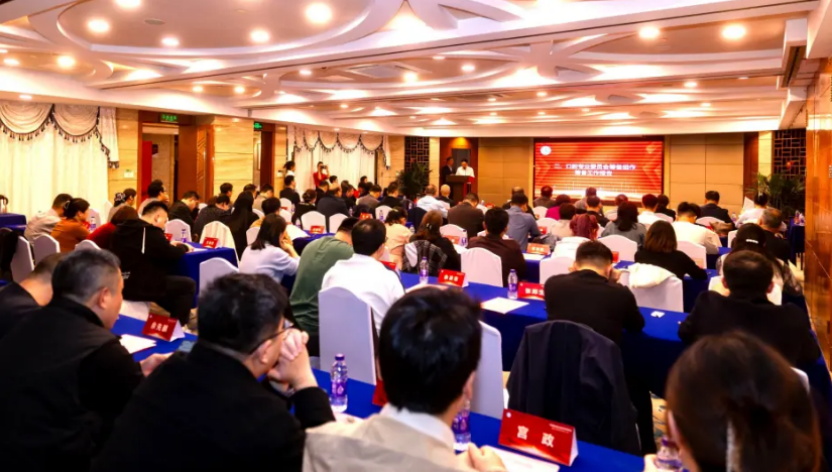
Recently, at the Tsinghua University Clinical Medicine Science and Technology Innovation Conference, the Tsinghua Clinical Medicine Science and Technology Innovation Platform was officially launched, with the concurrent hosting of the Shuimu Tsinghua Clinical Research Forum. The platform integrates six core entities to establish a comprehensive collaborative innovation system covering the entire chain of "clinical research – clinical translation – pharmaceutical and device development – data science – medical-engineering integration – clinical validation." It enables resource sharing and capability complementation, deeply integrating Tsinghua's multidisciplinary strengths to promote seamless connections from the identification of clinical issues to the transformation of results and industrial application. This addresses challenges in the development of clinical medicine and accelerates the output of new drugs, new devices, and innovative diagnostic and treatment solutions.
10
Realization of Hardcore Vascular Intervention Solutions"Human-Machine Integration"
Recently, the Beijing Intellectual Property Office released the list of recognized units for the 2025 Beijing Intellectual Property Pilot Advantage Program. Weimai Medical was selected thanks to its "R&D breakthrough - patent fortification - transformation implementation" strategy and over a hundred core patents. Its vascular intervention "eye, hand, brain" collaborative solution breaks through the limitations of traditional interventional robots, achieving "human-machine integration." This system, through full-chain closed-loop design, makes interventional robots an intelligent extension of a doctor's surgical capabilities, achieving key breakthroughs in tactile feedback and motion control. It also fully integrates with the underlying data of DSA equipment, enabling seamless tactile feedback and motion execution. Currently, Weimai Medical has obtained more than a hundred patents, transitioning from "technology follower" to "innovation leader."
11
Ruixin Medical"Coronary Artery Interventional Surgery Control System" Successfully Shortlisted for the 2025 National Artificial Intelligence Medical Device Innovation Task List
On December 8, the Ministry of Industry and Information Technology (MIIT) and the National Medical Products Administration (NMPA) announced the "2025 AI Medical Device Innovation Task - Shortlisted Units for Leadership in Charge." The "Coronary Artery Interventional Surgery Control System," independently developed by Ruixin Healthcare, has been shortlisted in the intelligent auxiliary decision-making product category. This initiative aims to select innovative entities to focus on key challenges and promote the development of AI-powered medical devices. Ruixin Healthcare’s system is applied in percutaneous coronary intervention (PCI) procedures and consists of a slave surgical platform and a master control platform, enabling doctors to precisely control surgical instruments in real time and assist in completing critical steps. Currently, PCI is the most effective treatment for coronary heart disease, but traditional surgery faces challenges such as high operational difficulty, long procedure times, and radiation exposure for doctors, along with uneven distribution of medical resources. Ruixin Healthcare’s system helps doctors avoid radiation, enables precise navigation, assists novice surgeons, and improves the success rate and accessibility of surgeries. To date, the system has filed over 20 patent applications and completed multiple validations.
12
Brain-Computer Interface Technology Innovation Center Settles in Tongji Hospital
Wuhan Designates Tongji Hospital as the "Wuhan Brain-Computer Interface Clinical Transformation Technology Innovation Center" Relying Unit
13
The 16-Provincial Alliance Medical Consumables Procurement is About to Begin
Recently, the Henan Province Pharmaceutical Centralized Procurement Platform released the "Notice on Carrying Out Centralized Maintenance Work for Information on Coronary Intervention Balloon-Type Medical Consumables." According to the notice, the provincial alliance for centralized procurement consists of 16 provinces: Henan Province, Tianjin City, Shanxi Province, Inner Mongolia Autonomous Region, Jilin Province, Heilongjiang Province, Shanghai City, Fujian Province, Hubei Province, Hunan Province, Hainan Province, Chongqing City, Sichuan Province, Shaanxi Province, Gansu Province, and Ningxia Hui Autonomous Region. The varieties subject to maintenance this time are cutting balloons, scoring balloons, spiny balloons, and papillary balloons medical consumables. Relevant enterprises should log in to the Henan Province Pharmaceutical Centralized Procurement Platform to view the product grouping catalog and submit declarations as required.
14
China's National Healthcare Security Administration Plans to Construct a Price Framework for Surgical Robots and Remote Surgery
Recently, the National Healthcare Security Administration officially released the "Guidelines for the Establishment of Surgical and Therapeutic Auxiliary Operation Projects (Trial) (Draft for Comments)". Through a multi-faceted strategy involving standardized pricing, regulated management, and market-oriented compatibility, the guidelines remove policy barriers for the clinical popularization of cutting-edge medical technologies. In the field of robotic surgery charges, the Guidelines provide comprehensive and detailed coverage. All auxiliary scenarios throughout the entire process, from navigation and partial execution to precise execution, are included, unifying the pricing framework for robotic-assisted operations across different departments and anatomical locations. This innovative classification method breaks the limitations of traditional categorization based solely on anatomical treatment areas, establishing "surgical robotic arm assistance" as an independent auxiliary operational unit for pricing purposes.
15
Pilot Launch in BeijingConstruction of 26 Innovative Drug and Device Promotion Centers
Recently, Beijing has launched a pilot program to establish 26 demonstration and promotion centers for the clinical application of innovative drugs and medical devices, aiming to build a systematic demonstration and promotion system for innovative drugs and medical devices and promote the innovative development of the pharmaceutical industry. Pilot hospitals will carry out clinical applications and standard formulation for newly approved innovative drugs and medical devices in relevant specialties. Eighteen hospitals, including Peking Union Medical College Hospital, Peking University People's Hospital, and Beijing Tongren Hospital, will establish 26 pilot centers across 11 specialties such as endocrinology, oncology, and medical testing. Each center should form a professional clinical application team, develop and improve clinical application management systems, operational guidelines, and data collection standards; conduct clinical applications of newly approved innovative drugs and medical devices, design and implement high-quality post-marketing evaluation studies, systematically collect and analyze data on the effectiveness, safety, convenience, cost-effectiveness, and patient compliance of products in real-world healthcare settings, and produce evaluation reports.
16
Shanghai pharmaceutical machinery enterprises exist in thisEight Situations Will Lead to a Meeting
Recently, the Shanghai Municipal Drug Administration released the "Shanghai Drug Administration's Measures for Responsibility Interview on Drug, Medical Device, and Cosmetic Safety." The Measures state that if any of the following eight circumstances occur, drug regulatory authorities at all levels in Shanghai may conduct interviews with the legal representatives, main persons in charge, or relevant responsible personnel of the entities to be interviewed. These eight circumstances include: occurrence of drug, medical device, or cosmetic safety incidents; evidence indicating potential safety hazards that have not been promptly addressed; products found to be non-compliant or showing abnormal results through supervisory inspections or risk monitoring, potentially posing significant safety hazards; a high number of complaints or reports from the public, media exposure, or cases involving assistance with significant impact; submission of false or authenticity-related problematic materials during the application for registration, filing, or other processes; serious defects in the quality management system with inadequate rectification; failure to timely implement product recalls or other risk control measures as required, or implementation being untimely or insufficient; and poor credit risk ratings for drug, medical device, or cosmetic manufacturers according to municipal regulations.
17
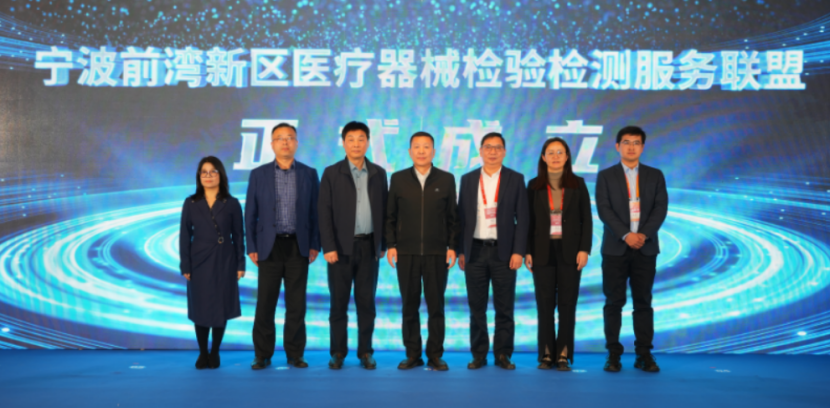
The Medical Device Inspection and Testing Service Alliance of Ningbo Qianwan New Area Established
Recently, the Zhejiang Province Medical Device Inspection and Testing Service Alliance——The Medical Device Inspection and Testing Service Alliance of Ningbo Qianwan New Area was inaugurated at the 4th China Ningbo Biomedical Industry Development Conference. The alliance, jointly initiated by four organizations including the Ningbo Customs Technology Center, adheres to the concept of "resource sharing, complementary advantages, coordinated development, and industry service." It integrates various resources to provide enterprises with one-stop, customized inspection and testing services throughout the product lifecycle. With a solid foundation in the medical device industry, Qianwan New Area faces challenges such as scattered testing and low efficiency. After the establishment of the alliance, the Qianwan New Area Branch of the Ningbo Market Supervision Administration will leverage the strengths of member units to shorten testing cycles, reduce costs, and facilitate product registration and market access.
18
Beijing Releases Medical Device Policies and Services"One-Touch" Guide
Recently, according to Beijing Chaoyang Market Supervision news, the Beijing Medical Device Review Center has launched a public service guide that integrates policy consultation, process handling, and innovative service resources to help companies operate more efficiently. The core services offer "three essentials": resolving evaluation issues through the "Beijing Device Review Consultation and Appointment System"; establishing dual innovation service stations in the north and south (Beijing Pharmaceutical and Medical Device Innovation Service Stations) for localized support; and enabling the public to access highlights of the center’s work and reform achievements via official channels. For frequently asked questions, the "Quick Reference Package" specifies that inquiries regarding Class II medical device registration and changes should be directed to the telephone line of Beijing Drug Administration's Device Review and Inspection Center; medical device classification determinations can be processed through the "Medical Device Classification Determination Information System," supplemented by Beijing-specific guides such as the "Comprehensive Guide to Classification Determination (2024)."
19
Notice on the Implementation of the "Minamata Convention on Mercury" by the General Office of the National Medical Products Administration
Starting from January 1, 2026, China will comprehensively ban the production of mercury-containing thermometers and mercury-containing sphygmomanometers. For mercury-containing products that have already obtained medical device registration certificates, the original registration certificates will remain valid within their validity period; if an application for renewal registration is made upon expiration, the validity period shall not exceed December 31, 2025. Mercury-containing products that have been accepted as medical devices will continue to undergo evaluation and approval as medical devices, and those approved for registration will also have a validity period not exceeding December 31, 2025.
Note: The information in this article is compiled based on online news.
Recommended Recent Exciting Events
Your Needs, We Listen: "Standardized Operation Training Course for Large Animal Experimentation" Solicits Opinions

END