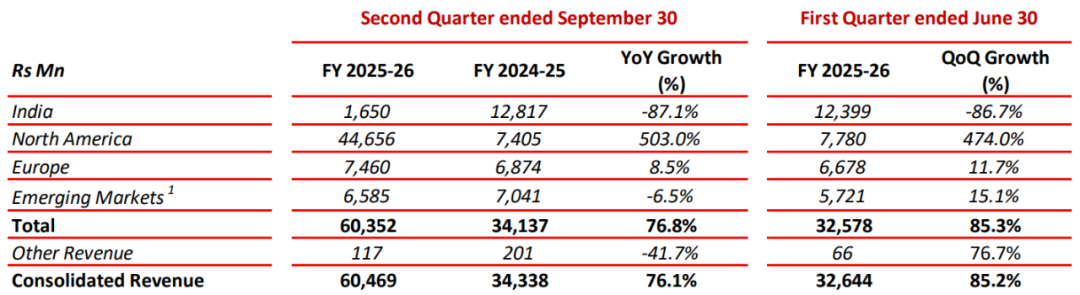
On December 16, Hansoh Pharma announced an unusual BD deal: granting Indian pharmaceutical company Glenmark the development and commercialization rights of Ameitini in "Belt and Road" countries and regions as well as Africa, Australia, and New Zealand. Hansoh will receive over one billion US dollars in regulatory and commercial milestone payments, along with tiered royalties based on net sales.However, for Glenmark, this is not the first time it has "acquired" innovative drugs in China.In September this year, Glenmark secured the global development and commercialization rights (excluding Greater China, Europe, the US, Japan, Russia, and some CIS countries) for Hengrui Pharma's newly approved HER2 ADC, Ricotrastuzumab, with an upfront payment of $18 million, potential milestone payments of nearly $1.1 billion, and sales royalties.Last year, Glenmark acquired the development and commercialization rights of PD-1 Envafolimab from Alphamab Oncology and 3D Medicines for a total of $700 million. The authorized regions include parts of Asia-Pacific, the Middle East, Africa, Russia, CIS countries, and Latin America.In fact, in the BD boom of the past two years, Biopharma's cooperation strategy has gradually expanded from simply "licensing-out innovative molecules to multinational pharmaceutical companies" to promoting the entry of already marketed drugs into broader and more diverse global markets. On this path, Indian pharmaceutical companies, which started with generic drugs and have established themselves through their global commercial networks and channels, have gradually become the preferred partners.Now, with the participation of Hengrui Pharma and Hansoh Pharma, two leading local innovative pharmaceutical companies, the trend has become clear:China's Innovative Drugs Are Leveraging Indian Pharmaceutical Companies to Open Up Emerging Markets。Set Sail with Indian Pharmaceutical Companies From the BD deal reached by Hansoh Pharma this time, Glenmark has obtained an exclusive license, allowing it to develop and commercialize Aumolertinib in the authorized regions (Middle East and Africa, Southeast Asia and South Asia, Australia, New Zealand, Russia and other CIS countries, as well as certain specific Caribbean countries covered by the agreement).Coincidentally, just three months ago, another leading Chinese pharmaceutical company, Hengrui Pharma, also reached a collaboration with Glenmark. Hengrui Pharma received an upfront payment of $18 million and is eligible for milestone payments related to regulatory and sales achievements, with the total deal amount potentially reaching up to $1.093 billion.Similar to the deal with Hansoh Pharma, Hengrui Pharma is also venturing into emerging markets. The agreement at that time stated that Hengrui Pharma granted Glenmark the exclusive rights to develop and commercialize Recombinant Trastuzumab worldwide, excluding mainland China, the Hong Kong Special Administrative Region, the Macao Special Administrative Region, Taiwan region, the United States, Canada, Europe, Japan, Russia, Armenia, Azerbaijan, Belarus, Kazakhstan, Kyrgyzstan, Moldova, Tajikistan, Turkmenistan, and Uzbekistan.From the perspective of the transaction subject, Hansoh Pharma's Aumolertinib is a third-generation epidermal growth factor receptor-tyrosine kinase inhibitor (EGFR-TKI) used for the treatment of non-small cell lung cancer (NSCLC). Hengrui Pharma's Recombinant Trastuzumab is China's first self-developed antibody-drug conjugate approved for HER2-mutated NSCLC patients. It is indicated for the treatment of adult patients with locally advanced or metastatic non-small cell lung cancer (NSCLC) that is unresectable, harbors HER2 (ERBB2) activating mutations, and who have received at least one prior systemic therapy.It can be said that,These two deals, whether in terms of drugs or the markets they target, are both core areas and regions of strength that Glenmark is highly proficient in and is currently focusing its efforts on.Glenmark's Q2 report for the fiscal year 2025-2026 shows that North America, Europe, and emerging markets (Russia and the CIS, Latin America, the Middle East and Africa, and the Asia-Pacific region) are its three major revenue-generating markets, accounting for more than 97% of its total revenue.
FigureSource: Glenmark FY2025-2026 Q2 Earnings
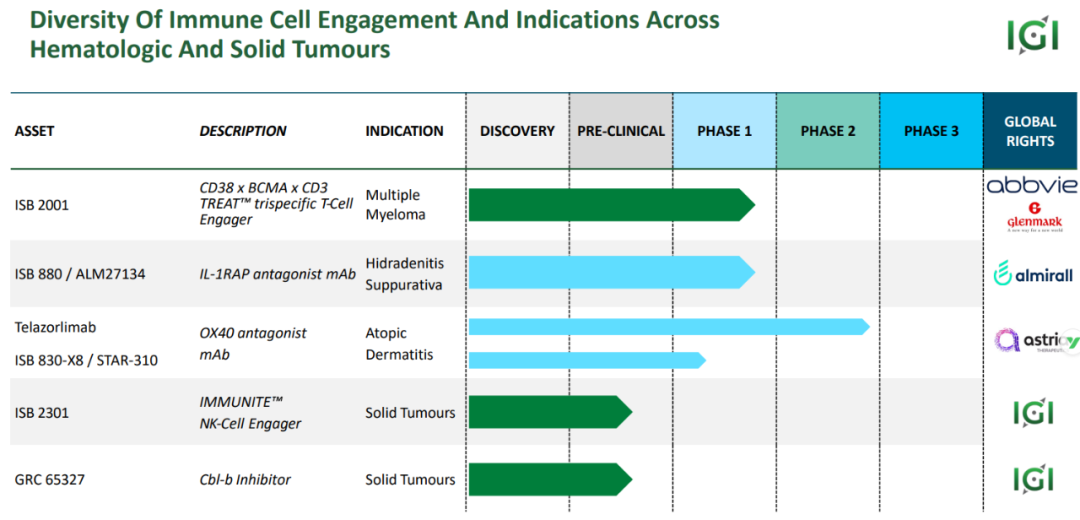
In terms of disease areas, Glenmark is one of the leading oncology companies in India. In its 2025 Investor Day report, it stated that it is currently launching several innovative products through collaborations and building a large portfolio of commercial products in emerging markets.Among them, QiNHAYO™ (Envafolimab) is the drug currently being launched by Glenmark. Notably, Envafolimab is a subcutaneously injectable PD-L1 antibody drug licensed to Glenmark by Alphamab Oncology and 3D Medicines at the beginning of 2024. Glenmark's Q2 report indicated that, to date, it has submitted marketing authorization applications for QiNHAYO™ in 14 markets, with the first commercial launch expected during the fiscal year 2026.In retrospect, the two deals between Hansoh Pharma and Hengrui Pharma undoubtedly aligned with Glenmark's strategic needs as they sought to enter emerging global markets, making it a "mutual convergence."Glenmark: What’s Behind the Company That Continuously Wins Favor from China’s Leading Pharma Firms as Innovative Chinese Drugs Go Global?Glenmark, established in 1977, is a global pharmaceutical company driven by R&D, with businesses covering branded drugs, generics, and over-the-counter medicines. It focuses on therapeutic areas such as respiratory diseases, dermatology, and oncology. From publicly available information, Glenmark has four R&D centers and ten world-class manufacturing facilities spread across five continents, with operations in more than eighty countries.Notably, in India's pharmaceutical market environment where companies predominantly focus on generics, Glenmark is one of the few Indian pharmaceutical companies developing innovative drugs for the global market.Glenmark once had two subsidiaries: Glenmark Life Science, which focuses on active pharmaceutical ingredients, and Ichnos Glenmark Innovation (IGI), which is dedicated to the research and development of oncology treatments.The former manufactures and sells APIs in major global markets, with the world's top 20 generic drug companies currently being its customers. In 2023, Nirma acquired 75% of Glenmark Life Sciences for an enterprise value of approximately 75 billion rupees and renamed it Alivus Life Sciences. This also marks that Glenmark is focusing its efforts on accelerating its innovative transformation; the latter has built five antibody product pipelines based on its proprietary BEAT protein engineering platform through both collaboration and self-research, with partners including pharmaceutical giants such as AbbVie.FigureSource: Glenmark2025 Investor Day Report
Notably, IGI is Glenmark's future lever in the oncology field. In the company’s 2025 Investor Day report, it stated that it would establish long-term investment exposure in developed markets through IGI. At the same time, it is also focused on introducing high-value innovative products to advance the construction of its commercial product pipeline.In terms of sales, Glenmark has a well-established distribution network in emerging markets, particularly in regions such as Asia, Africa, and Latin America, along with strong production capabilities and extensive experience in registration submissions. This is evident from its past performance and the rapid launch of Envafolimab in emerging markets. This also represents one of its core advantages that attract Chinese pharmaceutical companies.It can be said that Glenmark's "continuous procurement" of Chinese innovative drugs is, in fact, a precise alignment between the strategic demand for Chinese innovative drugs to enter the global market and the channel advantages of Indian pharmaceutical companies. The "two-way collaboration" surrounding emerging markets will also help Chinese innovative drugs reach a broader global market.……
Welcome to add the author for communication
Lin Yiling: lyl18819426740
Zhao Jingyi: sucde0307
Copyright © 2025 PHARMCUBE. All Rights Reserved.Disclaimer: The information in this WeChat article is for general reference only and should not be used directly as decision-making content. PharmaCube assumes no responsibility for any loss incurred by any party due to the use of the content in this article.