

Yinova Tech Files IPO Prospectus: Pioneering Mental Health Innovation with AI-Powered Non-Invasive Brain-Computer Interface Solutions Across 350+ Institutions

EBrain Scientific
Medical Electronic Instrument R&D and Manufacturer
As 2025 comes to a close, although China's official statistics on the birth population have not yet been released, according to projections by the United Nations Population Division, China’s birth population in 2025 is estimated to be approximately 8.71 million. This suggests that China’s population may experience four consecutive years of negative growth.
Corresponding to the "four consecutive declines" in population, in recent years, the scale of the population with mental health problems in China has continued to expand, facing a significant treatment and service gap. A report from an international study that Beijing Anding Hospital participated in showed that about 92% of people with severe mental illnesses in China have not received treatment. More notably, since the cancellation of the national psychological counselor professional qualification certification in 2017, the industry has yet to establish a clear entry standard and system, resulting in inconsistent quality of mental health services in China, weak public trust, and further exacerbating the contradiction between supply and demand.
Against this backdrop, the emergence of new technologies such as brain-computer interfaces and artificial intelligence has brought new possibilities to the development of the mental health services industry. Despite the current challenges faced by both mental health services and the supporting technologies of brain-computer interfaces themselves—such as information asymmetry, outdated tools, difficult-to-use data, and subpar user experiences—a group of companies deeply engaged in the cutting-edge interdisciplinary fields of brain science and digital health have already made breakthroughs under the joint efforts of the industry, moving into a new phase of product implementation and scenario integration.
EBrain Scientific Inc., which was established in 2022, is one of them.
EBrain Scientific leverages the technological power of brain-computer interfaces and artificial intelligence to break down existing barriers in the mental health services industry. By transforming EEG data into visible, audible, and usable health tools, it aims to shift psychological assessment from subjective experiential judgment to objective data-supported evaluation, thereby building a truly inclusive, intelligent, and easily accessible brain health management platform.
From science fiction to reality, brain-computer interfaces are entering a critical phase of accelerated technological iteration, expanded application scenarios, and the formation of an industrial ecosystem, creating new possibilities for the development and iteration of various industries. However, despite continuous advancements in technology and tools, their practical application in the field of mental health services still faces challenges.
On one hand, traditional mental health assessments heavily rely on subjective scales, lacking scientific and objective quantitative tools. Secondly, the public generally pays insufficient attention to the brain when focusing on mental health, neglecting its critical role as the "command center" of the body. Moreover, the current mental health service sector has yet to establish a unified and standardized industry system, urgently requiring productization and scaling pathways to enhance the accessibility and systematic nature of services.
On the other hand, "EEG data is difficult to collect, preserve, and interpret, which has led to the relatively limited application of brain-computer interface technology in mental health services, despite its development over many years," admitted Cheng Jiangtao, General Manager of EBrain Scientific. In addition, this kind of technology has long been confined to the fields of scientific research and medical treatment, and the development and application systems for the consumer market are still not well-established, making it difficult to truly integrate into people's daily lives.
Facing the real challenges in industry development and technology application, EBrain Scientific always follows the development path of "technology-driven, scenario implementation, and ecosystem co-construction," and is committed to creating an open, secure, and trustworthy comprehensive solution for brain-computer interfaces.
In practice, the company focuses on mental health issues caused by central nervous system (CNS) diseases. It collects and monitors EEG signals through brain-computer interface devices, and combines digital therapeutics (DTx) and neurofeedback training (NFB) as methods to build a multi-modal medical-grade brain health digital platform. This helps users systematically improve concentration and regulate emotional states through non-drug interventions, addressing the pain point of the psychological service industry's inability to be standardized.
In addition, when discussing different technical approaches of brain-computer interfaces, Cheng Jiangtao analyzed and pointed out: "The invasive approach has higher risks and is currently mainly suitable for certain severe disease treatment scenarios, and still needs time to overcome technical bottlenecks. In contrast, non-invasive technology has basically completed the initial accumulation and is entering a period of explosive growth in commercial applications, representing the mainstream direction of current market development."
It is reported that the 2-minute rapid EEG assessment model independently developed by EBrain Scientific can objectively quantify assessments for common psychological risks such as hyperactivity, insomnia, and emotional disorders. It has already been put into practical use in multiple scientific research units and rehabilitation institutions. The overall solution has also been implemented in more than 350 schools and research institutions across China, covering areas such as education and workplace health management, demonstrating broad application prospects and social value.
EBrain Scientific's self-developed multimodal medical-grade brain health digital platform consists of two parts: hardware and software. In terms of hardware, the company has launched an innovative device that integrates high-precision EEG acquisition and real-time processing — the multi-channel wireless brain-computer system.
The system adopts a wireless data transmission solution, featuring low latency and high stability, supporting synchronized multi-user measurements and parallel data analysis. The product is compatible.Dry Electrodes and Semi-dry ElectrodesTwo acquisition modes allow users to flexibly choose based on different scenarios, balancing comfort and signal quality. The device supports both simultaneously.Multimodal physiological signals such as brain waves, electrocardiogram, and electromyogramCollection and fusion analysis, and can achieve automated data processing and report generation through cloud services.
Currently, the product mainly includes two models: the 8-channel dry electrode wireless EEG device and the 32-channel dry electrode wireless EEG device, respectively targeting...Lightweight Application Scenarios and High-Precision Scientific Research and Medical Scenarios, forming a product matrix that covers different levels of demand.
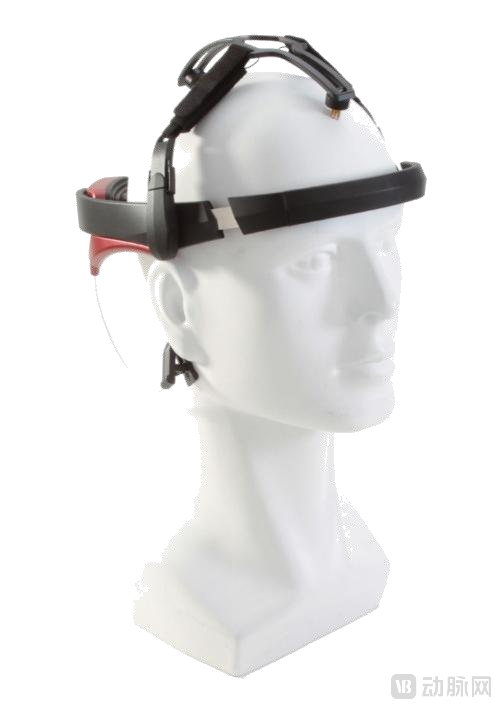
Multi-channel Wireless Brain-Computer System
Hardware is just the first step; EBrain Scientific's software platform is also a key part of its system construction, covering the entire closed-loop process from data collection, screening assessment to neurofeedback training.
Brainwave Acquisition SystemCapable of real-time analysis and visualization of digital EEG, with a user-friendly and intuitive interface. The system supports real-time data streaming and event synchronization recording, offers comprehensive data analysis and processing functions, and is compatible with various third-party data formats, effectively ensuring scalability for research and clinical applications.
Screening Evaluation SystemIntegrates digital clinical questionnaires with automated cognitive science paradigm operation modules. Based on AI algorithms, the system can generate structured brain function data evaluation reports and supports simultaneous EEG testing and comparative analysis for multiple users. Additionally, the system is compatible with various third-party cognitive testing tools, establishing a multi-dimensional and standardized evaluation process.
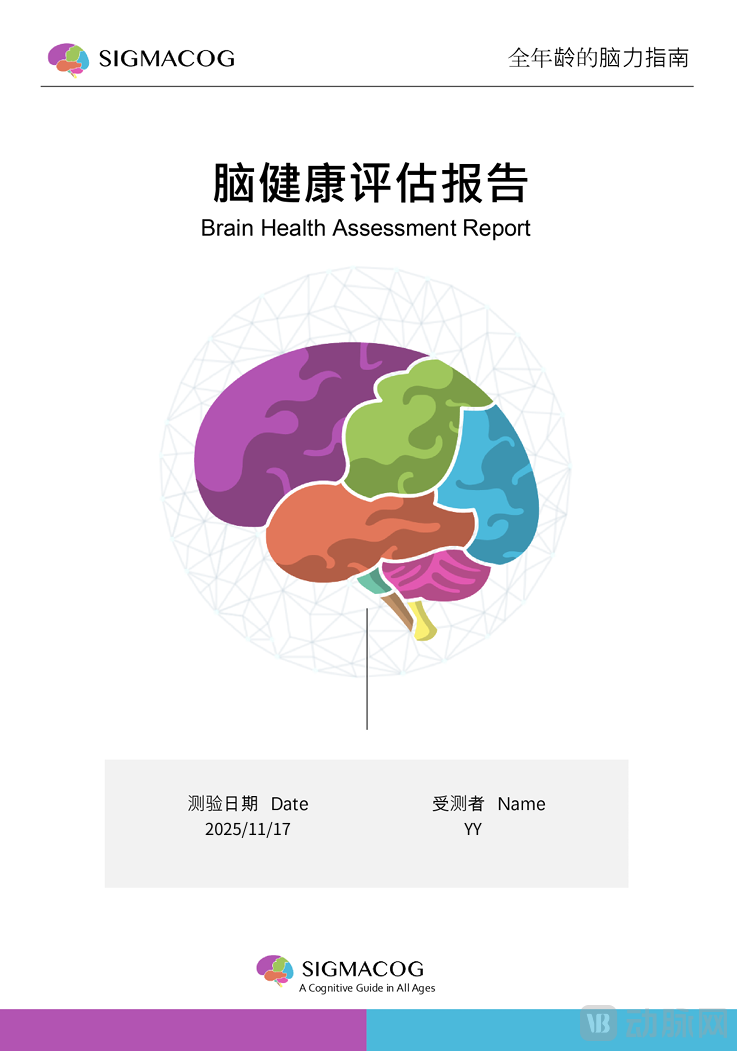
Brain Health Assessment Report
Neurofeedback Training PlatformBased on the neural plasticity mechanism, a variety of neurofeedback training paradigms targeting the brain surface and brain networks have been developed. For instance, users can control a virtual aircraft to navigate through obstacles by focusing their attention or influence visual feedback (e.g., flame size) by adjusting brainwave intensity, progressively optimizing specific brain functional states through interaction. The platform also supports personalized program customization based on individual goals and offers multi-user synchronous training, suitable for both individual rehabilitation and group intervention scenarios.
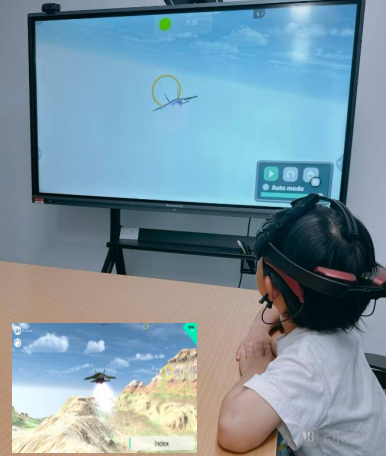
Neurofeedback Training Platform
Cheng Jiangtao further elaborated on the operating principle of this solution: "Users only need to use EBrain Scientific's multi-channel wireless brain-computer system and accompanying application software to collect resting-state EEG data within two minutes. After uploading it to the cloud, the system will automatically generate a detailed brain health assessment report and provide personalized interpretations of various indicators. In the field of mental health, this method has been proven to have auxiliary improvement effects on attention deficit hyperactivity disorder, anxiety, depression, etc., offering a new technical approach for mental health services."
In recent years, with the advancement of policies such as the "Healthy China 2030" Plan Outline and the Promotion Law on Mental Health Education in Primary and Secondary Schools, brain health and mental health services have become key priorities for governments at all levels, schools, healthcare institutions, and enterprises. At the United Nations Day Conference held in October 2025, "mental health" was listed as a core agenda item for the first time.
With significant advantages such as safety, low cost, and ease of deployment, non-invasive brain-computer interfaces are rapidly penetrating fields like medical rehabilitation and consumer electronics. According to data released by Precedence Statistics, the global brain-computer interface market size was $2.35 billion in 2023, with non-invasive products accounting for a whopping 81.93%, corresponding to a market size of approximately $1.93 billion. It is projected that by 2033, the market size of this segment will increase to $7.62 billion, maintaining an average annual compound growth rate of about 15.5% from 2024 to 2033.
However, whether it is mental health services or brain-computer interfaces, the commercial implementation has always been a challenge—factors such as high technical barriers, expensive costs, and limited application scenarios have restricted their large-scale promotion. In response, EBrain Scientific has adopted a step-by-step commercialization approach, gradually building a three-tier market system of "research-professional-consumer" and forming a diversified profit model including equipment sales, service charges, and software subscriptions.
The research market is the starting point and foundation of EBrain Scientific.By collaborating with universities and research institutions, the company has not only secured stable initial revenue but also accumulated valuable data and experience. Cheng Jiangtao revealed: "Currently, we have amassed over 1,500 cases of EEG data covering multiple ethnic groups in Taiwan, China, which can serve as an effective reference standard. Based on this data, the correlation coefficient between our evaluation results and clinical indicators is approximately 80%."
The professional services market is the company's current key expansion direction.EBrain Scientific has established local service teams in seven cities, including Nanjing, Suzhou, Shanghai, and Beijing, and has collaborated with local mental health institutions to incorporate EEG assessments into their service processes. Cheng Jiangtao illustrated this with the example of Suzhou: "This year, the company undertook a psychological screening project at a university in Suzhou, completing EEG data collection for 1,300 individuals within a month. After obtaining the data, the system categorizes the results into three levels—red, yellow, and blue—based on risk severity, cross-references them with scale results, and ultimately generates an evaluation report for the university, helping it more accurately identify groups that require focused attention."
From a long-term strategic perspective, the C-end market is the core direction for the company's future development.With the advancement of technology and the reduction in costs, consumer-grade brain-computer interface products are gradually becoming a possibility. In this trend, Cheng Jiangtao is particularly focused on the application scenario of sleep monitoring: "Compared to smartwatches or smartphones that monitor sleep through the user's breathing sounds, brain-computer interfaces can directly read sleep rhythms, more directly reflecting their sleep state, thereby providing more precise feedback and intervention."
"For innovative brain-computer interface companies, it is important not only to focus on existing markets but also to actively explore new application areas, as this is the way to bring this technology to a broader population," said Cheng Jiangtao.
In the closed loop from data collection to service implementation, what EBrain Scientific explores is not only a business model but also a practical path for brain-computer interface technology to truly serve the general public. This effort pushes the industry to evolve from relying on subjective scales toward a more scientific, digital, and traceable direction. In the future, the company will continue to deepen cooperation with various links in the industry chain, building a bridge that connects technology with demand. Together, they will promote brain-computer interface technology to move from laboratories to clinical settings, and from concept to universal accessibility.