

Emerging Economies Poised for Leapfrog Growth in Participatory Healthcare, Says EY Report
In the transformation of the traditional healthcare industry, the prevailing mindset has been that technology drives industrial development. This is because human needs for medical treatment are less volatile and involve lower autonomy compared to consumer demands. However, a recent survey report by Ernst & Young indicates that with the integrated development of traditional and non-traditional sectors, healthcare institutions need to transition toward participatory care. While other industries have rapidly shifted to a consumer-oriented model, the healthcare sector remains significantly lagging behind.
In early 2018, EY conducted a survey of 2,455 consumers, 152 physicians, and 195 executives to gain a deeper understanding of the beliefs and attitudes of U.S. consumers and healthcare professionals toward technology, as well as how it can improve health outcomes and interactions among patients, providers, and practitioners. EY posits that the future direction of healthcare discourse will no longer center on whether the healthcare industry can benefit from informatization—a topic now considered obsolete. Instead, “patient-mediated” forces—the power of patient and consumer engagement—will play a leading role in the profound transformations reshaping healthcare. This article was compiled and edited by VCBeat (WeChat ID: vcbeat).
How to Define Participatory HealthcareParticipatory healthcare profoundly reflects the significant shifts in people’s healthcare needs, as individuals increasingly demand greater convenience, flexibility, and self-directed, personalized healthcare experiences. This represents a fundamental transformation in the patient-provider relationship, wherein individuals engage as equal and accountable partners alongside their professional healthcare teams. Empowered by knowledge, skills, and confidence, individuals are better equipped to sustainably participate in the healthcare system.
By making participatory health a pillar of the system and an integral part of healthcare’s core business, the healthcare industry will enter a markedly different future.
A new health ecosystem will emerge from the convergent integration of traditional and non-traditional medicine. This ecosystem can integrate specialized medical knowledge into professional networks and platforms. New pathways for health and healthcare will arise between consumers and a system that transforms the medical framework into an online, networked, and participatory model.
It is evident that consumers hold a more comprehensive view of health, encompassing social, economic, and mental well-being. The desire to improve health, coupled with the support of convenience, has driven consumer engagement with digital health technologies. Technology is regarded as one of the key enablers in the lifelong journey of health. An EY survey found that consumers crave an easier and more convenient experience, with 56% of respondents having used some form of technology to communicate with healthcare providers.
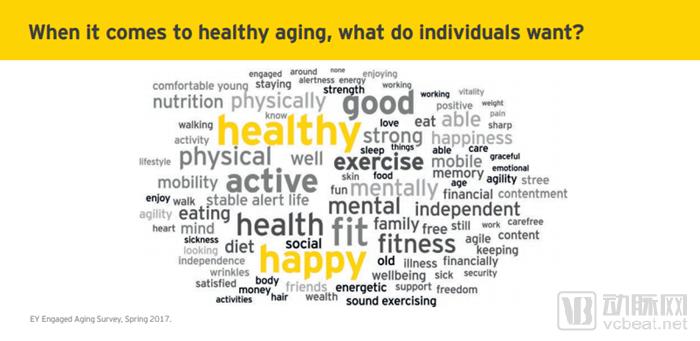
In addition to the endogenous changes driven by consumption upgrading, the digital revolution has also transformed the possibilities of healthcare. Low-cost, high-speed mobile connectivity and smart devices have redefined how consumers manage their health and interact with the medical system. Sensor technologies and mobile solutions are reshaping how the healthcare industry connects and communicates with patients. In participatory health, it is the convergence of all these tools that is rebuilding a scalable healthcare ecosystem.
Among the key drivers pushing healthcare toward a consumer-centric model, the foremost is the advent of an aging society. Increased longevity and a larger elderly population will place immense pressure on healthcare systems. As demand for medical care rises, it will also undergo significant changes.
Data from the United Nations’ World Population Ageing 2015 report indicates that by 2050, one in five people will be aged 60 or older. This aging trend will drive growth in both the demand for and expectations of healthcare systems.
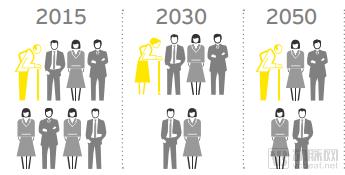
World Population Ageing 2015
In some regions, more than 25% of the population will be over 60 years old by 2030. In 2015, the global market for assistive devices for the elderly and people with disabilities was valued at $14 billion, and it is expected to exceed $26 billion by 2024.

World Population Ageing 2015
Proportion of Population Aged 60 and Above by Region in 2030. Africa: 6%; Latin America and the Caribbean: 17%; Asia: 17%; Oceania: 20%; South America: 25%; Europe: 25%. Showing the proportion of population aged 60 and above in 2030.
Secondly, in an aging society, people's medical needs have also undergone multi-level changes. Chronic diseases and extended lifespans have increased the cost burden at the end of life. Healthcare institutions need to address the gap between lifespan and healthspan.
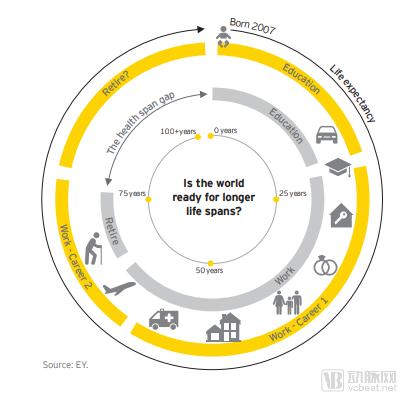
It is evident that there is an approximately 25-year gap between life expectancy and actual health status. Narrowing the disparity between healthy life expectancy and overall life expectancy is now of paramount importance. Closing this gap yields significant benefits: it reduces healthcare costs; enables society to redirect financial resources toward other investments; allows businesses to maintain a more efficient workforce; and empowers individuals to pursue ongoing goals while sustaining both physical and financial well-being.
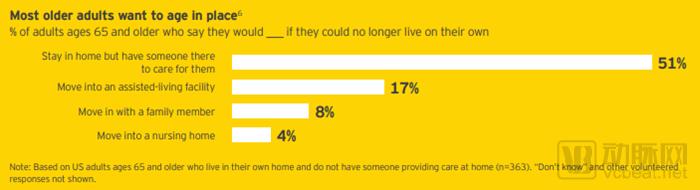
In terms of caregiving, EY’s report indicates that approximately 51% of older adults wish to remain at home with care support when they are no longer able to live independently. Seventeen percent prefer moving to facilities offering assisted living, while only 4% opt for nursing homes. Addressing population aging requires focusing not merely on medical treatment (“yi”), but primarily on long-term care and support (“yang”).
Changes in the Middle Class
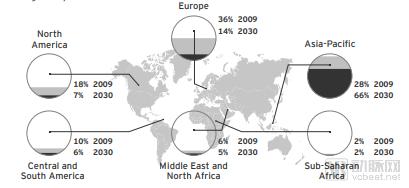
The middle class will grow from 1.8 billion in 2009 to 4.9 billion in 2030, leading to higher consumption expectations. The Asia-Pacific region will experience growth, with two-thirds of the expanding middle class in the Asia-Pacific region residing there by 2030.
Data from the World Bank in 2014 shows that there is still huge room for growth in healthcare expenditure in middle-income and low-income countries. With the growth of the middle class in emerging economies, they will bring more health management needs, promoting a prevention-oriented healthcare system. Global per capita health expenditure indicates that developing countries still have significant growth potential in terms of both market capacity and incremental market expansion. World BankGlobal Per Capita Health Expenditure (2014): High-income countries spent $5,251 per capita; middle-income countries spent $292; and low-income countries spent $37.
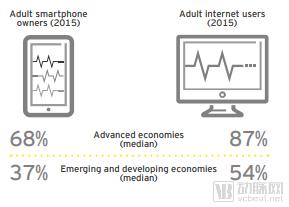
The utilization rate of electronic devices will vary significantly between 2030 and 2060.A 2016 report from the Pew Research Center shows that in 2015, mobile phone ownership reached 68% in developed countries and 37% in developing countries. Internet usage rates were 87% in developed countries and 54% in developing countries.
Approximately 42% of the elderly population aged over 65 own smartphones, a figure that stood at merely 13% in 2013. Today, about 64% of seniors use the internet, representing a 55-percentage-point increase over the past two decades.
Adults aged 65 to 69 are twice as likely as those aged 80 and older to report having used the internet or broadband at home, and approximately four times as likely to report owning a smartphone.
The three factors mentioned above are largely positive forces driving the transformation of healthcare. Meanwhile, shifting toward a consumer-centric model is a necessary step to overcome the deep-seated ailments of the healthcare system. The long-established system of primary, secondary, and tertiary care is increasingly ill-suited to address the challenges posed by an aging population, as the disease burden shifts toward chronic conditions such as diabetes, musculoskeletal disorders, and cardiovascular diseases. Chronic diseases and increased longevity have extended the cost burden at the end of life.
The growing middle class in emerging and developing economies will drive increased demand by raising expectations for health consumption and influencing health-related outcomes through lifestyle changes. Furthermore, broader contextual factors—including self-determination, social and crowd-sourced networks (such as VCBeat), and a cultural shift toward sharing and participation—are transforming the organization and operation of healthcare systems.
While the current progress and growth in the healthcare market are optimistic, EY’s report suggests that more changes are needed to achieve a patient-centric healthcare ecosystem.
Patient-oriented reform requires the integration of all tools to achieve a patient-centric ecosystem; however, the embarrassing reality is that, to a large extent, the current application of digital health technologies is limited to specific initiatives worldwide, targeting particular conditions, procedures, or management issues.
In rapidly evolving, early-stage environments, it makes sense to adopt an incremental approach, selecting “battles worth winning” with the goal of achieving actionable outcomes. For the hardest-to-reach consumers—whether in underserved areas or among those reluctant to engage in health management—bridging the “last mile” has clearly become a focal point for disruptive innovators, healthcare professionals, technology experts, and payers.
Emerging and developing economies are likely to take the lead, as they are not constrained by existing infrastructure or vested interest groups seeking to maintain the status quo. Delivering participatory healthcare and welfare at scale is extremely complex. What remains unclear is how national, regional, or local healthcare systems will transition—whether by integrating participatory health into existing frameworks or by completely replacing current medical systems with it. The rationale for change is currently being articulated, but in an industry known for its slow pace of transformation, this will constitute a profound journey of change for the entire system, professionals, consumers, and patients alike.
Change may first occur in emerging economies, but the future adoption of advanced technologies built on networks or platforms that facilitate organizational transactions and interactions is important for all economies—whether they are emerging, developing, or developed.
Economic, epidemiological, and demographic shifts mean that traditional healthcare delivery systems have failed to address many of the challenges facing healthcare in the 21st century. Rising costs, consumer expectations, new technologies, and increasing globalization are placing immense pressure on the health sector, demanding better coordination and response within economic constraints.
An EY survey found that consumers desire a simpler and more convenient experience, with 56% of respondents having used some form of technology to communicate with healthcare providers. Meanwhile, 44% of consumers have not yet used any electronic devices to interact with their care teams.
On the Patient Side
50% of patients reported feeling comfortable contacting their physicians via electronic tools.
20% of respondents reported using wearable devices to track health and fitness data in the past year.
Consumers are also welcoming the use of electronic devices to communicate with doctors in the future.
56% of respondents expressed willingness to use some form of technology products to communicate with caregivers
33% of survey respondents indicated their willingness to use smart devices to send messages to physicians.
36% of respondents expressed willingness to use home diagnostic devices and test kits, as well as to share the resulting information with their physicians.
21% of respondents indicated their willingness to receive expert advice via video.
Americans are willing to share a range of health-related information with their physicians, including medical history, but they remain hesitant to disclose certain types of data. Data on people’s daily lives and physical activity can help doctors gain a better understanding of patients by revealing the small, health-impacting decisions made outside the clinical setting.
EY’s report highlights several ways to incentivize patients to share their data. While concerns about privacy persist, respondents also indicate that appropriate measures can encourage data sharing. Sharing data to improve convenience (e.g., reduced wait times) is valued more highly than cost savings (61% vs. 55%). Sharing lifestyle information has become more acceptable (74% agreement) when it is perceived as a means to help physicians provide more comprehensive care. Curiosity serves as a powerful motivator; some individuals are willing to share dietary and exercise information if they receive personalized insights in return.
On the Physician Side
Doctors generally believe that digital health technologies will effectively promote the overall health of the population. Compared with the rich stories told by our genes and environment, doctors still have access to only a limited amount of information about us.
Physicians view connected sensors capable of providing routine biometric data and home-based genetic testing as a gateway to a broader understanding of their patients.
71% of physicians stated that technology-based personal sensors have a positive impact.
68% of doctors believe that home diagnostic devices can deliver better outcomes.
67% of physicians believe that smartphone apps capable of recording health data can lead to better outcomes.
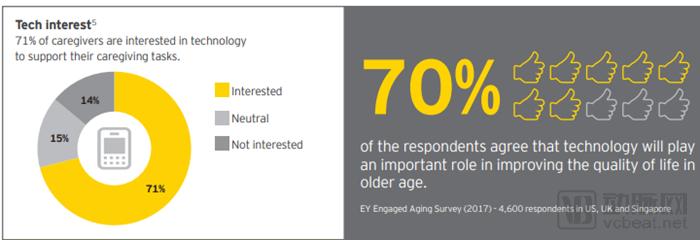
71% of healthcare professionals expressed interest in using technology to assist with nursing care. 70% of respondents indicated that technology plays an important role in improving the quality of life for the elderly.
Companies embracing self-reform are reaping benefits: the more actions enterprises take, the more likely they are to stand out in competition, particularly in clinical performance and patient experience. In fact, over the past 12 months, healthcare organizations that have adopted technologies to enhance patient experience have been better positioned for the future. Among companies that launched performance optimization initiatives last year, 70% reported improved customer experience as a key benefit, while 58% cited improvements in clinical outcomes and customer relationships.
However, healthcare administrators also face a perennial dilemma: they are passionate about the quality of care patients receive, yet simultaneously concerned about rising healthcare costs.
In an early 2018 EY survey of 195 U.S. executives, 63% had already begun addressing medical errors; the same proportion reported implementing new cost-improvement measures. Furthermore, 56% had either implemented or were planning initiatives focused on healthcare productivity and internal process improvements.
According to a recent report by Rock Health, digital health funding has grown annually since 2011, with 2017 being the best year on record. The most heavily funded value propositions include disease monitoring, technologies that improve the R&D process, on-demand healthcare services, and solutions that empower consumers to better access and understand their health data.
Although 46% of companies seeking to improve patient experience report facing funding shortages during transformation, with another 35% confronting unknown risks and 32% of executives expressing concerns over privacy issues, overcoming these obstacles, the EY report offers an encouraging message.
The more proactive a healthcare enterprise is, the more likely it is to perceive itself as being at the forefront of competition, particularly in terms of clinical outcomes and patient experience. Health companies should continue to focus on integrating digital technologies that are built upon trust-based relationships with consumers and that strengthen the bond between patients and providers.
The EY report also presents a blueprint for the future of healthcare:
We have observed shifts in other sectors as well, such as the sales of books and other consumer goods, and the transition of video entertainment from physical assets to streaming. Healthcare companies must address this growing demand; otherwise, they risk ceding their customers to new entrants, many of whom seek to create value by eliminating intermediaries in the value chain or reshaping the delivery of healthcare services. In the future consumer-centric health ecosystem, focusing on improving the patient experience will be critical. Healthcare companies have already responded.
Jacques Mulder, Head of Health at EY US, concluded by stating, “The key to a better health ecosystem lies in the vast amount of digital health data we already possess and are poised to collect. Whether we are discussing improved health outcomes, patient experiences, or internal operations, the technologies that enable us to capture, integrate, and analyze data will prepare us for a future centered on consumers and focused on prevention.”