

Xiamen University Affiliated First Hospital Achieves HIMSS O-EMRAM Stage 7, Becoming a Rare 'Dual Stage 7' Hospital
From June 26 to 27, 2018, an expert panel from HIMSS Analytics conducted an on-site review of the First Affiliated Hospital of Xiamen University for HIMSS O-EMRAM (Outpatient) Stage 7 certification. The review team included Mr. Philip W. Bradley, North America Director of HIMSS Analytics; Ms. Liu Jilan, Executive President of HIMSS Greater China; and Dr. Sun Xin, Director of the Medical Affairs Department at Guangzhou Women and Children’s Medical Center. Over the two-day assessment, the panel comprehensively evaluated the hospital’s system construction and application through presentations, document reviews, interviews, and on-site visits. The experts confirmed that the First Affiliated Hospital of Xiamen University met the requirements for HIMSS O-EMRAM (Outpatient) Stage 7, becoming one of the few hospitals worldwide to achieve “Dual Stage 7” status.
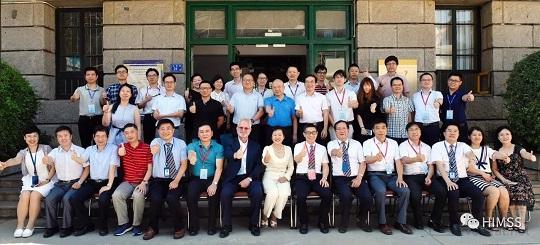
Ms. Liu Jilan pointed out that, compared to the inpatient model, HIMSS’s outpatient electronic medical record (EMR) model places greater emphasis on patient engagement, chronic disease management, and population health management, building upon a foundation of digitalization and intelligence. Through patient portals (apps), seamless connectivity is achieved among healthcare providers, medical institutions, and patients. This not only makes medical consultations and payments more convenient and efficient for patients but also enables medical institutions to extend beyond hospital walls, providing services such as remote diagnosis and treatment, precise follow-up, disease prevention, health education, and health promotion. This aligns perfectly with the core value and purpose of the “internet hospitals based on medical institutions,” which the Chinese government is currently vigorously promoting.
She expressed her delight at seeing further achievements in the informatization construction of The First Affiliated Hospital of Xiamen University. Building upon its attainment of HIMSS Inpatient Stage 7 certification in 2017, the hospital has achieved significant progress in leveraging modern information technology to optimize medical service workflows, facilitate patient access to care, and enhance the quality of outpatient services.
Centered on “Internet + Healthcare,” the hospital has launched a series of highly effective new initiatives. The hospital has vigorously developed its Internet Hospital, leveraging network technologies to establish an integrated online-offline medical service model that covers pre-consultation, during-consultation, and post-consultation phases, thereby further enriching the scope of medical services. Additionally, the hospital has introduced mobile smart applications for both the public and physicians, breaking down barriers between internal and external networks to enable “handheld healthcare” for the general public and provide patients with personalized diagnosis and treatment services.
By connecting with patients via mobile applications and linking to government platforms and other healthcare institutions through Health Information Exchanges (HIE), The First Affiliated Hospital of Xiamen University has initiated effective trials and explorations in the fields of artificial intelligence and big data applications. Particularly commendable is the hospital’s ability to effectively demonstrate the dividends of informatization through models of cost-benefit and outcomes analysis.
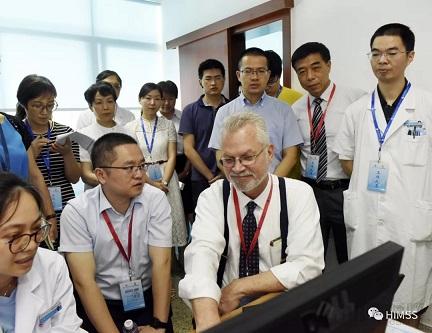
Philip W. Bradley affirmed the achievements of the First Affiliated Hospital of Xiamen University. He noted that the hospital has a sound governance mechanism, with clinical frontline staff highly engaged in the hospital’s informatization initiatives. Building upon its existing electronic outpatient order entry system, the hospital has comprehensively implemented structured electronic medical records (EMRs) for outpatient care. On top of its prior paperless inpatient diagnosis and treatment processes, it has now achieved paperless workflows across all outpatient services. Physicians can access patients’ complete medical records from within the hospital, as well as all diagnostic and laboratory reports and imaging studies from both inside and outside the institution, thereby establishing a relatively comprehensive patient health record.
Meanwhile, structured electronic medical record (EMR) templates convert previously underutilized textual data into discrete data sources, facilitating the use of patient information by information systems. This lays a solid foundation for subsequent applications of artificial intelligence and big data. The hospital has established its own clinical knowledge base and implemented outpatient clinical pathways, thereby improving the quality and efficiency of medical care.
Director Sun Xin stated that the hospital’s Health Examination Center has established a “one-stop” service model, ensuring a smooth workflow and achieving seamless information interoperability between the examination center, outpatient clinics, and inpatient departments, thereby enhancing efficiency and improving the patient experience.
Leveraging the Citizen Health Information System and the External Connectivity Platform of the Xiamen Municipal Health and Family Planning Commission, the hospital has not only enabled access to regional data—such as medical images, laboratory and diagnostic test results, and outpatient medical records—but also facilitated the direct integration of these data. This approach minimizes redundant examinations for patients, prevents the waste of medical resources, and ensures continuity of care. By establishing a robust data platform, the hospital effectively conducts mining, extraction, integration, and utilization of clinical big data. This capability allows hospital management to access comprehensive institutional data anytime and anywhere, while also enabling analysis and prediction of various hospital operations. Furthermore, it supports monitoring of quality indicators related to patient safety, helping administrators identify issues, propose solutions, enhance the efficiency of quality management, and improve the quality and safety of medical care, thereby laying a solid foundation for precision medicine at the hospital.
President Jiang Jie of the First Affiliated Hospital of Xiamen University stated: “Guided by HIMSS, the hospital has made effective investments in information technology construction, yielding substantial returns in patient safety, service quality, work efficiency, cost-effectiveness, and the experiences of both healthcare professionals and patients. In 2017, we achieved HIMSS EMRAM (Inpatient) Stage 7 certification, ranked 8th among China’s Top 100 Hospitals for Healthcare Information Connectivity (HIC100), and passed the National Health and Medical Information Interconnectivity Standardization Maturity Assessment at Level 4 Grade A, thereby becoming a leading pioneer in advanced hospital IT infrastructure.”
Achieving HIMSS EMRAM (Inpatient) Stage 7 signifies that the hospital has made remarkable progress in liberating healthcare professionals’ productivity and substantially improving efficiency and the quality of medical services. The recent attainment of HIMSS O-EMRAM (Outpatient) Stage 7 accreditation marks a new milestone for the hospital in facilitating patient access to care, innovating service delivery models through internet-based healthcare, establishing a comprehensive, whole-person, and continuum-of-care model for medical services and health management, and enhancing the overall patient experience. By leveraging “Internet + Healthcare,” the hospital has constructed an all-encompassing, end-to-end network for patient medical services.
We can confidently state that, through HIMSS implementation, the hospital’s level of health information technology has taken a leading position both domestically and internationally. The excellence and advanced nature of the HIMSS EMRAM rating model have been fully demonstrated. Moving forward, we will leverage our existing high-standard, high-level IT infrastructure to achieve new milestones in building smart hospitals, particularly in the areas of artificial intelligence, internet hospitals, and big data, thereby continuously enhancing the sense of gain for both patients and medical staff. Committed to transforming healthcare through information and technological innovation, we remain steadfast on this journey.
Source:HIMSS Official WeChat