

DXY Integrates AI, Physician IP, and Doctor-Patient Integration to Redefine Healthcare Connectivity
Tencent serves as a connector across industries, with involvement in healthcare, manufacturing, technology, and more. As a connector within the healthcare industry, how does DXY facilitate connections among hospitals, patients, and enterprises?
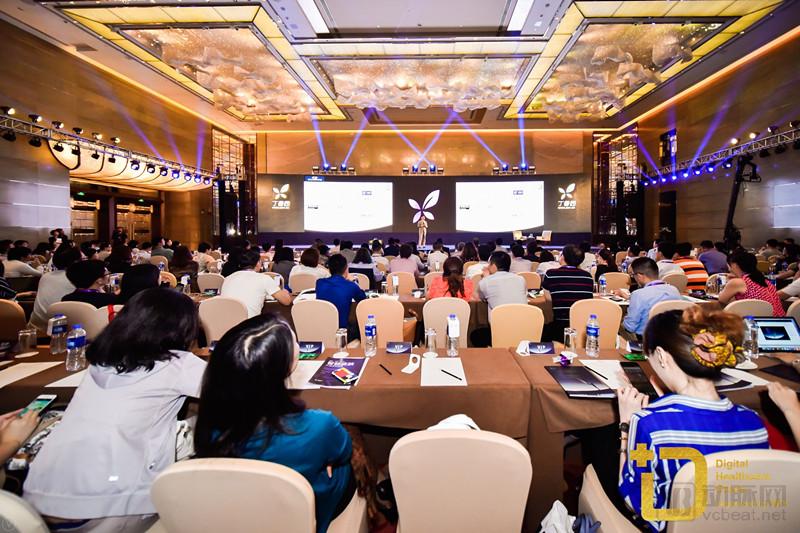
On June 28, at the 5th Digital Healthcare China (hereinafter referred to as DHC) Summit hosted by DXY, Li Tiantian, Founder and Chairman of DXY, and Zhang Wei, Vice President of DXY and Head of the Enterprise Business Division, provided a detailed interpretation of this matter.
Zhang Wei believes that in China’s corporate culture, a five-year period represents both the development cycle of an enterprise and that of the industry as a whole. Looking back on the past five years, we observe the following: In 2014, internet healthcare began to rise; in 2015, patients gradually became the focus of attention throughout the entire healthcare industry chain, recognized as a group in greater need of support and care; in 2016, driven by advances in smart technologies and mobile devices, the healthcare sector underwent restructuring; and in 2017, the surge in artificial intelligence and the prominence of physicians’ personal brands laid the foundation for an integrated doctor–patient model, ushering in a new phase that will drive industry-wide transformation and development. At this juncture, only through multi-stakeholder collaboration can the healthcare industry establish more sustainable mechanisms for enhancing value and improving experience.
In the healthcare industry, data is at the core, driving medical services. Li Tiantian, founder and chairman of DXY, believes that data serves four major functions, guiding various stakeholders in the industry to deliver services.
First, assess and measure progress by examining the results of data-driven measurements.For example, weight and waist circumference should be measured before and after weight loss; the results will guide the physician in determining the next steps for the patient—whether to increase physical activity or maintain the current regimen.
Second, data is interoperable and can be jointly utilized by professionals across different industries.This is akin to a hotpot, where diverse ingredients are cooked in the same pot to cater to varying preferences. Whether they are healthcare providers, hardware manufacturers, pharmaceutical companies, insurance firms, or hospitals, all stakeholders can identify entry points into healthcare services through this dataset. In this process, those who truly possess the capabilities for data collection, analysis, and commercialization will emerge as the most valuable partners in collaboration.
Third, the data results are instructive; they serve as a compass, guiding those lost in the forest toward the way out.Dingxiang Yuan’s WeChat official account boasts a massive follower base. By leveraging data analytics to identify physicians’ areas of interest and current trending topics, the platform achieves exceptionally high click-through rates, with nearly every article surpassing 100,000 views and some even reaching tens of millions.
Fourth, it serves a filtering function. By adopting the user’s perspective and segmenting the user base—much like customers selecting cherries, inevitably choosing those that are large and bright red—we can identify individuals who genuinely trust our brand and endorse our products. These individuals are then recruited as the initial cohort of seed users. This process prioritizes not the quantity of users, but rather cultivating their adherence to and engagement with the platform, ultimately transforming them into super users, i.e., loyal advocates.
Building on this core mission of serving physicians, DXY has established multiple business lines targeting hospitals, medical institutions, commercial clients, and the general patient population. Through years of accumulation, DXY has amassed extensive core data from both healthcare providers and patients. By leveraging big data analytics and comparison technologies, the company drives the sustained, rapid, and healthy growth of its various business operations, continuously creating value for society.
In essence, the integration of doctors and patients is also the core strategy of DXY. Zhang Wei explained that building a complete doctor-patient integrated platform model requires four key components: physician education, doctor-doctor interaction, doctor-patient interaction, and patient management. Data is indispensable to every aspect and every step of this process.
Taking doctor-patient interaction as an example, on April 27 this year, the first comprehensive AI-assisted diagnosis and treatment platform for dermatology in China, jointly developed by DXY, The Second Xiangya Hospital of Central South University, and Ruiqi Software, was officially opened to clinicians, leveraging data and artificial intelligence technologies to support physicians.
Yin Heng stated that the intelligent skin system is currently accessible to physicians, assisting in the diagnosis of approximately 85 dermatological conditions. This range is expected to expand to 300 conditions within the next one to two years, essentially covering common and recurrent diseases. Once the accuracy reaches a certain threshold, public access will be enabled to facilitate healthcare-seeking for patients with skin conditions.
What if AI makes a medical error? Yin Heng explained it this way: Currently, AI is not replacing doctors, because what AI provides is a diagnostic hint. The final diagnosis of the disease requires the doctor to make judgments and decisions based on the patient's medical history and the initial diagnosis results provided by AI.One thing is certain for the future: if you do not use AI as an aid, you are highly likely to be replaced by physicians who leverage AI tools.
Regarding doctor-to-doctor interactions, Zhang Wei believes that “with the widespread adoption of innovative AI technologies and business models, the entire healthcare system will undoubtedly improve.”
Doctors are the most critical factor in the entire healthcare process and the true source of value for patients. It is not only about diagnosing diseases but also providing emotional support; these two elements together form the core of what is truly needed to help patients treat their illnesses.
Looking back, the entire ecosystem of the healthcare industry has been evolving alongside policy and economic developments. As integral participants in this broader ecosystem, physicians are undoubtedly undergoing changes as well. Moreover, physicians possess a unique intellectual property (IP): their distinctive professional competence in diagnosing and treating patients.
Professor Wu Shiwen, a Departmental Professor in the Department of Neurology at the Chinese PLA General Hospital, presented real-world cases from within the hospital to demonstrate how departmental brand building capabilities have been enhanced in the context of “Internet Plus.” He noted that Western medicine has a characteristic tendency where patients recognize the institution rather than the individual physician. Even physicians from top-tier hospitals may lose many patients if they practice at smaller or less renowned institutions. Therefore, he emphasized the importance of establishing personal brands, whether through academic conferences or science popularization and education via WeChat official accounts.
In 2012, he partnered with DXY to establish the Neurology Time Conference, leveraging DXY’s communication channels and influence for pre-conference promotion through platforms such as WeChat and DXY Open Courses. The initiative was widely acclaimed across China, with many regarding it as a refreshing change in the landscape of medical academic conferences in the country.
Subsequently, they organized various other conferences, such as Stroke Time and Parkinson’s Time. This has now evolved into a brand known as “One City, One Doctor.”
Subsequently, we collaborated on a five-minute elevator pitch and explored partnership models. We examined how Chinese stakeholders can establish partnerships and engage in scientific research collaborations, moving away from traditional cooperative frameworks. Additionally, we established a patient registry for Duchenne Muscular Dystrophy (DMD) and Becker Muscular Dystrophy (BMD) in China. “It is precisely because of these efforts that we spearheaded the development of PDC124, a gene therapy drug, while leveraging WeChat official accounts and self-media platforms to provide patient education and support, thereby assisting numerous patients.”
Over the past few years, DXY has collaborated with numerous partners to serve physicians and patients through innovative models, implementing more than 300 large-scale projects annually. Last year, ten MedDigital Innovation Awards were conferred upon exemplary cases of integrated physician-patient care. Among these awardees, ten focused on physician education, two on patient education, and two on comprehensive project management.
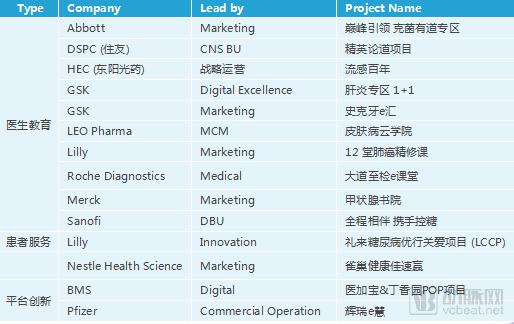
The MedDigital Innovation Award is an evaluation program for medical digitalization innovation projects, initiated and organized by DXY, a value connector in the healthcare industry. As China’s largest social and academic platform for physicians, DXY collaborates with healthcare enterprises to implement hundreds of digitalization projects each year. Through recommendations, nominations, and project summaries, these initiatives are comprehensively assessed across multiple dimensions—including data metrics (e.g., UV/PV), content quality (quality, update frequency, format), and innovativeness (business model, platform, strategy)—to identify outstanding annual projects and confer the MedDigital Innovation Award.
MedDigital Innovation Award, designed to recognize and promote the sharing of outstanding industry cases and successful experiences, encourage digital collaboration and innovation in the healthcare sector, and jointly deliver higher-value services to doctors and patients.
Taking the Abbott–Kejun Youdao Zone as an example, online and offline integration is leveraged to expand expert resources. This approach primarily involves identifying aligned topics based on experts’ research interests and academic hotspots, recording online interviews and open lectures; holding offline summits and utilizing digital methods for dissemination, exposure, and retention; providing experts with differentiated platforms for showcasing their expertise and multi-channel personal IP exposure, thereby fostering conceptual understanding from top to bottom and facilitating hands-on offline practice.
Based on the results from April 19, 2017, to May 31, 2018, the dedicated section achieved a total of over 18,000 page views (PV) and more than 4,500 unique visitors (UV), with WeChat article readings exceeding 25,000. These figures all surpassed the target KPIs by over 50%. Furthermore, 50% of users engaged in deep browsing, with an average session duration of 2 minutes and 57 seconds, outperforming similar sections.
In terms of platform innovation, it is Pfizer e-Hui, with its operational model—
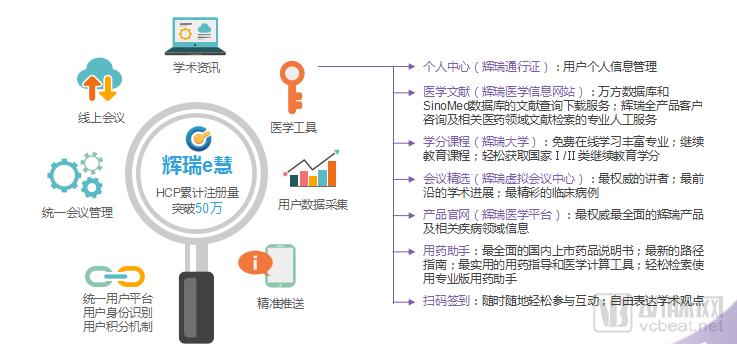
Zhu Lipi, Head of Commercial Operations at Pfizer China, shared her insights on the future trends of this model:
First, new technologies will be integrated into every solution within our commercial operations.
Second, everything is driven by data.
Third, with costs rising continuously, labor-intensive operations face significant cost challenges. Therefore, leveraging digital solutions to optimize business operations has emerged as another key trend. Sales teams in Europe and the United States are shrinking; for instance, some European countries no longer have sales personnel, and Australia also operates without a local sales team.
In China, the focus has been on the sales and marketing market. With their internal customer base gone, how can they transform? “Perhaps shifting towards helping and better serving doctors is one direction for transformation, and also one of the future models,” Zhu Lili frankly stated.