

Can Rapid Expansion Models Succeed in China's Dental Chain Market? Key Differences from the $190 Billion US and European Markets
In the first half of 2018, the dental services sector heated up again, with multiple chain brands securing substantial financing or implementing new strategic layouts.
In January, Moore Dental announced the completion of its Series B financing round, amounting to hundreds of millions of yuan, with investors including Shuimu Investment and Guoxin Venture Capital.
In February, Youmu Dental announced the completion of its Series B financing round, totaling RMB 65 million, led by Matrix Partners China and participated in by Jingxu Venture Capital.
In February, Jicheng Pediatric Dentistry completed a tens-of-millions-of-RMB Series A financing round, led by IDG Capital and participated in by Daotong Investment and Dianliang Fund.
On May 18, with the approval of the China Banking and Insurance Regulatory Commission (CBIRC), Taikang Insurance Group officially announced its strategic investment in Bybo Dental Medical Group. Taikang Life Insurance invested RMB 2.06236 billion to acquire a 51.56% equity stake in Bybo Medical. On June 15, the successful completion of this strategic investment was formally announced.
In June, Happy Oral Care secured RMB 450 million in Series B financing, led by Legend Capital.
On one hand, capital is flooding into the dental market; on the other, dental chains face practical challenges in capital, talent, technology, market access, and management during expansion. The current market landscape thus presents a juxtaposition of “ice and fire.”
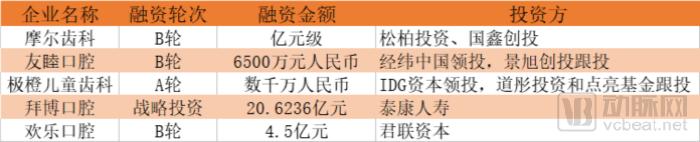
Dental Chain Enterprises That Completed Financing in the First Half of 2018
As chain healthcare providers expand nationwide, the time-sensitive nature of medical investments makes achieving rapid profitability challenging. Enterprises face numerous practical issues, such as retaining existing customers while attracting new ones, encouraging consumers to increase spending, continuing to adopt innovative technologies and introducing new services to meet consumer demands, enhancing brand awareness through marketing and promotional activities, and capitalizing on growth in relevant markets.
New dental clinics typically experience low revenue and high costs during their initial operational phase, including expenses for dentists, renovation, rent, and equipment. It generally takes 2–3 years, or even longer, to break even. Consequently, some brands are adopting a cautious, trial-based approach to nationwide expansion across China.
Integrating a company’s resources, processes, and profit model into a proprietary system to meet consumers’ long-standing demands for dental care services is the essence of competitive advantage. What pain points are currently facing China’s dental care service market, particularly dental chain clinics? What characteristics of the U.S. and European dental care markets might offer valuable lessons? VCBeat (WeChat ID: vcbeat) has attempted to outline, discuss, and interpret these issues.
In China’s healthcare sector, particularly the dental industry, regional chains comprising three to five clinics have demonstrated robust growth. Major dental enterprises such as Topchoice Medical are primarily concentrated in Zhejiang Province; Little White Rabbit Dental focuses on the northwest market centered in Xi’an; Dazhong Dental is mainly present in Wuhan and other central provinces and cities; and Keen Dental concentrates its operations in Shandong Province. These companies have adopted a cautious, exploratory approach toward expansion beyond their home provinces and across China.
However, expanding dental chains across regions to achieve nationwide branding often encounters significant profitability challenges. Leading dental chain providers, such as Bybo Dental, Arrail Dental, and Happy Dental, have begun to adopt refined operational strategies, striving to gradually build a strong online reputation.
Healthcare institutions have a limited service radius. Once they expand across regions, it is often extremely difficult to maintain consistent medical quality under a single brand, leading to significant disparities in care—much like the idiom “oranges grown south of the Huai River become trifoliate oranges when grown north.” Unlike chain businesses such as McDonald’s, KFC, or Starbucks, the strategy of rapidly scaling by opening hundreds of clinics—a “land grab” approach—is hardly viable in the healthcare sector. After such expansion, if operations and integration are poorly managed, the accumulated resources may even be poached by competitors, particularly in the highly competitive dental industry, where talent turnover is rapid.
Overall, under compliant operations, the financial model of dental healthcare institutions can generate a net profit margin of approximately 15%. While this represents a respectable return, the sector is no longer characterized by exorbitant profits. As patient awareness rises, information asymmetry diminishes, and the industry chain matures, net profit margins are likely to stabilize around 10% in the future. Meanwhile, the expanding base of new consumers will continue to drive growth in the overall dental market size. Varying investment efficiency, cycles, and costs will give rise to different business models and investment expectations.
The asset-heavy expansion model, characterized by large-scale capital investment in hospital construction, naturally entails a longer expected investment horizon—potentially 5 to 10 years or more—making short-term losses inevitable. If the goal is to achieve profitability within a 2- to 3-year investment cycle, the appropriate scale of investment, cost structure, and business model will differ accordingly. Distinct financial models ultimately determine divergent development paths for enterprises.
Currently, the overall chain affiliation rate of dental clinics in China is below 20%, with the top 10 chains accounting for 6%–8% of the market. Private-sector growth is outpacing that of public institutions. The core competitiveness of a dental clinic lies in delivering effective clinical outcomes at reasonable prices and with high-quality service, which requires multi-faceted resource accumulation and technical expertise built over many years. Regarding the challenges of the chain model, the following points are particularly critical.
Dentist Resources Are Scarce, and Labor Costs Are High
According to the latest data from VCBeat, there are 18,000 public general hospitals and specialized dental hospitals in China, along with 80,000 private dental hospitals and clinics. However, the number of officially registered dentists stands at merely 200,000, underscoring the need for long-term standardized training.
Physicians are the core productive force of hospitals and the primary providers of patient care. The dental sector is heavily reliant on dentists; clinic services depend on their clinical expertise. However, dentists are a scarce resource in China, and their training requires a considerable amount of time. Consequently, recruiting qualified dentists represents the most significant cost in scaling dental chains, with labor costs accounting for approximately 40% of total expenses.
In dental training, a hospital should function like a school, serving as a self-sustaining ecosystem. Following capital expansion, there is often inadequate preparation for such a specialized labor market. When investing in clinic networks, proactive human resources planning can sometimes be even more critical than financial statements.
Low Entry Barriers and Decentralized Clinics
Compared with specialties such as ophthalmology, otolaryngology, and others, the startup costs for dental practices are relatively low. With two to three dentists, two to three dental chairs, and an initial investment of RMB 1–2 million in certain regions, a clinic can be established. Consequently, the theoretical barrier to entry is low for dentists from both public hospitals and chain brands, leading to a proliferation of independent clinics across various locations with a relatively dispersed distribution. In some high-demand areas, the growth rate in the number of clinics has outpaced the growth of both the resident population they can serve and the available number of dentists.
Particularly for physicians in second- and third-tier cities, dentists theoretically have a greater willingness and likelihood of establishing their own clinics, while facing fewer temptations to remain employed. In first-tier cities such as Beijing, Shanghai, Guangzhou, and Shenzhen, dentists command higher salaries. Due to intense competition among healthcare institutions, the inflation of compensation costs is common. Consequently, income from employment remains substantial, allowing dentists to avoid the risks associated with entrepreneurship.
Additionally, property costs are lower in second- and third-tier cities. A 500-square-meter commercial space may cost RMB 100,000 per month in Shanghai and potentially reach RMB 200,000 in Beijing, whereas in second- and third-tier cities, the cost could be as low as RMB 30,000–40,000. Fixed costs, including property, equipment, and consumables, are substantial, accounting for 30%–40% of expenses. In first-tier cities, property alone represents a significant fixed cost burden.
Unreasonable Incentive Policies Lead to Dentist and Patient Attrition
Given the low barrier to entry for dentists starting their own practices, large branded chains must establish reasonable incentive mechanisms and systems to achieve platform-level benefits. Retaining talent requires ensuring that dentists feel sufficiently respected; otherwise, departing dentists may take their existing patient base with them.
The challenges facing physicians—difficulty in recruitment, retention, and training—are mirrored by the equally thorny issue of a shortage in operational talent. Core operational metrics for dental institutions have been shifting. Previously, the focus was on consultation conversion rates, visitation rates, closure rates, average transaction value, and customer acquisition costs. Now, greater emphasis is placed on patient visit frequency, number of payment transactions, number of services consumed, depth of service expenditure, churn rate, and annual average spending.
Standardization of clinical care, standardization of management, socialization of marketing, and data-driven decision-making all reflect an institution’s capability for refined operations. As service itself constitutes marketing, commission structures and performance evaluation systems must be adjusted accordingly; some institutions have already begun to use patient attrition rate as a key performance indicator.
High Customer Acquisition Costs, Urgent Need for Refined Operations
As a relatively mature sector in consumer healthcare, dentistry enjoys higher patient awareness. According to the results of the Fourth National Oral Health Epidemiological Survey conducted in 2017, residents’ oral health literacy and health-related behaviors have improved to varying degrees compared with those a decade earlier. Specifically, the awareness rate of oral health knowledge among residents was 60.1%, and 84.9% of respondents held positive attitudes toward oral health care.
Against this backdrop, patients’ expectations for care experience have been rising steadily, while customer acquisition costs remain persistently high, with some clinics incurring costs as high as RMB 3,000–4,000 per patient. In the mobile internet era, healthcare institutions place great emphasis on return on investment (ROI), particularly in their operations on social media platforms such as Dianping, WeChat, and Weibo. Dianping (part of Meituan’s In-Store Business Unit) leverages location-based services (LBS) and maintains strong competitiveness through the objectivity of its user-generated content (UGC) reviews and transparency of information, resulting in improving patient referral capabilities.
If offline customer acquisition platforms are available, such as health checkups, insurance, and cross-industry collaborations, they can also enhance customer acquisition advantages. For example, Meiwei Dental, which belongs to the Tianyi Group, naturally benefits from patient referrals generated by Meinian Onehealth’s health checkup services—a resource that most other dental enterprises lack. Taikang Insurance Group made a strategic investment in Bybo Dental; Bybo’s network layout, scale, and business positioning align well with Taikang’s customer base, and synergies with Taikang’s life and health insurance businesses are expected.
Furthermore, dental chains must recognize the intimate nature of the patient-dentist relationship. Clinics need to prioritize service quality, technical expertise, and humanized management to retain patients, thereby cultivating a strong awareness of patient management.
Balancing Standardization and Personalization
Ensuring consistency in management and medical standards, while maintaining diverse characteristics, is a critical issue that healthcare chains must address, as acquisitions are a primary mode of expansion for many such networks.
Consistency and standardization encompass numerous elements, such as new management mechanisms, novel service workflows, and advanced health information systems. At the core of these innovations is the transformation of complex yet intuitive processes into simplified, rule-based tasks, thereby shifting responsibilities that previously required highly trained, high-cost physicians to lower-cost nursing staff or general practitioners.
It is foreseeable that standardization can improve efficiency; however, any standardization and integration strategy must be aligned with the local realities of individual clinics. Dentistry is inherently a business focused on attracting local patients within a specific service radius. Consequently, some chain brands deliberately cultivate personalized branding for each region. To some extent, this approach helps mitigate reputational risks to other brands within the group arising from adverse events. When acquiring and integrating clinics, companies must also exercise caution in incorporating each clinic into the chain brand, seize the window of opportunity for integration, enhance consistency in treatment and services, and achieve a balance between standardization and personalization.
From a horizontal perspective, a comparison with the U.S. oral healthcare services market reveals significant differences from the Chinese market, such as variations in insurance-driven dynamics, the family dentist system, and patients’ awareness of oral health care. Of course, a common challenge shared by both markets is the shortage of dentists.
China’s dental industry is valued at RMB 200 billion, with a CAGR of 25%, and is projected to reach the trillion-yuan mark within ten years. The U.S. market is approximately USD 120 billion, with a CAGR of 3%. The European market stands at around USD 70 billion. Combined, the European and American markets total USD 190 billion.
The ratio of clinics to hospitals in the United States is approximately 9:1. Clinics, which provide a full spectrum of high-, medium-, and low-level services, constitute the predominant form of healthcare delivery. Hospitals primarily serve to enhance clinical training for medical students and provide care for low-income populations.
Not only in the United States but also in most European countries, dental practices are predominantly small, single-site clinics, typically staffed by an average of one to three dentists. Although Germany boasts the largest dental market in Western Europe, more than 95% of its clinics remain small in scale. While the United Kingdom and Spain have a relatively higher proportion of chain clinics, their share of the total number of clinics remains below 25%.
However, this situation is changing. In recent years, the predicament of physicians operating solo clinics has been deteriorating, while group practice clinics—namely, small-scale chains—are rising rapidly, particularly those with 10 to 20 branches.
The proportion of small chains is increasing, with DSO chains having at most 800 locations.
Although the U.S. healthcare system holds significant structural advantages in physician training and industry oversight, and dentists face relatively lower barriers to obtaining licenses and securing loans for private practices, it has become a growing consensus among dentists that independent practice is increasingly challenging. This trend has created substantial opportunities for investors, who have begun acquiring dental clinics and establishing chain models.
In Europe, a landmark event occurred in early 2017 when private health insurer Bupa officially completed its acquisition of the UK dental chain Oasis Dental Care. This move propelled Bupa to become the leading provider of dental care in the UK, with 460 clinics and over 2 million patients. Prior to this, Bupa had already built a portfolio of chain brands, including Sanitas (Spain) and Barbican Dental Care (UK), through continuous mergers and acquisitions of insurance companies and dental chains.

Bupa Group pioneered the “insurance + dental services” model and entered the Chinese market in 2005.
Bupa’s model integrates hospitals with insurance, resembling the Kaiser Permanente HMO model. Its healthcare portfolio includes nursing homes, rehabilitation hospitals, and dental clinics. By incorporating physicians and hospitals into its insurance system, Bupa reduces customer acquisition costs and maintains strong competitiveness.
In the United States, the rise of Dental Service Organizations (DSOs) has led to the emergence of numerous dental chains. Ten of these chains operate more than 200 clinics each, with the largest, Heartland Dental, owning 800 clinics.
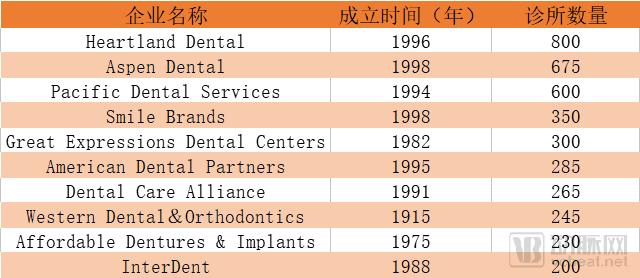
Top 10 Dental Support Organizations in the United States
To borrow a current buzzword, DSOs do not operate clinics themselves but rather “empower” them. Their key focus is on supporting groups of approximately 5 to 10 affiliated practices. Dentists must not only advance their clinical skills but also contend with rising costs, government regulations, and legal challenges. For instance, young dentists often bear heavy debt burdens and require team-based cost-sharing as well as valuable educational opportunities, while experienced dentists need to offload non-clinical administrative tasks associated with running a dental practice, thereby allowing them to concentrate on patient care.
In terms of scale, a Dental Support Organization (DSO) may consist of as few as two clinics or aggregate hundreds of them. The support provided by DSOs to their member practices is not uniform but rather diverse, including assisting clinics in complying with government regulations (such as legal compliance, integration of Hospital Information Systems [HIS], data privacy, and proper use of instruments), providing advanced technologies (such as equipment procurement and maintenance, and digital upgrades), managing insurance-related matters (such as verifying the alignment of reimbursements with provided medical records and negotiating reimbursement rates), and establishing professional communities for dentists (to facilitate information sharing and build trust), thereby enhancing resilience against various operational risks.
The emergence of Dental Support Organizations (DSOs) is beneficial to the dental industry, creating advantages in medical quality, transparency, efficiency, and financing. This will provide patients with more professional, higher-quality services and care, a point also acknowledged by dentists.
However, as the number of clinics increases and collaborations deepen, it is essential to continuously enhance the cohesion of dental teams, the profitability of dental clinics, patient treatment outcomes, and cultural alignment. Some dentists are also concerned that Dental Support Organizations (DSOs) may take over their practices. Currently, there are no publicly listed companies among DSOs.
Insurance-Driven, Market Standardization
The United States has a population of approximately 320 million, with about 200 million people covered by dental insurance (including commercial insurers such as Delta Dental and government programs like Medicaid). Among these, roughly 150 million individuals hold commercial dental insurance, accounting for the vast majority. Data indicates that Delta Dental is the largest dental insurance provider in the U.S., having rapidly expanded during policy gaps to serve 67 million dental insurance enrollees.
Collaborating with insurance institutions provides dental clinics with a stable patient base, making it one of the most reliable sources of patient flow. Furthermore, patients prioritize medical safety and pricing transparency. A clinic’s long-term inclusion in an insurance network serves as a strong endorsement of brand trust, demonstrating its reliability in quality. Clinics that fail to meet insurers’ requirements—such as ensuring diagnostic appropriateness and avoiding excessive charges—cannot join these insurance networks. According to data obtained by VCBeat, patients referred by insurance providers account for more than 50% of the patient volume at some clinics.
As a payer, insurance companies can effectively audit materials submitted by clinics and dentists, control costs and reimbursement ratios, and enhance information transparency. They also assist the government in regulating overtreatment, thereby balancing the interests of clinics and patients. Consequently, insurance has significantly promoted the development of the dental industry. However, it is also possible that as clinic operating costs rise, insurance reimbursement rates may decline, subjecting dentists to greater survival and competitive pressures.
In terms of specific insurance coverage, unlike many domestic dental insurance plans in China that primarily emphasize “preventive” care, U.S. dental insurance typically covers preventive services (such as complimentary cleanings, examinations, and fluoride treatments), basic treatments (mainly restorative procedures, including fillings, root canals, extractions, and periodontal therapy, with partial reimbursement), and complex treatments (including orthodontics, dental implants, and cosmetic dentistry, also with partial reimbursement).
Digital Transformation to Boost Efficiency
Digitalization, as referred to here, encompasses two aspects: one is the digitalization of clinical treatment workflows, and the other is the digitalization of clinic management software.
First, with the assistance of digital devices such as intraoral scanners (e.g., 3Shape, iTero, Carestream) and CBCT systems (e.g., Sirona, KaVo, Carestream, Planmeca), many dental surgical procedures will undergo significant changes in the future. This will enable patients to benefit from advanced oral scanning and imaging technologies, while 3D printing equipment will become standard in dental clinics.
If CT, intraoral scanning, and occlusal imaging data can be integrated to formulate precise diagnosis and treatment plans, clinicians' efficiency will be significantly enhanced.
Take the field of orthodontics, where digital applications are relatively widespread, as an example. Invisalign is building a closed-loop digital orthodontic system (iTero intraoral scanning + aligners + orthodontic software). By 2017, its global number of orthodontic cases had exceeded 5 million, including many highly complex cases. It has now established Invisalign treatment planning centers in San José, Costa Rica; Chengdu, China; and Cologne, Germany, each equipped with state-of-the-art facilities.
As part of the digital treatment workflow, CAD designers and clinical experts at Invisalign’s Treatment Planning Center collaborate closely with Invisalign-trained orthodontists to develop treatment plans and digital case setups, creating highly customized digital orthodontic treatment solutions for patients.
Currently, companies such as Henry Schein (SLX™ Orthodontic System), Straumann (ClearCorrect + Dental Wing), 3M (Clarity™ Clear Aligner System), and Dentsply Sirona (SureSmile + OraMetrix) have joined the competition in the field of digital orthodontics. In the field of implantology, Nobel, 3Shape, and Simplant digital surgical guides all serve to enhance clinicians’ efficiency, albeit through different approaches.
At the clinic level, practices are increasingly adopting new technologies to establish paperless, digital workflows, leveraging advanced management software (such as billing and scheduling systems) and cloud storage solutions. For instance, by utilizing cloud storage, critical patient data and documents are securely hosted on remote servers, enabling dentists to access this information anytime and from any location. In China, however, a significant number of independent clinics still lack even basic outpatient management systems.
Henry Schein’s Dentrix Ascend and Patterson Dental’s Fuse are among the most widely used dental software solutions. This year, Henry Schein spun off its entire software business and formed a joint venture software company, Henry Schein One, with Internet Brands, a provider of patient-provider engagement platforms. With annual sales of $400 million, the new entity aims to help the dental industry improve practice management, marketing, and patient communication.
It is worth noting that clinics developing software systems independently often lack advantages in terms of cost, resources, and technology; adopting third-party software is more cost-effective.
Social Word-of-Mouth Marketing: Patient Care Experience Becomes Increasingly Important
Online social marketing primarily leverages platforms such as Yelp and Facebook (the Chinese equivalents being Dianping, WeChat, and Weibo). Currently, dentists face the challenge of rising click-through costs for feed-based advertisements, coupled with increasingly stringent quality requirements. Consequently, dental practitioners must prioritize the dissemination effectiveness of their ads, expand user reach, select more optimal timing for ad placements, and craft content with greater viral potential, ensuring that every dollar spent on social marketing delivers value.
Additionally, online reviews and word-of-mouth are crucial for clinic operators. When evaluating the value of healthcare providers, patients primarily consider affordability, quality of care, and convenience—factors that can be assessed by reviewing past consumer feedback on online review platforms. An excessive number of negative reviews is likely to result in customer churn.
Therefore, dentists need to leverage online reviews to monitor the service quality of their clinics on one hand, and cultivate the habit of proactively inviting patients to post online reviews about their care experiences on the other. The aim is to increase the clinic’s positive ratings and patient satisfaction rates.
A key aspect of improving patient satisfaction is providing more personalized, refined, and comfortable services. This includes widely adopted microscopic treatments, as well as SPA therapies—such as upright massage and reflexology—that place a high priority on delivering personalized and luxurious therapeutic experiences. In recent years, sleep-inducing therapies for children have also gained popularity.
Furthermore, in terms of communication and interaction with patients, dentists tend to provide greater care and health education, even establishing personalized long-term health management goals. Making patients feel valued and well-cared for is a viable strategy to enhance patient retention.