Chinese Healthcare Firms Rush to Hong Kong IPOs; Alibaba Health Invests in Two Pharmacy Chains, Demonstrating 'Capital + Business' Synergy

Works | "Eyes on Vision"
Author |Qiu Xiaofei
Medical History in Pictures | Issue 20180701
This week, Chinese healthcare companies have ushered in a wave of Hong Kong IPOs, with MicuRx Pharmaceuticals, Innovent Biologics, and Babytree successively submitting listing applications, potentially signaling that healthcare enterprises are entering a period of capital realization. As the Hong Kong Stock Exchange’s listing rules become clearer, it is expected that more domestic companies will pursue listings in Hong Kong.
Alibaba Health Announces Two Consecutive Investments This Week: One is the formal signing of a capital increase agreement with Shuyu Civilian Pharmacy, with an investment amount of RMB 454 million and a 9.34% equity stake; the other is the signing of a strategic cooperation agreement with Huaren Health to deeply cultivate the regional pharmaceutical retail market.For details, click here.。
In summary, against the backdrop of the internet era, future diagnostic products will evolve toward miniaturization (even virtualization), automation, precision, cloud integration, sharing, and data-driven capabilities. Furthermore, as new technologies such as internet technology, cloud computing, big data, and artificial intelligence are increasingly applied in the in vitro diagnostics (IVD) industry, the competitive landscape for IVD companies will shift under the transformation trend advocated by “Internet + IVD.” The primary battlefield will escalate from product competition in diagnostic reagents to intelligent health monitoring based on in-depth big data services.
Gene editing is currently regarded as the most promising technological approach for addressing monogenic diseases. The global market for diagnosing monogenic diseases is valued at approximately $75 billion, while analysts project that the therapeutic market could reach $2 trillion.
Alibaba Health’s growth trajectory serves as an excellent case study for examining the development of the “Internet + Healthcare” industry. Key questions that new entrants must consider include how to rapidly iterate through trial and error, how to identify sustainable profit models to support business expansion, how to strike a balance between regulatory policies and industry interests, and how to continuously optimize product and service structures to meet industry demands.
Based on discussions with department directors and physicians, we have summarized five key criteria for selecting medical AI solutions: First, the team must be reliable. Second, product accuracy is a prerequisite for clinical trials; substandard products will simply gather dust in hospitals. Third, the product must be innovative and precisely address physicians’ needs. Fourth, engineers should collaborate closely with physicians to refine the product. Fifth, AI solutions should be seamlessly integrated into physicians’ workflows without imposing additional burdens.
Based on our observations, the core of current Internet-plus chronic disease management still lies in the following three aspects:
1. The primary role of smart hardware integration is monitoring, with its core lying in simplifying labor costs and improving management efficiency through multi-dimensional data collection;
2. It is unlikely that patient adherence in chronic disease management can be resolved solely through the Internet; data monitoring requires follow-up services to form a closed loop;
3. The acquisition of precise user traffic and the creation of value chains for chronic diseases fundamentally rely on human services, with physicians remaining the core element across all stages.
There are several key milestones in the development history of Babytree. In October 2014, it launched the Xiaoshiguang platform; in June 2015, it introduced its e-commerce platform, Meitun Mama. In 2016, Babytree completed a financing round led by Fosun, with total funding amounting to approximately RMB 3 billion. In May 2018, it entered into a strategic cooperation agreement with Alibaba Group, which made an equity investment of approximately RMB 214 million, accounting for 9.90% of Babytree’s share capital as of the last practicable date.
June 25
Shuyu Pingmin Pharmacy Receives RMB 454 Million Investment from Alibaba Health
Ali Health issued an announcement stating that on June 25, 2018, its subsidiary, Ali Health (China), entered into a capital increase agreement with the target company and its existing shareholders. Pursuant to the agreement, Ali Health (China) will inject approximately RMB 454 million into the target company, of which RMB 34.08 million will be used to increase the registered capital of the target company, and approximately RMB 420 million will be allocated to the target company’s capital reserve.
Keywords: Healthcare
June 26
GE’s Major Downsizing: To Divest Healthcare Business
GE Officially Announces Spin-off of Healthcare Business, Selling 20% Stake and Distributing Remaining 80% to Shareholders; GE Healthcare to Become an Independent Company. GE Also Announces Exit from Baker Hughes Stake Within 2–3 Years.
Keywords: Healthcare
23Mofang’s Zhou Kun Responds to Further Price Cuts: Bringing Products into the Spotlight of More People
On June 26, 2018, China’s consumer-grade genetic testing market experienced another “earthquake” as the leading DTC brand, 23Mofang, adjusted its product pricing once again, marking the first time that consumer-grade genetic testing products entered the “200-yuan range” era.
Keywords: Genetic Testing
World’s First Drug for the Treatment of Hand, Foot and Mouth Disease—Suramin Sodium for Injection—Granted U.S. Patent
Hongzhi Pharmaceutical, a well-known domestic listed company specializing in pediatric medicines, issued the “Announcement on the Company’s Receipt of a U.S. Patent Certificate.” The announcement stated that the company recently received a patent certificate issued by the United States Patent and Trademark Office. This patent discloses for the first time a new use of a P2X receptor antagonist for the prevention or treatment of hand, foot, and mouth disease.
Keywords: Pharmaceuticals, Kangzhi Pharmaceutical
Reaching the Efficacy Endpoint: KEYTRUDA Combined with AXL Inhibitor for the Treatment of Advanced Lung Cancer
BerGenBio announced that its Phase 2 clinical trial BGBC008, evaluating the combination of bemcentinib, the world’s first oral selective Axl inhibitor, and Merck’s PD-1 inhibitor KEYTRUDA® (pembrolizumab) for the treatment of advanced non-small cell lung cancer, met its predefined primary efficacy endpoint.
Keywords: Pharmaceuticals
June 27
Kanpu Bio’s KPG-121 Initiates Phase I Clinical Study for Prostate Cancer in the United States
CompuChem Biopharmaceutical Technology (Shanghai) Co., Ltd. (“CompuChem Biopharma”) announced that the Phase I clinical trial of KPG-121, a Class I innovative drug with global independent intellectual property rights independently developed by the company, in combination with enzalutamide for the treatment of metastatic castration-resistant prostate cancer (mCRPC), has been initiated in the United States.
Keywords: Medicine
The First CD19-Targeted CAR-T Product Approved for Clinical Use in China
Shanghai JW Therapeutics Co., Ltd. and its affiliate, Shanghai Mingju Biotechnology Co., Ltd., announced that the Investigational New Drug (IND) application for Mingju Biotechnology’s CAR-T product, JWCAR029, has been approved by the China National Medical Products Administration (NMPA). This marks the first CD19-targeted CAR-T product approved for clinical trials in China.
Keywords: Clinical
June 28
Head of Novo Nordisk's Diabetes Division Resigns
This afternoon, Zhou Xiaping, General Manager of Novo Nordisk Greater China, announced a personnel change: Stanley He Weicong, Head of the Diabetes Care Division, has decided to leave Novo Nordisk, with his last working day being July 14.
Keywords: Novo Nordisk, Personnel Changes
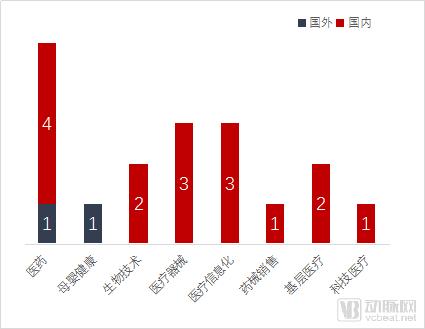
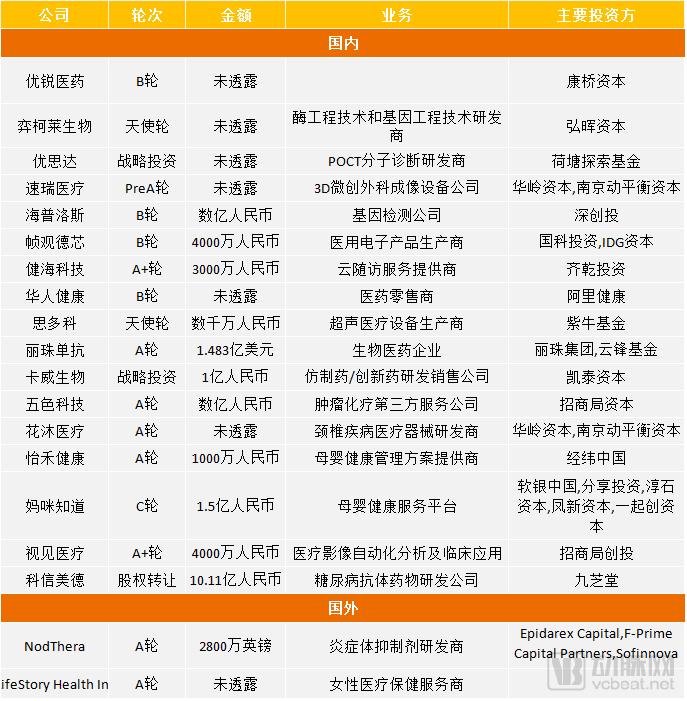
This week, there were 19 financing events in the medical field both domestically and internationally.
Senior Healthcare Investment Expert Li Zhimin
In the therapeutic domain, I am particularly optimistic about AI-driven treatment technologies and surgical robots. In the future, hospitals can leverage AI technology to perform basic diagnostic tasks by continuously refining algorithms based on extensive case data. Currently, IBM-backed robotic diagnostic systems can utilize big data to achieve precise diagnoses. In certain specialized areas, these systems can diagnose ten patients per minute with an accuracy rate of up to 99%, whereas physicians typically diagnose only two to three patients every ten minutes on average.
AI technology presents significant growth opportunities for the healthcare sector, which in turn constitute our investment opportunities. A Chinese company has already developed a robot capable of performing neurosurgical procedures. This technology is highly regarded by neurosurgery experts at Beijing Tiantan Hospital. For secondary hospitals that were previously unable to perform such surgeries, the maturation of this technology will enable them to expand patient services through the use of surgical robots combined with remote guidance from higher-tier hospitals.(Source: Jianyihui)
Pills Can Replace Injections for Insulin Delivery, Improving Patient Absorption Rates
Scientists at Harvard University’s John A. Paulson School of Engineering and Applied Sciences have developed an oral insulin pill formulated with ionic liquids, which may soon be adopted by patients with type 1 diabetes. This formulation is not only safe but also effectively bypasses gastrointestinal barriers, significantly enhancing the absorption efficiency of oral insulin.

Source: genengnews.com
Kaia Health’s Latest AI Application Helps Users Achieve the Perfect Squat Form
On June 26, London-based Kaia Health announced the launch of an AI-powered motion tracking technology called the “Perfect Squat Challenge.” This innovation enables anyone with an iPhone to access a virtual personal trainer and perform exercises such as squats, thereby providing high-quality, personalized fitness, rehabilitation, and physical therapy services.

Source: mobihealthnews.com
Cerner’s First EHR Project to Go Live in 2020
Virginia officials told the House Committee on Veterans’ Affairs on Tuesday that the U.S. Department of Veterans Affairs’ Electronic Health Record (EHR) program would be fully implemented in the Pacific Northwest region in March 2020. The VA will ensure the effectiveness of its pilot initiatives early in the process, evaluating plans for Spokane and Seattle, Washington, scheduled for July, August, and September.

Source: healthcareitnews.com
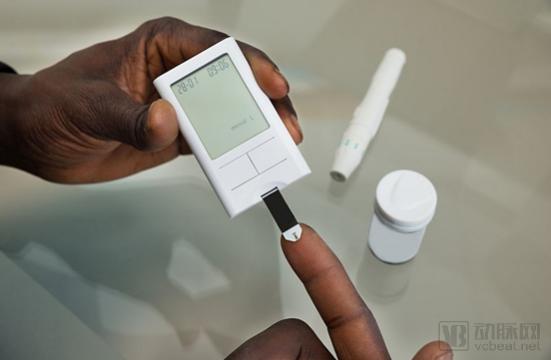
Closed-Loop Insulin Delivery Improves Glycemic Control
A study published online on June 25 in the New England Journal of Medicine showed that using an automated, closed-loop insulin delivery system provides better glycemic control and is more effective than traditional subcutaneous insulin therapy for patients with type 2 diabetes. Among hospitalized patients with type 2 diabetes receiving non-critical care, the use of an automated closed-loop insulin delivery system significantly improved glycemic control without increasing the risk of hypoglycemia.
Source: physiciansbriefing.com
Ministry of Commerce: “2017 Analysis Report on the Circulation Market of Chinese Herbal Medicines”
This marks the fifth consecutive year that the Ministry of Commerce has released an analysis report on the circulation market of Chinese herbal medicines. Specifically, among the 741 commonly circulated varieties of Chinese herbal medicines in China, prices rose for 220 varieties, remained stable for 334 varieties, and declined for 187 varieties. Compared with 2016, the number of varieties with price increases decreased by 7% in 2017, the number with stable prices decreased by 12%, the combined total of varieties with price increases or stable prices fell by 10%, and the number of varieties with price declines increased by 48%.
Deloitte: The Transformation of Healthcare, from “Scale” to “Value”
This report, jointly authored by the Deloitte Research Center and Deloitte China’s Life Sciences & Health Care Industry Team, examines the current state of China’s healthcare services sector and its future trends.
Zheshang Securities: In-Depth Report on the Blood Products Industry – Steady Growth in the Global Market, with Volume and Price Rising Driven by Dual Reforms
The global blood products market is experiencing steady growth, driven by strong demand and unique competitive advantages. In China, dual reforms in policy regulation are addressing both volume and pricing constraints. The market is characterized by high concentration and oligopolistic competition, with an industry inflection point of rising volume and prices on the horizon.
iResearch: 2018 Research Report on China's Health Insurance Industry
"2018 Health Security Industry Research Report" provides an overview of the industry's development through in-depth interviews with experts in the health security sector and desk research. By employing qualitative research methods such as PEST and SICAS, and integrating analysis of the industry’s scope, market structure, opportunities, and challenges, the report thoroughly examines the current status and future development trends of the health security industry.
CVSource Research Institute & Xiantong Capital: 2018 White Paper on Investment and Financing in China’s Healthcare Sector
Leveraging the joint release of the “2018 White Paper on Investment and Financing in China’s Healthcare Sector,” Zero2IPO Research and Xiantong Capital, a firm specializing in biopharmaceutical investments, have pooled their respective strengths. Upholding a professional and rigorous research approach and ethos, they have conducted in-depth research and analysis of the characteristics, investment logic, financing and investment landscape, and representative case studies of China’s domestic healthcare industry. We hope this research report will provide valuable insights and reference for investment and financing activities in the healthcare sector.
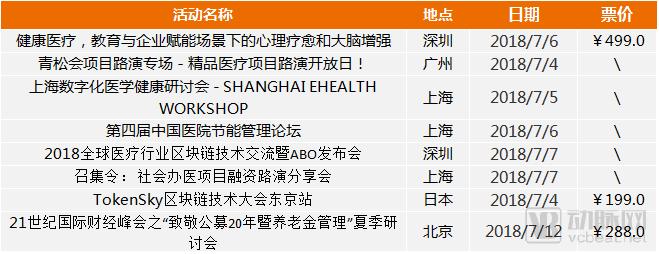
For more content, please refer to the VCBeat knowledge base!