

AI-Powered Mortality Prediction Achieves 95% Accuracy: Transforming Clinical Care and End-of-Life Planning
Confucius said, “If you do not yet understand life, how can you understand death?” In traditional Chinese culture, people are highly averse to discussing death. This is because, in ancient times, warfare, poverty, and rudimentary medical conditions made death imminent and longevity elusive. According to World Health Organization statistics, the global average life expectancy in 2015 was 71.4 years, with Japan having the highest at 83.4 years. Reaching the age of 70 is no longer considered a rare feat.
People are beginning to discuss death rationally, even contemplating and analyzing it. Recently, VCBeat (WeChat ID: vcbeat) learned that Google researchers have developed an AI network capable of predicting patients’ disease trajectories during hospitalization by analyzing their data, thereby estimating the risk of death at specific time points with an accuracy rate of 95%. Over the years, scientists worldwide have continually attempted to leverage data and algorithms to predict mortality, with steadily improving accuracy. VCBeat has compiled a review of these developments.
The World Health Organization has quantified the factors influencing lifespan, identifying four key determinants of individual longevity: genetics, psychology, environment, healthcare services, and personal behavior and lifestyle. Their respective weightings are 15%, 17%, 8%, and 60%. This finding is quite surprising, as people have long relied on genetic factors and the level of medical care to predict individual lifespan. In reality, however, personal behavior and lifestyle play a far more critical role in determining longevity.
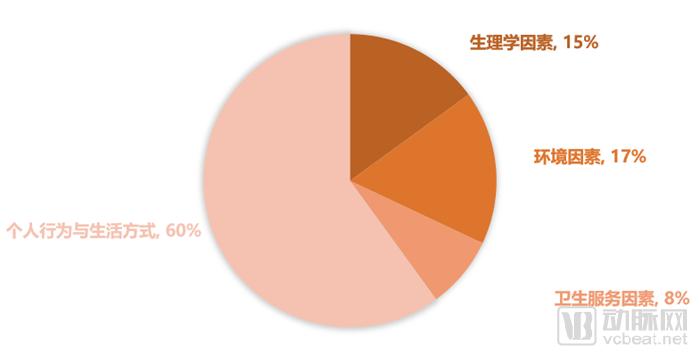
Image compiled by VCBeat based on World Health Organization data
It now appears that Laozi’s statement from over 2,000 years ago, “My fate lies within myself, not with heaven or earth,” is not without scientific basis. This undoubtedly complicates accurate mortality prediction, a challenge in which innovative technologies such as AI and big data are demonstrating their advantages at just the right time.
Tikker: The First "Death Watch"
Tikker is a smartwatch that has earned the nickname “Death Watch” for its claim to accurately predict users’ time of death. Launched in 2013 by Swedish author and publisher Fredrik Colting, Tikker calculates a user’s life expectancy based on factors such as age, gender, and medical history, and then estimates their ultimate time of death.
In fact, Tikker’s algorithm is relatively simple and its predictive accuracy is quite low; it primarily serves as an entertainment feature for users. Kording stated that if we could gain a clearer understanding of our own life expectancy, we would certainly be better equipped to make informed choices about how we live our lives.
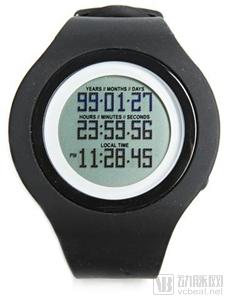
Image from the Tikker official website
Tikker’s interface differs from that of ordinary watches, consisting of three layers. The top two layers display the years, months, days, hours, minutes, and seconds remaining in the user’s life, while the bottom layer shows the actual time when the user views this information.
Supercomputer Predicts Death with 96% Accuracy
In September 2015, U.S. media reported that researchers at Boston’s Beth Israel Deaconess Medical Center had developed a supercomputer system capable of predicting patient mortality with an accuracy rate as high as 96%.
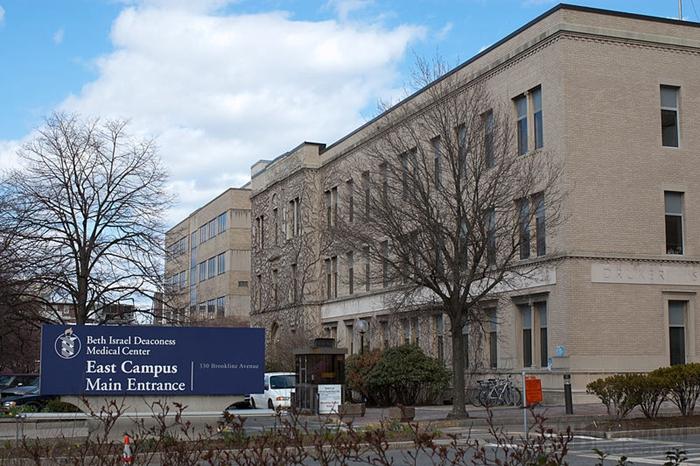
Image from the official website of Beth Israel Deaconess Medical Center
Beth Israel Deaconess Medical Center has connected patient monitors to its supercomputer system, enabling more accurate diagnosis than human physicians. The supercomputer is loaded with data from over 250,000 patients spanning the past 30 years, creating a specialized database to help clinicians make faster diagnoses.
Supercomputer systems collect patient data every three minutes, encompassing a range of vital signs from oxygen saturation to blood pressure. By analyzing this data, the system can determine whether a patient is at risk. This rapid diagnostic platform facilitates prompt treatment and holds significant potential for saving lives and predicting patient mortality timelines.
AI Enters the ICU: 93% Accuracy in Mortality Prediction
Children’s Hospital Los Angeles has a hospital research division called the “Virtual PICU,” where data scientists Melissa Aczon and David Ledbetter collaborate with clinicians to develop an AI system that enables physicians to better identify which children are at risk of clinical deterioration.
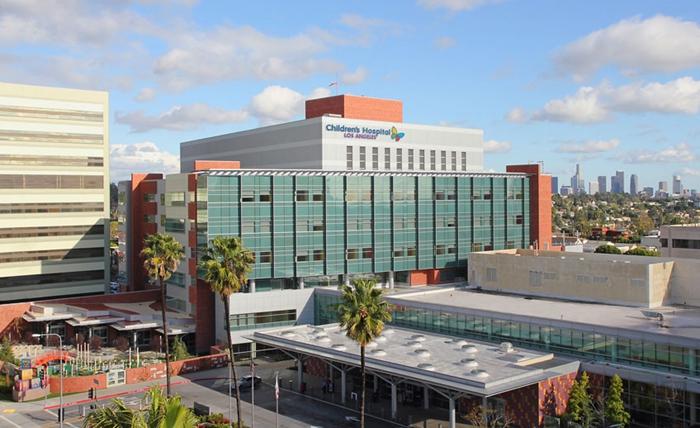
Image from the official website of Children's Hospital Los Angeles
Aczon and Ledbetter extracted vital signs data (typically updated every few minutes), existing laboratory test results, medication information, and administered treatment protocols from the electronic health records of over 12,000 pediatric intensive care unit (PICU) patients. Subsequently, they employed a recurrent neural network (RNN) machine learning algorithm to identify relevant patterns within the data, successfully predicting imminent mortality. The RNN approach excels at processing continuous data sequences rather than drawing conclusions from isolated data points at a single time point, thereby enabling the most accurate predictions based on clinical data from the preceding 12 hours as time progresses.
Currently, the program is still in the experimental stage. Statistics show that its accuracy in predicting mortality reaches 93%, significantly outperforming the simple scoring systems currently used in hospital Pediatric Intensive Care Units (PICUs). Aczon and Ledbetter published a paper on arXiv, disclosing their research findings.
Deep Learning Image Analysis Technology Determines Patient Lifespan with 69% Accuracy
Luke Oakden-Rayner of the University of Adelaide and his team applied machine learning methods to CT scan images to predict patient mortality. Their findings have been published in Scientific Reports, a journal under the Nature portfolio. Using “off-the-shelf machine learning methods,” Rayner’s team analyzed CT images of patients’ major organs and thoracic tissues with convolutional neural networks to predict which patients would die within five years, achieving an accuracy of 69%, comparable to clinicians’ “manual” predictions.

Image from the official website of the University of Adelaide
Studies have shown that the system has learned to recognize the visual manifestations of various diseases, a skill that requires extensive training for human experts to master. Although researchers find it difficult to determine which key features in the images the system “sees” to make its predictions, the system is most accurate in predicting mortality among patients with severe chronic conditions, such as emphysema and congestive heart failure.
Currently, constrained by file sizes and computer memory, Rayner’s team has analyzed only a small dataset of CT scan images. Rayner stated that future work may leverage the University of Adelaide’s high-performance computing cluster to expand the analysis to tens of thousands of images and incorporate additional information, such as patient age and sex.
“Death Algorithm”: Optimizing End-of-Life Care with 90% Prediction Accuracy
In late 2016, Anand Avati, a graduate student in the Department of Computer Science at Stanford University, and a team from the School of MedicineSelecting approximately 200,000 patients as the training cohort, with in-hospital medical records serving as the primary parameters, in an effort to develop an algorithm that“Death Algorithm”: Estimating the Life Expectancy of Terminally Ill Patients by Considering Multiple Conditions, Including Cancer, Neurological Disorders, Heart Disease, and Kidney Failure.

Image from Stanford University's official website
Clinically, the 3 to 12 months preceding a patient’s death constitute the golden window for providing end-of-life care. Avati and colleagues aimed to identify patients within this “mortality window,” thereby assisting physicians in adopting more appropriate and humane medical interventions. They collected physician-coded medical data—including diagnostic statements, scheduled scan counts, length of hospital stay, various treatments administered, and medication prescriptions—and fed these inputs into a deep neural network. By adjusting the weight and intensity of each data point, the model ultimately generated a probability score estimating the likelihood of a given patient’s death within the next 3 to 12 months.
“The Death Algorithm” was first trained on data collected from nearly 160,000 patients. After completing the learning phase, Avati and colleagues tested it on the remaining 40,000 patients. The results showed a low error rate: among patients predicted by the algorithm to die within 3 to 12 months, 90% of the predictions were confirmed; among those predicted to survive beyond one year, 95% indeed survived for more than 12 months.
In November 2017, Avati presented this study at the IEEE International Conference on Bioinformatics and Biomedicine.
Google AI: Predicting Patient In-Hospital Mortality Using Electronic Health Records with 95% Accuracy
In June 2018, Google announced that researchers had developed an artificial intelligence network capable of leveraging raw data from entire patient electronic health records—including medical history, radiology results, and clinicians’ notes—to predict disease trajectories and mortality risk during hospitalization with greater accuracy than previous methods.

Image from FierceBiotech
Google’s model performed deep learning on more than 216,000 anonymized electronic health records from over 114,000 adult patients who were hospitalized for at least one day at the University of California, San Francisco, or the University of Chicago. The model used ICD-9 codes to predict patient mortality, readmission, and prolonged length-of-stay risks, and to generate discharge diagnoses. Among these, Google’s model achieved a 95% accuracy rate in predicting in-hospital mortality risk, with a false alarm rate significantly lower than that of traditional regression models.
This model is characterized by the development of a universal data processing pipeline that takes raw data as input, eliminating the need to adjust electronic medical record (EMR) data, and maps it onto variables used in traditional models. This approach enables the incorporation of free-text clinical notes from physicians and nurses, as well as other less structured data. While handling a dataset on the scale of 46 billion records, it requires only 20% of the workload associated with traditional methods.
Birth, aging, sickness, and death: each person follows a different trajectory yet moves in the same direction throughout life, with every step shrouded in uncertainty. However, when machine intelligence transforms human lifespan from an unknown variable into a known parameter, many people object. The opponents’ arguments center on the “right to know.”
First is the patient’s right to informed consent. Admittedly, patients have the right to be informed about their own health status. However, opponents argue that when a patient’s life expectancy is limited, the “right not to know” takes precedence over the “right to know.” They may require white lies to maintain an optimistic mindset, which in turn could potentially extend their lifespan. Furthermore, since AI-based mortality prediction cannot achieve 100% accuracy, opponents worry that false signals of impending death could “crush” patients who are already clinging to life.
Second is the machine’s right to know. Critics argue that this right infringes upon patients’ privacy rights. In the field of artificial intelligence, data rights are an unavoidable topic. Currently, AI-based mortality predictions are conducted without patients’ knowledge, which appears to constitute a clear case of data infringement against patients.
Yet, predicting the future and foreseeing life and death have been endeavors that humanity has pursued for millennia without relinquishment. The existence of such pursuits is not without its rationale.
On one hand, preparing for a rainy day. The ECRI Institute, a nonprofit organization that evaluates medical procedures, devices, and drugs for the healthcare industry, states that many hospitals are looking to develop early warning systems to predict life-threatening events such as sepsis, cardiac arrest, and respiratory arrest.
On the other hand, it reduces resource waste. For instance, studies have shown that nearly 80% of Americans prefer to spend their final days at home rather than surrounded by medical equipment. In a Stanford University case study, researchers defined the “end-of-life period” as the 3 to 12 months preceding death; end-of-life care extending beyond 12 months may lead to unnecessary resource waste and exacerbate supply shortages. Accurate mortality prediction can help healthcare providers allocate medical services more precisely.
We believe that humanity possesses the resolve to live fully in the face of mortality. Despite its imperfections, increasingly accurate AI-driven mortality prediction serves as a boon to both patients and healthcare providers. As AI algorithms evolve, mortality prediction has already entered clinical practice and is poised to play an indispensable role in the future. VCBeat will continue to monitor these developments closely.