

QView Medical Files IPO Prospectus Highlighting AI-Powered CAD System That Reduces Breast Ultrasound Image Reading Time by 33%

Qview Medical
Developer of Ultrasound Image Analysis Software
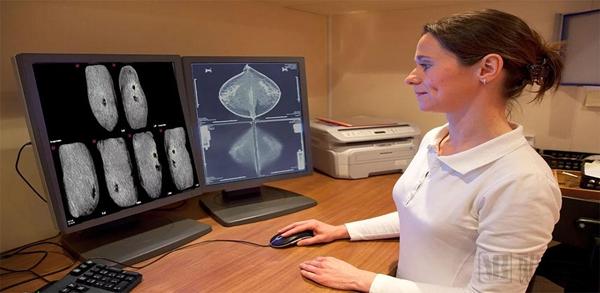
Breast cancer is one of the leading causes of death among women today. In China, the incidence of breast cancer has been rising year by year and now ranks first among malignant tumors in women. Studies have shown that breast cancer is a systemic disease with a high case fatality rate. However, humans are not powerless against it; if the disease is detected at an early stage and treated effectively, women can not only avoid pain but also prevent the spread and metastasis of cancer cells.
Currently, a large number of patients undergo digital mammography (also known as mammography) for disease screening. Typically, these images are reviewed individually by radiologists, which significantly increases their workload and makes it more challenging to detect lesions.
Computer-Aided Diagnosis (CAD) is a novel technology that has been applied in the field of medical imaging in recent years, driven by advances in computer technology and digital healthcare. It employs specialized computer algorithms to analyze images, identify and detect pathological features, thereby assisting radiologists in improving the detection rate of lesions.
As a leader in ultrasound CAD screening for dense breast tissue, Qview Medical has developed a CAD system for 3D automated whole-breast ultrasound, representing a generational upgrade and enhancement of its existing CAD imaging technology.
According to VCBeat (WeChat ID: vcbeat), the company’s product, QVCAD, is primarily based on deep learning algorithms. By integrating innovative C-Thru technology with Automated Breast Ultrasound (ABUS), it reduces image reading time by 33% while maintaining diagnostic accuracy.
ABUS, short for Automated Breast Ultrasound, provides a one-touch standardized operational workflow and image interpretation, encompassing standardized acquisition, standardized imaging, and standardized reporting, with automatic generation of standardized, full-volume ultrasound images. Studies have shown that, compared to digital mammography alone, the breast cancer detection rate increased by 35.7%.
QView Medical, established in 2006, possesses extensive application experience in the field of artificial intelligence (AI). In November 2016, the team developed the first computer-aided detection (CAD) system approved via Premarket Approval (PMA) for mammography and lung CT imaging. PMA, or Premarket Approval, is a scientific regulatory assessment conducted by the U.S. Food and Drug Administration (FDA) to evaluate the safety and effectiveness of medical devices.
While developing the QVCAD algorithm for 3D ABUS, QView Medical collected and conducted in-depth research on cancer cases from over one million ABUS 3D images worldwide. The company stated that the solution provided by QVCAD Invenia ABUS has the potential to become the preferred screening method for women with dense breasts.
In December 2017, QView Medical announced that its QVCAD for the detection of dense breast tissue in women, used in conjunction with the GE Invenia ABUS system, had received FDA approval.
In March 2015, QView Medical raised $4.8 million in a venture capital funding round; the investors were not disclosed.
Years of Entrepreneurial Experience Drive Advances in Breast Imaging
As Chief Executive Officer (CEO) and Chairman of QView Medical, Bob Wang has founded multiple companies over the past 30 years that have transformed medical imaging and improved breast care. His exceptional vision and execution in the imaging industry have driven the development and advancement of modern mammography technology.
Wang stated that when he first entered the field of medical imaging, the high radiation exposure associated with mammography was considered harmful to the human body, rendering it unsuitable for breast cancer screening. Through his in-depth research, Wang developed a high-resolution, low-dose rare-earth X-ray imaging technology, which was successfully sold to 3M Company and licensed by Eastman Kodak Company.
Wang reduced the radiation dose of mammography by 95%, gradually evolving into the breast imaging technology we use today. According to VCBeat (WeChat ID: vcbeat), this rare-earth technology, which lowers X-ray doses, can be applied to all X-ray imaging procedures worldwide and is valued at billions of dollars.
From 1993 to 2006, Wang founded R2 Technology and served as its CEO and Chairman. R2 Technology focused on researching the impact of Computer-Aided Detection (CAD) systems on the early detection of breast cancer, with a commitment to commercialization. It was also the world’s first imaging example to introduce CAD into mammography and has been widely used in various countries. In July 2006, R2 Technology was acquired by Hologic.
Wang did not cease his further study and exploration of medical imaging. He observed that mammography failed to reveal the key features of early-stage breast cancer in cases involving dense breast tissue. In contrast, ultrasound examination appeared to be more effective.
In January 1997, Wang founded U-Systems, Inc., serving as its CEO and Chairman. U-Systems primarily designed and developed breast screening systems and was acquired by GE Healthcare UK in November 2012. Subsequently, Wang developed the core technology underlying somo.v, an automated breast ultrasound system that became the first FDA-approved ultrasound device for breast examination.
Furthermore, Wang holds relevant degrees from the Massachusetts Institute of Technology and Rensselaer Polytechnic Institute. In January 2011, The Cooper Companies, Inc. acquired EndoSee Corporation, a medical device company founded by him, for $44 million in California, USA. Cooper plans to leverage EndoSee’s infrastructure while introducing high-quality products into the office- and surgery-based strategies of obstetrics and gynecology (OB/GYN) practices.
Since founding QView Medical, Mr. Wang established W&Wsens Devices in November 2014 and UroViu Corporation in March 2016. UroViu’s product, the Uro-V single-use diagnostic cystoscopy system, has received FDA 510(k) clearance and is patented.
Ron Ho, another key member of QView Medical, serves on the company’s Board of Directors. Recently, Ron Ho was appointed as the new CEO of U-Systems. Prior to joining U-Systems, he led Metron Systems, a laser scanning company that provided precise 3D digital technologies for complex components in the medical, aviation, and aerospace industries. Additionally, he spent 16 years with the ultrasound division of Siemens Medical Solutions, where he was primarily responsible for product development and commercialization of ultrasound transducers.
Currently, Ron Ho serves on the boards of directors of multiple medical device companies and holds a Bachelor of Science in Mechanical Engineering (BSME) and a Master of Science in Mechanical Engineering (MSME) from the University of Washington. According to VCBeat (WeChat ID: vcbeat), he has been granted numerous patents related to ultrasound technology.
What is the principle of the QVCAD system?
As the first company to develop a CAD system for 3D Automated Breast Ultrasound (ABUS), QView Medical primarily focuses on screening dense breast tissue to enable precise diagnosis and treatment. Its QVCAD system helps radiologists significantly improve the efficiency of breast cancer screening. The QVCAD system is particularly designed for patients who have negative mammography results but are affected by dense breast tissue when undergoing ABUS examinations. The multimodal combination of mammography and breast ultrasound provides a solution for women with dense breasts.
Furthermore, QView Medical recognizes the significant value of ABUS systems. The company believes that while maintaining diagnostic precision, it is essential to improve the efficiency of machine reading. Leveraging its deep learning expertise in the field of AI, QView Medical has developed new algorithms for its existing ABUS systems and conducted rigorous testing with the ultimate goal of enhancing machine reading performance.
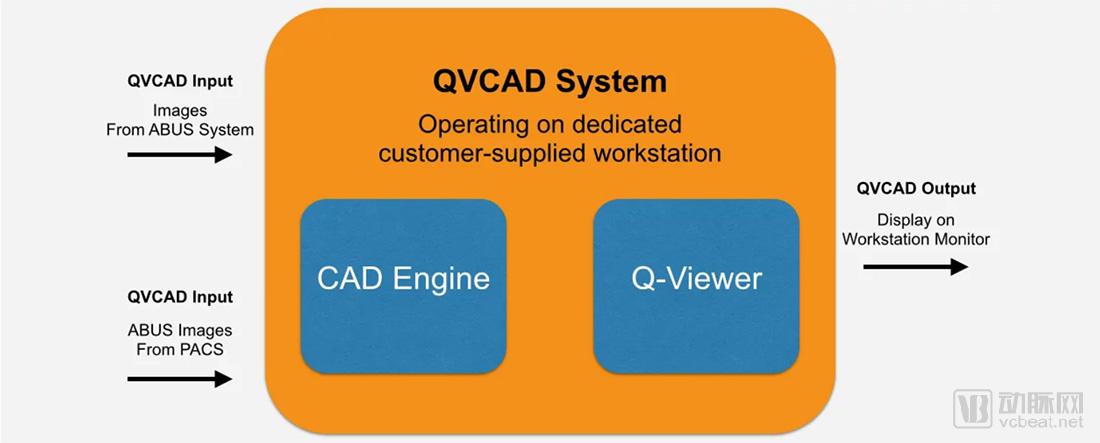
QVCAD is a software system composed of two subsystems:
1. The CAD subsystem incorporates complex image processing methods;
2. The Viewer subsystem recombines ABUS images with the output from the QView CAD engine to display them on a monitor for interpretation by medical personnel.
The QVCAD system receives input images from ABUS and ABUS images from the PACS system in standard DICOM format. The native images from the ABUS system are processed by the QVCAD CAD engine, and the resulting output images are displayed on the Q-Viewer.
QVCAD CAD Engine employs multiple image pattern recognition processes and utilizes artificial neural networks to detect suspicious lesions in the breast. Its primary purpose is to differentiate potential breast lesions from normal breast tissue.
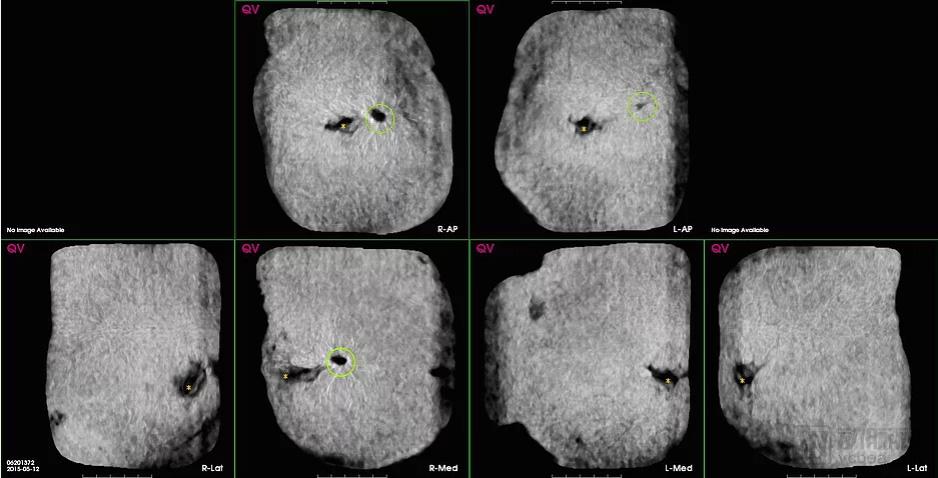
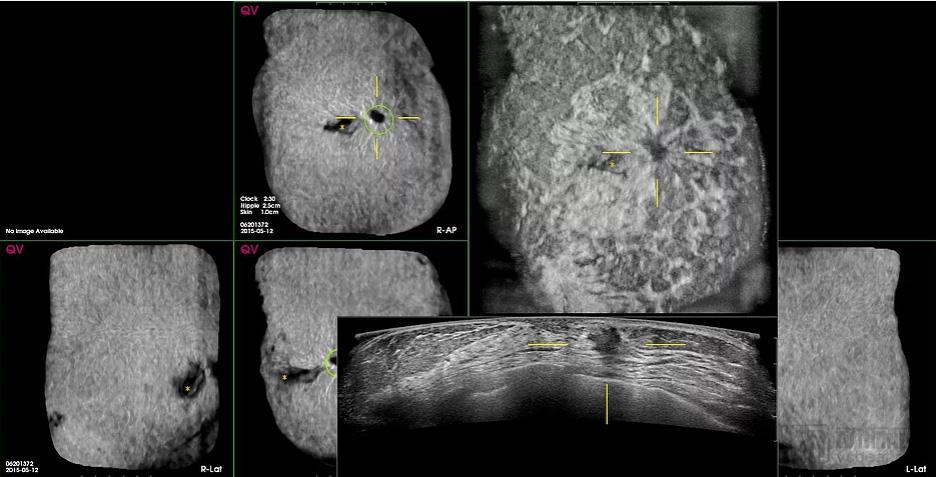
The CAD engine outputs of the QVCAD system are primarily presented in the following two ways:
1. Presented in coronal image format. As shown in the QVCAD navigation image below, CAD has detected potential abnormalities in the breast. The key areas marked by CAD are indicated by green circles in the image, with details displayed directly by the CAD Image Navigator. The CAD markings highlight potentially malignant lesions.
2. Cursor Hover Mode enables users to quickly view localized regions of interest within the viewport. This is achieved by displaying the corresponding ABUS coronal and transverse raw images adjacent to the CAD navigation image, allowing observation of the point under the cursor. The hover mode is activated whenever the cursor rests on any area of the CAD navigation image.
QView Medical: A Comparison with Competitors
1. Comparison of QView Medical and iCAD
iCAD, Inc., founded in 1984 and headquartered in Nashua, New Hampshire, USA, is primarily dedicated to providing advanced image analysis, workflow solutions, and radiation therapy for the early detection and treatment of cancer. The company operates mainly through its Cancer Detection and Cancer Therapy segments. The Cancer Detection segment includes image analysis and clinical decision support solutions for mammography, breast tomosynthesis, and computed tomography (CT) imaging. The Cancer Therapy segment primarily provides platform technologies for isotope-free cancer treatment.
Compared with Qview Medical, iCAD was established earlier, offers a broader product portfolio, and covers a wider range of diseases, providing patients with comprehensive services for cancer detection and treatment. iCAD’s PowerLook Breast Health Solutions deliver 2D and 3D mammography integrated with AI technology to meet patient needs.
2. Comparison Between QView Medical and Volpara
Volpara is dedicated to providing digital healthcare solutions for the early detection of breast cancer, offering comprehensive analysis of female breast density and performing interpretation and screening based on objective measurements of breast density, compression, and radiation dose. Volpara Solutions has developed multiple software products. Among them, VolparaDensity provides clinicians with patient-specific X-ray radiation doses through mammographic diagnostics, converting mammography into volumetric data to support clinical decision-making. Volpara’s technology has been adopted in more than 30 countries, and its global reach continues to expand.
Compared with Qview Medical, Volpara primarily measures and analyzes female breast density through the conversion of images and data. In contrast, Qview Medical focuses on the upgrading and iteration of imaging and ultrasound technologies to provide solutions for women with dense breasts.