

Zipongo Files S-1: How the Digital Nutrition Platform Turns $1 into $6 in Chronic Disease Cost Savings Through Food-as-Medicine

Foodsmart
Personalized Digital Nutrition Platform
For chronic conditions such as the “three highs” (hypertension, hyperlipidemia, and hyperglycemia) and diabetes, healthy eating has become a critical component of disease management. In San Francisco, USA, Zipongo, a digital health platform focused on nutritional diets, leverages biometric technology to provide personalized dietary plans for chronic disease management and other related services.

Zipongo's Historical Funding Rounds
In January 2018, Zipongo secured $18 million in Series B financing, with investors including Seventure Partners, Mayfield Fund, and Zaffre Investments.
Among Zipongo’s investors, in addition to Mayfield Fund, a California-based digital investment specialist, is Seventure Partners. As a European leader in innovative financing, a global frontrunner in microbiome-focused venture capital, and a key player in nutrition and health investments, Seventure Partners will bring Zipongo expertise in global markets and fundraising.
Furthermore, Zaffre Investments is the investment fund under Blue Cross Blue Shield of Massachusetts, a premier health insurance provider in the United States.
On November 29, 2016, shortly after Zipongo completed its first Series B financing round, the company acquired FillMyFork, another San Francisco-based startup that had previously developed an app for tracking personal dietary health. Since its establishment in March 2010, Zipongo has secured nearly $50 million in funding.
As an online digital platform for nutrition and health, what has been Zipongo’s development trajectory and business model? And why has it garnered favor from U.S. health insurance giants?VCBeat (WeChat: vcbeat)Consulting multiple sources to address the aforementioned questions and explore Zipongo’s business logic.
Nutritional Health Program Originating from Pediatric Weight Management
Jason Langheier, MD, MPH, is the founder and CEO of Zipongo. A serial entrepreneur, he established Zipongo in 2011 to provide food benefit management and nutritional counseling for large self-insured employers and health plans. The company was inspired by his experience running a pediatric weight management clinic at Boston Medical Center.
Jason Langheier not only pursued systematic studies in medical academia but also frequently developed various health systems during his school years to improve health behaviors.
During his studies at Duke University School of Medicine, Jason Langheier developed a system called Coach K Drive 2 Fitness to promote physical activity among individuals. Upon achieving specific goals, users could earn health-related rewards from local vendors. The system was subsequently adopted by Fitness Forward, a nonprofit organization dedicated to engaging volunteers in guiding school-aged children toward healthy lifestyles.
During his studies at the Harvard T.H. Chan School of Public Health, where he earned a Master’s degree in Biostatistics and Decision Science, and while serving as a researcher at the University of California, San Francisco, Dr. Jason Langheier created a “Children’s Playbook” to foster collaboration for comprehensive health within communities.
Meanwhile, Jason Langheier is also the co-founder and CTO of Proventys, a medical information company. As the principal investigator for an NCI SBIR grant, he led the initial development of a personalized treatment decision support system based on NCCN guidelines, as well as predictive models for adverse outcomes of chemotherapy.
After discussing the role of Zipngo’s nutritional adherence tools in health, a leading nutrition expert from the Harvard T.H. Chan School of Public Health stated: “The second pillar of FBM is enabling access to the oldest ‘new’ generic medication—Hippocrates’ view, articulated over two centuries ago, that ‘let food be thy medicine and medicine be thy food.’ Yet today, it is easier to fill a prescription than to obtain clear guidance and support for eating better.”
Modern clinical guidelines for the treatment of hypertension, hypercholesterolemia, obesity, and diabetes require physicians to prioritize dietary improvement as the first line of defense. Meanwhile, evidence demonstrates that food-based therapy is a key intervention for such chronic diseases; for metabolic syndrome, it not only helps alleviate chronic conditions but also generates substantial cost savings for healthcare payers, including patients, employers, insurance companies, and governments.
Leveraging Food as Preventive Medicine to Control the Soaring Costs of Chronic Disease
Chronic diseases are the primary driver of high medical costs, with employers being the biggest beneficiaries of reduced expenditures. According to the Agency for Healthcare Research and Quality, 86% of healthcare spending in the United States is attributed to patients with one or more chronic conditions. Managing and preventing chronic diseases among employees can significantly impact healthcare costs.
Zipongo’s philosophy holds that there is a simple and cost-effective approach to achieving cost-reduction goals for chronic diseases: food. Food serves as a preventive medicine to maintain patients’ health.
Unhealthy diets are often the primary culprit behind many chronic diseases, while a healthy diet helps prevent and treat the most common illnesses. Although food cannot completely replace medication, nutritional health is fundamental to maintaining a healthy workforce and reducing healthcare costs.

Image source: medcitynews
Zipongo is a digital nutrition platform that provides personalized meal recommendations to millions of eligible users based on biometrics and food preferences, offering real-time support for their food decisions.
Zipongo integrates users’ electronic medical records and health data to enable more personalized recipe customization and provide tailored healthcare plans. Once users input their data, the app retrieves their personal health profiles and creates distinct, targeted dietary plans for each individual.
At the core of the platform is a powerful database that synchronizes thousands of recipes and intelligent recommendation software across its mobile app, PC interface, and nutritional database. This enables the delivery of highly personalized dietary plans for each participant. Zipongo partners with corporate employers and health management companies to reduce chronic diseases and improve the health of employees and members of health management programs.
In the United States, Zipongo has over 150 partner clients. A simple statistic vividly illustrates Zipongo’s impact on cost control: “For every $1 invested in health products, companies can achieve $6 in cost savings.”
In addition, Zipongo collaborates with third-party providers offering biometric services, such as 23andMe, to assess users’ physiological indicators—including blood pressure, cholesterol levels, and body composition—and leverages valid user data to customize meal plans and provide nutritional recommendations.
Whether at home, in the office, at the supermarket, or in a restaurant, users can access the healthiest recipes through Zipongo, thereby reducing the likelihood of choosing unhealthy foods due to convenience, cost, and other factors.
To enhance service accessibility, Zipongo partnered with leading food service providers such as Compass and Guckenheimer, adopting an O2O-like model to enter the meal services market. While recommending healthy meal plans to users, the platform integrated local stores, enabling seamless connectivity between users and food service providers. Through customized shopping lists, users could access discounts on healthy foods. The platform even linked employees with delivery services, helping to streamline the shopping and dining processes.
Provide food management solutions for chronic diseases,Launch of the FoodScripts Module
In the field of chronic diseases, the two conditions most sensitive to dietary changes are diabetes and heart disease. For individuals with diabetes, maintaining health means keeping blood glucose levels within the normal range. Excessive sugar in the blood can damage the kidneys, eyes, and vascular system. Insufficient sugar levels may lead to diabetic coma.
A substantial body of research has demonstrated that dietary management is essential for maintaining healthy blood glucose levels.
An analysis of over 40 studies on medical nutrition therapy for patients with diabetes found that diet can prevent, treat, and even reverse type 2 diabetes. Specifically, using food as medicine daily to improve glycemic control in diabetic patients is effective, making medical nutrition therapy a novel approach for individuals with prediabetes and those newly diagnosed with diabetes.
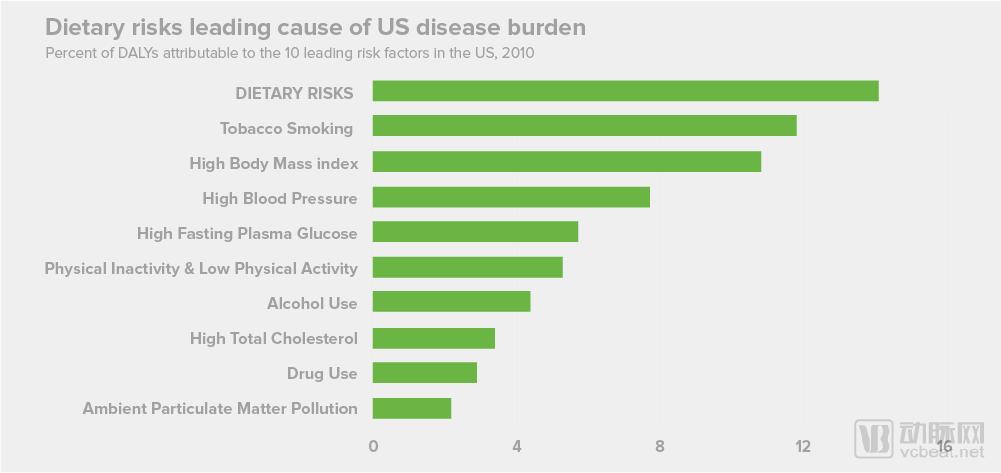
Source: Food Benefit Management (FBM)《A New Solution to Get the Most out of Your Benefits Dollars White Paper》
Furthermore, diet plays a crucial role in heart disease. To address this, the National Heart, Lung, and Blood Institute has developed a scientifically based dietary approach to control hypertension, known as the “DASH” plan. As hypertension is a leading cause of heart disease, the DASH diet aims to manage high blood pressure through non-pharmacological means or as an adjunct to medication.
This dietary plan emphasizes increased consumption of vegetables, fruits, and low-fat dairy products, including foods rich in potassium, calcium, and magnesium that help lower blood pressure, along with moderate amounts of whole grains, fish, poultry, and nuts. Many individuals who rely on antihypertensive medications can reduce their dependence on these drugs by adhering to the DASH diet.
A series of studies have provided scientific support for Zipongo. Since its launch in 2014, the platform has accumulated millions of visits from employees, health plan members, and patients with chronic diseases to its health, cooking, and restaurant modules, helping to assess and improve nutrition.
Currently, Zipongo is expanding its technology platform to enable health plans and providers to use food as a treatment for chronic diseases through a new solution called FoodScripts. As a specific module added to the Zipongo platform, FoodScripts addresses conditions such as hypertension, diabetes, and obesity through standardized, personalized nutrition plans.
Zipongo emphasizes using food as a therapeutic intervention for chronic diseases, rather than targeting only healthy populations. Initially, Zipongo focused on B2B enterprise clients, providing them with dietary health management solutions. Later, the company’s strategy gradually shifted toward hospitals and specialized health management service providers.