

China Electronics Guokang: A New-Model Healthcare Service Operator Backed by Sinopharm and China Electronics
In December 2016, after nearly a year of preparation, the Internet Healthcare Innovation Team, in collaboration with the financial sector of Sinopharm Group and the smart healthcare division of China Electronics Corporation (CEC), officially established Zhongdian Guokang.
Behind the Low Profile: Two Major Central State-Owned Enterprise Shareholders
Zhongdian Guokang is a new-type medical service operator in China, jointly established by the innovation teams of Sinopharm Financial Leasing, a company under the China National Pharmaceutical Group Corporation specializing in healthcare and wellness, and China Electronics Holding Limited.
An Experienced and Innovative Team
Since 2012, the core team of Zhongdian Guokang has been engaged in mobile healthcare, chronic disease management, and post-operative cardiovascular follow-up care, and later expanded into regional population health big data platform services, strategically focusing on high-tech sectors within the emerging healthcare industry.
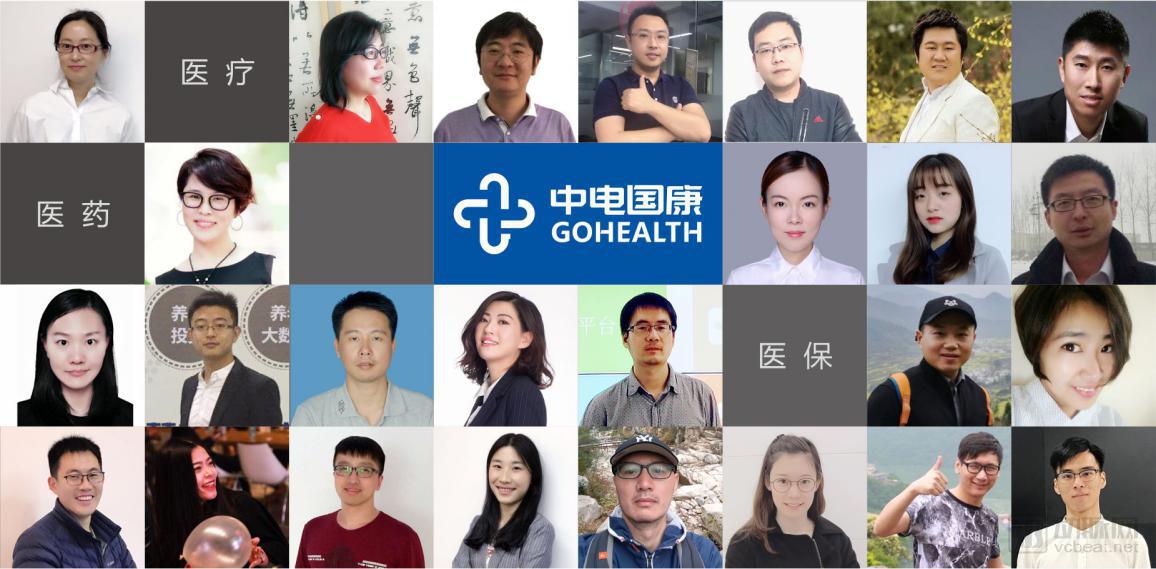
The innovative team comprises professionals from companies across diverse sectors, including big data, healthcare informatics, internet-based healthcare, insurance cost containment, and the pharmaceutical industry. Possessing a hybrid expertise in medical big data, pharmaceuticals, and health insurance, the team demonstrates strong capabilities in innovative practice.
Positioning: A New Type of Medical Service Operator
CEIC Health empowers medical institutions (for remote diagnosis and treatment), chain pharmacies, and urban residents through cloud platform APIs featuring an “AI Algorithm Library + Big Data Platform,” delivering integrated medical-cloud, healthcare, and pharmaceutical services to establish itself as a next-generation healthcare service operator:
1. Full-lifecycle management from medical care to health;
2. Comprehensive medical services spanning from in-hospital diagnosis and treatment to out-of-hospital follow-up care;
3. Full industry chain supply, ranging from diagnosis and treatment, pharmaceutical distribution, and remote testing to medical insurance and commercial health insurance coverage.
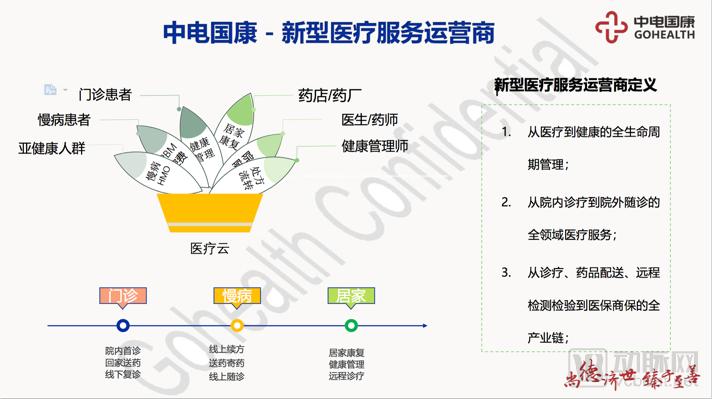
Regarding the company’s positioning, founder Zhang Juan stated that neither a purely online nor a purely offline approach can adequately meet users’ healthcare and medical needs. Only by fully leveraging the innovation team’s online DNA and the shareholders’ offline resource advantages can sufficient competitive edges be built to serve users effectively. Zhongdian Guokang has chosen to engage in comprehensive cooperation with second- and third-tier cities, utilizing shareholder advantages to acquire equity stakes in certain hospitals, establish independent third-party medical centers, and deploy equipment and platform assets to hospitals, thereby strengthening its offline resource layout. Meanwhile, the company fully capitalizes on the advantages of its big data platform for healthcare, empowering hundreds of medical institutions, hundreds of chain pharmacies, and millions of residents through its platform API capabilities. It provides remote medical services, prescription and pharmaceutical services, and HMO chronic disease insurance services via its online platform. This B2B2C model can attract large volumes of effective end-users (C-side), whose value is substantial compared to end-users acquired through pure B2C internet healthcare models.
Emerging Businesses Under Supply-Side Reform
“Amid the public’s growing aspiration for healthy living and the sweeping wave of new healthcare reforms, the vast majority of cities need to systematically reconstruct their existing healthcare systems. This necessitates supply-side reforms in diagnostic and treatment services, medication services, and insurance services. Therefore, China Electronics Guokang positions itself as a new-type healthcare service operator.”
Mr. Juan emphasized that the core principle of supply-side reform is to make production methods more conducive to productivity growth after transformation. In alignment with healthcare reform policies, China Electric Guokang has continuously restructured its existing product lines—including the operation of population health big data platforms, AI-based medical consortium platform operations, and AI-driven specialized rehabilitation services—through “Cloud + AI” empowerment. Meanwhile, it has innovatively developed and launched new products: the “Blockchain-Based Prescription Circulation Platform” and the “Chronic Disease HMO Platform.”
The central themes of the new healthcare reform policies remain tiered diagnosis and treatment and the reduction of pharmaceutical expenditures. Effectively managing physicians’ prescribing behaviors has become a key focus for future policy initiatives. The evolution toward Pharmacy Benefit Management (PBM), grounded in rational drug use, represents the prevailing trend. Against this backdrop, China Electronics Guokang independently developed its “Blockchain-Based Prescription Circulation” product, which was launched in January 2018. The company has already initiated preliminary collaborations with nearly ten large Grade A tertiary hospitals and signed strategic agreements with China’s largest telecommunications operator and its leading medical informatics vendor. Pilot programs for this product have been implemented in Shandong and Anhui provinces. The product features three major highlights:
According to Ms. Juan, abroad, prescriptions issued by licensed physicians are considered the physicians’ intellectual property and products, and fees are charged for their circulation to patients or outside hospitals. In China, in a sense, physicians’ prescriptions “leak” unofficially, as there is no authoritative shared circulation platform. Theoretically, all prescriptions issued by physicians should be processed through such a shared circulation platform, which ensures the security of all prescriptions and guarantees that they cannot be tampered with. For example, if a prescription circulates online and eventually reaches a pharmacy or a delivery company, any tampering would constitute a medical accident.
CEIC Guokang’s decision to integrate blockchain technology with prescription circulation offers two key benefits:
First, encryption and tamper-proof technologies are employed to ensure the highest level of security for data during internet transmission;
Secondly, smart contract technology addresses the payment cycle issues faced by pharmacies. Zhongdian Guokang embeds blockchain-based smart contract technology into its underlying infrastructure, packaging pharmaceutical accounts receivable into digital assets. These assets are then offered to capital providers with sufficient liquidity, such as banks, factoring companies, and internet finance firms. This approach resolves the payment cycle challenges between industrial enterprises (pharmaceutical manufacturers) and distribution enterprises (pharmacies, etc.), alleviating working capital constraints for pharmacies and pharmaceutical distributors. Ultimately, this supports industry development and ensures the timely and stable supply of medicines.
Prescriptions submitted through the platform undergo online review. In practice, certain chronic and common diseases may lead physicians to issue large-volume prescriptions, necessitating careful attention to issues such as drug incompatibilities. Leveraging its strong data-driven foundation, China Electronics Guokang conducts in-depth organization and analysis of medical data assets shared with its shareholder companies and partner hospitals, and has developed a rational medication use module embedded within the prescription circulation platform. Before prescription data reaches pharmacies, it is first processed by the prescription review platform. If a physician’s prescription is deemed unreasonable, involves non-standard medication use, or triggers drug incompatibility rules, an alert interface will appear to notify the physician, who can then adjust the prescription accordingly.
This service is currently under development. It primarily involves embedding the aforementioned blockchain smart contracts into the underlying infrastructure of the prescription platform. Shareholders of Zhongdian Guokang hold a factoring license and have RMB 10 billion in capital dedicated to supply chain finance, thereby leveraging these advantages to serve a broader client base.
According to Mr. Juan’s summary, there are nearly seven innovative directions in healthcare finance, one of the most important being supply chain finance based on pharmaceuticals and medical consumables. In the future, prescription drugs worth hundreds of billions will be prescribed, purchased, and delivered through online consultations, leading to significant innovation and business restructuring in healthcare supply chain finance.
Prescription circulation primarily involves chronic disease management and outpatient medications. These services can be fully decoupled from tertiary hospitals and transferred to primary healthcare institutions. However, from an economic perspective, stocking nearly a thousand types of medications at primary care facilities is highly inefficient and contradicts fundamental economic principles. The optimal model for prescription circulation is to conduct consultations at the primary care level while fulfilling medication dispensing through internet-based platforms.
This is also the core idea of supply-side reform: to make the transformation of production methods more conducive to the development of productive forces.
The so-called “strengthening primary care” refers to shifting all outpatient and chronic disease medications to online consultations, with initial and follow-up visits conducted at the primary care level.
As a result, all diagnostic and treatment costs, as well as medical expenses, will decrease, while efficiency will improve. This involves reforms in physicians’ clinical practices, as well as in drug distribution and disease management models.
Based on its assessment of the broader market environment, CEC Guokang launched a chronic disease HMO product in March 2018. Currently, this solution has initiated collaborations in multiple cities across China.
“At the inception of the company, we engaged in in-depth discussions with mainstream commercial insurance providers to strategically position ourselves in the HMO sector.” In March 2018, Zhongdian Guokang released its chronic disease HMO product solution and initiated collaborations in multiple cities.
In the United States, a typical example of an HMO is Kaiser Permanente. Its core essence lies in a healthcare institution holding an insurance license providing insurance services to residents. These insurance services encompass medical care, allowing members to choose hospital tiers, physician levels, care locations, and medication categories, representing a bundled healthcare service model.
Some domestic enterprises have also been making efforts in this area, but with limited success. The primary reason was that the conditions for healthcare reform policies were not yet ripe at the time. In recent years, sweeping measures under the new healthcare reform policies have made it possible for Health Maintenance Organizations (HMOs) to take root in China. HMO providers, who need to consider reducing operational costs, have made currently somewhat marginal telemedicine services a necessity. However, HMO providers face many barriers that need to be broken down. They require an insurance background, strong cost-control capabilities, and medical service delivery capabilities; some may even need to acquire hospitals to achieve a closed-loop system.
The establishment of the National Healthcare Security Administration (NHSA) sends a highly significant signal. The NHSA’s mandate encompasses the entire value chain—from pricing (previously under the National Development and Reform Commission), to procurement and bidding (formerly managed by the National Health and Family Planning Commission), and payment administration (originally handled by the medical insurance bureau of the Ministry of Human Resources and Social Security). This integrated structure greatly facilitates decision-making and supports the implementation of healthcare reforms in pricing, procurement, and payment methods. Now is an ideal time to develop Health Maintenance Organizations (HMOs).
Zhongdian Guokang aims to effectively implement tiered diagnosis and treatment through the aforementioned products, alleviate the burden on large tertiary Grade A hospitals caused by patient influx for medication, save national chronic disease medical insurance funds, and create a new supply of medical and pharmaceutical services via the “Internet + Health” model, thereby achieving supply-side reform.