

Medlinker Launches First TCM-Focused Internet Hospital in Rizhao, Marking the Start of Its 'Internet Hospital+' Strategy
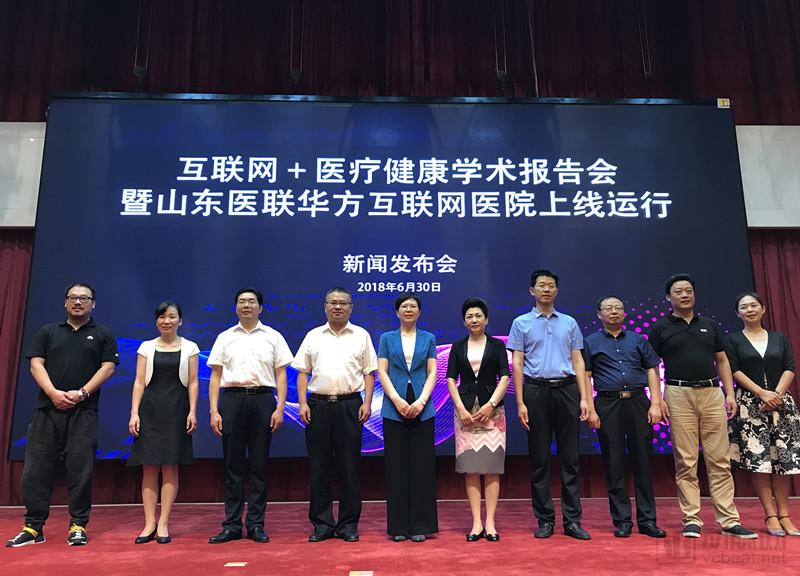
According to VCBeat (WeChat ID: vcbeat),On July 2, the first “Yilian Huafang” Internet Hospital, jointly established by Yilian and the Rizhao Huafang Traditional Chinese Medicine Branch, was officially launched. Featuring traditional Chinese medicine as its specialty while covering general practice, this launch signifies a comprehensive upgrade of Yilian’s “Empowering Healthcare” initiative.
Healthcare is an industry particularly reliant on policy; even the slightest policy shift can have a significant impact on the sector. Keeping pace with policy trends has become the norm in healthcare.
On April 28, the State Council issued the “Guiding Opinions on Promoting the Development of ‘Internet + Healthcare’” (hereinafter referred to as the “Opinions”), which clearly stipulates that internet hospitals must be affiliated with physical hospitals; patients’ initial consultations must be conducted in person, while follow-up and subsequent visits may be carried out online.
Although it is only a draft for comments, this document serves as a much-needed boost to internet hospitals that have experienced roller-coaster-like development. The days of passively waiting for the next market opportunity are over. Various institutions are making continuous moves in the field of internet healthcare, collectively accelerating their pace. Medlinker is one such player.
In addition to offering services such as online consultations, remote multidisciplinary consultations, appointments with renowned specialists, electronic prescriptions, and home medication delivery, the “Yilian Huafang” Internet Hospital has also attracted four National Masters of Traditional Chinese Medicine, represented by Professor Zhang Daning, along with 600 other physicians to join its platform.
Zhang Daning is a renowned nephrologist and traditional Chinese medicine (TCM) practitioner in China, a leading authority in Chinese nephrology, a descendant of six generations of imperial physicians, and an esteemed healthcare provider for national leaders recognized by the state. As the founder of TCM nephrology, Professor Zhang edited and published China’s first *Practical TCM Nephrology* and *Great Dictionary of TCM Nephrology* in the 1980s. He scientifically and rigorously standardized the concept, scope, and fundamental principles of syndrome differentiation and treatment in “TCM kidney diseases,” thereby enabling “TCM Nephrology” to be scientifically separated from TCM Internal Medicine and established as a systematic and complete clinical discipline within TCM.
Traditional Chinese medicine (TCM) resources are scarce, and National TCM Masters such as Zhang Daning are regarded as treasured assets of TCM. Medical services provided by traditional brick-and-mortar hospitals are constrained by geographic radius, making it difficult for broader populations to access TCM care, particularly from National TCM Masters. The launch of the “Yilian Huafang” Internet Hospital has built a “grand cloud bridge” that enables the public to have “zero-distance” access to National TCM Masters, renowned physicians, and classic prescriptions. This initiative expands the service radius, alleviates the imbalance in medical resource distribution to a certain extent, continuously meets the personalized health needs of the population, and strongly promotes the development of healthcare services in Rizhao City.
On the other hand, for internet hospitals to take off, they must have a solid foothold.“Yilian Huafang” relies on the offline entity of Rizhao Huafang Traditional Chinese Medicine Branch Hospital to clearly define medical liability, ensure patients’ basic safety during medical treatment, and reduce unnecessary doctor-patient disputes.
Yang Yang, Vice President of Medlinker, stated, “The launch of the ‘Medlinker Huafang’ Internet Hospital marks the starting point of the strategic cooperation between Medlinker and Huafang. In the future, Medlinker will continue to inject diversified medical resources into Rizhao, including leveraging its network of 500,000 physicians for multi-site practice via the internet hospital platform and building a medical big data platform in Rizhao, thereby providing the city with comprehensive smart healthcare solutions.”
Having just turned four, Yilian adopted a significantly higher profile in 2018, with a flurry of strategic partnerships and frequent corporate moves.
Just this past June, Medlinker joined forces with Penguin Doctor and Dingdang Kuaiyao to establish a tripartite strategic partnership, bridging the “last mile” of medical care services. By leveraging Dingdang Kuaiyao’s pharmaceutical resources, pharmacy network, and drug delivery capabilities, Medlinker has rapidly expanded its presence in the pharmaceutical distribution sector, creating a closed-loop service ecosystem integrating “medical consultation, diagnosis, and medication.”
In May, Medlinker continued to advance its smart hospital initiatives. It not only entered into a strategic partnership with West China School of Stomatology to jointly promote the innovative integration of artificial intelligence and dentistry, but also completed the internal beta launch of its independently developed Winlite Smart Hospital Platform, initiating trial operations at multiple medical institutions.
Prior to the official launch of the “Medlinker Huafang” Internet Hospital, Medlinker had signed a strategic cooperation agreement with the People’s Government of Rizhao City, Shandong Province, to provide comprehensive smart healthcare services to the city.
At this point, Medlinker’s medical empowerment initiatives have flourished across the board. From government agencies to healthcare institutions, pharmaceutical and medical device manufacturers, and insurance companies, Medlinker has penetrated every segment of the upstream and downstream value chain in the broader health industry.
If previous strategic collaborations were essentially about exporting Yilian’s single capabilities, then the launch of the “Yilian Huafang” Internet Hospital represents a perfect demonstration of Yilian’s comprehensive capabilities.
A conceivable closed-loop healthcare service scenario is as follows: Patients undergo their initial consultation at the offline entity, Rizhao Huafang Traditional Chinese Medicine Branch Hospital. Subsequent steps—including follow-up visits, treatment plan confirmation, rehabilitation management, and health management—are completed through the medical consortium product ecosystem, which comprises the Medical Consortium, Internet Hospital, and Penguin Clinic. If medication is required, physicians will issue electronic prescriptions and upload diagnostic reports to the patient’s portal, enabling patients to place online orders via Dingdang Kuaiyao, a strategic partner of the Medical Consortium.
Currently, there are two main types of internet hospitals: one type is established by internet healthcare companies that apply for hospital licenses; the other type is jointly built by internet healthcare companies in partnership with offline hospitals.
Industry experts believe that for internet healthcare companies, building offline physical hospitals entirely on their own entails a significantly heavier business model and inevitably leads to slower growth. In contrast, partnering with existing offline hospitals to co-develop facilities represents an asset-light approach, enabling companies to rapidly build core competencies and scale them broadly.
The extremely high frequency of strategic cooperation with YiLian indicates that YiLian positions itself as the latter.
Wang Shirui, Founder and CEO of Medlinker and Penguin Doctor, believes that internet hospitals facilitate a two-way flow between online and offline medical services. Each model has its own advantages, and only through their complementarity can the industry advance faster and further.
From its inception as a simple platform for physician learning and exchange to its later role in facilitating multi-site practice by deploying physician resources, Medlinker’s positioning as an integrator of diverse resources and capabilities centered around hospitals has become increasingly clear. To date, Medlinker has established core competencies across multiple levels. On the supply side, it can deliver single-capability solutions or collaborate with pharmaceutical manufacturers, medical device companies, and insurance providers to offer comprehensive, integrated outputs. On the support side, strategic partnerships have enabled the development of capabilities in AI technology, pharmaceutical distribution, and healthcare big data, thereby supporting various solutions. Beyond hospitals, Medlinker’s solutions can also be extended to third-party institutions.
The collaboration with the Rizhao Huafang Traditional Chinese Medicine Branch serves as a comprehensive trial of Yilian’s capabilities. Shandong Province, one of China’s most populous regions with over 100 million permanent residents, represents a substantial healthcare consumption market. Rizhao is merely the starting point; as cooperation deepens, Yilian’s internet hospital services will inevitably expand to other parts of Shandong, ultimately achieving a presence across the province and throughout China.
Furthermore, healthcare is an industry profoundly influenced by policy. As an emerging form of medical service, internet healthcare must align its strategies with policy frameworks to ensure robust survival and development. Currently, the cornerstone of deepening healthcare reform is the implementation of a tiered diagnosis and treatment system, aiming to achieve the medical objectives of “initial consultation at primary care institutions, two-way referrals, separate management of acute and chronic conditions, and coordination between different levels of healthcare providers.”
“Internet Hospital + Medical Consortium” has become an industry-recognized approach to tiered diagnosis and treatment. In the future, as Internet hospitals deepen their deployment, medical consortiums will further facilitate the establishment of alliances among various Internet hospitals, enabling interoperability of data between institutions. On the basis of ensuring information security, a patient data-sharing platform will be established to achieve sharing of medical equipment within the medical consortium, inter-hospital collaborative workflows, and remote patient examinations, thereby maximizing the implementation of tiered diagnosis and treatment.
Meanwhile, value-added services such as physician education within the medical consortium, patient referrals, physician outpatient consultations, and remote diagnosis and treatment can also be provided.
With the internet hospital at its core, there is significant room for imagination in the future development of medical alliances in terms of healthcare service solutions.