

After the Hype Fades: The Current State of Medical VR Backed by Samsung and Microsoft
The development of virtual reality (VR) has been fraught with challenges. The VR industry surged in popularity in 2016, only to plummet into a deep freeze in 2017. Taking medical VR as an example, data from the VCBeat database (WeChat ID: vcbeat) shows that this sector secured only one round of financing in 2017. This trajectory aptly illustrates the saying, “It began as a gentle breeze at the end of duckweed, only to fade away amidst the wild grass.”
Some industry experts believe that the so-called "industry winter" is merely a transition of the VR sector from hype-driven concepts to practical implementation, with the entire industry undergoing consolidation. VR is increasingly being integrated across various sectors, including education, gaming, auto shows, and real estate. This marks the correct trajectory for the VR industry’s development.
By mid-2018, it became evident that the VR industry was no longer confined to gaming and adult entertainment, but had expanded into a wider range of application scenarios. For instance, Beike Zhaofang launched its VR property viewing feature; Baidu’s VR Smart Classroom was implemented in a primary school in Anhui Province; and iQIYI introduced an all-in-one VR headset alongside its mobile cinema service. On the hardware front, Xiaomi and Facebook jointly released the Oculus Go all-in-one VR headset. Meanwhile, telecom operators such as China Mobile also placed their bets on VR, establishing laboratories and launching VR projects based on 5G applications.
In the medical VR industry, focus is primarily concentrated on six major application scenarios: education and training, personalized fitness, psychological disorders, rehabilitation training, visual impairments, and clinical assistance. The market remains optimistic about the future of medical VR, with a projected compound annual growth rate (CAGR) of 54.45% in the sector. ABI Research predicts that the market value of the medical VR industry will reach $285 million in 2022.
As the tide recedes, which companies in the medical VR industry remain standing, and how has the industry’s direction shifted? VCBeat has compiled an analysis.
In 2017, the VR industry entered a downturn. Once a buzzword, VR was left far behind by AI and deep learning, unable to match their pace of industrial development. AI became the primary battleground for tech giants such as Google, Apple, and Amazon. Although the VR sector appeared somewhat subdued, major players have not abandoned this market. Mark Zuckerberg firmly believes that VR will be the next-generation computing platform; in 2014, he made a bold $3 billion acquisition of virtual reality manufacturer Oculus.

Whether VR is regarded as a discarded burden or an overlooked gem, it is evident that tech giants have not lost confidence in the technology and continue to increase their investments in medical VR. Among them, Samsung has emerged as the most active player, driven by the shrinking market share of its smartphone business amid intense competition. Samsung’s strategy for expanding into medical VR involves two key approaches: first, leveraging its existing healthcare infrastructure and mobile devices to collect data and establish itself as a leading mobile health platform; second, vertically integrating to develop comprehensive implementation scenarios and applications for medical VR.
Samsung’s foray into the pharmaceutical sector began at an early stage. As early as 2015, it invested RMB 4.7 billion to build what was planned to be the world’s largest biopharmaceutical manufacturing facility, and made strategic inroads into multiple fields, including wearable medical devices, digital health platforms, and medical diagnostics. Samsung aims to become a platform connecting individuals, physicians, and hospitals, thereby helping to elevate global healthcare standards.
Unfortunately, despite its extensive reach, it has failed to establish strong competitiveness across various industries. VCBeat has found that within Samsung’s healthcare empire, medical VR plays the role of bridging the “last mile,” connecting multiple stakeholders, with Samsung fulfilling its envisioned function as a platform.
In March 2018, Samsung announced a collaborative study with Travelers Partners Insurance, Cedars-Sinai Medical Center, Bayer, and AppliedVR to investigate the use of virtual reality (VR) in pain relief. The study employed wearable devices and VR-assisted therapy to alleviate acute orthopedic pain and extremity pain. The project aimed to leverage cutting-edge technology to improve treatment outcomes for injured workers.
Chronic pain in factory settings can lead to a range of issues, with injured employees potentially resorting to opioids to mask their pain. This study demonstrates that non-pharmacological VR therapy can help injured workers avoid chronic pain, reduce the risk of opioid addiction, and lower healthcare costs.
In this study, the equipment suite primarily included Samsung’s Gear VR (powered by Oculus headsets), the Samsung Gear Fit2 wearable device, pain management content supported by appliedVR’s biosensor technology, and a transcutaneous electrical nerve stimulation (TENS) device provided by Bayer for treating muscle pain caused by physical activity and strenuous work. This suite of devices was used to measure participants’ daily functional status, work productivity, and analgesic usage.
Of course, Samsung plays more than just a hardware provider role in this initiative. A key partner in Samsung’s groundbreaking research is the insurer Travelers. The collaboration between Samsung and the insurance company can address the challenges of implementing medical VR solutions, thereby establishing a complete commercialization pathway.
Traveler is committed to finding innovative ways to help clients maintain workplace safety and manage workers’ compensation risks. Traveler previously developed a nurse-assisted program to guide injured workers through the claims process. In 2016, Traveler launched a predictive model capable of forecasting workers’ risk of opioid dependence, thereby reducing opioid use during their recovery and treatment.
According to statistics from the U.S. Department of Health and Human Services, more than 14,000 facilities nationwide have been confirmed for opioid misuse, with 116 Americans dying daily from opioid abuse. Medical VR offers non-pharmacological pain relief; its integration with existing mobile devices holds immense market potential.
Dr. David Rhew, Chief Medical Officer and Head of Healthcare and Wellness at Samsung Electronics America, stated that what excites him most is not the technological breakthrough itself, but rather the role this technology plays in economic efficiency. He said, “This project is exciting and pioneering because it will be the first to evaluate the economic benefits of virtual reality in employee compensation structuring.”
Perhaps the FDA’s recent flurry of policies aimed at reducing opioid dependence has generated greater excitement for Samsung. On June 28, the U.S. FDA announced that it is working with stakeholders to curb the illegal online sale of opioids. Earlier, on May 30, the FDA launched an innovation challenge designed to spur the development of digital health and diagnostic medical devices targeting pain and addiction. The FDA has also pledged to streamline the approval process if breakthrough technologies emerge.
In the VR sector, the upstream segment is dominated by internet giants and hardware manufacturers, which hold first-mover advantages in deploying hardware and systems. The midstream segment primarily consists of content providers offering industry-specific applications, creating substantial growth opportunities for startups. The downstream segment comprises distribution channels and marketing platforms.
In the consumer entertainment sector, tech giants are all vying to monopolize terminal entry points. VCBeat has observed that in the healthcare field—a sector with high barriers to entry for both devices and content—giants have not abandoned the battlefield of application and content development. However, compared with their previous heavy-investment R&D stance, their approach to VR appears more prudent this time.
Microsoft’s latest initiative in medical VR is the development of Canetroller, a virtual reality cane designed for individuals with visual impairments. While traditional VR devices primarily offer visual experiences, Microsoft has innovatively adapted this modality by converting visual inputs into auditory cues for users with vision loss.
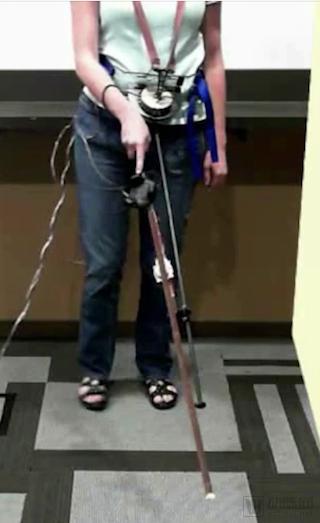
Canetroller is a haptic cane controller that simulates the motion of a cane. Users can wear the Canetroller as a strap-like device. It consists of a short film, slider, voice coil, tracker, controller, and a pair of VR glasses. The device provides three types of feedback: a physical resistance simulator; a vibration simulator that activates when the cane contacts an object or drags across a surface; and a spatial 3D auditory feedback simulator that reproduces sounds associated with real-world cane interactions. In experiments, users were able to independently navigate through traffic lights using this device.
In the medical field, even high-demand procedures such as surgery have attracted major industry players. GE engineers previously released a virtual reality navigation software capable of generating 3D medical images of the human body, allowing physicians to conduct examinations within a virtual anatomical environment. The system employs tracking technology to precisely monitor various movements while minimizing user discomfort such as dizziness. This platform enhances preoperative planning and surgical assessment for clinicians.
In the field of medical VR, Dell, a low-profile yet diverse giant, is quietly making strides by investing in research and development for healthcare applications. As part of its commitment to smart healthcare, Dell has provided a $100,000 grant to the Institute for Creative Technologies at the University of Southern California. The University of California, Los Angeles will utilize this funding to advance virtual reality exposure therapy known as Bravemind. This therapeutic approach specifically focuses on treating post-traumatic stress symptoms in war veterans.
Dell is also paying close attention to the digital transformation of China’s education sector. In the interdisciplinary field of medical education, Dell aims to leverage virtual reality (VR) as an entry point. On June 28, 2017, the Dell–Yiweixun Joint Laboratory for Digital Medicine and Virtual Simulation was unveiled to the public. The event featured collaborations with the Simulation Medicine Center at Shanghai Ruijin Hospital and the School of Medicine at Tongji University to jointly analyze the applications of virtual reality solutions in medical education.
In addition to the development of upstream giants, a cohort of leading enterprises has emerged in the midstream overseas market by integrating application technologies into VR devices. Against the backdrop of a maturing upstream hardware market, these companies leverage established device providers to explore genuine therapeutic applications of medical VR.
AppliedVR: Pain Management Using VR
AppliedVR is the market-leading provider of clinical virtual reality therapeutics, with products primarily used for pain management and serving both B2B and B2C markets. Clinically proven to reduce acute pain by up to 52%, AppliedVR is deployed in more than 180 hospitals across the United States and in seven countries worldwide, including partnerships with 12 of the top 20 ranked hospitals.
Within just one year of its founding, the company secured seed funding from Techstars and the Cedars-Sinai Accelerator. It has also partnered with industry giants, emerging as a leader in the medical VR sector.
AppliedVR’s VR therapy aims to provide patients with an enjoyable treatment experience, thereby freeing them from painful and frightening medical encounters. In its early products, AppliedVR’s VR devices offered patients scenic, dynamic environments to alleviate anxiety. AppliedVR has designed a VR system tailored to hospital workflows to reduce patient anxiety and acute pain.
AppliedVR has also designed a product suite to help women manage prenatal labor pain. In addition to VR devices used in hospital settings, AppliedVR has developed a home-use solution that is driven by biometric data and integrated with daily experiences, enabling chronic pain patients to better control their pain.
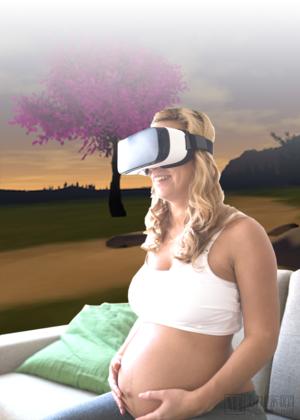
Rendever: Using VR to Bring the Elderly Back to Age 18
VR products are popularly applied in gaming and entertainment, but in the healthcare sector, the elderly population represents a blue ocean market for medical VR.
Rendever leverages VR to help the elderly rediscover memories and broaden their life experiences. Although Rendever is not a large-scale enterprise, it garnered media coverage from CBS, Fortune, and The New York Times shortly after its inception. With promising growth prospects and a deep focus on the elderly demographic, the company has maintained an upward trajectory even amidst the consolidation and reshuffling of the VR industry.
In mid-May this year, the French National Consultative Ethics Committee (CCNE) issued a statement asserting that the rigid institutional framework of elderly care facilities in France constitutes a form of collective “segregation” and even “abuse” of older adults. The statement reported that 40% of residents exhibit symptoms of depression, and 11% have suicidal ideation.
Geriatric psychiatrist Pierre Vandeval reported, “Depression is common among the elderly. However, due to the lack of relevant training among medical caregivers, older adults are often underdiagnosed or misdiagnosed.” “France has the highest suicide rate among individuals aged 75 and above in Europe,” with those aged 85 and above representing the age group with the highest suicide rate in France.
As global population aging accelerates and average life expectancy increases, enhancing the quality of life for older adults has become a significant challenge in medicine. Rendever enables seniors to revisit places they once lived, parks they previously enjoyed, and even their most memorable wedding venues. Rendever not only helps older adults reconnect with youthful memories but also empowers them with renewed vitality to explore new experiences.
Rendever’s VR devices can stimulate new memories and conversations through interactive content, enabling seniors to go on group hikes or don VR headsets to create masterpieces alongside Picasso. Rendever provides seniors with new ways to socialize.
On its official website, a 91-year-old stated, “I can spend the entire day immersed in the thrill of conquering snow-capped mountains.” For homebound seniors, Rendever’s devices help preserve family history and wisdom, while reinforcing their sense of being an indispensable part of the family structure.
Following Rendever’s VR therapy, elderly residents in nursing homes—who were previously prone to depression and loneliness—showed a 40% increase in happiness levels after engaging with VR experiences.
Currently, Rendever primarily collaborates with care facilities and communities. Rendever recommends that adult children consider selecting a care facility equipped with Rendever for their parents.
MindMaze: Dedicated to VR Rehabilitation, Secures Over 100 Million in Investment
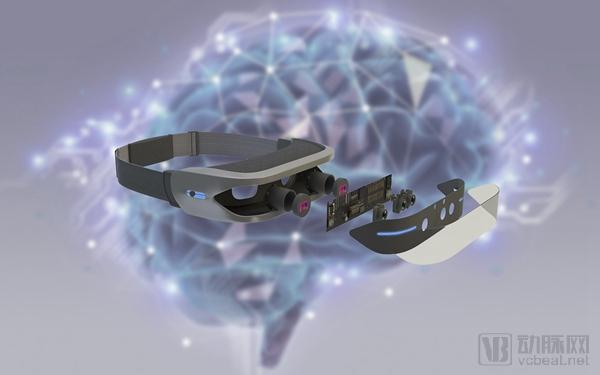
Another company, the Swiss neurotechnology firm MindMaze, specializes in integrating virtual reality and motion capture with brain-computer interfaces to help patients recover from trauma. For example, for stroke patients who have lost the use of their left hand but retain function in their right hand, the computer generates a virtual reality representation of the non-functional left hand, which can trick the brain into reactivating its functionality. The immersive experience provided by MindMaze makes the medical experience more patient-friendly, enabling patients to undergo rehabilitation unconsciously and thereby improving treatment adherence.
This VR system for mobilizing phantom limbs does not require wearing a mask, but another product from MindMaze, called MASK, does. The mask is a thin sensor that can be worn inside a VR headset. It detects the user’s facial expressions and maps them onto the avatar in the game.
Masks represent a significant leap in virtual reality, transforming social VR and augmented reality into genuinely emotional experiences. By synchronizing the user’s body with the full expressive capabilities of their virtual avatar, MASK enables real-time dynamic rendering of facial expressions.
The CEO of MindMaze also stated that, in actual clinical practice, the technology is not necessarily limited to stroke treatment. It is worth noting that MindMaze’s facial expression capture technology can be applied simultaneously in both the consumer entertainment and healthcare sectors.
MindMaze Secures $108.5 Million in Series C FundingMindMaze has attracted significant investment, primarily due to its integration of artificial intelligence, virtual reality, and neuroscience in research and development. Furthermore, MindMaze’s VR rehabilitation platform, MindMotion Pro, has already received FDA clearance.
With the widespread adoption of VR hardware, new products have been released this year across the board, from Samsung’s Gear VR and Facebook-acquired Oculus Go to HTC’s VIVE VR. Facebook has also partnered with Xiaomi to launch an all-in-one VR headset tailored for the Chinese market. Numerous new VR applications have also emerged in the medical field. Notably, in the management of psychiatric disorders, VR therapy offers many advantages over traditional treatments.
VR therapy outperforms traditional treatment methods by enabling patients to better control their exposure. Virtual reality experiences can be designed to be highly interactive, allowing patients to maintain a sense of control when encountering anxiety triggers. VR therapy offers a non-pharmacological approach to reducing trauma-related anxiety. Compared with traditional treatment protocols, well-designed VR treatment programs can improve cost-effectiveness. Unlike conventional anxiety treatments, VR applications enable patients to continue their therapy at home, significantly enhancing long-term treatment outcomes. VR therapy will not replace traditional treatments in all scenarios. However, even as an adjunctive therapy, it offers compelling advantages over standard care.
VCBeat has compiled an overview of some typical overseas medical VR companies.
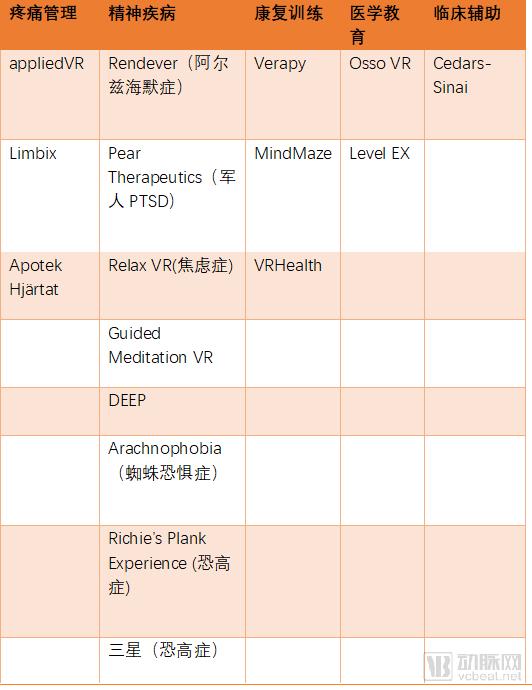
Pain Management:
Apotek Hjärtat (part of Sweden’s ICA Group) is compatible with commercially available VR devices to alleviate patients’ anxiety during medical visits.
Limbix helps physicians treat patients with anxiety, phobias, and those requiring pain management techniques. Its product, Real-world Footage, features 360-degree visuals designed to help patients cope with the challenges they face.
Mental Disorders:
Pear TherapeuticsOne of its products, named reCALL™, enables military personnel with PTSD to return to the battlefield through virtual reality. By confronting the traumatic scenarios directly, patients gain a greater sense of control, thereby facilitating the treatment of PTSD. Although this approach initially sparked controversy, current trials have demonstrated its efficacy. In addition to its virtual reality offerings, Pear Therapeutics has a diverse portfolio of other digital therapeutic products.
reCALLTMTreatments available for military personnel experiencing PTSD include: 1. Accessible treatment anytime and anywhere; 2. Provision of an immersive environment to maximize therapeutic efficacy; 3. Elimination of prolonged waiting times; 4. Compatibility with standard care protocols during the course of treatment.
Relax VR This is an iPhone app that allows users to enjoy a variety of visual and auditory experiences, including beaches, oceans, wind, waves, streams, crickets, and more. It features ten scenic landmarks from around the world, ranging from Wineglass Bay in Australia to a tropical beach in the Philippines.
Designed for HTC Vive, Samsung Gear VR, and Oculus RiftGuided Meditation VR Allow users to choose tranquil environments from around the world, ranging from lush tropical rainforests to Japanese temples, where they can relax and recharge.
For many people, simple relaxation is one of the greatest challenges.DEEPBy immersing users in a tranquil underwater world where pressure, anxiety, and depression can dissipate, it encourages a sense of calm.
Arachnophobia(Arachnophobia) Provides self-guided exposure therapy for individuals with arachnophobia. Across five levels of exposure, users are subjected to an increasing number of spiders in the room. If this is not stressful enough, participants are not allowed to move their hands or arms during the therapy session. Over time, users can learn to face spiders calmly instead of reacting with panic and fleeing.
On acrophobia,Richie’s Plank ExperienceYou are seated on a platform 80 stories above the ground. You are encouraged to use a physical board to enhance the sense of immersion. For those with acrophobia or arachnophobia, you can choose to have the spider wait on your platform.
SamsungTwo 360-degree video applications have been introduced to help users overcome acrophobia. Through urban and natural landscapes, these apps allow users to experience elevator rides, skywalks, virtual towers, cliff driving, heli-skiing, and crossing suspension bridges—all delivered via immersive 360-degree VR experiences.
Rehabilitation Training:
VerapyProvides a platform, VR viewers, and software for patients requiring treatment for various diseases and rehabilitation. Includes a comprehensive suite of patient tracking and data analytics tools.
Medical Education
Osso VRProvide an open virtual operating room based on common commercial VR hardware, such as the Oculus Rift/Touch and HTC Vive. Through virtual surgeries, physicians can move beyond traditional training methods reliant on rote memorization and examinations, gaining valuable hands-on experience in a simulated environment, particularly for managing complex surgical procedures.
Level EX, anesthesiologists, otolaryngologists, emergency physicians, and pulmonologists collaborate within this platform based on real-world surgical scenarios. Through this virtual simulation, physicians can earn continuing medical education (CME) credits.
By realistically simulating human tissue dynamics, endoscopic optics, and fluid motion, Level EX provides surgeons with a way to perform procedures that harms no one, although mistakes in the game can be startling. Virtual patients respond fully—they cough, bleed, and react—just like real patients.
VRHealthVRHealth is the world’s first certified virtual reality healthcare company, with all its medical applications FDA-cleared. Our products focus on the assessment and treatment of motor cognition, physical function, psychological well-being, postural control, and pain. VRHealth delivers enhanced experiences and real-time data analytics for use in both clinical and home settings, enabling users to analyze and quantify performance through digital interventions.
VRHealth focuses on developing medical tools and content while providing real-time analytics. Leveraging our expertise, specialized knowledge, and experience, we deliver a comprehensive suite of VR/AR solutions tailored to the unique characteristics and target market demands of any organization. By harnessing breakthrough technologies, we enhance rehabilitation outcomes through immersive experiences and meaningful analytics.
As early as 2015, PitchBook, a global data research firm based in Silicon Valley, categorized VR application areas into gaming, entertainment and media, enterprise, military, and healthcare in its report on the VR industry.
In PitchBook’s breakdown of the VR sector, the industry is divided into two major segments: software and hardware. The software segment requires visualization content to populate it. For startups, it is not feasible to invest substantial capital in hardware R&D; moreover, even several tech giants have stumbled in their efforts to develop VR devices. In 1995, Nintendo’s planned VR game failed to achieve commercialization. Google announced its Google Glass head-mounted display (HMD). In 2013, Microsoft released the “Explorer Edition,” but this device is no longer available for sale.
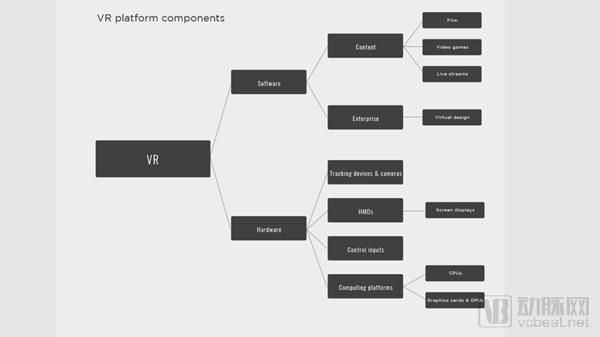
Classification of VR Platforms in the PitchBook Report
Therefore, many experts believe that the future development of medical VR will involve more heterogeneous content to populate hardware platforms.
One development direction for VR is not to be tied to specific devices; instead, people are increasingly exploring VR as a platform, examining how virtual reality can effectively meet individual needs and fit into their life scenarios.
“Virtual reality is like a syringe,” said Dr. Spiegel. “A syringe is merely a platform; what matters is the medication delivered through it, not the syringe itself. We often talk about VR as if it were something exotic, but VR is just a device, much like a headset. The key lies in visualization—what people see and hear. This is where our concept of personalized VR therapy comes into play: we need a ‘VR pharmacy,’ where we can conduct psychometric assessments on individual patients and leverage this data to curate tailored experiences from a VR content library.”
Dr. Spiegel is the Director of the Center for Health Services Research at Cedars-Sinai, where Cedars-Sinai collaborates with the aforementioned companies on research into the medical applications of VR.
At another session of the VR Medical Symposium, Josh Sackman, President of AppliedVR, further elaborated on the view that VR will evolve as a platform. He emphasized the heterogeneity patients encounter with healthcare providers on a daily basis. Rather than committing to developing a one-size-fits-all VR therapy, AppliedVR now advocates for creating a broad range of VR content and leveraging complementary technologies, enabling providers to deliver finely tuned experiences tailored to each patient.
Integrating VR into the notoriously inflexible HER systems and aligning it with existing workflows presents a significant challenge. Dr. Spiegel stated, “EHRs are effectively the digital backbone of modern Western medicine. We need to find a way to connect VR, a digital therapeutic modality, with these systems.”
Of course, the human factor is always taken into consideration when it comes to anything new or unusual. Most practicing physicians are not yet familiar with VR, or they have only a general idea of why it can be effective. He stated that for VR to gain traction in healthcare, the industry needs “VR clinicians” who can authoritatively discuss how and why VR should be used in specific scenarios, or “VR clinics” where patients interested in VR technology can receive treatment.
Samsung Medical’s executive, Rhew, shares this sentiment. Dr. Rhew stated, “Compared to the past, the healthcare industry in 2018 is far more open to technological advancements. Our challenge lies in popularizing medical VR and accelerating its adoption.””。
Some experts have also stated that virtual reality is effective and well-received because it is part of a holistic approach. In the future, researchers in virtual reality should bear in mind that designing a technology-driven intervention will have countless additional impacts on patients’ health.