MMC Model Drives 30.6% Revenue Growth and 15% Reduction in Drug Ratio: Building an Integrated Chronic Disease Management System
The prevalence of metabolic diseases in China continues to rise. In 2010, national epidemiological survey data showed that the prevalence rates of diabetes and prediabetes in China had reached as high as 11.6% and 50.1%, respectively. The proportion of overweight and obese individuals stood at 33%, while the prevalence of metabolic syndrome exceeded 30%. Metabolic diseases, characterized by obesity, hyperglycemia, hypertension, and dyslipidemia, have become major chronic conditions posing a serious threat to the health of the Chinese population.
As chronic diseases have become a massive burden on healthcare expenditures, a new model of diagnosis and treatment has emerged: the National Standardized Metabolic Disease Management Center (MMC) model.
MMC, or the National Center for Standardized Management of Metabolic Diseases (hereinafter referred to as “MMC”), is led by Professor Ning Guang, an academician of the Chinese Academy of Engineering, and is hosted by the Chinese Medical Doctor Association (CMDA) and undertaken by its Branch of Endocrinology and Metabolism Physicians. MMC’s integrated care model, characterized by “one center, one-stop service, and one standard,” enables patients to receive prevention, screening, diagnosis, and patient education services all within a single center.
The integration of the MMC online and offline consultation platform, which combines disease diagnosis and treatment, rapid testing, data analysis, and patient education, will enhance the effectiveness of metabolic disease management. By adhering to the principle of “one center, one-stop service, one standard,” we implement holistic, full-process standardized management for patients with metabolic diseases, aiming to reduce the incidence of metabolic diseases and their complications.
Recently, the “Visionary Project” – IoT Healthcare Innovation Leaders Summit, hosted by the Bethune Public Welfare Foundation and co-organized by AstraZeneca, was held in Wuxi. Presided over by Conference Chair Chen Haixiao, Director of Taizhou Enze Medical Center (Group), the event featured dozens of hospital presidents and corporate representatives, including Tian Xiaoli, Executive Secretary-General of the Bethune Public Welfare Foundation; Shan Baode, Executive Vice President and Secretary-General of the Shandong Hospital Association; Ruan Liemin, President of Ningbo First Hospital; Zhang Jian, Assistant to the President of Zhengzhou People’s Hospital; and Li Datao, Founder of VCBeat. Participants shared insights and engaged in discussions on the construction of chronic disease management within hospitals based on the MMC (Metabolic Management Center) model.
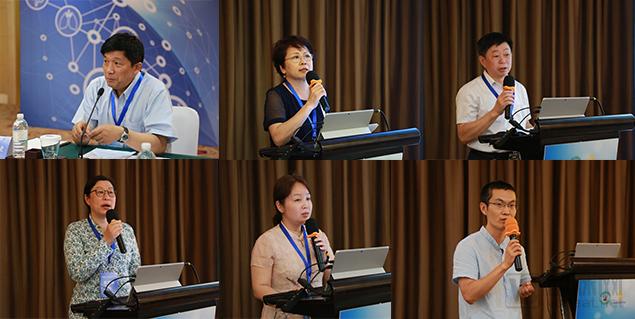
Based on the preceding paragraphs, the aforementioned attendees are listed in order from left to right.
As public hospital reform enters a critical and complex phase, the management philosophy of public hospital directors is evolving accordingly. In 2018, Zhejiang Province launched the “At Most One Visit” government service reform initiative. Applied to the healthcare sector, the core objective of “At Most One Visit” is to ensure that patients receive medical services in a convenient and comfortable manner. Ruan Liemin, President of Ningbo No. 1 Hospital (hereinafter referred to as “Ningbo No. 1 Hospital”), believes that the foundation for achieving “At Most One Visit” for patients lies in the hospital’s informatization construction.
Meanwhile, under the broader trend of tiered diagnosis and treatment, enhancing the service capabilities of primary care physicians within their jurisdictions and ensuring effective referral processes are fundamental to truly laying the groundwork for a tiered healthcare system. Ningbo No. 1 Hospital has undertaken exploratory initiatives in this regard.
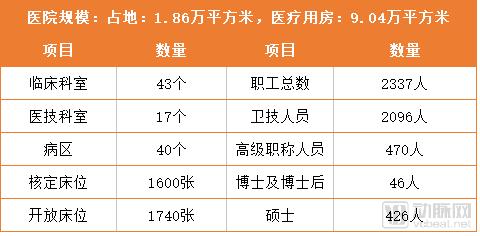
Basic Information of Ningbo No. 1 Hospital
She frankly stated that public hospitals are currently under pressure from two main sources: competition and patient demands. Among these, patient expectations are clearly defined: brand reputation, technical expertise, safety and efficacy, as well as convenience and comfort. Changes in the environment are also compelling directors of public hospitals to reconsider how to transform traditional management models.
In the improvement of medical care experience, the integrated diagnosis and treatment model was introduced into Ningbo No. 1 Hospital as early as ten years ago. To enhance patients’ sense of access to high-quality, continuous medical services, the hospital has established the Metabolic Management Center (MMC) for Endocrinology and Metabolism, the Brain Disease Diagnosis and Treatment Center, and the Arrhythmia Diagnosis and Treatment Center.
Among them, Ningbo First Hospital joined the MMC in 2017 and became the first and only clinical medical research base for metabolic diseases in the Ningbo region.
Prior to joining the MMC, Ningbo First Hospital had already closed its general internal medicine outpatient clinics. During the establishment of the MMC center, the hospital pioneered a multidisciplinary endocrinology team clinic, breaking down departmental barriers. This model allows patients with metabolic diseases to complete standardized diagnosis and treatment, patient education, and post-discharge disease management in a one-stop manner. Furthermore, examination reports and data are mutually recognized with other metabolic centers already operational across China.
Furthermore, according to Dean Ruan, Ningbo First Hospital conducts more than 200 screenings for diabetic complications each month and includes over 100 patients in the MMC (Metabolic Management Center) program. Meanwhile, the team has established a regional disease management center and a big data center.
When patients visit the MMC, they can proceed directly to the physician’s consultation room after completing the reception and patient education processes. During this time, patients can use their mobile phones to scan a QR code linked to their MMC ID and independently complete their medical history forms. After making payments at the all-in-one kiosk, patients can undergo routine laboratory tests as well as complication screenings—including fundus photography, visceral fat assessment, and nerve conduction studies—directly at the center. They can also print their test reports themselves and return to the physician’s consultation room. Following the consultation, patients can schedule follow-up appointments via the app.
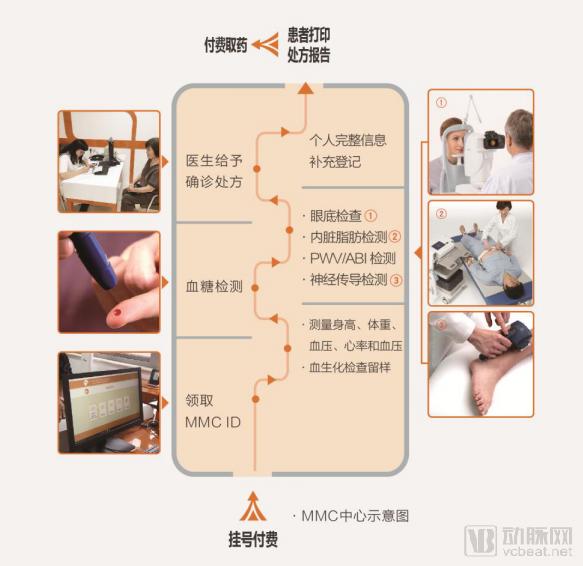
MMC Patient Visit Process Diagram
“Within the MMC diagnosis and treatment centers, nearly all relevant examinations can be completed on-site, starting from front-desk registration, effectively addressing the ‘three longs and one short’ issue commonly encountered by patients during medical visits.”
Dean Ruan also mentioned that the integration of diagnosis and treatment brings three benefits: first, it enhances the patient experience by ensuring that individuals with complex and difficult-to-treat conditions who truly require specialist care receive prompt and effective treatment; second, it fully leverages specialists’ role in mentoring and guiding junior colleagues, thereby improving the diagnostic and therapeutic capabilities of the entire medical team; and third, it frees specialists from managing common and mild cases, allowing them to devote more energy to caring for patients with complex and challenging conditions.
In the comprehensive, dynamic management of chronic disease prevention and control, information technology infrastructure is pivotal. Taking diabetes as an example, the center has established a diabetes information management platform and completed hardware integration with various technical departments of the hospital. Currently, over 7,000 patients have been enrolled in the program, and two analytical reports have been completed.
Under the national policy support for tiered diagnosis and treatment and strengthening primary healthcare, the Ningbo Municipal Government has taken the lead in establishing a "trinity" integrated medical-preventive professional system for chronic disease control and prevention. This system features the Centers for Disease Control and Prevention (CDCs) as the operational leaders, comprehensive hospitals as the technical support for clinical diagnosis and treatment, and community health service centers (township health centers) as the foundational implementation network.
In terms of tiered diagnosis and treatment, Ningbo First Hospital has achieved vertical, seamless integration with higher- and lower-level hospitals as well as primary healthcare institutions by exploring the “3+2+1 Hospital-Community Integrated Co-management Model.”
Ningbo No. 1 Hospital has assumed full administrative control over four hospitals and specialized management over another four. It established the first and largest “Eastern Zhejiang Diabetes Specialty Alliance” in the Eastern Zhejiang region, as well as the “Acute Chest Pain Emergency Alliance” in Ningbo. The hospital has formed two regional medical consortia with 13 healthcare institutions in the urban area and achieved inter-hospital collaboration with 29 hospitals across the greater Ningbo metropolitan area. Meanwhile, it provides targeted assistance to three healthcare institutions in poverty-stricken areas, including Qinglong and Ceheng in Guizhou Province and Hunchun in Yanbian Prefecture, and offers substantial support for poverty alleviation efforts in Kuqa, Xinjiang, and Nagqu, Tibet.
Henan is not only a populous province but also a highland for China’s healthcare reform. Unlike the development path of Ningbo No. 1 Hospital, Zhengzhou People’s Hospital advocates a coordinated system integrating medical care, disease prevention, and health management.
Zhengzhou People’s Hospital, founded in 1912, has undergone wartime relocation, merger, and reconstruction. It is accredited by the Joint Commission International (JCI) and has been certified as a Grade A tertiary hospital. Currently, the hospital operates two campuses and four emergency stations, with more than 2,500 open beds (including over 600 at the East District Hospital). It handles over 1 million outpatient visits annually, admits more than 60,000 inpatients each year, and performs nearly 40,000 surgeries per year.
Zhang Jian, Assistant to the President of Zhengzhou People’s Hospital, emphasized that in terms of disciplinary collaboration, Zhengzhou People’s Hospital adheres to the philosophy of “prioritizing substance and excellence over quantity; focusing on access rather than ownership; and valuing regular engagement over permanent presence.” The hospital has successively integrated its remote diagnosis and treatment platform with those of the PLA General Hospital (301 Hospital) and Peking Union Medical College Hospital; collaborated with Shanghai East China Cancer Hospital to establish a branch center for the diagnosis and treatment of pulmonary nodules under the Chinese Lung Cancer Prevention and Control Alliance; and become a member hospital of the Beijing Tiantan Neurological Disease Specialist Alliance.
Notably, in the realm of chronic disease management, the hospital partnered with Harvard Medical School’s Joslin Diabetes Center in June 2016. Adhering to the philosophy of “shifting interventions upstream and proactive management,” it introduced an overseas blood glucose management system and launched a hospital-wide blood glucose management program. This initiative ensured standardized care for hospitalized patients with hyperglycemia, managing 4,846 high-risk patient cases over two years.
Zhang Jian stated, “Diabetes is a chronic disease. It is not only high-risk populations in hospitals that require attention; what is more critical is comprehensive, end-to-end management. Monitoring services for key indicators are primarily conducted during hospitalization, which falls under the scope of outpatient service trade. Previously, our collaboration with Harvard Medical School focused mainly on in-hospital care. After recognizing the advantages of MMC’s full-process management model, we have introduced this model into our hospital.”
In December 2017, Zhengzhou People’s Hospital joined the National Standardized Metabolic Disease Management Center (MMC). In April of the following year, the MMC was officially unveiled at the hospital, making it the first institution in Henan Province to do so.
After enrolling in the MMC (Metabolic Management Center), patients can access efficient, one-stop, end-to-end diagnosis and treatment within the hospital, eliminating the need for multiple visits to various departments. This approach not only reduces the burden on patients but also enhances the operational efficiency of healthcare providers by leveraging intelligent systems to automate manual tasks as much as possible. Furthermore, by relying on the specialized Health Medicine Center of Zhengzhou People’s Hospital, chronic disease management services for MMC patients are extended into community and home settings.
In terms of talent training, Zhengzhou People’s Hospital implements a multidisciplinary collaborative model and has established a special management team for the MMC (Metabolic Management Center). Led by the Department of Endocrinology and Metabolism, a professional medical team comprising physicians, nurse educators, dietitians, health managers, pharmacists, rehabilitation therapists, and psychologists has been formed to actively conduct training across the entire hospital.
In terms of patient management, a whole-process management model is implemented. Within the hospital, a multidisciplinary team comprising endocrinologists, diabetes education nurses, dietitians, health managers, pharmacists, rehabilitation therapists, and psychologists collaboratively develops individualized health management records for patients. Outside the hospital, professional medical staff conduct regular follow-ups to document disease status, provide early warnings, issue medication adherence and follow-up visit reminders, and schedule subsequent appointments.
Furthermore, patient education is also conducted within the center, with an annual MMC patient education plan developed and delivered by healthcare professionals. Zhang Jian stated, “Throughout the implementation of the MMC model, hospitals place significant emphasis on one particular aspect: publicity. This is because we aim to foster broader consensus regarding the implementation of the MMC project. Once patients develop a sense of identification with the MMC model, their acceptance of integrated diagnosis and treatment will increase.”
Promoting the MMC project has also become a key priority for Zhengzhou People’s Hospital. The hospital has leveraged social media platforms such as Weibo, WeChat, and Toutiao to raise awareness, while simultaneously utilizing its own promotional resources—including the hospital journal, official website, and in-hospital television screens—to establish a comprehensive, multi-dimensional publicity system for the project.
In addition to media channels, a series of offline promotional activities were also conducted. Within the hospital, the MMC program was introduced through health lectures and public health experience sessions; outside the hospital, promotion was carried out via community health outreach, large-scale free clinics, and expert lectures.
Zhang Jian believes that the main beneficiaries of implementing the MMC one-stop diagnosis and treatment model in hospitals include patients, departments, and hospitals:
1. Patient benefits: Improved healthcare experience, reduced complications, and lower medical expenses;
Second, the department benefits. This is directly reflected in the department's revenue data: the hospital's business income has increased significantly, with the medical revenue of the Department of Endocrinology and Metabolism rising by 30.6% compared to the same period last year; the proportion of drug costs has decreased significantly, with the drug cost ratio in the Department of Endocrinology and Metabolism dropping by 15% compared to the same period last year; and the number of admitted patients has increased, with a 20% year-on-year increase in patient admissions in the Department of Endocrinology and Metabolism.
Furthermore, standardized MMC training enables healthcare professionals to master the standardized workflows for all MMC operations, thereby improving the management of metabolic diseases and enhancing the professional competence of medical staff. It advances the concept of chronic disease management and represents the hospital’s innovative exploration in this field. Meanwhile, participation in national MMC center training and exchanges helps elevate the clinical diagnosis, treatment, and scientific research capabilities of municipal and prefectural-level hospitals.
Third, the hospital benefits. This is manifested in distinct internal and external advantages. The MMC Center has established a management system for metabolic diseases, providing the hospital with effective tools for both in-hospital and out-of-hospital management to better serve patients. Meanwhile, it has cultivated an experienced implementation team, laying a solid foundation for the initiative of “devolving medical talent and resources to grassroots levels.” Externally, while implementing the MMC project, the hospital has garnered significant government attention and increased support, while also strengthening peer exchanges. Dozens of hospitals have visited for exchanges, thereby enhancing the hospital’s influence.
Under the patient-centered philosophy in hospitals, the transformation of pharmaceutical companies is also evident.
The marketing characteristics of pharmaceutical companies determine their business models. In the era when medical representatives were prevalent, patients’ demand for medications was met almost exclusively through physicians’ prescriptions. As the second-largest foreign pharmaceutical company in China, AstraZeneca’s “patient-centric” philosophy enabled it to rapidly transition from a traditional B2B business model. How to reach patients at the service delivery level and how to improve the accessibility of healthcare services have become the focus of AstraZeneca’s innovative explorations. The widespread application of the Internet of Things (IoT) in chronic disease monitoring devices has provided AstraZeneca with a “new approach.”
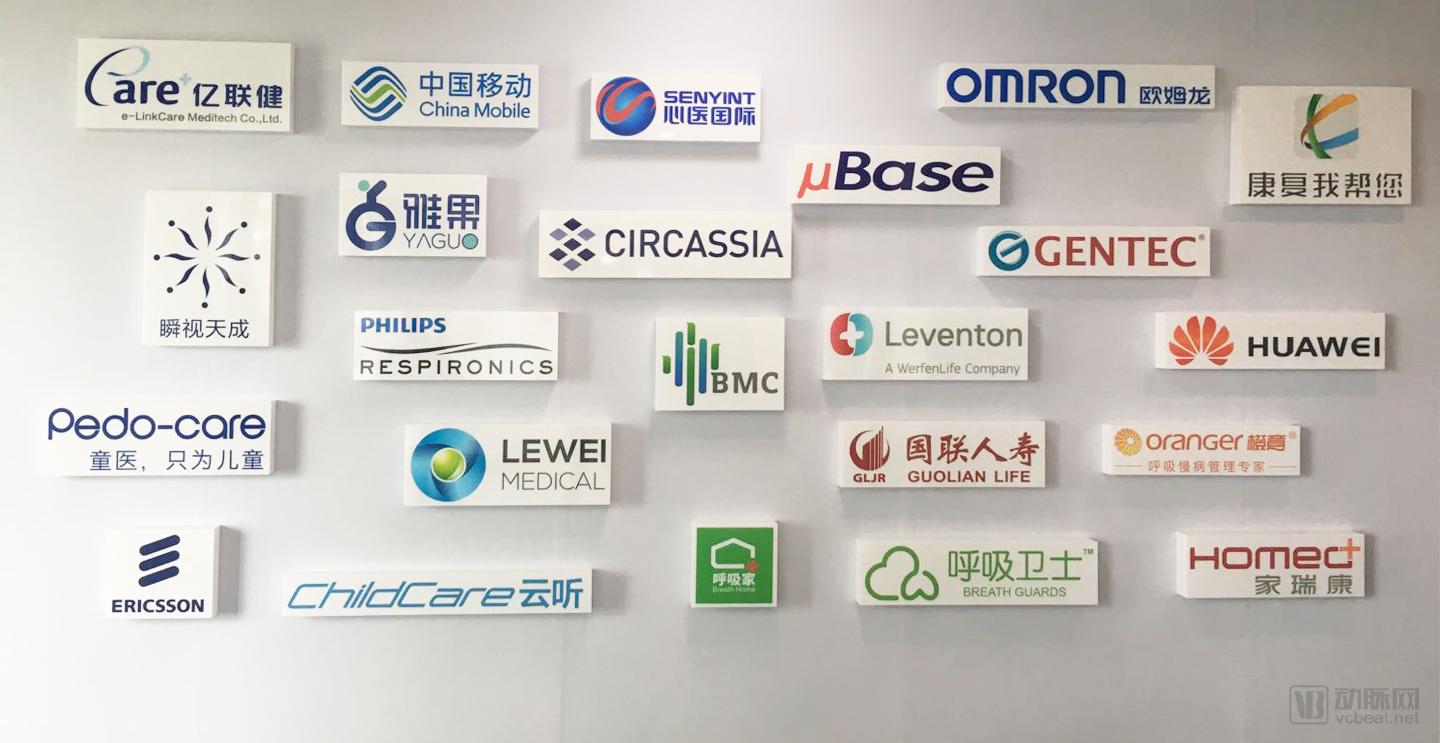
AstraZeneca Health IoT Ecosystem Partners (Partial List)
To address the cumbersome healthcare processes currently faced by patients with metabolic diseases, AstraZeneca, in collaboration with multiple partners, supports the China Metabolic Management Center (MMC) project. This initiative was jointly launched by the Chinese Medical Doctor Association, the National Clinical Research Center for Metabolic Diseases, and the Shanghai Institute of Endocrinology and Metabolism. Leveraging advanced diagnostic and therapeutic equipment along with Internet of Things (IoT) technology, the Metabolic Management Center is committed to creating an integrated online-and-offline solution for comprehensive disease management throughout the entire course of metabolic disorders, thereby enabling more convenient and precise care for a greater number of patients. By the end of 2017, AstraZeneca had supported the establishment of 70 standardized Metabolic Management Centers.
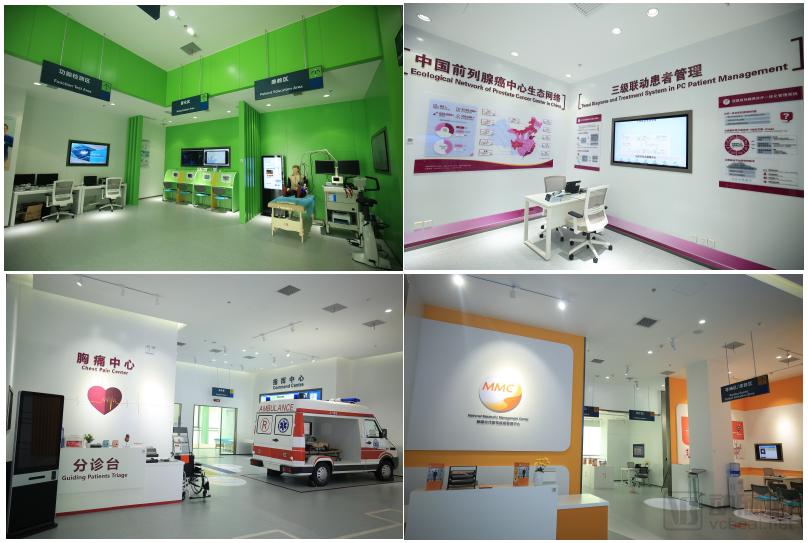
Minglong Lai, Vice President of AstraZeneca China, stated that over its 25 years of roots in China, AstraZeneca has focused on several chronic disease areas with the most urgent patient needs in China, including respiratory, cardiovascular, kidney, metabolic, and digestive diseases. While bringing global innovative medicines to patients, the company is also actively promoting the enhancement of local new drug R&D capabilities.
AstraZeneca has proposed a “patient-centric” commercial innovation strategy in China, partnering with stakeholders across government, industry, academia, research, and healthcare to collaboratively build an open and cooperative innovative health ecosystem, thereby delivering end-to-end, integrated whole-disease-management solutions for Chinese patients and healthcare providers.
In addition to the widely recognized Pediatric Nebulization Center and MMC (China Standardized Metabolic Disease Management Center), AstraZeneca has established the China Commercial Innovation Center in Wuxi, launching multiple specialized centers including the Integrated Respiratory Diagnosis and Treatment Room, the Prostate Cancer Integrated Diagnosis and Treatment Center, the Gastrointestinal Tumor Prevention and Control Center, and the China Chest Pain Center.
According to previous statistics from VCBeat, by the end of 2016, AstraZeneca had put into operation 11 standardized metabolic disease management centers across China; by the end of 2017, this number had reached 70. Furthermore, throughout 2016, AstraZeneca also established 122 chest pain centers, 100 integrated diagnosis and treatment centers for prostate cancer, more than 1,300 comprehensive respiratory diagnosis and treatment rooms, and over 12,900 standardized nebulization rooms.
On the afternoon of the conference day, the preliminary round of the inaugural National Metabolic Center (MMC) Chronic Disease Management Innovation Project Competition, hosted by the National Clinical Research Center for Metabolic Diseases and the Endocrinology and Metabolism Branch of the Chinese Medical Doctor Association, and organized by AstraZeneca, was held at the AstraZeneca China Commercial Innovation Center. The competition aims to identify innovative projects in the field of chronic disease management leveraging the Internet of Things (IoT), artificial intelligence (AI), and out-of-hospital care models, with winning solutions to be implemented across hundreds of MMC centers.
Following the preliminary screening, six projects advanced to the final roadshow stage, presenting their benefits for hospital implementation to dozens of hospital presidents and representatives in attendance. The panel of judges comprised experts spanning both business and clinical practice, including Ge Menghua, President of Shaoxing Second Hospital; Zhao Yongsheng, Vice President of Shenzhen Second People’s Hospital; Zhang Maosong, Head of Diabetes Business at AstraZeneca; Li Datao, Founder of VCBeat; and Wang Yun, Venture Partner at Qianji Capital.
For this corporate selection process, we have comprehensively evaluated factors including technological innovation, business model innovation, and the implementation intentions of the hospital representatives present. Hospitals show a strong preference for innovative solutions that reduce labor input, enhance patient care experiences, and streamline clinical workflows. In particular, solutions that demonstrate superiority in automated data collection and remote processing will be given priority consideration by major hospitals.
After two hours of presentations and exchanges, and based on on-site scoring, Guoshi Technology, Yiyun Health, and Beijing Zhiyuan Huitu emerged as the top performers. They will advance to the finals, scheduled to be held in Qingdao on July 14, coinciding with the 2018 Annual Conference of Chinese Endocrinologists.
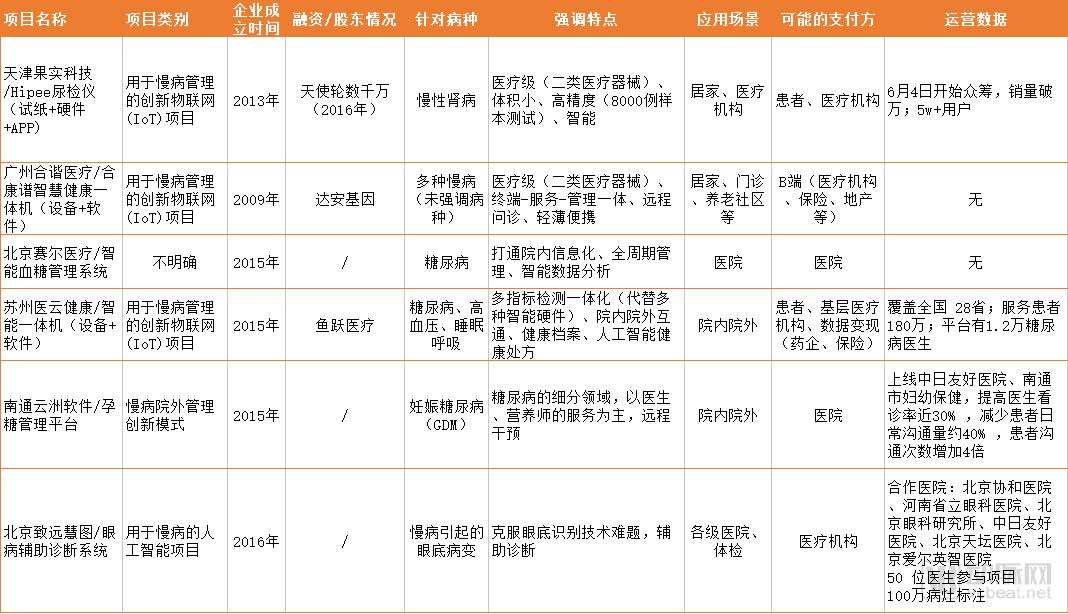
Information on Participating Companies (Data Source: Company-Provided Materials, Compiled by VCBeat)
In terms of integrating its projects with the MMC (Metabolic Management Center), Guoshi Technology has proposed that its portable urinalysis device can assist the MMC in screening for diabetic nephropathy and hypertensive nephropathy. Furthermore, during post-discharge management, the device enables home-based monitoring of key indicators and provides follow-up data to the MMC, thereby facilitating patient re-examinations.
MedCloud Health believes that its all-in-one devices can be directly deployed within MMC (National Metabolic Management Center) to monitor blood glucose, diet, respiration, and sleep in patients with metabolic disorders. Outside the hospital setting, the cloud platform connects physicians, patients, and smart hardware monitoring devices to enable post-discharge follow-up, medication reminders, intelligent assessments, and monitoring of patient adherence to treatment plans for individuals with chronic diseases.
As an AI-powered auxiliary system, Beijing Zhiyuan Huitu aims to deliver more than just diabetic retinopathy screening; it provides a comprehensive, end-to-end solution for chronic ocular diseases, integrating devices, software systems, and services. Suitable for tertiary hospitals, primary healthcare institutions, ophthalmology clinics, and health examination centers, the system can also be deployed in MMCs (Metabolic Management Centers) for fundus image screening of diabetic complications. This significantly reduces the time physicians spend on image review and diagnosis, while lowering the rate of misdiagnosis.
As a co-organizer of this competition, Lai Minglong stated that, adhering to the corporate value of “patient-centricity,” AstraZeneca has always focused on addressing the pain points faced by patients, providing them with high-quality innovative medicines and efficient, convenient, and smart whole-disease-management solutions. Therefore, AstraZeneca seeks partners who share the “patient-centric” value to jointly build a healthcare ecosystem.
“We hope that the final projects can be effectively implemented in hospitals and truly benefit patients. From a corporate perspective, we believe that projects capable of meeting the management needs of doctors and hospitals, helping to alleviate physicians’ workload, facilitating doctor-patient communication, improving patient satisfaction, and bringing tangible benefits to patients will be more favorably received.”
In this competition, AstraZeneca is also seeking partners who share its goals and values and can achieve mutual benefits. “We hope that by supporting this competition, we can help more chronic disease management companies implement their solutions within the MMC framework, serving as a platform and bridge, and ultimately benefiting patients.”
After selecting the three shortlisted companies, they will compete in the final round in Qingdao on July 14. The MMC Chronic Disease Innovation Competition undoubtedly provides innovative enterprises with concrete application scenarios and a platform, creating more opportunities for practical implementation. Furthermore, AstraZeneca’s support for various integrated diagnosis and treatment solutions will undoubtedly offer the shortlisted innovators greater platforms and possibilities for collaborative win-win partnerships to better serve patients.
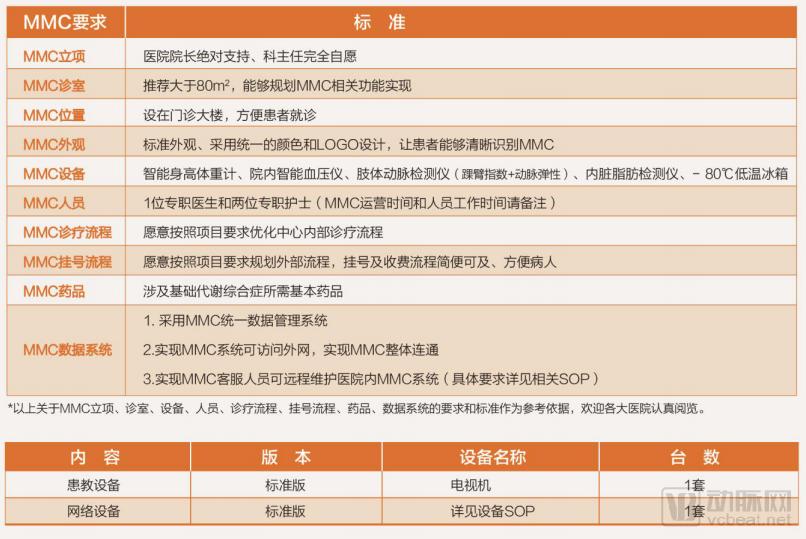
Appendix: Basic Criteria for Selection of MMC Regional Centers