

Hospital Logistics Transformation: Suitcase-Sized Robots Are Replacing Traditional Delivery Systems in Tier-3 Hospitals
In the past two years, VCBeat has consistently spotted hospital logistics robots at various healthcare informatics conferences. Typically resembling suitcases in shape, these robots operate autonomously, shuttling back and forth without manual intervention, much like robotic vacuum cleaners. This article provides an in-depth analysis of the currently popular hospital logistics robots.
Like Industry, the Healthcare Sector Also Needs Logistics Robots
Driven by Industry 4.0 and "Made in China 2025," intelligent logistics has ushered in significant development opportunities and serves as the cornerstone for building future smart factories. Automated Guided Vehicles (AGVs) are the key core equipment in intelligent logistics systems. The mission of intelligent logistics is to identify an optimization path that minimizes inventory, enhances flexibility, and reduces costs, production time, and resource consumption, representing an inevitable pathway for enterprises undergoing intelligent transformation.
2011–2016: New Growth Volume and Growth Rate of AGVs in China (Unit: Units)
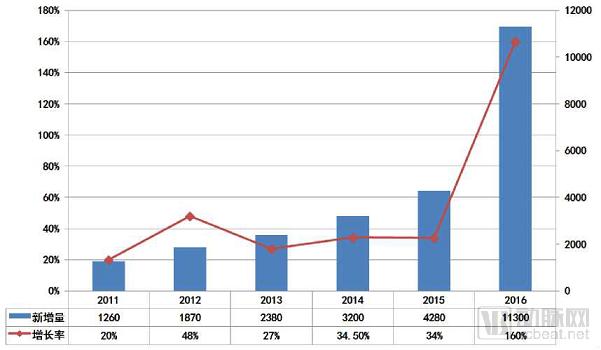
Note: The 2016 sales statistics are derived from data reported by individual companies and disclosed by core component suppliers, covering AGVs, AGCs, and warehousing robots. Source: New Strategy Robotics Industry Institute
In addition to the industrial sector, hospitals have also become a major hotspot for intelligent logistics. With the deepening of healthcare system reforms such as the separation of prescribing and dispensing, hospital administrators are increasingly focusing on optimizing internal hospital structures and reducing operational costs, alongside the continuous enhancement of diagnostic and treatment capabilities during hospital development.
Hospital logistics holds a strategic position in modern hospital management, encompassing nearly all daily operational and managerial activities across every business department. These activities include the transmission of medical documentation (such as medical records, physician prescriptions, laboratory test reports, billing documents, and accounts); the delivery of medical supplies (including pharmaceuticals, medical devices and equipment, sterile medical materials, and surgical instruments); the transport of medical specimens (such as laboratory samples and pathological specimens); and logistical support functions performed by the hospital’s general services department, including procurement, loading and unloading, storage and custody, and supply distribution.
As the strategic value of modern logistics technologies in reducing costs and improving services gains increasing recognition and attention, the introduction of modern logistics theories and technologies can enhance the overall operational performance of hospitals.
Currently, the existing logistics systems in hospitals remain inefficient and costly. It is estimated that approximately 46% of hospital budgets in China are allocated to logistics-related expenses, with 27% spent on materials and equipment and 19% on labor. Furthermore, relevant studies indicate that nurses spend 10% of their time transporting items rather than caring for patients. This prolonged physical strain has led to significant burnout among nursing staff.
Traditional hospital logistics rely primarily on patients, medical staff, or dedicated delivery personnel for the transport of various items within the facility. There is a lack of clear separation between pedestrian and material flow pathways, leading to significant cross-traffic between people and goods. This often results in chaotic conditions, posing potential risks of cross-infection among individuals, as well as contamination, damage, or loss of items.
It is precisely due to these various reasons that logistics robots have gradually begun to emerge in some large hospitals over the past two years.
One Equals Ten: The 24/7 On-Duty Medical AGV Robot
The Automated Guided Vehicle (AGV), the focus of this article, refers to an unmanned, automatically guided transport vehicle operated under the control of computers and wireless local area networks. Guided by magnetic strips, lasers, or other navigation systems, it travels along pre-programmed paths and stops at designated locations to perform a series of tasks such as item transfer and handling, thereby facilitating the transportation of materials within hospitals.
Currently, AGV robot transmission systems are primarily applied in industrial production and the logistics industry. In the medical field, hospitals in developed countries have introduced and utilized these systems earlier and more extensively, such as in Germany, Nordic countries, Singapore, and Japan. AGV robots are mainly used to replace labor-intensive hand carts for transporting patient meals, clothing, hospital waste, sterilized items from the supply room, and other materials. They can achieve transportation between buildings and across different floors. However, there are still few instances of domestic hospitals applying this system for transportation.
Hospitals in Europe and the United States generally regard various hospital logistics activities as an integrated system, focusing on optimizing total logistics costs to reduce operational expenses. Given the close interdependence of internal logistics processes, cost-improvement strategies place significant emphasis on reengineering and optimizing logistics workflows to cut costs and enhance medical efficiency.
At the Orbis Medical Center in the Netherlands, the efficiency of logistics transportation is one of the key indicators for evaluating hospital operational efficiency. The center has introduced Automated Guided Vehicle (AGV) robots manufactured by Swisslog and deployed them throughout the entire facility. In daily hospital operations, logistical services are always on standby to meet clinical medical needs, with supplies loaded onto AGV robots ready for immediate dispatch. Strict separation of pedestrian and material flow pathways has been implemented to ensure the smooth operation of AGV robots within the hospital premises.
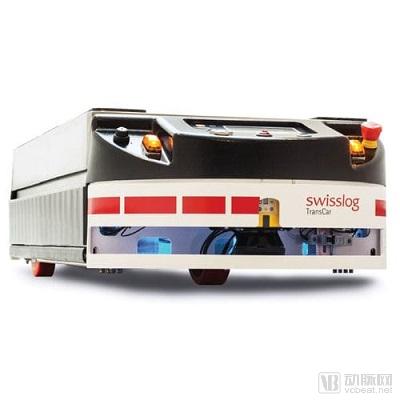
HOSPITAL AUTOMATED GUIDED VEHICLE TRANSCAR®
When patients seek medical care, all their needs are integrated with logistics that permeate every corner of the facility. A hospital-wide logistics transmission system fulfills patients’ logistical requirements, maximizing patient satisfaction and convenience while enhancing operational efficiency. After three years of operation, Orbis Medical Center has become the second-most operationally efficient hospital in the Netherlands, thanks to its innovative processes.
At the service center of the Cleveland Clinic (Ohio, USA), there are more than 81 automated guided vehicle (AGV) robots, each five feet in length, including waste carts, food carts, linen carts, and heavy-equipment carts. All carts are equipped with radio-frequency identification (RFID) tags to ensure they reach the correct locations. Healthcare staff can scan barcodes on the carts using handheld devices to verify that materials are delivered according to the correct specifications.
Dave Miano, the project architect for the Cleveland Clinic’s Service Center construction project, stated that these AGV robots traveled a total of more than 1,000 miles across nearly 5,000 round trips in just one day.
Schachinger described these robots as “highly efficient,” noting that they do not require fixed work schedules. “In the vast majority of cases, at least around 65 of these 81 AGV robots are actively performing tasks,” he added.
Memorial Hospital in Greenville, South Carolina, USA, has six floors. To ensure the proper operation of AGV robots, the hospital constructed narrow elevators dedicated exclusively to AGVs; these elevators have no buttons and are not accessible to people.
According to Mike Bailey, Director of Environmental Services at Greenville Memorial Hospital, the hospital has been using an Automated Guided Vehicle System (AGVS) since the late 1970s, making it one of the two oldest such systems in hospitals across the United States. When first installed, the AGV robots operated by following signals from embedded floor wires. However, after a system upgrade several years ago, it was upgraded to laser-guided remote sensing technology.
“AGV robots require approximately three to four hours of operation before needing a 15-minute charge; if a unit’s battery is completely depleted, it may take up to 30 minutes to fully recharge. At any given time, there are 32 to 34 AGV robots in operation within the hospital,” Bailey added.
Bailey stated that the installation cost for AGVS in Greenville is approximately $10 million to $15 million, with annual operating expenses of around $1 million.
Major Domestic AGV Robots and Their Application Technologies
The figure below shows the major domestic AGV robot companies and their products:
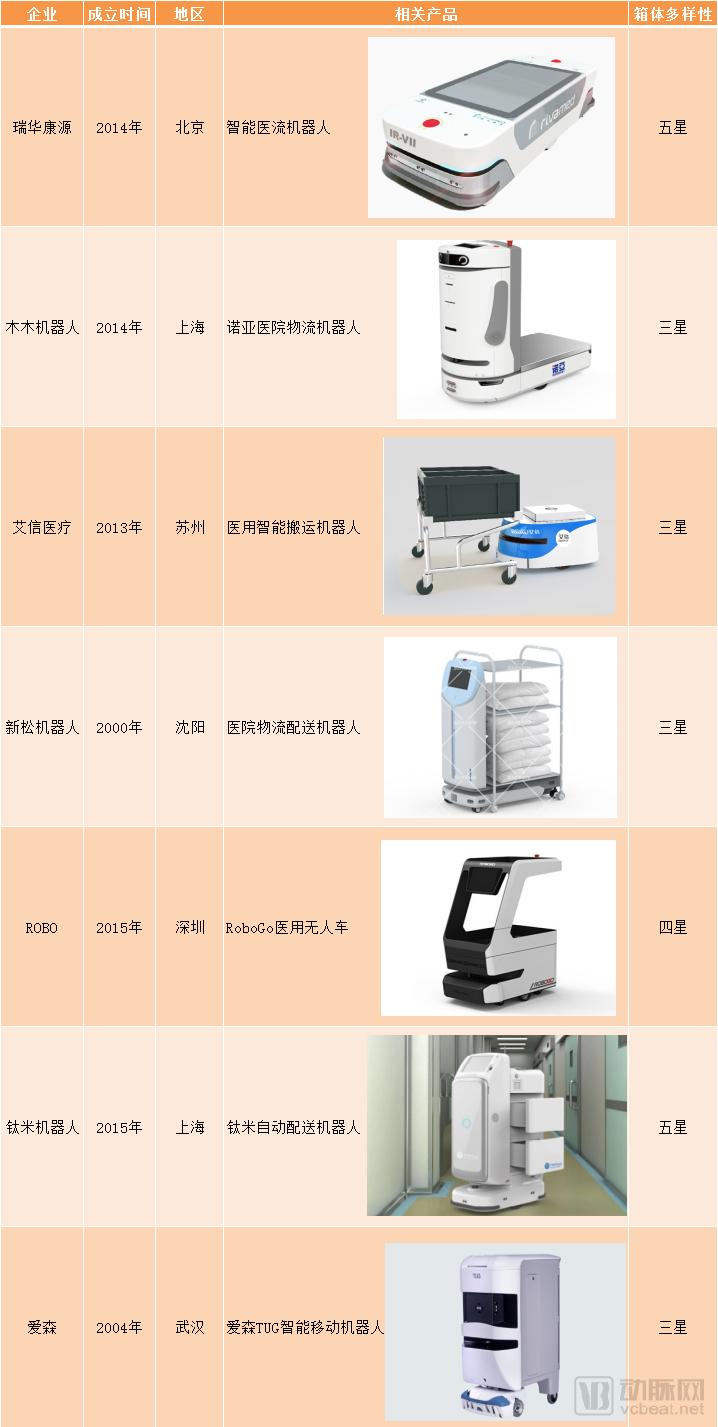
This indicates that most companies in the medical AGV robot sector were established around 2014, and the number of market participants remains limited. Notable among them is Siasun Robot & Automation, which is affiliated with the Chinese Academy of Sciences, offers a broad domestic robotics product line, and operates across multiple industries. In terms of container diversity, Ruihua Kangyuan and Timi Robot demonstrate the strongest applicability across various scenarios, capable of accommodating a wider range of medical item transportation needs.
Based on different application scenarios and uses, AGV robots currently mainly fall into the following categories:
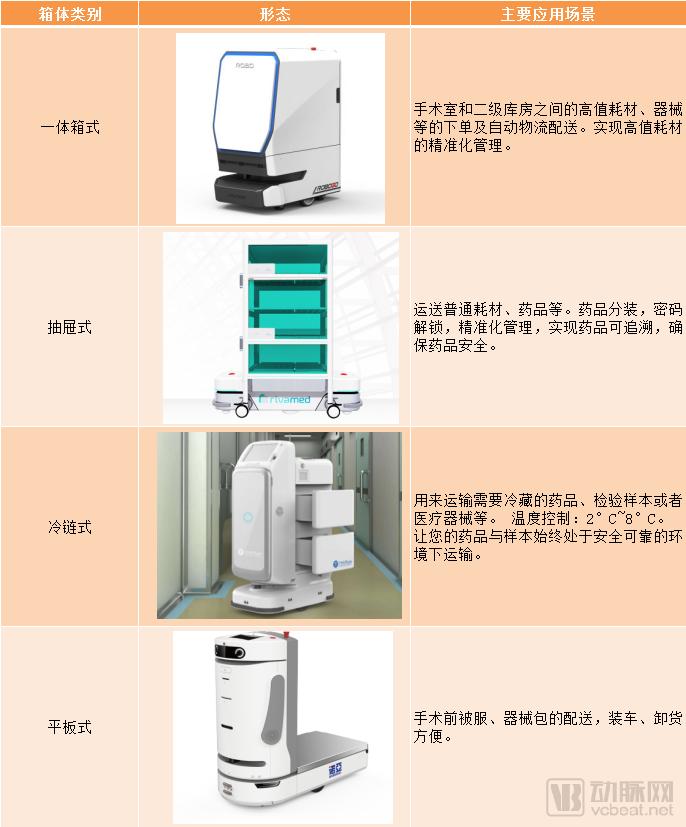
The following are the technical specifications of a certain AGV robot:
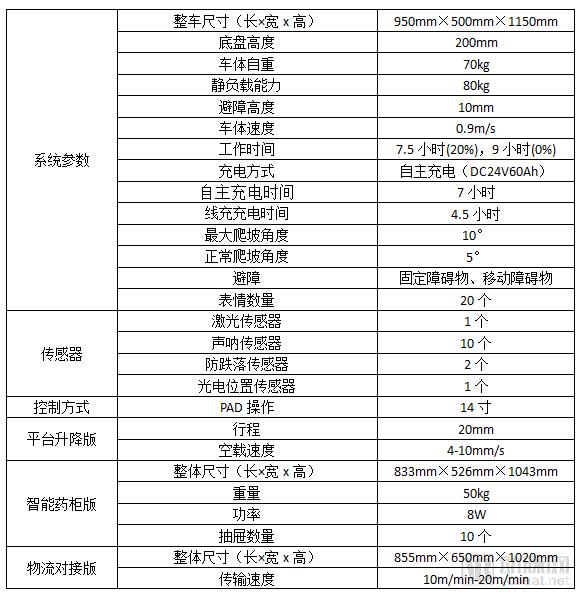
Generally speaking, an AGV (Automated Guided Vehicle) robot system is a battery-powered, fully autonomous, unmanned automated material handling system that uses mobile robots as its carrier. It represents a new type of intelligent logistics solution that has emerged with the widespread adoption of IoT sensor technologies and information technologies, such as advanced positioning, obstacle avoidance, identity recognition, and automatic charging. By integrating robot-related modules with the hospital’s HIS (Hospital Information System), it effectively helps hospital distribution systems achieve informatization, digitalization, networking, integration, intelligence, and automation.
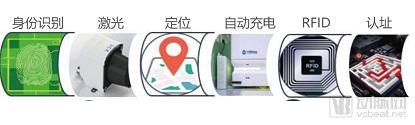
IoT Technologies Involved in AGV Robot Systems
The steering, starting, stopping, and reversing mechanisms of the AGV robot are controlled by an onboard microcomputer-based intelligent system, which also features corresponding programmable input capabilities. Guided by laser navigation and following pre-loaded program instructions, the vehicle automatically moves forward, reverses, steers, and opens doors to reach designated delivery locations before returning automatically, all without human intervention. The vehicle is also equipped with appropriate sensors that provide reference signals to the intelligent system, enabling it to issue corrective information for the vehicle’s position.
As SLAM technology has matured in recent years, the positioning and navigation of AGV robots have become more precise.
SLAM (Simultaneous Localization and Mapping) was first proposed in the field of robotics. It refers to the process by which a robot, starting from an unknown location in an unfamiliar environment, localizes its own position and orientation by repeatedly observing environmental features during motion, and then constructs an incremental map of the surrounding environment based on its estimated position, thereby achieving simultaneous localization and mapping. Due to its significant academic and practical value, SLAM has long been regarded as a key technology for realizing fully autonomous mobile robots.
Currently, there are two mainstream types of SLAM: visual SLAM and LiDAR-based SLAM (Lidar SLAM), which typically employs 2D or 3D LiDAR sensors (also known as single-line or multi-line LiDAR). For indoor robots, such as robotic vacuum cleaners and Automated Guided Vehicles (AGVs), 2D LiDAR is generally used, whereas 3D LiDAR is commonly adopted in the field of autonomous driving. The advantages of LiDAR include high measurement precision, providing accurate angle and distance information with angular accuracy of <1° and ranging accuracy at the centimeter level. In comparison, cameras used as sensors for visual SLAM are more affordable, lightweight, and widely available (for instance, nearly every mobile phone is equipped with a camera).
The AGV robot is powered by batteries, specifically maintenance-free, emission-free lead-acid batteries. The onboard computer of the transfer cart monitors the battery status in real time. When the battery voltage drops to the minimum threshold, the transfer cart completes its current delivery task before the control center directs it back to the charging station. After each task is completed, the cart automatically returns to the parking area for intelligent charging, requiring no operator supervision.
AGV robot workstations typically come in three different types: sending stations, receiving stations, and send/receive stations. Workstations with different designs can meet various operational requirements.
During its journey to the destination, an AGV robot typically needs to pass through fire doors. By sending a signal to the fire door in advance, the AGV robot transmits the signal to the control center via the hospital’s wireless network. After confirming that there is no fire alarm report for the fire door, the control center issues a command to allow the AGV robot to pass. If a fire alarm is reported at the fire door, the control center will issue a command directing the AGV robot to move to a designated area.
Vertical transportation of AGV robots is facilitated by dedicated elevators. Data transmission and reception are achieved through connection point antennas or far-infrared transceiver units located at the interface between the elevator shaft and the elevator car. For systems utilizing far-infrared transceiver units, these devices are installed on the ceiling of the elevator shaft and the top of the elevator car. Each elevator machine room requires a connector. Additionally, a 220V power supply, installed inside or on top of the elevator car, is required to power the infrared transceiver unit. The width of the elevator car doors and its internal dimensions must match the dimensions of the AGV robots.
Application Scenarios and Value of AGV Robots
Based on current market applications, AGV robots are primarily utilized in the following six scenarios:
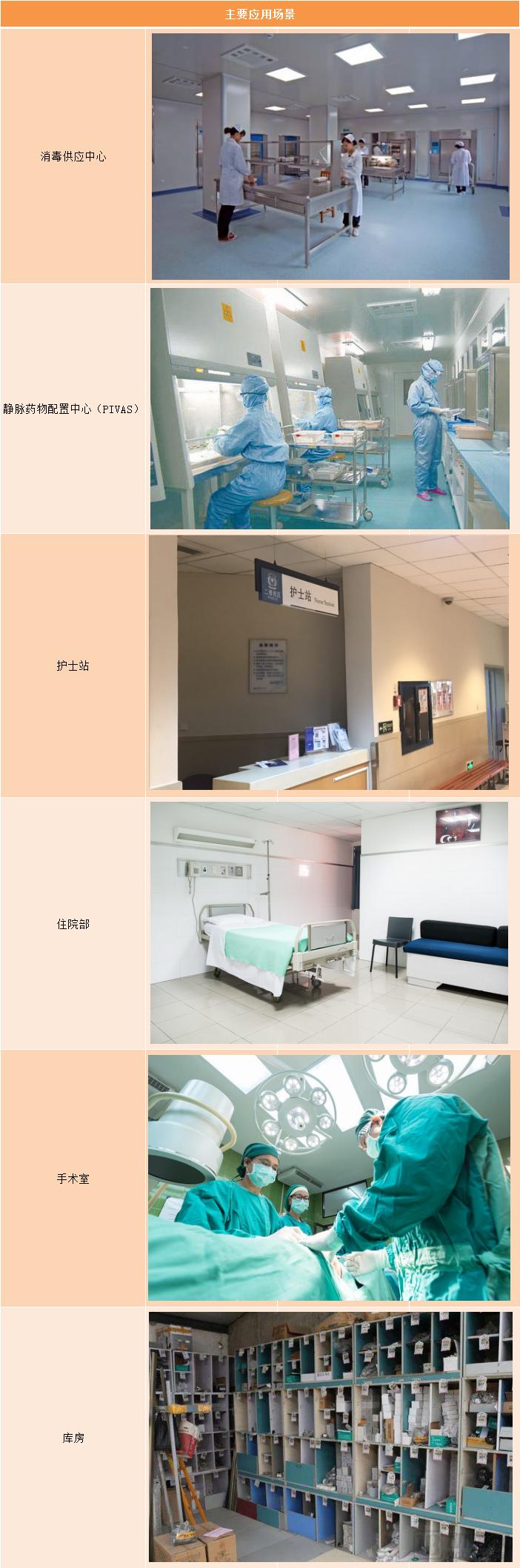
Taking Wuhan Union Hospital as an example, the hospital began trialing the “Baymax” intelligent medical logistics robots developed by the Team of TiMi Robotics in September 2016. Its primary function is to deliver medical consumables to operating rooms. The robot retrieves instruments based on commands and transports them from the storage room to the operating rooms, with an average transit time of 1.75 minutes per trip. It completes an average of 140 deliveries per day, equivalent to the workload of four delivery staff members.
According to Zhang Zhiyao, Deputy Director of the hospital, in terms of operating room supply distribution, logistics delivery robots transport medical devices, high-value auxiliary materials, low-value consumables, and surgical packs, thereby reducing the risk of carrying infectious pathogens during transportation and the possibility of cross-infection. In terms of medication distribution, the robots shuttle between the hospital’s Intravenous Admixture Services (IVAS) pharmacy and the nursing stations in various wards based on demand, transporting medications to meet patients’ routine and urgent medication needs.
Similarly, Fuwai Hospital of the Chinese Academy of Medical Sciences has introduced clean material delivery robots. Two such robots are assigned to handle delivery tasks for eight operating rooms. With a daily workload involving the delivery of special instruments for more than 40 surgeries, the two robots can easily complete the task in just three rounds. Subsequently, these robots can be flexibly deployed to deliver sterile items and consumables.
For another example, RoboGo’s autonomous medical delivery vehicles handle approximately 150 transport tasks per day in the clinical laboratory of a certain hospital, equivalent to 6–7 hours of work. They operate independently 24/7 throughout the year, saving approximately RMB 300,000 annually in labor costs.
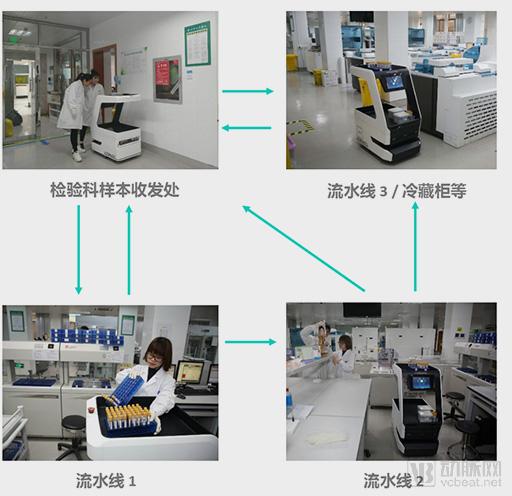
Workflow of the RoboGo Medical Unmanned Vehicle
In terms of practicality, AGV robots offer nine major values for hospital logistics:
1. 24/7 delivery to save hospitals transportation time;
2. Features such as quantity verification, electronic signature, and barcode scanning for cross-checking effectively reduce the risk of human error;
3. It can effectively reduce manual transportation costs;
4. Low setup costs, suitable for progressive investment from partial to hospital-wide implementation in both new and existing hospitals
5. Reduce the workload of healthcare workers and enhance their well-being;
6. Reduce time spent on non-direct patient care to improve the quality of medical services;
7. Transport clean items and supplies separately to effectively reduce the risk of cross-infection or disease transmission;
8. Enhance the level of intelligence and automation in hospitals to strengthen hospital brand and competitiveness;
9. Meet patients' needs for routine and as-needed medications.
Hospital PIVAS Construction: A Key Driver for AGC Robots
PIVAS, also known as the Intravenous Admixture Service Center or Admixture Center, is a novel pharmaceutical care service dedicated to promoting rational drug use and medication safety in hospitals. The original intent behind establishing PIVAS was to achieve closed-loop management, standardize medication practices, and ensure safety. The entire process includes: physicians issuing medical orders, nurses confirming and generating the orders, pharmacists reviewing prescriptions, admixture preparation, distribution, ward reception, nurse administration, and completion of administration. This end-to-end workflow is referred to as the closed-loop management of PIVAS.
In recent years, the rapid development of Pharmacy Intravenous Admixture Services (PIVAS) in China’s tertiary hospitals has, to some extent, accelerated the application of Automated Guided Vehicle (AGV) robots within hospital settings.
The world’s first centralized intravenous medication admixture service was proposed and implemented by the Ohio State University Wexner Medical Center in 1969. As this was only an initial exploration, there were no relevant standards at the time, and the scope of services, technical requirements, and personnel qualifications were quite basic. Nevertheless, this endeavor marked the dawn of a new era in ensuring the safety of intravenous medications for humanity.
Since then, centralized intravenous medication admixture services have been gradually implemented worldwide, with major developed countries and regions establishing relatively comprehensive regulatory frameworks, laws, regulations, and related infrastructure. By 1999, 79% of non-governmental hospitals and over 90% of government-run hospitals in the United States had adopted centralized intravenous medication admixture; more than 80% of public and university-affiliated hospitals in Australia had implemented such services; and regional centralized admixture had already been achieved in certain government-run hospitals in Japan. Baxter has over 25 years of practical experience in the commercial operation of excellence-driven centralized admixture services across seven countries, including Canada, Australia, and Puerto Rico.
To achieve scientific closed-loop management in PIVAS, in addition to the traditional measures of strengthening cleanroom environment management, improving and standardizing clinical infusion procedures, and enhancing the selection and management of medical supplies, it is also essential to employ AGV robots to ensure the safety of medications and reagents during transportation.
Recently, the National Health Commission, the National Development and Reform Commission, and nine other departments jointly issued the “Guiding Opinions on Promoting the Reform and Development of the Nursing Service Industry” (hereinafter referred to as the “Guiding Opinions”).

The “Guiding Opinions” state: In terms of information technology, emphasis is placed on strengthening the informatization of nursing care. By leveraging the rapid development of information technologies such as big data, cloud computing, the Internet of Things (IoT), and mobile communications, we will vigorously advance the informatization of nursing care, actively optimize nursing workflows, innovate nursing service models, and enhance nursing efficiency and management effectiveness. We will promote innovation in lifestyle-oriented service formats within the nursing sector, improve service processes, and actively foster new business models such as smart health and nursing care.
It is foreseeable that with the emergence of more related policies, medical AGV robots are poised for explosive growth in Grade A tertiary hospitals.