

NiuNuo Tech Pioneers AI-Driven EEG Solutions for Neurological Disorders Including Epilepsy and Alzheimer's Disease
In her first interview with VCBeat, she described herself as someone who “loves to take on challenges.”
Since 2011, Dai Shenyi, CEO of NuoNuo Technology, has been actively engaged in entrepreneurial ventures, exploring fields such as addiction treatment and sports internet. However, Dai, who specialized in EEG algorithms during her interdisciplinary training in brain science at Zhejiang University, told reporters that she had always been waiting for an opportunity—an opportunity to launch a startup focused on EEG technology.
Advances in brain science are inseparable from technological breakthroughs. Over the past two decades, significant progress in hardware technology—characterized by intelligent and miniaturized designs—along with rapid advancements in cloud storage and big data computing, have all served as “catalysts” for the development of the electroencephalography (EEG) industry. In particular, 2014, hailed as “Year One of Chinese Entrepreneurship,” saw a surge in mass entrepreneurship across China. A substantial influx of capital began to support high-tech startups. Leveraging her prior experience, professional networks, and financial resources accumulated from earlier ventures, Dai Shenyi suddenly realized that the long-awaited entrepreneurial opportunity in the EEG field had arrived. Thus, she plunged once again into the wave of new startup ventures.

Dai Kunyi, Founder and CEO of Niunuo Technology
Teaming up with two close friends, Liu Junbiao and Wang Shuang, with whom he had collaborated on scientific research at Zhejiang University for over a decade, Dai Shenyi swiftly established Nuonuo Technology, officially embarking on his entrepreneurial journey in the field of electroencephalography (EEG).
Liu Junbiao holds a Ph.D. in Circuits and Systems from the College of Information Science and Electronic Engineering at Zhejiang University, specializing in embedded system applications. With extensive experience in serial entrepreneurship, NuoNuo represents his fourth venture. Wang Shuang is a Professor and Doctoral Supervisor at Zhejiang University, as well as Deputy Director of the Epilepsy Ward in the Department of Neurology at the Second Affiliated Hospital of Zhejiang University School of Medicine. He serves as a Council Member and Young Committee Member of the China Association Against Epilepsy, a Young Committee Member of the Neurology Branch of the Chinese Medical Doctor Association, a Working Group Member on Translational Research for the International League Against Epilepsy, and a Member of the American Epilepsy Society, boasting abundant medical professional resources.
In fact, at the time of Niuno’s founding, the team aimed to launch the project with a relatively asset-light approach, starting from the lightweight consumer-grade market to explore viable business models. They had attempted to develop EEG algorithms and customized modules to assist others in creating consumer-grade EEG products, and also conducted fatigue testing for Air Force pilots and frontline factory workers, but the results were unsatisfactory.
After six months of exploration, the team concluded that the true application scenarios for EEG technology lie within the healthcare industry. Thus, starting in June 2015, they decided to focus on the medical market and clarified Nuono’s core positioning.To become a world-class provider of EEG solutions in the healthcare sector.
Addressing Core Pain Points in the EEG Industry Through Epilepsy
In the medical field, epilepsy is the indication most likely to be directly addressed by EEG.First, electroencephalography (EEG) is the gold standard for epilepsy; second, the inherent characteristics of epilepsy allow EEG applications to extend from hospital settings to home environments. This represents the optimal entry point for a startup team to initially focus on a single disease before expanding into multiple disease areas.
Epilepsy, commonly known as "sheep madness," is a chronic brain disorder caused by abnormal neuronal discharges in the brain. Frequent and long-term seizures have severe impacts on patients' physical and mental health as well as their cognitive abilities, imposing significant psychological and economic burdens on individuals, families, and society.
According to the World Health Organization, there are approximately 50 million people with epilepsy worldwide, 80% of whom live in developing countries. In China, the prevalence of epilepsy is approximately 0.7%, with the number of patients currently exceeding 10 million and increasing by 300,000 to 400,000 annually.
Therefore, epilepsy research has long held a significant position in the biomedical field. Electroencephalography (EEG) is one of the most critical diagnostic tools for epilepsy; it not only helps determine whether a patient’s condition constitutes an epileptic seizure based on EEG characteristics but also aids in identifying the seizure type and potential epilepsy syndrome, thereby facilitating the discovery of precipitating factors for epilepsy.
However, due to limitations in EEG equipment, algorithms, and specialized personnel, the diagnosis and treatment of epilepsy have long faced numerous challenges.
Dai Shenyi told reporters that epileptic seizures are characterized by sudden abnormal electrical discharges in the brain, with unpredictable timing and frequency. In many cases, by the time patients travel from onset to seeking medical care at a hospital, the epileptiform discharges have already ceased before an electroencephalogram (EEG) can be performed. Therefore, there is an inherent need for mobile EEG monitoring in epilepsy management. However, most hospitals currently still rely on traditional EEG machines, which are cumbersome to transport and have limited sensitivity and specificity.
The most critical issue is that data acquired by traditional EEG devices remains offline and cannot be uploaded to the cloud for further analysis. Moreover, due to device limitations, there is a lack of out-of-hospital epileptiform discharge records, special frequency bands are difficult to identify, and data cannot be integrated into electronic medical records, thereby preventing the generation of diagnostic reports.
Furthermore, the detection and analysis of epileptic electroencephalogram (EEG) signals are typically performed manually by experienced neurologists or neurophysiology specialists. However, China currently faces a shortage of EEG technicians, and hospitals at all levels lack qualified physicians for EEG interpretation, particularly in primary healthcare institutions where there is a severe deficit of skilled personnel. Moreover, manual EEG reading is costly and inefficient, hindering effective intervention and control of epilepsy, while also being prone to misdiagnosis and missed diagnoses.
“The lack of high-quality resources for EEG interpretation (including algorithms and EEG technologists) is the core issue facing the global EEG industry,” said Dai Shenyi.
To address this pain point, Nuonuo Technology has launched a series of EEG technology products and application services, focusing on enhancing device portability and reducing the cost of EEG interpretation. By collecting and establishing an EEG pathology database and leveraging artificial intelligence to assist physicians in diagnosis and treatment, the company aims to improve medical diagnostic efficiency and accuracy.
Hardware + Software: Building a Big Data Cloud Platform for EEG
NuoTech’s product portfolio is primarily divided into hardware and software segments, encompassing an EEG pathology database and algorithms, an EEG big data cloud platform, and a range of independently developed electroencephalographs.
In terms of hardware, Niunuo Technology’s electroencephalogram (EEG) devices have surpassed leading domestic and international manufacturers in quality. The product lineup primarily includes four models: the medical EEG device (ENS-2124U Medical EEG Device), the portable EEG device (BYC-1524W-S50 EEG Device), the headband-style EEG monitor (ENS-6164H), and the iNeuro epilepsy wristband. Among these, the medical EEG device series has obtained EU CE certification and CFDA Class II medical device registration. It is currently the only EEG device certified by the CFDA that utilizes a 24-bit sampling precision chip.
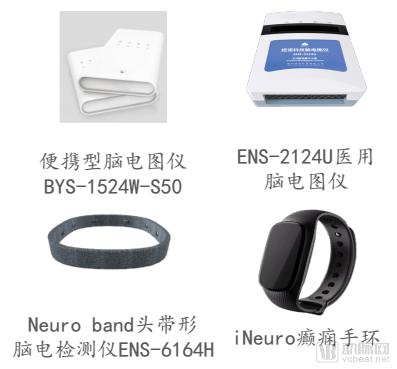
EEG analyzers can acquire more objective and comprehensive EEG data across diverse application scenarios. According to VCBeat, Nuonuo Technology has now accumulated tens of thousands of high-quality, medical-grade EEG datasets, laying a solid foundation for AI-assisted diagnostic analysis of EEG signals.. NuoNuo Technology has also become the only company in China to have established a big data platform for electroencephalography (EEG).
In terms of software, Nuo Technology has launched a unified EEG data format platform and a cloud-based big data analytics platform for EEG, breaking down data format barriers across different brands. This has achieved standardization and seamless data flow on the EEG cloud platform, automated preliminary screening of positive EEG indicators, and the development of initial predictive models for epilepsy warning related to diseases.
Machine learning-based computer-aided diagnosis systems can rapidly, automatically, and accurately detect and quantify brain diseases, providing pathological data to support physicians’ diagnoses, reducing their workload by at least 50%, and greatly facilitating clinical consultations and disease prediction.
Dai Shenyi introduced that Nuonuo Technology currently far outperforms similar domestic products in cloud platform data processing, artificial intelligence algorithms, and data standardization. Its disease diagnosis has achieved very high accuracy, with algorithm sensitivity exceeding 80% and specificity over 90%.
NiuNuo Technology is currently focusing on optimizing algorithms for epilepsy and Alzheimer’s disease, but Dai Shenyi stated that it will expand to various EEG-related disorders in the future.“EEG devices can be applied across multiple clinical departments. Currently, we are focusing on epilepsy as our entry point, given that the demand for EEG in epilepsy management is the most imperative. EEG-based diagnosis remains the gold standard, with no other more effective diagnostic alternatives available at present. Of course, we do not intend to limit ourselves to epilepsy; rather, we aim to use it as a breakthrough to establish a pathological database. Once this database is established, we will be able to expand into any medical specialty requiring EEG testing.”
Pioneering a New Model for the EEG Industry Guided by AI
As a leader in the AI-driven EEG industry in China, Nuono Technology has established close collaborations with many renowned Grade-A tertiary hospitals, clinical medical institutions, pharmaceutical companies, and research organizations across the country. These partnerships advance the R&D and production of new products, facilitate academic exchanges, promote industry development, and pioneer a new model for the EEG sector guided by artificial intelligence.
Joining Hands with Medical Institutions to Co-Establish EEG Centers
In collaboration with the healthcare system, NuoNuo Technology has adopted a development model that involves partnering with medical KOL teams to jointly apply for national-level key research projects. By leveraging a research-oriented approach to collaborate extensively with physician groups, the company secures top-tier academic and scientific support. Building on this foundation, it engages in sales and service partnerships with various hospital groups for the establishment and operation of EEG centers.
Nuo Technology has jointly applied for nearly 10 national and provincial key research projects with medical teams from Beijing Tiantan Hospital, Shanghai Huashan Hospital, the Second Affiliated Hospital of Zhejiang University School of Medicine, and Sun Yat-sen University in Guangzhou, and will soon co-publish multiple SCI-indexed papers.
In terms of EEG center sales, Nuonuo Technology focuses on developing medical database functionalities and establishing a hospital-based joint consultation system. By continuously improving the transmission and circulation of cloud-based online EEG data, the company provides hospitals with comprehensive EEG center solutions, including medical devices, remote platforms, and data analytics platforms.
For large public hospitals or private healthcare groups that are already equipped with sufficient EEG devices, Nuonuo Technology adopts a service-oriented model supplemented by equipment sales. The company generates service fees by providing hospitals with an EEG data analysis platform to assist physicians in diagnosis, while simultaneously driving the sales of Nuonuo’s EEG machines within these hospitals.
For county- and city-level hospitals with limited or no EEG equipment, NuoNuo Technology adopts a business model combining medical device sales with services. Under this model, NuoNuo establishes co-built EEG centers to provide hospitals with medical devices, remote platforms, and data analysis platforms. By leveraging the hospitals’ existing physician resources in conjunction with remote EEG specialists, and based on intelligent analysis of EEG data, the company facilitates two-way referral services, thereby promoting tiered diagnosis and treatment.
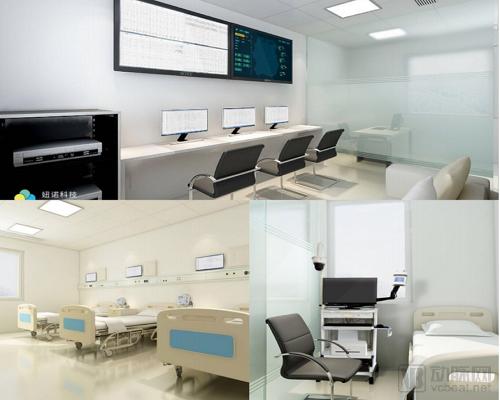
EEG Center Rendering
With the technical support of NuoNuo Technology, tertiary hospitals collaborate with primary and secondary hospitals to conduct joint consultations. Primary healthcare institutions perform EEG data acquisition and transmit the data to tertiary hospitals via the NuoNuo remote platform, whereupon the tertiary hospitals issue diagnostic reports. This approach not only facilitates the referral of patients from tertiary hospitals to primary care settings but also enables long-term management of patients at the primary care level.
For example, NuoNuo Technology is currently assisting in the construction of a medical consortium between the Second Affiliated Hospital of Zhejiang University School of Medicine (SAHZU) and Changxing County People's Hospital, facilitating the referral of patients requiring long-term maintenance to primary care institutions. SAHZU utilizes NuoNuo’s EEG devices, while primary care facilities leverage the NuoNuo platform to integrate with their existing EEG equipment. Primary care institutions are responsible for EEG data acquisition and transmission, whereas SAHZU handles image interpretation and treatment planning. It is reported that this medical consortium has been operational for six months, managing over 300 epilepsy patients, with more than 100 patients under the management of primary care hospitals in Changxing.
In addition, NuoNuo Technology collaborates with private medical institutions to provide patient referral services and receives a share of the diagnostic and treatment revenue. Patients often crowd major tertiary hospitals, queuing up for examinations; however, routine electroencephalogram (EEG) tests can actually be performed at ordinary hospitals. NuoNuo Technology assists large hospitals with triage and patient diversion, directing patients to nearby private hospitals (such as Mingzhou Hospital and Dingxiang Clinic) for examinations. The test results are directly fed back to the attending physicians, facilitating timely formulation of treatment plans.
It is reported that, to date, Nuonuo Technology has established partnerships with more than 20 hospitals across China, including renowned medical groups such as the Second Affiliated Hospital of Zhejiang University School of Medicine Medical Group, Huashan Hospital Medical Group, and Guangzhou Zhongshan Medical Group.
Serving Pharmaceutical Enterprises: Building an End-to-End Integrated System
In addition to hospitals, collaboration with pharmaceutical companies is also one of Nuonuo Technology's key business areas.
For pharmaceutical companies, the launch of a product is by no means the end point, but rather the starting point for extensive Real-World Studies (RWS) and clinical application evaluations of the drug.
After a pharmaceutical company’s drug is launched, it is necessary to observe the drug’s efficacy, safety, and pharmacoeconomics in populations beyond those included in the rigorous Phase III registration trials, thereby extending the product’s lifecycle, enhancing its commercial value, and raising its growth ceiling.
NiuNuo Technology offers a comprehensive suite of EEG analysis and statistical systems, enabling end-to-end integrated real-world studies to assist pharmaceutical companies in evaluating drug efficacy.
In 2017, Nuonuo Technology partnered with the global biopharmaceutical company UCB to launch a specialized disease management solution for epilepsy, aimed at managing UCB’s target patient population.
VCBeat has learned that Nuonuo Technology has conducted data analysis on 300 epilepsy patients, implemented phased chronic disease management for 30 of them, and tested a three-tier diagnosis and treatment system along with remote patient management. Through this process, Nuonuo helped UCB gain insights into the characteristics of its medications, such as the efficacy of anti-epileptic drugs in controlling seizures across different types of epilepsy, their impact on patients’ sleep architecture, and their varying effects on patients with diverse clinical profiles and physiological states. These efforts aim to enhance user value and precisely target key customer segments.
Dai Shenyi stated that Nuonuo Technology plans to assist UCB in establishing an integrated, end-to-end diagnosis and treatment model using Zhejiang Province as a pilot, with gradual expansion across China. The company also expects to deepen its collaboration with UCB by participating in Phase IV clinical trials involving more than 3,000 cases.
Entering the Health Checkup Market to Boost the Development of the EEG Industry
In recent years, driven by the booming general health industry, the market for health checkup services has entered a period of rapid growth. However, none of the current checkup packages include electroencephalogram (EEG) examinations. This is not due to a lack of demand, but rather because existing EEG interpretation capabilities are insufficient to meet such substantial medical needs.
“There is a shortage of EEG specialists in China, and the training cycle is lengthy. Even if EEG data is collected, it is futile without professionals to interpret the readings,” said Dai Shenyi. Nuonuo Technology has seized this market opportunity by partnering with leading health checkup providers such as Meinian Onehealth.
For health examination institutions, the NuoNuo AI EEG Analysis System can help address challenges in EEG interpretation, enabling EEG examinations to serve as a preliminary screening tool prior to other diagnostic tests (such as imaging). It also facilitates comparative validation studies in conjunction with blood tests and imaging modalities.
For Niunuo Technology, collaborating with health examination centers not only provides access to massive datasets to advance the development of EEG-based artificial intelligence but also serves as an entry point for connectivity with Grade A tertiary hospitals, thereby generating new data value.
Since its establishment in 2014, Nuonuo Technology has grown through exploration and is now a modern high-tech enterprise integrating comprehensive EEG solutions, R&D of artificial intelligence algorithms, development of software and hardware products, equipment manufacturing, sales, and technical services.
The company has successively received honors such as Hangzhou’s “Qinglan Program” and Binjiang District’s “5050 Program,” completed two national-level scientific research projects, secured three provincial- and municipal-level awards, obtained eight national patents, and registered 15 software copyrights.
Looking ahead, Nuono Technology will adopt a dual-pronged strategy of “R&D and optimization” to deepen its scientific research and development in the field of electroencephalography (EEG). It is reported that Nuono Technology is currently undergoing Series A financing, with Tan Zhen Capital serving as the exclusive financial advisor. The company previously completed its angel round of financing from Beike Fund in January 2016, and its Pre-A round from Fenghao Venture Capital in July 2016.