

China Renaissance Lists on HKEX with Over HK$10 Billion Market Cap, Reveals $1.7 Billion Healthcare Portfolio

China Renaissance
Financial Services Investment Institutions
Today, China Renaissance (01911.HK) listed on the Hong Kong Stock Exchange. As the first IPO in the new economy financial services sector, it was priced at HK$31.80 per share, opened at its IPO price this morning, and achieved a market capitalization exceeding HK$10 billion.
In fact, China Renaissance provides financial services to the entire industry. In the healthcare sector, it focuses on innovative drugs, oncology, and vaccines. The group has offices in Beijing, Shanghai, Hong Kong, and New York, with nearly 600 employees. As of March 31, 2018, China Renaissance Group had helped clients successfully complete more than 700 transactions, including initial public offerings (IPOs), mergers and acquisitions (M&A), and private equity financing, with a total transaction value exceeding $100 billion. Its private equity fund assets under management (AUM) amounted to nearly $4.1 billion.
To this end, as China Renaissance goes public, VCBeat (WeChat ID: vcbeat), which has long focused on the broader health sector, highlights its strategic layout and achievements in the healthcare industry.
To gain a detailed understanding of China Renaissance’s strategic layout in the healthcare sector, VCBeat selected 30 out of more than 40 projects for analysis based on public information. The specific healthcare projects involved are as follows:
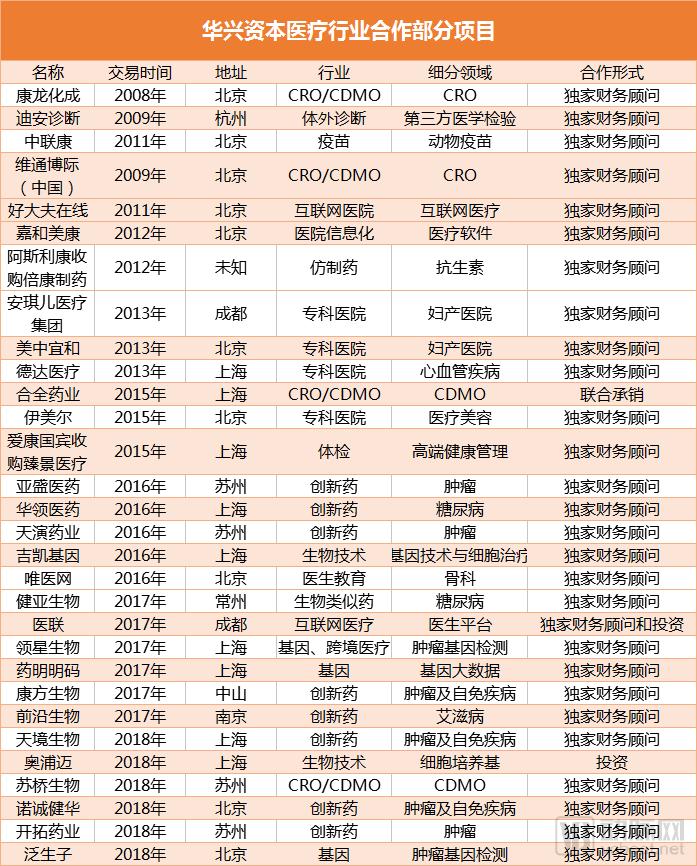
As can be seen from the list, China Renaissance began to favor and deeply cultivate the healthcare and life sciences sector in 2009. Its investments span mobile internet healthcare, specialized hospitals, medical devices, healthcare services, pharmaceuticals, as well as biotechnology, diagnostics, and genetic testing, all closely aligned with the most cutting-edge trends in the healthcare and life sciences fields both in China and globally.
Data shows that over the past year, China Renaissance has successively served several technology-leading companies, including WuXi AppTec, Akeso, Frontier Biotechnologies, and Ascentage Pharma. As of October this year, the China Renaissance Healthcare and Life Sciences team has acted as financial advisor for more than 40 financing and M&A transactions, with a total transaction value of approximately $1.7 billion.
As Chinese enterprises expand onto the global stage, they will encounter a diverse array of opportunities and challenges, ranging from overseas mergers and acquisitions, international strategic partnerships, and establishing overseas manufacturing plants and R&D centers, to building global sales networks.Bao Fan stated that China Renaissance will continue to strengthen its service capabilities, aiming to become the closest capital markets partner for Chinese enterprises expanding into international markets.
So, which regional projects does China Renaissance focus on, and in what ways does it collaborate with them?
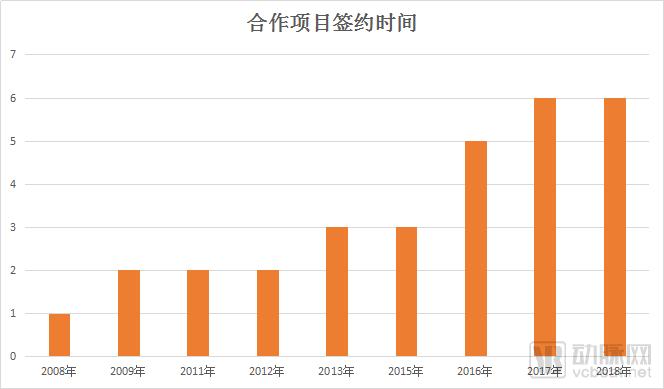
It can be seen that China Renaissance began signing projects in 2008, with Pharmaron being its initial project. Between 2010 and 2018, the number of signed projects gradually increased from one to six, covering areas such as innovative drugs, genomics, and oncology.
In particular, many gene-related projects were signed in 2017 and 2018, such as I-Mab, OpMab, Suqiao Biopharma, InnoCare Pharma, Kintor Pharmaceutical, and Genetron Health.
In his opening keynote, Bao Fan pointed out that 2017 had become a breakthrough year as disruptive innovations and services continued to enter the healthcare and life sciences sectors. “China Renaissance remains bullish on three key areas within the new economy: consumption upgrading, industrial transformation, and technological innovation. While information technology innovation drove China’s rapid economic growth over the past two decades, healthcare and life sciences will lead China’s technological innovation in the next twenty years.” In Bao Fan’s view, following the information technology revolution, healthcare and life sciences have taken center stage in China’s new economy and are poised to become the new protagonists of industrial investment in the new era.
In 2009, China’s healthcare reform had just begun, primarily facing two challenges. On one hand, due to insufficient funding for the healthcare sector, major public medical institutions struggled to independently establish comprehensive laboratories; in particular, some community health centers and township health clinics lacked the capacity to provide comprehensive medical testing services. On the other hand, as healthcare reform policies continued to advance and the external environment improved, the third-party medical testing market in China experienced rapid growth.
From the perspective of healthcare reform policies, measures such as curbing the disorderly growth of medical expenses, guiding rational drug use in public hospitals, strengthening the development of primary healthcare institutions, and encouraging private capital to enter the healthcare service market have created a favorable policy environment for the development of third-party medical testing agencies.
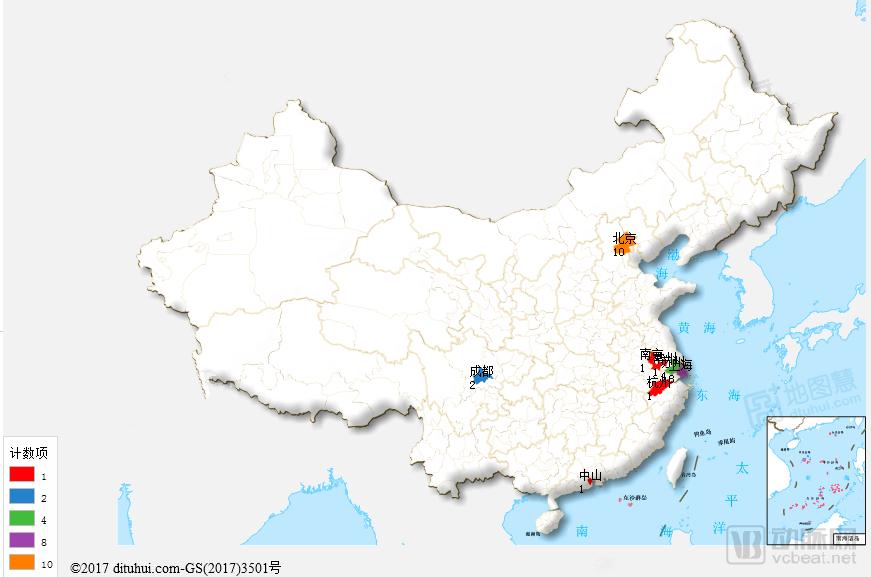
Based on the signed projects, most are concentrated in first-tier cities such as Beijing, Shanghai, and Hangzhou. This is related to the fields in which these projects operate.
One reason is that their strong economic conditions make it easier for first-tier cities to attract talent. In fields such as genomics, oncology, and innovative drugs, where R&D is central, the demand for technical R&D professionals is more clearly defined.
Reason 2: These enterprises need to collaborate with hospitals during the research and development of products or technologies. First-tier cities boast abundant medical resources and relatively comprehensive disease data, which also facilitates the subsequent application of their products.
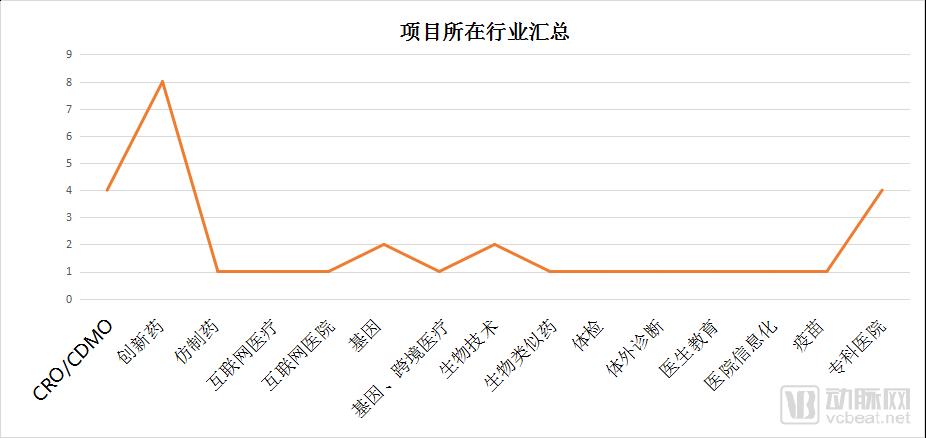
China Renaissance has signed projects in 15 industries, including innovative drugs, generic drugs, internet healthcare, internet hospitals, and genomics.
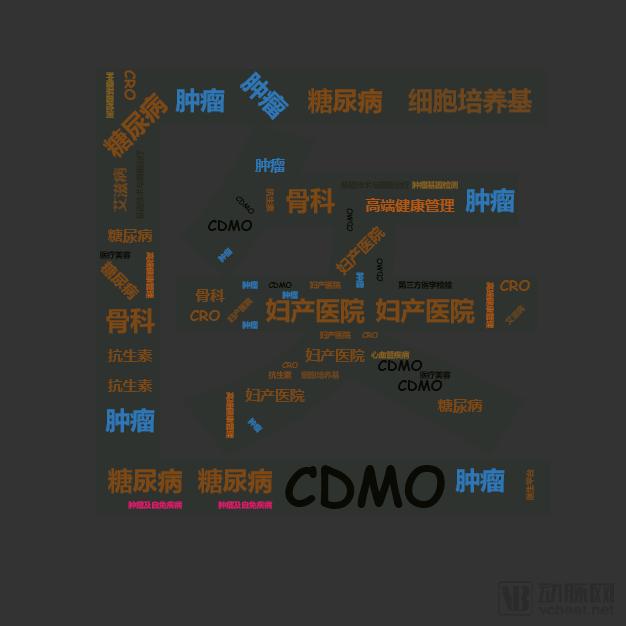
These projects span niche sectors including oncology, antibiotics, and premium health management, with a majority focused on diabetes.
This is due to the large population of patients with diabetes. According to statistics, in 2015, approximately 415 million people aged 20–79 worldwide had diabetes (a prevalence rate of 8.8%), and an additional 318 million had impaired glucose tolerance (a prediabetes prevalence rate of 6.7%). China has the largest number of diabetic patients globally; in 2015, the number of patients reached 109.6 million, and 1.3 million people died from diabetes and its complications. Meanwhile, according to IDF projections, if no intervention is implemented, the global number of diabetic patients will reach 642 million by 2040, with 481 million individuals in the prediabetic stage, and the number of patients in China will rise to 154 million.
However, the awareness rate of diabetes in China is only 30.1%, with merely 25.8% of patients receiving treatment. Among those undergoing treatment, only 39.7% achieve good glycemic control. Based on these figures, it is estimated that only 3.08% of all diabetic patients have their blood glucose levels under control.
In terms of expenditure among the diabetic population, China ranked second among the top ten countries globally for diabetes-related spending in 2015. In 2015, the market size of diabetes medications in China reached RMB 41.3 billion, representing a year-on-year increase of 6.7%. Due to the high incidence rate of diabetes coupled with low diagnosis and treatment rates, China’s diabetes market holds substantial potential. Within China’s diabetes medication market, insulin and its analogs accounted for a market size of RMB 17.6 billion, representing 42.6% of the total. Oral hypoglycemic agents captured 56.6% of the market share, with a market size reaching RMB 23.36 billion, a year-on-year increase of 8.8%.
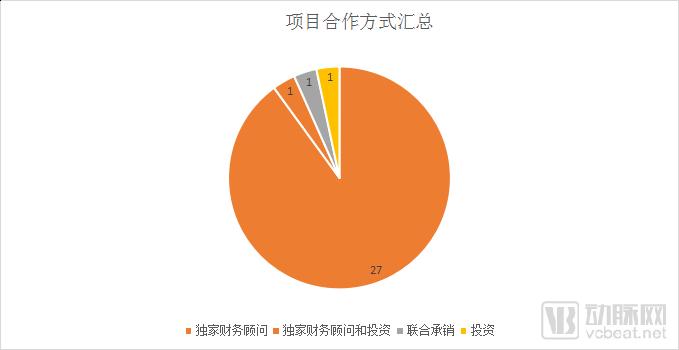
Currently, there are four types of cooperation between China Renaissance and its signed projects: exclusive financial advisor, exclusive financial advisor and investment, joint underwriting, and investment.
Among these, the most common form of cooperation was serving as exclusive financial advisor, accounting for 27 out of 30 projects. This is closely related to the growth trajectory of China Renaissance Capital.
This is because China Renaissance Group’s private placement team has consistently assisted clients in accurately positioning their offerings, structuring financing solutions, and preparing comprehensive marketing materials, while simultaneously identifying suitable financial or strategic investors with strong capabilities and strategic synergies.Over the past eight years, China Renaissance has grown into the leading professional firm in the field of equity financing financial advisory in China, having completed private financing and M&A transactions totaling over US$6 billion, and was consecutively rated as China’s “Best New Investment Bank of the Year” for six straight years from 2006 to 2011.For instance, behind the series of financing, mergers and acquisitions, and IPOs undertaken by China’s most influential internet giants—such as JD.com, Didi Chuxing, Meituan, and iQIYI—China Renaissance Capital has played a pivotal role. Even 58.com and Ganji.com, which had been locked in a decade-long rivalry, were ultimately united through the matchmaking efforts of this investment bank.
In the healthcare sector, China Renaissance has been fully committed to investing in the healthcare and life sciences industries and building its team since 2009. It currently boasts a professional investment banking team of 22 members, including senior professionals with over 25 years of experience in financing, M&A, and cross-border transactions in the U.S. life sciences sector, former R&D personnel from top U.S. innovative pharmaceutical companies, and experts with strong financial backgrounds.
Their areas of focus include pharmaceuticals and biotechnology, medical devices, healthcare services, diagnostics and genetic testing, and mobile internet healthcare. They provide specialized investment banking services to enterprises in these sectors, including industry analysis, investor screening, transaction structure design, and negotiation support.
Even so, Zhou Dayong, Managing Director of the CR Capital Healthcare Team, stated that the team itself is currently facing challenges in internationalization.
“For companies, China Renaissance not only helps them secure capital, but more importantly, lays a solid foundation for their future development,” said Zhou Dayong.
These innovative pharmaceutical companies are all very young and research-focused, yet they lack a deep understanding of capital markets and corporate governance structures. Beyond product development, China Renaissance provides these companies with one-stop services, helping them streamline corporate systems and equity structures, while offering strategic advice for future new drug R&D, talent acquisition, and international M&A activities. For biopharmaceutical startups, the China Renaissance Healthcare team acts more like a corporate steward, facilitating business growth.
However, the biopharmaceutical sector is the most internationalized industry in China, yet it also exhibits the largest gap compared to global standards. Abroad, there are a number of outstanding investment banks specializing in biopharmaceuticals; they possess a deeper understanding of the sector and are better attuned to the needs of these companies. Furthermore, advanced biotechnology companies overseas provide strong support for industry development. “Therefore, in our efforts to help Chinese pharmaceutical companies go global, we must first address our own internationalization,” said Zhou Dayong. “To tackle this challenge, China Renaissance is actively recruiting overseas talent, bringing in professionals with biopharmaceutical expertise and international backgrounds to internationalize its Healthcare team.”
Furthermore, talent specialization is also an issue that CRP-FANYA is considering. Biomedical technology is too new and developing too fast, with many specialized subfields. This market is just beginning, and many people are unaware of the value and direction of investment. It is necessary to attract more specialized talents with stronger expertise to better help investment institutions and entrepreneurs discover value.
As its business cases have multiplied, China Renaissance has gradually evolved into a resource-rich platform in the healthcare industry, bringing together numerous healthcare investors, scientists, and even companies listed on China’s A-share market. For corporations, China Renaissance assists in talent acquisition, strategic capital market planning, and identifying available resources; for investment institutions, it serves more as a beacon, helping them uncover future opportunities. In summary, China Renaissance is playing an increasingly vital role in fostering the organic integration of capital and industry.
No industry can achieve rapid growth without the support of capital markets. According to statistics, in the first half of 2017, the healthcare and life sciences sector completed a total of 24 private equity financing transactions, representing a year-on-year increase of approximately 40%, with a transaction value of around USD 1 billion, up by about 150% year on year. In terms of initial public offerings (IPOs), 11 deals were completed in the first half of the year, a year-on-year surge of approximately 270%, with a transaction value of roughly USD 700 million, reflecting a 140% year-on-year increase. It is evident that capital has been flowing vigorously into both the primary and secondary markets of China’s life sciences industry, at a notably rapid pace. Bao Fan stated, “Driven by capital, the continued forward development of the pharmaceutical industry is inevitable.”
Healthcare and life sciences are global industries. Deepening engagement in these sectors requires a cohort of individuals who possess both the mindset of scientists and the spirit of entrepreneurs. In this regard, Bao Fan believes that China has already assembled a group of top-tier industry talents with an international perspective. He anticipates that the level of internationalization in China’s healthcare and life sciences sector will surpass that of the internet industry, and that globally influential industry leaders and entrepreneurs will emerge.