

Empowering Dermatologists through AI: An Interview with Professor Lu Qianjin, Newly Appointed Chair of the Dermatology and Venereology Branch of the Chinese Medical Association
At the closing ceremony of the 24th National Annual Conference of Dermatology and Venereology of the Chinese Medical Association, held in Kunming on June 24, Professor Lu Qianjin from the Department of Dermatology and Venereology at the Second Xiangya Hospital of Central South University was officially elected as the Chairman of the 15th Committee of the Dermatology and Venereology Branch of the Chinese Medical Association.
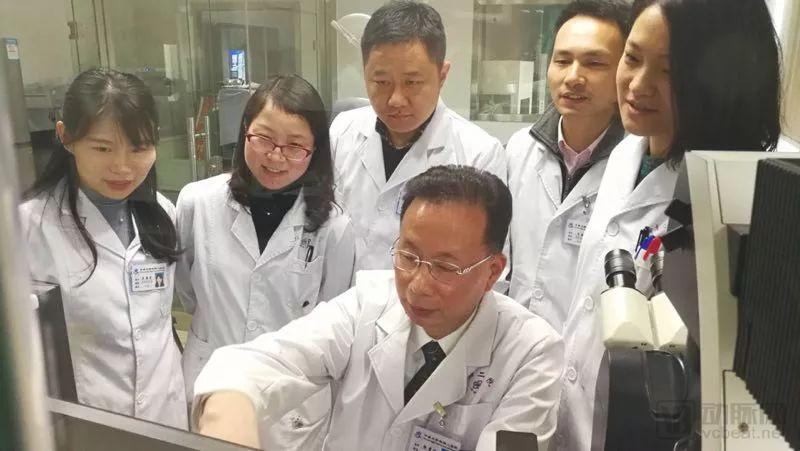
Lu Qianjin stated that the future focus of the Society’s work will not only involve establishing Chinese data on key dermatological conditions to develop clinical practice guidelines for the diagnosis and treatment of skin diseases in China, but also promoting basic research to accelerate alignment with international standards.
Additionally, he is an expert who actively embraces technology, aiming to strengthen medical education through “Internet Plus.”“We have done a great deal of work on the Grassroots Physicians’ Lecture Series and the Advanced Lecture Series in previous committee terms. Building on this foundation, we will leverage Internet Plus technologies to develop an online educational platform that offers clinical expert lectures and research guidance, with the aim of comprehensively enhancing China’s levels of basic research and clinical diagnosis and treatment,” explained Lu Qianjin.
The day after the conference concluded, Professor Lu Qianjin was still at his outpatient clinic by 7 a.m. as usual, working late into the night before returning home. This consistent dedication is merely a microcosm of Professor Lu’s decades-long commitment to clinical practice and scientific research.
In 1999, after obtaining his master’s and doctoral degrees from Hunan Medical University, Professor Lu Qianjin, who was then serving as Deputy Director of the Scientific Research Office at Hunan Medical University, traveled abroad for further studies. He conducted postdoctoral research in the United States, specializing in the epigenetic pathogenesis of lupus erythematosus at the University of Michigan Medical Center.
Lu Qianjin believes, “No matter how successful one’s career is or how affluent one’s life becomes in the United States, one will always be a foreigner. By returning to China to diagnose and treat Chinese patients and conduct research—applying my basic science and clinical research findings to serve Chinese patients—I feel that this carries greater value.”
In 2005, Lu Qianjin gave up his lucrative career and comfortable lifestyle in the United States to return to China, where he established a laboratory from scratch (now the Hunan Provincial Key Laboratory of Medical Epigenomics).
At that time, the hospital did not offer Lu Qianjin any special privileges, providing only a laboratory of less than 100 square meters located at a wastewater treatment plant. Despite these modest conditions, Lu chose to rise to the challenge and pursue research on epigenetics in China, focusing on systemic lupus erythematosus.
This is a long-standing, unresolved challenge that has plagued the medical community for many years. Despite more than a century of research, its etiology and pathogenesis remain unclear.
“I find systemic lupus erythematosus to be highly challenging. Since my graduation from university, I have been deeply interested in this condition, focusing particularly on research into its etiology and pathogenesis, with a special emphasis on epigenetics,” said Lu Qianjin.
Conducting scientific research entails countless rounds of repetitive experiments and inevitable failures. Reflecting on his decades-long journey in scientific research, Lu Qianjin recalled, “We encountered many setbacks, particularly in basic research, and experienced numerous failures. However, we never gave up and continued to strive forward. There are always more solutions than problems.”
Lu Qianjin’s dedication and perseverance in his work have profoundly inspired his students and every member of his team through his words and actions. What left a deep impression on Associate Researcher Wu Haijing, a member of his team, was an incident where Professor Lu, suffering from a severe cold and persistent cough, continued to discuss project details with his research group while undergoing nebulizer treatment in the laboratory, so as not to delay the project’s progress.
After years of development, Lu Qianjin’s laboratory has expanded from its original size of less than 100 square meters to a comprehensive 1,000-square-meter facility. It has also undertaken various major research projects, such as those funded by the U.S. National Institutes of Health (NIH) and the Major International Cooperation Projects of the National Natural Science Foundation of China.
Research Feeds Back into Clinical Practice. Having deciphered the pathogenesis of lupus erythematosus and gained a deeper understanding of its early diagnosis and treatment, Lu Qianjin has become increasingly proficient in the therapeutic techniques for this condition.
Every Monday, Professor Lu Qianjin’s specialized clinic for systemic lupus erythematosus (SLE) is packed to capacity. In recent years, the number of SLE patients seeking care from across China has increased annually. Many critically ill patients, including those with lupus cerebritis, severe lupus nephritis, and hematologic involvement, have been successfully discharged under Professor Lu’s meticulous treatment.
A female patient from another province, who had been misdiagnosed for many years, visited multiple hospitals in her quest for medical care. However, her condition worsened, involving multiple organs, and she was deemed infertile. Eventually, the patient sought help from Professor Lu. After adjusting the treatment plan, her health gradually improved, and two years later, she successfully gave birth to a baby boy.
Lu Qianjin was the first in the world to name a novel form of cutaneous lupus erythematosus and to report multiple complex and rare dermatological conditions. As the department director, he organized and guided physicians in successfully treating thousands of critical cases, including severe lupus erythematosus, severe drug eruptions, and bullous dermatoses, thereby rescuing these critically ill patients from life-threatening conditions.
Unlike typical physicians who focus solely on clinical consultations, Dr. Lu Qianjin always brings three essential items to his outpatient clinics: a follow-up logbook, his professional seal, and blood test records of key patients.
He explained, “The aim is to accumulate more data, including not only clinical data but also biological samples. By building this repository, we can establish a big-data platform for Chinese patients with lupus erythematosus, which will inform the development of diagnostic and treatment guidelines tailored specifically to the Chinese patient population.”
It is this patient-centered philosophy of disciplinary development that prompted Lu Qianjin to begin establishing a clinical database for lupus erythematosus patients in 2007. Five years ago, Lu Qianjin’s team conducted the first multicenter epidemiological study in China to cover both cutaneous lupus erythematosus and systemic lupus erythematosus, revealing that nonspecific skin lesions of lupus erythematosus are an independent risk factor for visceral organ involvement. Early intervention in such patients can effectively prevent major organ involvement.
His in-depth engagement with big data enabled Lu Qianjin to keenly recognize the potential of Artificial Intelligence (AI) in advancing the discipline, making him one of the earliest experts in China to explore AI applications in dermatology.
“I had this idea ten years ago. Dermatology, which is primarily based on morphology, holds significant advantages in the application of AI. With a sufficiently large dataset of dermatological images, machine-assisted diagnosis is entirely feasible; when combined with patient history and laboratory tests, it can even achieve precise diagnosis.”
In April 2018, Professor Lu Qianjin led the team from Xiangya Second Hospital, in collaboration with DXY and Ruiqi Software, to launch Smart Skin, China’s first AI-assisted diagnostic platform for dermatology. The platform is currently available free of charge to registered physicians, offering features such as AI-assisted diagnosis, case management, and online learning. It achieves an overall recognition accuracy of 86% across 85 dermatological conditions, including lupus erythematosus, psoriasis, acne, and herpes zoster. For 34 common diseases, the accuracy exceeds 95%. The platform leads the industry in both the number of identifiable conditions and diagnostic accuracy.
Professor Lu Qianjin believes that “the development of AI can liberate more dermatologists from routine clinical diagnosis and treatment, allowing them to devote more time to researching these diseases, developing better technologies and drugs, and focusing on the diagnosis and management of complex and refractory conditions. I believe this is the future trend.”