

Former SF Express Executive's Startup KuaiYiJian Secures RMB 100 Million Series B Funding, Achieves Monthly Revenue Over RMB 10 Million Since June
VCBeat (WeChat ID: vcbeat) has learned that Kuaiyijian recently completed a RMB 100 million Series B financing round. The round was led by Nokia Growth Partners (NGP), co-led by SoftBank China, and participated by Chende Capital.
Following this round of financing, Wang Zheng, founder of Quiknos, told VCBeat that the company would continue to expand its market presence, aiming to cover 10 provinces by 2018 and double the number of cooperating physicians.
Wang Zheng,March 2015After resigning from SF Express, the founder established Quiknos to penetrate the primary healthcare market from a logistics perspective. By leveraging robust logistics and information technology systems, Quiknos provides high-quality medical specimen delivery and related services, helping primary care physicians enhance their technical capabilities, strengthen brand promotion, attract patients, improve efficiency, reduce costs, and increase revenue.
In simple terms, Quiknos connects thousands of clinics, village health rooms, and health stations on one end with third-party medical testing institutions on the other, using logistics as a bridge to help them address the lack of effective diagnostic support tools in the clinical process.
Two years ago, VCBeat reported on the Quiknos project, titled“[Exclusive] Former SF Express Executive Founds Quiknos, Signs Contracts with 4,000 Primary Care Clinics in Over a Year Without Burning Cash” Goes Viral on WeChat Moments.At that time, it was in the midst of a difficult fundraising period.
After several years of development, the Quiknos team has grown to nearly 1,000 members, with front-line business personnel accounting for 80% of the entire company, and its business volume has increased tenfold. It can be said that Quiknos has now undergone a complete transformation and emerged reborn. To this end, VCBeat conducted exclusive interviews again with Wang Zheng, Yuanjun Deng, Managing Partner at Nokia Growth Partners, and Kai Wu, Partner at SoftBank China Capital, to interpret how investors view Quiknos and the changes it has undergone over the past three years.
In fact, following VCBeat’s report, many investment firms expressed interest in the Quiknos platform. Wang Zheng revealed that the undisclosed Series A and Series A+ financing rounds raised tens of millions of yuan, with the Series A+ round led by SoftBank China Capital.
“This round of Series B financing began in November 2017 and was finalized within two months. Since the Nokia Growth Partners fund is denominated in U.S. dollars, it took considerable time to restructure the company to accommodate the investment,” Wang Zheng admitted.
Wang Zheng stated that over the past two years, the most significant change for Quiknos has been a tenfold increase in its business scale. The number of clinics it serves has grown from 2,000 to 20,000, and its service coverage has expanded from Guangdong and Fujian Provinces to eight provinces, including Sichuan, Zhejiang, and Hunan. Quiknos has also established its own cold-chain logistics fleet, standardized the specimen transportation process, and is gradually building a comprehensive logistics system.
When selecting cities for expansion, he employs his own methodology: initially screening candidates based on local economic development, the number of clinics and health centers, population density, and other factors, followed by on-site visits conducted by dispatched personnel.
Currently, the majority of Kuaiyijian’s partner clients are village health clinics and village health stations, which operate under a public-ownership, private-operation model. Kuaiyijian plans logistics routes based on the geographic locations of these clinics to ensure that specimens are delivered to the testing laboratory on the same day.
In terms of profitability, as of June this year, the KuaiYiJian platform’s monthly revenue exceeded RMB 10 million. With routine testing as its core offering, the company collaborates with various manufacturers to customize differentiated specialized testing products, such as early-stage cancer screening and genetic testing services. “Although this is not our core business, demand is robust,” said Wang Zheng.
Compared with other similar platforms, the services launched by Quiknos are differentiated and maintain a certain leading advantage. Taking Guangdong Province and Fujian Province as examples, because Quiknos has built an effective sales channel network for village doctors, the sales volume of customized products such as early cancer screening is relatively large.
Currently, the Quiknos platform is connected to tens of thousands of clinics, which equates to tens of thousands of village doctors. Assuming each village clinic serves 500 households, with an average of four people per household, the platform covers a population in the tens of millions. By extrapolation, when it expands to cover 200,000 clinics in the future, it will reach a population of 300–400 million. Therefore, by using medical laboratory testing as its entry point, Quiknos plans to gradually expand into other business areas, offering immense growth potential.
In terms of the volume of test samples collected through the Quiknos platform, routine tests predominate, including complete blood count (CBC), liver function tests, renal function tests, and hepatitis B serological markers. For clinics, over 90% of test reports are available the next day, with certain test items demonstrating even higher efficiency than hospitals.
Although there are many POCT testing devices, their results are not always accurate. The high acquisition cost and low utilization rate of these devices often lead to significant idle time. By outsourcing tests to third-party medical laboratories through Quiknos, these concerns are completely eliminated. Meanwhile, the demand for point-of-care testing is met by rapid testing centers established in partnership with Quiknos, a segment that is also experiencing rapid growth.
Wang Zheng candidly shared that over the three years since founding Quiknos, he has had many takeaways, with four being particularly notable:
First, customer acceptance of their services is increasing.Previously, no one was engaged in this business, leading to significant skepticism among physicians and clinic operators. Acquiring a single doctor or clinic required five to ten times the effort compared to current standards.
Second, the services provided by Quiknos are becoming increasingly standardized.For physicians, seeing Kuaiyijian staff in uniform, wearing ID badges, and driving company-standard cold-chain logistics vehicles to collect specimens instills a high level of trust. Credibility is paramount in the medical field. This is what drove the shift from its original asset-light model to an asset-heavy one, aiming to provide clinics with high-quality medical services and ensure a superior customer experience.
Third, enhance the professionalization of staff and the differentiation of products.Taking the development of a system for cold-chain logistics operations management as an example, it requires the integration of hardware and software. In terms of hardware, it primarily relies on wireless sensor network (WSN) cold-chain monitoring devices based on next-generation Internet of Things (IoT) technology. These devices enable real-time tracking of each vehicle’s location, as well as the temperature and humidity of every temperature-controlled container. They provide timely alerts in case of anomalies, facilitating prompt intervention to ensure the normal operation of the cold-chain system.
Fourth, increasing recognition at the capital level.Previously, investment institutions believed that market demand was unclear, making fundraising relatively difficult. Three years later, Shenzhen Quiknos Technology Limited has demonstrated through its actions that not only does absolute demand exist, but the market potential is also substantial.
Although the business model of Quiknos appears straightforward, it entails high competitive barriers. It requires a robust logistics operation system, comprehensive personnel training and management frameworks, and strong IT system support. The platform must interface with tens of thousands of clinics on one end and dozens of clinical laboratories on the other, while managing variations in test items, specimen containers, storage temperatures, and sample collection requirements. Only those deeply embedded in the industry truly understand how to design such a product.
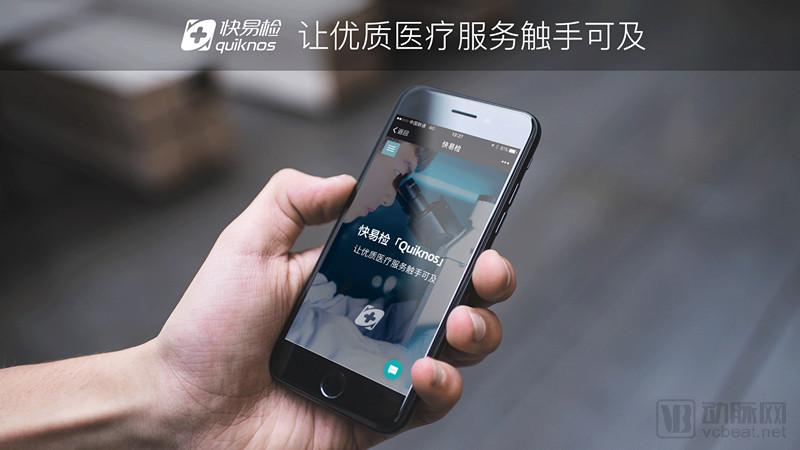
Meanwhile, Quiknos has also developed a physician-facing app that serves as a laboratory information management system for primary care clinics, enabling users to place orders and view test reports.
When discussing future plans, Wang Zheng outlined two key objectives: first, to continue scaling up replication efforts with the aim of covering at least 10 provinces within this year; and second, to double the number of collaborating physicians. He aims to leverage the sales channels and medical cold-chain logistics network built by Quiknos to deliver more high-quality medical services to the grassroots healthcare market.
“I learned about Quiknos through public information, contacted its founder Wang Zheng directly, and confirmed my investment intent after our first conversation,” Deng Yuanjun told VCBeat.
The reason is simple: his past experiences have led him to believe that the primary healthcare market entered by Quiknos is highly promising, and he places great emphasis on China’s rural market.
That was in 2004, when he joined Nokia and served as the head of Nokia’s mobile phone business in China. During this period, what he took most pride in was not Nokia’s annual revenue of RMB 70 billion, but rather the launch of Nokia’s ultra-low-end mobile phones around 2005.
“At that time, Deng Yuanjun believed that mobile phones were essential companions for everyone, yet not everyone could afford them—particularly migrant workers working away from home, as well as the left-behind children and elderly in their hometowns. ‘That’s when I began persuading Nokia’s Finnish headquarters to launch ultra-low-end mobile phones.’”
“This change has not only made it easier for people around the world to connect with one another, but also addressed the communication challenges faced by left-behind children and the elderly in China with their relatives working far away—a achievement our team is particularly proud of,” said Deng Yuanjun.
By analogy, Quiknos has addressed the majority of testing challenges faced by rural clinics, bringing high-quality medical resources down to the grassroots level of healthcare. This aligns with his original intention at the time to focus on the low-end mobile phone market.
“Therefore, entrepreneurial opportunities in non-tier-one regions—such as fifth-tier cities, rural areas, and townships—are the focus of our investment,” said Deng Yuanjun.
Additionally, founder Wang Zheng’s background at SF Express played a role. Although he considers many factors when evaluating investment opportunities, the team remains the most critical criterion. Deng Yuanjun believes that this team is highly passionate and driven by vision, and furthermore, their clinic clients are highly satisfied. During the due diligence process, client feedback was overwhelmingly positive.
In addition to financial support, assistance will also be provided in areas such as team management and channel development. He believes that Nokia’s endorsement will help Shenzhen Quiknos Technology Limited acquire local users, following the same principle as “loving me, love my dog.”
NGP, a global venture capital firm, manages over $1 billion in assets.“We have employees across the globe and keep a finger on the pulse of trends in every region. As a result, we have successfully invested in many innovative companies in the past. For instance, we invested in Ganji.com in China and the largest classified advertising company in India. By comparing development trends across global markets, we possess a more comprehensive global perspective than other investment firms, which constitutes a significant competitive advantage for us,” said Deng Yuanjun.
In terms of areas of focus, Deng Yuanjun prioritizes smart mobility,Internet of Things、Healthcare、EducationThese four major sectors. Although, Quiknos is the first project NGP has invested in within China's healthcare sector.
However, from the perspective of the broader health and wellness sector, Deng Yuanjun has also invested in Yuedongquan and Xiaoxun Technology. The majority of users on the Yuedongquan platform are concentrated in third-, fourth-, and fifth-tier cities, where the platform helps them establish exercise habits, boasting a substantial user base. NGP’s investment portfolio also includes My Dagong Network, whose user base consists predominantly of rural residents who likewise hope for their families to experience fewer illnesses or remain healthy.Therefore, these initiatives can all be integrated with Quiknos to provide laboratory testing products or other health services to users on these platforms.
In the future, he hopes to leverage the strong relationships established between Quiknos and primary healthcare institutions to extend its service chain, thereby continuously delivering more high-quality medical resources to these facilities. For instance, with the ongoing improvement of infrastructure in rural markets, technical challenges associated with telemedicine—such as the transmission of medical images and scans—can be effectively resolved.
It is evident that healthcare is a highly significant sector. There is no fixed investment amount; investments are made whenever promising targets emerge. Deng Yuanjun is willing to invest as long as the following four “P” criteria are met:
First, we look at the “People,” because investment is ultimately about investing in people—specifically, whether the team and founders meet our criteria.
Second, has the “pain point” been addressed? Entrepreneurs need to understand the true size of their market opportunity and the extent to which they have alleviated the pain point. Only when the market is sufficiently large and the pain point sufficiently acute will there be greater opportunities for future growth.
Third, “Proof Point.” We indeed need to see evidence demonstrating that the startup has achieved growth, including records of data and other metrics. Since we invest in early-stage startups, they must have a product already launched and have acquired a substantial user base within their specific niche market. Such companies are the ones worth investing in.
Fourth, Potential. As investors, we also consider the return on investment (ROI). We assess how much room for growth a startup has to deliver greater returns to investors in the future. This is one of our criteria for evaluating innovative companies in the market.
Wu Kai offers the following assessment of the Quiknos platform: Leveraging the founders’ backgrounds in SF Pharmaceutical Logistics and FedEx, it initially entered the grassroots market from the perspective of medical testing logistics. Today, it has evolved into a comprehensive platform serving primary healthcare, connecting village doctors, residents, county hospitals, third-party testing centers, diagnostic companies, and even pharmaceutical enterprises through Quiknos. In the future, it has the potential to become an information distribution platform for the grassroots level.
Village doctors constitute a particularly critical link in the entire value chain.Unlike the distant doctor-patient relationships in urban areas, village doctors are themselves part of the community; they have lived alongside the villagers for generations.There is a stable chain of relationships between villagers and village doctors.
In other words, village doctors operating village clinics are the most difficult group to penetrate. They are always cautious when recommending a testing product or providing medical services from Shenzhen Quiknos Technology Limited to patients, given their need to maintain long-term relationships within the community. However, once they endorse your offerings, they will spare no effort in promoting them.
In other words, this is the final gateway to the true grassroots healthcare market; those who win over village doctors will capture the vast grassroots healthcare market.