

Shanghai Ninth People's Hospital Signs $170M Stem Cell Technology Transfer Deal with Zhonghe Huapu for Dermatological Therapies
VCBeat (WeChat: vcbeat) has learned that on July 10, Shanghai Ninth People’s Hospital, Shanghai Jiao Tong University School of Medicine, andZhonghe Huapu (Beijing) Fundsigned a technology transfer agreement with the Management Co., Ltd., toRMB 120 millionExclusive Transfer of the Hospital's Plastic Surgery DepartmentA Stem Cell Technology from Professor Li Qingfeng’s Team。
This represents the largest single transaction to date for the conversion of doctors’ professional technological achievements at this hospital. More importantly, Shanghai Ninth People’s Hospital is undergoing a transformation into a new role as a Grade 3A hospital—becoming a “hub” for pharmaceutical and medical science and technology innovation, establishing a clinical research system, and integrating industry, academia, and research resources. A series of clinician-initiated initiatives for the translation of clinical scientific and technological achievements are currently underway.
“Tertiary Grade A hospitals should not be content with existing medical practices; instead, they should aim for the future and explore better healthcare solutions for the public,” stated Professor Wu Hao, President of Shanghai Ninth People’s Hospital. Since last year, Shanghai Ninth People’s Hospital has initiated a transformational development strategy, aiming to establish a distinct “Chinese brand” in original medical fields such as novel therapeutic approaches, new clinical guidelines, innovative drug development, and medical devices, rather than merely following in others’ footsteps.
In 2017, the new “Administrative Measures for the Transformation of Job-Related Scientific and Technological Achievements (Trial)” of Shanghai Ninth People’s Hospital, Shanghai Jiao Tong University School of Medicine, was introduced. The project led by Professor Li Qingfeng’s team, titled “Clinical Application and Industrialization of Adipose-Derived Stem Cells and Their Derivatives in Skin Therapy,” became the first successful case of technology transfer following the implementation of these measures.
Stem cell therapy is at the forefront of international medicine, and China attaches great importance to it. Professor Li Qingfeng’s team hasBreakthrough Progress in the Use of Adipose-Derived Stem Cells for Skin-Related Therapies, the relevant technologies can be applied in fields such as skin regeneration, wound healing, and transplantation, offering substantial potential clinical value and benefits.
Pursuant to the commercialization agreement executed between Shanghai Ninth People’s Hospital and Zhonghe Huapu, a new entity shall be established in Shanghai by Zhonghe Huapu or its designated investor(s).Biopharmaceutical Company, entering into an exclusive collaboration with Li Qingfeng’s stem cell project team. The project involves a phased investment of RMB 120 million, with an upfront licensing fee of RMB 10 million paid to Shanghai Ninth People’s Hospital. Upon successful commercial launch of the product, 3% of product sales revenue will be provided to the hospital as post-commercialization royalty payments.
This is not an isolated case of the conversion of job-related scientific and technological achievements at Shanghai Ninth People’s Hospital. Riding on the momentum of new regulations governing such conversions, a number of scientific research outcomes have embarked on the path to commercialization, including a 3D printing technology for orthopedics developed by the team led by Academician Dai Kerong, a lifelong professor at Shanghai Ninth People’s Hospital and a member of the Chinese Academy of Engineering.
In fact, this new regulation on the translation of scientific achievements is like a small move in a larger strategy by Shanghai Ninth People’s Hospital to build its clinical research system. Since last year, Shanghai Ninth People’s Hospital has integrated and established a matrix of public service platforms for clinical research. In addition to the existingFive Key Laboratories of Shanghai: Stomatology, Tissue Engineering, Orthopedic Implants, Translational Medicine for Ear and Nose Diseases, and Orbital Diseases and Ocular TumorsIn addition, last December, the Shanghai Institute for Precision Medicine, established as a Class IV Peak Discipline Construction Project under the Shanghai Municipal Education Commission and led by Shanghai Jiao Tong University School of Medicine with substantive development based at Shanghai Ninth People’s Hospital, was officially launched, creating a hub linking clinical medicine with basic medical sciences.
Meanwhile, the “Medical 3D Printing Innovation Research Center,” the “High-Standard Hospital-Level Biobank,” and the “Tissue Engineering Center,” dedicated to regenerative medicine—a new milestone in the history of life sciences—have all been integrated into the clinical research system at Shanghai Ninth People’s Hospital.
These platform matrices are characterized by a strong emphasis on “resource integration, collaborative innovation, and multidisciplinary convergence,” features that have been similarly “replicated” in the clinical disciplines of Shanghai Ninth People’s Hospital. The hospital is vigorously promoting “research-oriented MDT (Multidisciplinary Team) clinical care,” wherein specialists from different disciplines convene around specific diseases. Rather than merely discussing clinical solutions, they aim to develop innovative technologies, guidelines, and treatment modalities.
To truly realize the transformation of scientific and technological achievements, this hospital has introduced a new breed of talent, including globally recruited experts in biomaterials, drug R&D, and engineering, as well as industry negotiation specialists dedicated to facilitating technology transfer. These professionals are embedded across various platforms to provide support to all medical staff throughout the hospital.
Wu Hao stated that previous research has shown that the era of relying on a single discipline to work in isolation for technology transfer is over. To promote the translation of major clinical technological achievements, hospitals first lack a public service platform; second, they lack incentive mechanisms; and third, there is a need for a paradigm shift among physicians—moving from being content with merely providing adequate clinical care or focusing solely on laboratory work and SCI paper publications, to regarding the translation of scientific research into practical applications as a new professional aspiration.
In Wu Hao’s view, the fundamental goal of advancing clinical translational research based on basic science is to apply scientific achievements to public health, ensuring that the general population truly benefits from advances in medical science and technology. To achieve this objective, Shanghai Ninth People’s Hospital aims to explore transforming itself into an integrated “hub” for industry-academia-research collaboration, bringing together key elements such as industry, talent, and capital, thereby fostering the vigorous growth of a cohort of unicorn companies and hidden champions.
About Professor Li Qingfeng
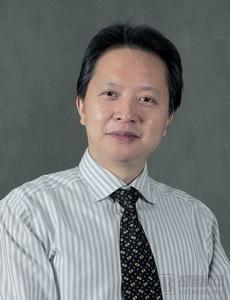
Professor Li Qingfeng, image from the official website of Shanghai Jiao Tong University
Li Qingfeng, Distinguished Professor under the Chang Jiang Scholars Program of the Ministry of Education, Recipient of the National Science Fund for Distinguished Young Scholars, and Expert with Outstanding Contributions awarded by the Ministry of Health. He currently serves as Director of the Department of Plastic and Reconstructive Surgery at Shanghai Ninth People’s Hospital, Shanghai Jiao Tong University School of Medicine, and is a Doctoral Supervisor.
Born in October 1964. Received the M.D. degree from Shanghai Medical University in 1994. Completed postdoctoral research at Shanghai Second Medical University in 1996. Conducted research on trauma repair at the Icahn School of Medicine at Mount Sinai in New York, USA, from 1998 to 1999. Appointed Professor at Shanghai Second Medical University in 2000. Served as Director of the Department of Plastic and Reconstructive Surgery at Shanghai Ninth People’s Hospital, Shanghai Jiao Tong University School of Medicine, in 2008.
He currently serves on the Editorial Board of Annals of Plastic Surgery, is a Founding Member of the American Society for Reconstructive Transplantation Surgery, and acts as a judge for the Ho Leung Ho Lee Prize. Additionally, he holds positions such as Vice Chairman, Standing Committee Member, Associate Editor-in-Chief, and Editorial Board Member in more than ten domestic academic societies and professional journals.
Professor Li Qingfeng has presided over six projects funded by the National Natural Science Foundation of China, including the National Science Fund for Distinguished Young Scholars and Key Program projects; one public welfare industry fund under the National Medium- and Long-Term Science and Technology Development Plan; and more than ten key scientific and technological projects in Shanghai. He has published over 150 academic papers, with more than 30 indexed by SCI, and has received numerous awards, including the Chinese Medical Association Science and Technology Progress Award and the Shanghai Science and Technology Progress Award.
This article was reposted from Wenhui Daily, authored by Tang Wenjia.