

From Nature Publications to Industrialization: How He Built a Gut Microbiome Powerhouse Within Three Years After Leaving BGI
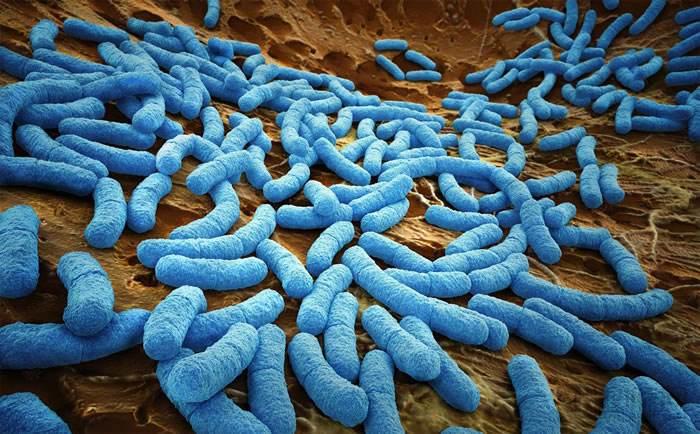
The ratio of human cells to bacteria living on and inside the human body is approximately 1:1.3, so it is no exaggeration to say that humans are hosts to bacteria.
In addition to being regulated by an individual’s own genes and influenced by environmental factors, human physiological health is significantly impacted by the vast community of symbiotic bacteria. The vast majority of these bacteria reside in the human intestine and are collectively referred to as the gut microbiota.
Human genes are determined at birth, and modifying them involves not only technical challenges but also ethical concerns. In contrast, leveraging and modulating the gut microbiota to exert beneficial effects on human health is gaining increasing attention from both the scientific community and the industry.
Numerous studies have demonstrated that, beyond intestinal inflammation, gut microbiota are associated with a range of conditions, including obesity, diabetes, cardiovascular disease, cancer, rheumatoid arthritis, and depression. Clinical research and industrial translation involving gut microbiota are rapidly gaining momentum.
Just as BGI participated in 1% of the Human Genome Project, its involvement in the European Union’s MetaHIT (Metagenomics of the Human Intestinal Tract) project in 2008 can be regarded as the starting point for microbiome research in China, as well as the origin of PuYuan Technology (whose founding team included several members who participated in this research initiative).
Young scientists represented by Wang Jun and Qin Junjie played an extremely important role in this initiative, carrying out extensive foundational and pioneering work for the research and development of microbiomics in China. At that time, European teams were also participating and conducting related work. Qin Junjie, founder of BGI Genomics (formerly known as Huada Gene) and then a doctoral candidate, served as the project leader. He led a spirited young team working day and night to race against their European counterparts in unraveling the mysteries of the human gut microbiota.
Qin Junjie recalled, “From the perspective of microbial ecology, I was a novice entering the field at that time. However, relying on a globally leading technology platform, I ventured forth with some degree of ‘boldness.’ It was precisely through the close integration of omics technologies, represented by next-generation sequencing, with microbial ecology that microbiomics emerged.”
In this project, they identified more than 1,000 human gut-resident genes and over 3.3 million bacterial genes. Not content with viewing the gut microbiota merely as isolated entities, Qin Junjie led his team to further interpret the human gut microbiome from the perspective of its relevance to human diseases. Their perseverance paid off: they uncovered a close association between the gut microbiota and type 2 diabetes, marking just the beginning of Qin Junjie and his team’s enduring commitment to microecological health.
Eight years later, Qin Junjie has transformed from a novice in the field of microbiome science into a leading figure in China’s and even the global research community. He has also evolved into an entrepreneur with acute sensitivity to industry trends and the ability to navigate increasingly complex and diverse challenges. The company he founded, Puyuan Technology, has become a leading enterprise in the microbiome sector.
Upon departing from BGI, with the support of his mentor Wang Jun and BGI Chairman Wang Jian, Qin Junjie had already established functional units for microbiome bioinformatics analysis, live bacterial screening and cultivation, animal models, and the translational development of probiotic/prebiotic products. He had founded a platform that was ahead of its international counterparts.
Speaking of his departure from BGI Genomics, Qin Junjie stated, “My intuition tells me that new technologies will drive the rapid development of the microbiome industry. I want to devote myself wholeheartedly and exclusively to this field, as if dedicating my life to creating a work of art.”
Founded in July 2014, Puyuan Technology witnessed Qin Junjie’s successful transformation from an academically devoted scientist into an entrepreneur navigating the competitive business landscape. Leveraging his rigorous scientific training and profound technical expertise, Puyuan Technology places a high priority on research and development (R&D), regarding core technologies as the lifeline of the enterprise. To strengthen its R&D capabilities, Puyuan established the Shenzhen Puyuan Genomics Research Institute and the Shenzhen Puyuan Medical Laboratory. By collaborating with renowned domestic and international research institutions, the company promotes the translation of scientific achievements through project-based R&D, thereby achieving integrated synergy among industry, academia, and research.
Puyuan Technology leverages advanced microbiome technologies, dedicating itself to technological development and product applications in three major fields: scientific services, microecological health, and clinical diagnostics. It primarily has three product lines:
First, technical services span multiple fields, including medicine, health, agriculture, and the environment. For instance, in the medical field, the focus is on the role of the human microbiome in achieving precise diagnosis and treatment of diseases, thereby developing solutions for microecological testing and therapy. In the health sector, the efficacy of various health foods and wellness programs is evaluated from the perspective of gut microbiota health. In agriculture, the value of microbes in crop growth and livestock breeding can be explored. In the environmental sector, microbes are utilized for environmental monitoring, pollution control, and ecological restoration. PuYuan offers not only sequencing services but also comprehensive microecological technical solutions. Leveraging a strong R&D team, PuYuan provides end-to-end services, ranging from technical solution design and analytical reporting to product development.
Second, it offers health products based on microbiomics and provides personalized gut health management services. Leveraging industry-leading technologies and extensive market collaborations across a broad and deep upstream and downstream industrial chain, Puyuan Technology has built a comprehensive life and health database. It delivers personalized customization of multi-dimensional metagenomic testing and intervention products for Chinese consumers, covering gut, skin, oral, and reproductive tract microbiota. Currently, Puyuan Technology has established multi-level collaborations with the COFCO Nutrition and Health Research Institute, numerous Grade A tertiary hospitals in Beijing, Shanghai, Guangzhou, Shenzhen, Hangzhou, and other cities, as well as various health management companies. This has enabled the company to complete its strategic framework from R&D to industrialization, accelerating the commercialization of its research outcomes.
Third, the clinical direction. It can provide rapid detection of pathogenic microorganisms and companion testing of gut microbiota for medical and research institutions, facilitating precision medicine and delivering more advanced and accurate personalized treatment for each patient.
In database development, beyond focusing on data scale, Puyuan Technology has expanded horizontally into areas such as data production standards, data mining algorithms, and knowledge bases for data interpretation, thereby leading and driving the industrialization of this field.
In 2017, Puyuan established collaborations with the Cancer Hospital of the Chinese Academy of Medical Sciences and the U.S. National Cancer Institute. By adopting U.S. standards, a comprehensive assessment was conducted on Puyuan’s data output processes, revealing that they are internationally leading. This demonstrates Puyuan Technology’s profound expertise and globally leading capabilities in data generation, data mining, and data interpretation.
In the course of industrializing gut microbiota applications, Puyuan has established an independent microbiome testing laboratory and a production line for gut microbiota analysis to meet the demands of large-scale testing and data analytics.
In terms of talent development, Puyuan boasts a professional team that supports scientific design. Some team members, like Tan Junjie, hail from BGI Genomics, while others are graduates cultivated in-house. The team collectively possesses 10 years of experience in microbiome analysis, was the first to construct an intestinal flora gene set, and has achieved over 4,500 paper citations. Furthermore, championing a spirit of innovation and refusing to rest on existing technologies, the team began upgrading its microbiome technologies in 2016, establishing a cutting-edge technical platform oriented toward multi-omics, personalization, and big data.
Since its founding four years ago, Puyuan Technology achieved financial self-sufficiency in 2014, developed its products in 2015, secured its first round of financing in 2016, and enhanced its software and hardware infrastructure in 2017, with its microbial detection platform passing ISO standards and the US MBQC program evaluation. For Puyuan, 2018 marks another inaugural year, during which the company will comprehensively upgrade its existing product lines and simultaneously launch several new products closely related to public health.
The microbiome sector is heating up abroad, and in China, buoyed by capital inflows and strong demand from downstream markets, it is also rapidly catching up. However, Qin Junjie frankly pointed out the prevailing impetuosity within the industry.
He stated, “I believe the current situation is that the script is in place and the stage is set; it all depends on how the actors perform. If we were to identify what is lacking, I would say that compared with foreign counterparts, China’s industry resembles them in form but not in spirit, lacking substantive depth. Viewed solely within the domestic context, this may not pose a significant problem, as capital and market forces provide a safety net.”
Although the domestic market is on an upward trend, Qin Junjie believes that the endogenous issues within the industry have not only posed challenges to Puyuan but also brought it tremendous opportunities.
He stated, “Drawing on the development of the probiotics industry, I believe that the microbiome-related sector will ultimately become internationalized. If we do not pay attention now, we may find in the future that instruments, reagents, algorithms, bacterial strains, drugs, and other components in the microbiome industry can only be sourced from abroad, or that foreign products offer the best efficacy.”
How to Take the Lead in the International Microbiome Market and Enhance China’s Core Competitiveness in This Field. Qin Junjie believes that the key lies in innovation. “We need to make greater efforts in innovation, not only in technological innovation but also in business model innovation.”
He believes that the market currently needs a benchmark enterprise capable of consolidating the industry. “Collaboration between upstream and downstream enterprises in the microecology industry is not yet sufficiently close. From science popularization and education, marketing, to testing and monitoring, as well as intervention and regulation, this constitutes a vast industrial chain that requires capable enterprises to integrate this ecosystem.”
Regarding the future development of the gut microbiota, Qin Junjie stated that there is still significant potential for the gut microbiota to enhance health services. In the future, applications of gut microbiota management will become more scenario-based and ecological, with the creation of digital platforms centered around the gut microbiota.
Qin Junjie envisioned four major application scenarios:
1. Application in Chronic Disease Management: High-risk populations, and even the general public, can undergo personalized gut microbiota interventions in advance, nipping modern society’s chronic diseases in the bud.
2. Leverage smart devices: After swallowing a pill, it can directly monitor important health indicators such as your gut microbiota and their metabolites in real time within the digestive tract.
3. Smart Home Environment: The smart kitchen provides personalized meal planning, particularly by incorporating probiotics and prebiotics as daily dietary supplements into our three regular meals. The smart bathroom will serve as the primary site for sample testing of oral, dermal, and excretory specimens; it will automatically collect and analyze samples during routine activities such as brushing teeth, washing the face, showering, and using the toilet, thereby providing health data. Smart devices, including air conditioners and water dispensers, will continuously monitor the safety and quality of indoor air and drinking water.
4. Gut Microbiota Maintenance: "Initializing" the gut microbiota through methods such as fecal microbiota transplantation and microecological capsules.
“At that time, what people paid attention to every day was not only the weather forecast, but also their own gut health forecast.” He said. This is a real-time analysis and early warning for individual health based on various dimensions of data such as personal genes, gut microbiota, daily life status, diet, and exercise information.
Beyond the aforementioned explorations into how gut microbiota can promote physical health, longevity, mental well-being, and cognitive function, the vast reservoir of bacterial metabolites remains to be fully harnessed in the future. To this end, PuYuan Technology will expand its operational footprint and commercial channels to enhance brand influence, while pursuing international collaborations to leverage and lead China’s competitive advantages and prominent position in this field.