

Exscientia Leverages AI Platform to Forge $300M+ Drug Discovery Partnerships with Sanofi and GSK
In 2016, the U.S. pharmaceutical company Sunovion convened 11 chemists for a game designed to test who could discover the most promising new drug candidates. The participating chemists were presented with grids containing hundreds of chemical structures, fewer than one-tenth of which were annotated with relevant biological activity data. Leveraging their years of expertise in chemistry and biology, the chemists were tasked with selecting the most suitable compound molecular structures from these grids for the synthesis of new drugs.
Among the participants, ten chemists struggled for hours without reaching a conclusion, whereas one contestant successfully identified several candidate chemical structures constituting the molecular framework of a new drug within mere milliseconds. This contestant was Willem van Hoorn, Head of Cheminformatics at the startup Exscientia, who employed the company’s proprietary drug-design algorithm for screening.
Exscientia had long sought to collaborate with Sunovion, making it essential to demonstrate the potential of its algorithm in assisting drug development. This initiative convinced Sunovion of the algorithm’s capabilities, enabling Exscientia to secure the desired partnership and jointly develop psychiatric medications.
AI Enters the Pharmaceutical Industry—Disrupting Traditional Drug R&D Models and Reducing Development Costs
New drug development is a massive, time-consuming, and capital-intensive undertaking with a high failure rate. In recent years, the cost of drug R&D has continued to rise. According to estimates by PhRMA (the Pharmaceutical Research and Manufacturers of America), developing a new drug takes approximately 10 years, with an average cost reaching $2.6 billion.
Chemists typically synthesize thousands of compounds to ensure the identification of the optimal candidate; consequently, drug development is characterized by slow progress and a high failure rate. Only approximately 12% of drugs entering clinical trials ultimately receive regulatory approval. Therefore, addressing the high failure rate has long been a priority for pharmaceutical R&D companies worldwide.
It is understood that half of clinical trial failures stem from the lack of efficacy of candidate drugs, meaning the targets are not correctly matched. AI’s deep learning models can identify the correct targets by scanning target databases, leverage cloud computing and algorithms to precisely determine which compounds bind to which targets, simulate the drug development process, rapidly discover new chemical structural combination patterns, screen for active compounds, and virtually construct drug molecules. This approach avoids many costly clinical trials, thereby improving the efficiency of new drug development and reducing R&D costs.
A research report from TechEmergence indicates that leveraging artificial intelligence can increase the success rate of new drug development from 12% to 14%, potentially saving the biopharmaceutical industry billions of dollars.
Many AI startups have also recognized the economic benefits derived from this mere 2% and have begun developing platforms that bridge drug discovery with big data analytics. Exscientia was the first company to build an automated AI-driven drug design platform.
Exscientia: Building an Automated AI Drug Design Platform
Exscientia is a Scottish startup whose core business involves leveraging its proprietary artificial intelligence platform to guide automated drug discovery and development. By integrating various algorithms—an approach that can reduce the drug development timeline from 4.5 years to one year and significantly decrease the number of compounds requiring initial consideration—the company systematizes tasks that currently depend on the expertise of technical personnel.
Exscientia’s AI-driven drug discovery platform leverages big data and machine learning techniques to automatically design millions of small-molecule compounds associated with specific targets, including single-target small-molecule drugs and bispecific small-molecule drugs targeting combinations of targets. These compounds are evaluated and screened based on efficacy, selectivity, ADME (absorption, distribution, metabolism, and excretion), and other criteria. The selected compounds are then synthesized and subjected to experimental testing, with the resulting data fed back into the AI system to optimize compound selection in subsequent iterations.
1. Single-Target Small-Molecule Drug Development—Exscientia’s AI System for New Drug Discovery
Exscientia has integrated AI technology with new drug development techniques to create an AI-driven drug discovery system that is fully applicable to traditional single-target drug discovery. This system operates as a closed-loop framework, primarily comprisingDesign-Manufacturing-Testing-Analysis Four Cycles(Design-Make-Test-Analyse cycle), the detailed methodology of Exscientia’s AI loop system was first published in Nature (2012).
By leveraging this tightly integrated design-manufacture-test cycle for the development of new drug molecules, the results of each synthesis, analysis, and test are rapidly fed back into the AI system, thereby influencing subsequent analytical outcomes.
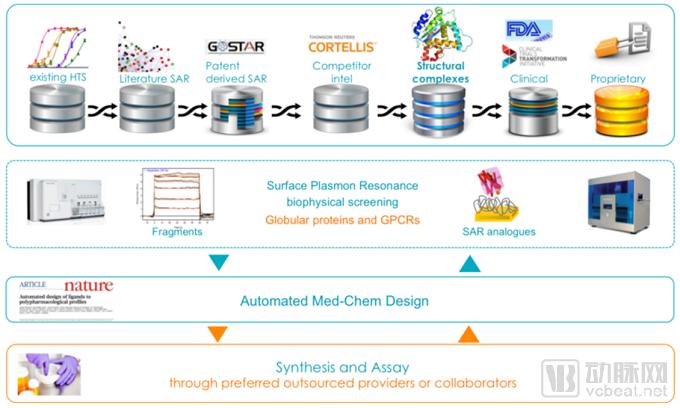
Exscientia's Design-Make-Test-Analyze Loop Platform
The real-time capability and high sensitivity of Surface Plasmon Resonance (SPR) can reduce the delays frequently encountered in traditional development processes, and enable fragment screening without requiring three-dimensional structures. Exscientia has chosen to conduct preliminary intelligent fragment screening driven by SPR, a method that can be effectively applied to the screening of soluble targets and challenging, high-value G protein-coupled receptors (GPCRs).
Additionally, to identify targets most likely to be chemically tractable, Exscientia also evaluated the druggability of each drug structure.
2. Exscientia’s Bispecific Small Molecule Design—A Single Compound Independently Binds to Two Different Targets
Bispecific small molecules can inhibit a novel combination of two metabolic disease enzymes from different gene families. For a single molecule with comprehensive pharmacodynamic genes, there is no priority for binding to its corresponding targets, thus requiring specialized inhibitory strategies.
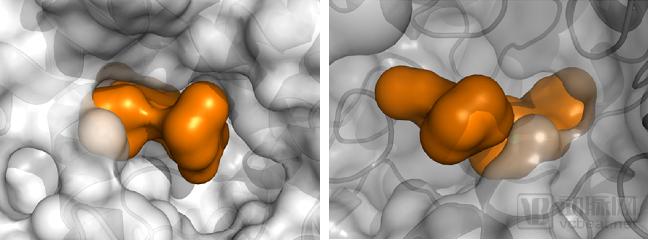
The figure shows a compound with a molecular weight of less than 400 Da, exhibiting nanomolar inhibitory potency and meeting the efficacy requirements for two primary targets (Enzyme A: IC50 = 347 nM and Enzyme B: IC50 = 11 nM).
The design process for bispecific small molecules is similar to that for single-target agents. The key difference is that their potency must simultaneously satisfy two distinct targets.
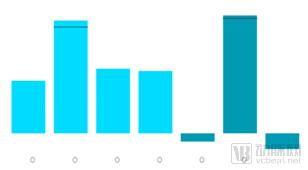
Bar Chart of the Evolutionary Process of Bispecific Small Molecules
The bar chart above illustrates the evolutionary trajectory of bispecific small molecules to achieve the required potency against the targets. The height of each bar represents the model scores for targets from two distinct enzyme families (cyan and dark blue), while the gray lines indicate the potency requirements for the two primary targets.
3、ExscientiaPhenotypic Drug Design Platform
Phenotypic Drug Design: Phenotypic drug design is a drug discovery approach based on biological phenotypes. Traditional phenotypic drug design involves designing compounds that can alter phenotypes in animal disease models, followed by in-depth exploration of the targets and mechanisms through which these compounds exert their pharmacological effects.
With the rapid advancement of technologies and instrumentation in biological research, modern phenotypic drug discovery differs from traditional phenotypic drug design. It involves more complex physiological and pathological processes, with research delving into the cellular level to identify novel therapeutics based on phenotypic changes observed at this scale. Modern phenotypic assays enable comprehensive monitoring of the effects of compounds on cells, tissues, or organisms.
By integrating the broad principles of drug discovery with cutting-edge research technologies, Exscientia has developed an innovative platform to support phenotypic drug design.
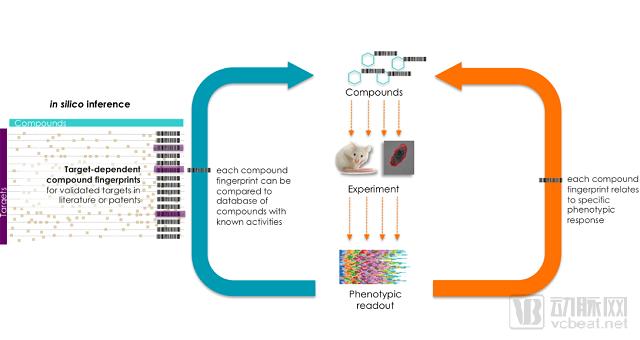
Exscientia's Phenotypic Design Platform
Exscientia’s phenotypic design platform uniquely integrates the phenotypic drug design process with big data analytics, automatically extracting key performance markers from high-dimensional phenotypic readouts and leveraging these markers to generate and optimize new iterations of compounds.
By testing each newly designed compound and comparing its predicted performance with the experimental readouts of all other molecules, Exscientia can rapidly screen for compounds that meet key performance criteria.
Exscientia Assists Pharmaceutical Giants in Collaborative Development of New Drugs
Compared with other industries, pharmaceutical companies have been slower to embrace digitalization and artificial intelligence, a pace dictated by the complexity of biology. However, as AI technologies mature, pharmaceutical firms are increasingly joining the AI ecosystem. Undeniably, AI is making significant inroads into the field of biology.
For traditional pharmaceutical companies venturing into new domains, the most expedient approach is to collaborate with AI-powered startups to explore pathways that enhance the efficiency of new drug development and achieve greater cost savings.
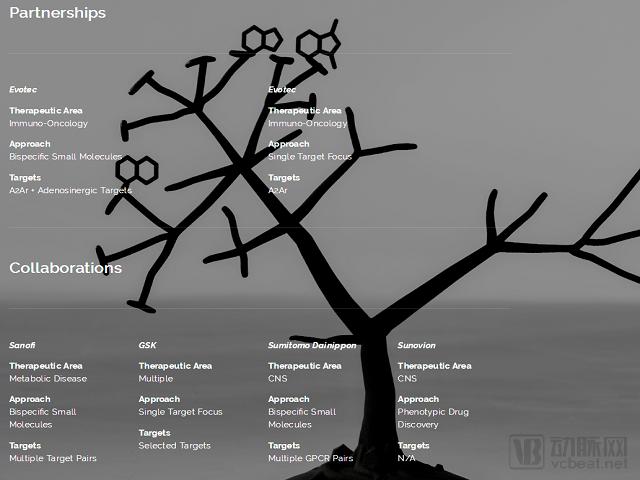
Exscientia has also seized this opportunity, establishing a partnership with Evotec and assisting Sumitomo Dainippon, GlaxoSmithKline (GSK), Sanofi, and Sunovion in developing new drugs.
Introduction to Exscientia’s Partners and Areas of Collaboration
Partners | Sanofi | GSK | Sumitomo Dainippon | Evotec |
R&D Field | Metabolic Diseases | Multiple Fields | CNS (Central Nervous System) | Immuno-oncology |
Methods | Bispecific Small Molecule | Single-Target | Phenotypic Drug Design | Bispecific Small Molecule |
Target | Multiple Target Pairs | Selected Target | Multiple GPCR (G protein-coupled receptor) targets for | N/A |
1. GSK Plans to Collaborate with Exscientia on Drug Discovery Targeting Disease Targets
GlaxoSmithKline (GSK) is a research-driven pharmaceutical and healthcare company that produces 4 billion packs of medicines annually, with products distributed across global markets. It was formed through the merger of Glaxo Wellcome and SmithKline Beecham. GSK represents the world’s highest standards in four key therapeutic areas: anti-infectives, central nervous system disorders, respiratory diseases, and gastrointestinal/metabolic conditions. The company also holds a leading position in the vaccine and oncology drug sectors.
In 2017, GSK and Exscientia entered into a strategic collaboration in drug discovery and development. Leveraging its AI-driven drug discovery platform, Exscientia developed innovative small-molecule drugs for ten disease targets identified by GSK and advanced clinical candidate compounds for these targets.If Exscientia achieves all agreed milestones, it will receive a total of £33 million (approximately $42.7 million) from GSK.。
2. Sanofi Partners with Exscientia to Develop Bispecific Small-Molecule Drugs
Sanofi is a global leader in healthcare, dedicated to researching, developing, and promoting innovative treatments based on patient needs. Sanofi’s core business spans three areas: pharmaceuticals, human vaccines, and animal health.
In May 2017, Exscientia entered into an agreement with Sanofi to co-develop bispecific small-molecule drugs for the treatment of diabetes and its complications. Under this collaboration, Sanofi committed approximately $273 million, covering research funding, milestone payments, and royalties, with the scope encompassing blood glucose control, non-alcoholic steatohepatitis (NASH), weight management, and other diabetes-related areas.
Exscientia leverages its AI-driven platform and automated design capabilities to identify synergistic drug target combinations, pinpoint target pairs, and generate specific small molecules tailored to them. These small-molecule drugs exhibit properties typical of conventional small molecules—molecular weight below 500 Daltons and suitability for oral administration. According to reports, Exscientia used its technology to filter out many chemically intractable combinations. The two parties have selected 45 metabolic disease targets and approximately 1,000 dual-target combinations.
Dr. Hopkins, CEO of Exscientia, stated, “Using our approach, the average time for drug development is reduced to just one-quarter of the original duration. We now have our first clinical-stage candidate molecule; leveraging our platform, this project advanced from target identification to clinical trials within 12 months. For us, AI-driven drug design offers profound strategic advantages.”
3. Evotec Invests €15 Million in Exscientia
In September 2017, Evotec invested €15 million in Exscientia, becoming its first strategic shareholder. Evotec employs more than 1,800 scientists and operates the largest and leading drug discovery platform in the industry.
Werner Lanthaler, CEO of Evotec, stated: “The investment in Exscientia represents the largest equity placement undertaken by Evotec to date. As a world-leading artificial intelligence technology company, Exscientia has collaborated with us over the past year on a joint immuno-oncology project, through which we have gained firsthand experience of the potential of its AI algorithms. We are highly enthusiastic about the combined potential of leveraging artificial intelligence in small-molecule drug discovery and development. This investment also marks our first effective deployment of capital under the €75 million financing arrangement recently secured from the European Investment Bank.”
Exscientia’s Operating Model – Developing Its Own Compound Combinations
In addition to designing molecules for biopharmaceutical companies, Exscientia also plans to develop some of its own discoveries. Dr. Hopkins stated, “Our company values collaboration, but we will also develop our own portfolio of compounds. Our system is highly scalable, so we do not wish to be limited by the targets selected by our partners.”
Andy Bell, Chief Chemist at Exscientia, previously led a medicinal chemistry team at Imperial College London. In May 2018, he published groundbreaking research findings, proposing a novel molecule for the treatment of the common cold.
These research findings were published in Nature Chemistry, describing the process of designing IMP-1088, a novel and highly potent antiviral agent that prevents cold virus replication. IMP-1088 targets human proteins rather than cold virus proteins, thereby minimizing the expected emergence of resistance to IMP-1088. Andy Bell’s research is ongoing, with clinical trials potentially conducted in later stages.
In October 2017, Exscientia received the 2017 Science and Technology Business Award and the Best Emerging Biotech Company Award, recognizing its substantial growth over the past year in accelerating drug discovery through the application of artificial intelligence and big data.
Dr. Andrew Hopkins: “Unlike traditional biotechnology companies, we have focused on collaborating with pharmaceutical companies since our inception. We have always believed that continuous gains and improvements can only be achieved through genuine drug development and technology validation. Meanwhile, we have leveraged the investment secured by the company to continually expand our scale, which is now one of our top priorities. We look forward to ensuring that Exscientia’s operating model is as innovative as the technologies we develop, with ongoing refinement and improvement.”