

Higi SH Holdings Inc. Files Prospectus Following $21.3M Series C Funding to Expand Its Network of 11,000 FDA-Cleared Smart Health Kiosks Across the U.S.
VCBeat learned from Mobile Health News that higi, a health “new retail” company, recently completed its Series C financing round, with investment from Flare Capital Partners and 7wireVentures, amounting to $21.3 million.
Among them, higi’s Series B financing came from BlueCross BlueShield Venture Partners (BCBSVP), a fund that primarily focuses on investing in promising emerging companies with strategic significance to the Blue Cross and/or Blue Shield plans.
Higi is a health management services company headquartered in Chicago and founded in 2012. Its core business involves deploying kiosk-like health terminals in retail pharmacies and train stations, with retail pharmacies being the primary target locations, to provide the public with free screenings for blood pressure, weight, pulse, and body mass index (BMI).
According to foreign media reports, following the completion of a new round of financing, the funds will be used to continue expanding user-facing terminals and enhancing user engagement.
This new model is akin to the concept of shared medical services, deploying testing devices in high-traffic areas—particularly retail pharmacies with a concentrated base of target users—to enable self-testing and health assessment, while collaborating with local healthcare providers to deliver follow-up health services.
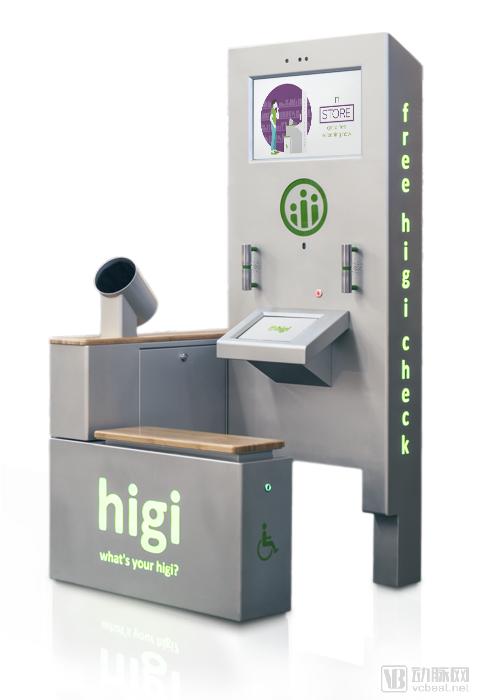
Higi Sites Offering Free Testing
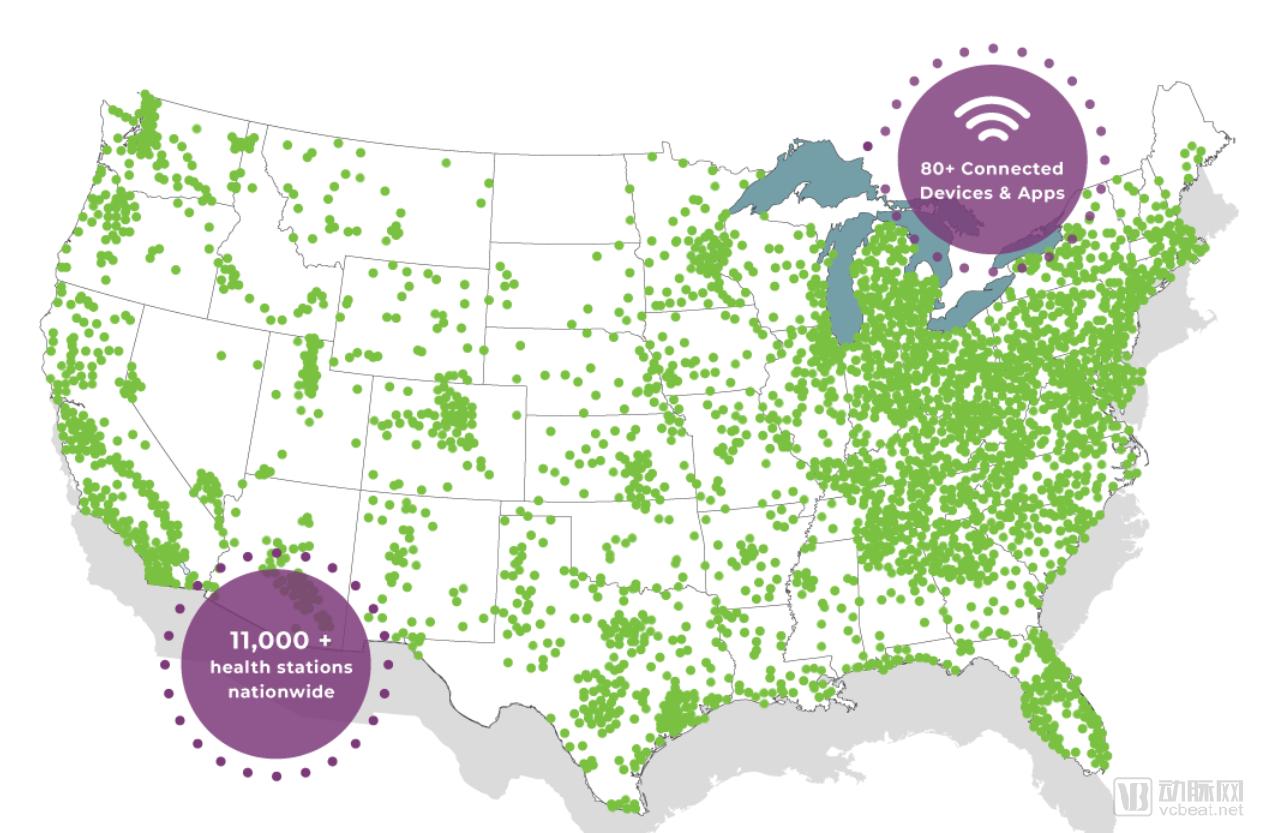
11,000 FDA-Cleared Smart Health Terminals
With over 11,000 FDA-cleared smart kiosks, higi adopts a site-centric approach to deliver health services to residents within a five-mile radius, reaching approximately 78% of the population. By establishing a new health access point in every neighborhood across the United States, it provides local residents with health assessment services, empowering consumers to measure, track, and manage their health data.
Schematic Diagram of the Higi Site
Furthermore, higi’s smart health kiosks are integrated with 80 different health devices and applications. These kiosks enable users to connect their data to the overall healthcare service workflow, including Electronic Health Records (EHR), facilitating real-time, seamless connectivity for users and their care teams.
In 2015, the company launched a mobile application for recording and tracking health data, enabling users to interact with millions of registered members on its platform. Leveraging the app’s social features, Higi expanded the scope of visible user information and increased the frequency of interactions among users. Through the app, users can follow friends, set health goals, and track daily step counts and physiological metrics.
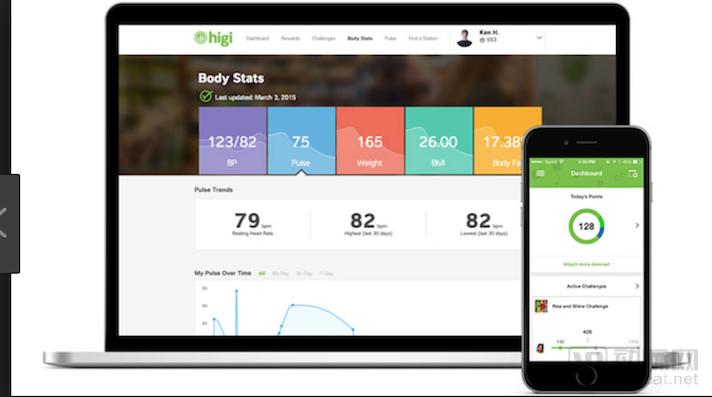
Applications Powered by Higi
Since 2012, higi has served approximately 47 million people and conducted more than 271 million physiological data tests.
Although higi’s consumer-facing services are completely free, this does not mean the company is unable to generate profits. On the contrary, after deploying a sufficient number of smart health kiosks across the United States, it will become a new traffic gateway and acquire extensive user health data.
Achieve population health management goals by providing solutions that range from health assessments to health services. These solutions enable healthcare organizations to reach, understand, and manage the user groups comprising their target populations, while also facilitating a clearer assessment of their health status, thereby achieving cost containment for insurance payers.
“Spending 10% on health management could help you save 90% on medical costs”—this phrase is commonly used as a slogan by health management providers in the United States. Tom Main, a partner at 7wire Ventures, stated, “higi is making healthcare more accessible to people by providing convenient health screenings for community residents. Over the past few years, higi’s stations have been narrowing their access scope while establishing comprehensive connections between nearby retail pharmacies and local healthcare providers, leading to a gradual increase in user engagement.”
Simplicity, Accuracy, and Safety: The Three Pillars Emphasized by Higi
Simplicity and ease of use are the primary requirements for any innovative product. higi’s health station is designed to be easily accessible and user-friendly. From the moment a user sits down at the health station, guided navigation walks them through every test offered by the smart health kiosk.
In terms of user-centered design, the higi station is wheelchair-accessible to accommodate individuals with disabilities or mobility impairments and provides Spanish language support. After completing the screening, users can access their health assessment results by downloading the mobile app or logging into their higi account on a PC.
For the detection of human physiological parameters, medical data monitored by FDA-cleared devices enable patients and their physicians to better utilize the test results.
Meanwhile, higi stations also guarantee user data privacy and security. All data storage across the sites complies with HIPAA standards, meeting healthcare security requirements.
Jeff Bennett, CEO of higi, stated, “As retailers continue to integrate healthcare solutions into their physical stores, consumers are seeking more effective ways to manage their health. higi is building health profiles by providing convenient, free ways to assess, connect, and take action.”
Its ultimate goal is to help the healthcare system improve public engagement with health services, narrow disparities in healthcare access, reduce medical costs, and ultimately enhance health outcomes.
Domestic Health New Retail Practitioners: Miao Health, Penguin Doctor
The health and wellness market is deeply rooted in a fundamental shift from treatment to prevention, from patients to consumers, and from clinics to retail. Retail settings are emerging as a new entry point for the health and wellness market, as users seek more accessible health services and higher-quality medical care. In the eyes of investors, higi is well-positioned to accelerate this market transformation by providing consumers with digitally connected organizations that track, store, and manage user health data in an intelligent and shareable manner.
In domestic practice, the concept of New Retail has gradually emerged in the big health industry. For instance, Miao Health has collaborated with Leyu Communications, also under the Sanpower Group, to deliver health management services by leveraging Leyu Brookstone’s network of over 2,000 offline stores. Experience zones have been established in these physical stores, where consumers can undergo ten free professional health screenings, including measurements of waist-to-hip ratio, BMI, total cholesterol, body composition, and a four-item lipid profile. Participants receive their test reports on-site immediately after the assessment.
Furthermore, Penguin Doctor is also a practitioner of the new health retail model. In June 2018, Penguin Doctor created a super showcase for a “smart health commercial complex” at the Yingke Center in Chengdu. Among its innovations, the “Health Terminals” and “Health Kiosks” are highly similar to higi’s business model. These terminals deployed by Penguin Doctor are located in office buildings, shopping malls, and community restrooms accessible to the general public. Users can access a variety of quick, non-invasive self-testing services through these devices, such as routine urine tests, early pregnancy tests, ovulation tests, and highly convenient genetic testing. The stations also offer professional and safe personal health care products, including sanitary pads and condoms.
This model remains relatively advanced in its domestic practice. Whether it can attract users depends not only on the accuracy of terminal detection but also on integrating the entire health service chain. As Penguin Doctor operates its own clinics, providing comprehensive services poses little challenge. For other all-in-one devices on the market, using equipment to replace preliminary examination and screening steps requires serving both as an entry point for health indicator monitoring and as a conduit for post-detection services. With the focus squarely on service delivery, this approach offers more tangible value than mere indicator monitoring.