

From CHIMA 2018 to Integrated Healthcare Solutions: Tencent, Alibaba, Winning Health, and United Imaging Redefine Medical Informatics

Image source: CHIMA official website
From July 12 to 15, Guiyang, Guizhou Province: the scorching sun blazed overhead.
The “China Hospital Information Network Conference and International Medical Information Network Technology and Product Exhibition (CHIMA 2018),” hosted by the Professional Committee on Hospital Information Management of the China Hospital Association, attracted more than 5,000 professionals from China’s healthcare information industry. VCBeat (WeChat official account: vcbeat), as a cooperating media partner, provided comprehensive coverage of the event.
At this conference, leading Chinese companies in the internet, healthcare information technology (HIT), and medical device sectors—including Tencent, Alibaba, Winning Health, and United Imaging—unveiled their innovative solutions and products. Case studies from these enterprises reveal that the current development trend of China’s healthcare informatization industry is increasingly centered on product integration to support the intelligent transformation of hospitals. This integration involves cross-sector collaboration among companies from diverse fields, as well as the smart upgrading of products by firms specializing in niche segments.
VCBeat predicts that the future healthcare IT industry will no longer be dominated by pure-play traditional healthcare IT leaders, IT giants offering only borderline products, or standalone medical device unicorns. Instead, it will be characterized by comprehensive solution providers that integrate innovative and traditional business models (including companies specializing in industry-wide data disaster recovery and cloud security). This also implies that the healthcare IT sector, alongside the intelligent transformation of hospitals, is poised to enter a new round of competition driven by cross-industry integration.
Below are several corporate snapshots observed by VCBeat at this conference.
Tencent: Empowering the Upgrade of Traditional Healthcare with Three Practical Application Cases
Making its debut at CHIMA, Tencent unveiled a range of eye-catching innovative achievements at the conference, including: diversified digital healthcare solutions, full-cycle health services based on regional medical information interoperability, intelligent medical services powered by the Tencent Ruizhi AI Engine, and medical big data visualization solutions. Meanwhile, multiple business units—including Tencent Smart Security, Tencent Cloud, WeCom, and Tencent Transcription—were also showcased.
At this summit, Tencent proposed three key themes centered around internet hospitals:
Keyword 1: Simplification—Streamlining healthcare processes, enhancing decision-making efficiency, and increasing patient satisfaction with medical services.
Keyword 2: Precision — Precisely match medical resources, upgrade healthcare service scenarios, and improve medical efficiency.
Keyword 3: Connectivity—Connecting fragmented healthcare data to achieve interoperability.
Meanwhile, security assurance is the cornerstone of building an internet hospital.
Building on these three key themes, Tencent has delivered three successful case studies:
Fudan University Shanghai Cancer Center is a renowned oncology specialty hospital in China, receiving a large volume of critically ill patients and their families from across the country for consultations every day. Tencent Healthcare entered into a strategic partnership with the hospital in September 2017, starting with WeChat electronic medical cards and gradually deepening collaboration to upgrade AI capabilities. The two parties took the lead in optimizing processes by migrating offline services online, thereby enabling a convenient, smart healthcare journey entirely through WeChat. This includes cardless medical visits, appointment scheduling, WeChat Pay payments, consultation reminders, report inquiries, and dynamic waiting-line notifications.
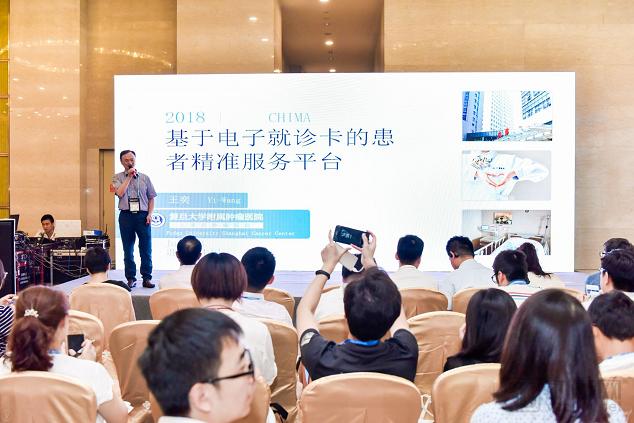
(Wang Yi, Director of the Information Department at Fudan University Shanghai Cancer Center, presenting a case study on smart hospitals)
Since the launch of the project, as of May 2018, more than 80,000 patients have used the WeChat cardless medical service, with 77,000 WeChat appointments, 130,000 mobile payments, and nearly 350,000 online inquiries for examination reports. The average consultation time per patient has been reduced by 150 minutes, saving patients a total of over 100,000 hours. Precise appointment scheduling has significantly improved outpatient efficiency, with an accuracy rate of 99.2% achieved through AI engine verification.
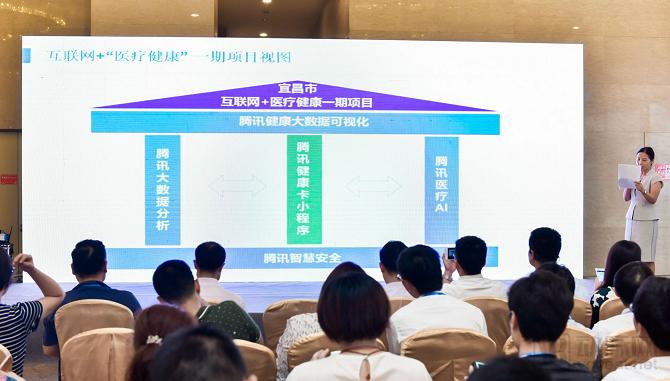
(Zhang Qiong, Director of the Yichang Municipal Health and Family Planning Commission, presenting a case study on city-level smart health)
Yichang Municipal Health and Family Planning Commission partners with Tencent, leveraging the “Yi Jian Tong” mini-program as an innovative platform to provide Yichang residents with comprehensive family health management services. This initiative delivers full-lifecycle medical and healthcare support, ranging from real-time intelligent reminders for prenatal check-ups and fetal development data tracking, to intelligent health services during childhood, self-managed health care in adulthood, and precise chronic disease management for middle-aged and elderly individuals.
Furthermore, leveraging artificial intelligence and big data capabilities, “Yijiantong” can analyze potential disease possibilities and provide early warnings of health risks. When medical care is needed, “Yijiantong” offers one-stop healthcare services, including intelligent triage, appointment scheduling and registration, online payment, and access to laboratory and diagnostic test results. Meanwhile, capabilities such as big data visualization, artificial intelligence, and information security enhance management efficiency, operational efficiency, and safety protection for “Internet + Healthcare” smart healthy cities.
The Children's Hospital, Zhejiang University School of Medicine, is the earliest-established and largest Grade A tertiary children's hospital in Zhejiang Province. With the advancement of new "Internet + Healthcare" services, the cybersecurity risks faced by medical institutions have been multiplied. The Children's Hospital, Zhejiang University School of Medicine, also faces challenges such as insufficient operational and maintenance capabilities. In response, Tencent Smart Security has proposed a multi-dimensional cloud-and-endpoint security protection solution.
In terms of perimeter security, The Children’s Hospital of Zhejiang University School of Medicine has deployed the Tencent YuJie Advanced Threat Detection System. Centered on the Hubble Analysis System and leveraging machine learning, behavioral detection models, and scenario-based policies, the system enables in-depth analysis and detection of APT attacks, anomaly traffic perception, ransomware detection, vulnerability exploit detection, and threat intelligence dissemination.
Tencent Yudian Endpoint Security Management System provides private cloud antivirus and vulnerability remediation services for over 700 endpoints at the hospital, establishing a dual-layer endpoint defense system that safeguards critical system components and secures various potential infection vectors. Meanwhile, Tencent Yujian Intelligent Situational Awareness Platform leverages artificial intelligence, big data, and intelligent visualization technologies to conduct in-depth detection and analysis of internal and external threats and risks facing the hospital. It builds an integrated security situational monitoring and early warning platform encompassing security detection, analysis, alerting, and response, helping the hospital achieve a closed-loop security management system with full-network visibility, observability, and controllability.
Alibaba DingTalk: Transforming Western China Hospitals into “Future Hospitals”
Collaboration and information sharing are unavoidable challenges for modern enterprises, hospitals, and healthcare service systems. The reason why hospitals in western China lag behind those in coastal regions was primarily due to inconvenient transportation in the past. Now that transportation issues have been resolved, inadequate information flow has become a major factor hindering development in the west. Wang Youcai, former Deputy Director of the Statistical Information Center of the National Health and Family Planning Commission and Chairman of CHIMA, stated at the summit, “I hope the Western Hospital Assistance Program will truly enhance collaboration among western hospitals, empower our reforms and development, and enable residents in western regions to access high-quality, efficient healthcare services resulting from improved collaborative capabilities.”
To address this issue, Alibaba DingTalk has launched the “DingTalk Future Hospital Product and Western Hospital Assistance Program.” This initiative aims to help assisted hospitals in western cities obtain the DingTalk mobile office platform and a suite of mobile applications—including Medical Management Cloud, Scheduling Management, and Dean’s Daily Reports—free of charge, through voluntary lectures, centralized training, and free mobile application deployment, thereby enhancing management efficiency and informatization capabilities. Furthermore, leveraging the DingTalk platform facilitates the establishment of medical consortium information systems within the western healthcare sector, enabling two-way referrals and resource sharing, and effectively promoting the optimization and transformation of the healthcare system in western China.
It is understood that the DingTalk Future Hospital product and the Western Region Hospital Assistance Program include outstanding solutions available on the DingTalk platform, such as “Lianfan Scheduling” provided by Hangzhou Lianfan, “Medical Management Cloud” provided by Shanghai Wanhu, and “Management Daily Report” provided by Guangzhou Yibo. These solutions cover various aspects of daily hospital operations and management, including scheduling management, document workflow, meeting management, and management daily reporting.
DingTalk’s Future Hospital product will be made available to all hospitals in Western China on a priority basis. In addition to being offered free of charge, a series of initiatives and arrangements will be implemented, including offline free clinics, academic lectures, practical deployment of DingTalk’s free applications, and centralized training sessions. The first phase of the Western Hospital Assistance Program will be piloted in two provinces: Ningxia and Guizhou, with the aim of helping hospitals in Western China enhance their management informatization capabilities.
“Taking two-way referrals as an example, we established an online center at the county-level hospital, set up an offline management body, and created DingTalk referral work groups to achieve fully online communication throughout the entire process. The efficient, environmentally friendly, traceable reports and precise analysis have significantly enhanced the public’s sense of gain in accessing medical care,” said Yang Weiquan, Director of the Tongren Municipal Health and Family Planning Commission in Guizhou Province, at the summit. He noted that more than 1,000 healthcare system units in Tongren City, including municipal medical institutions, are now using DingTalk.
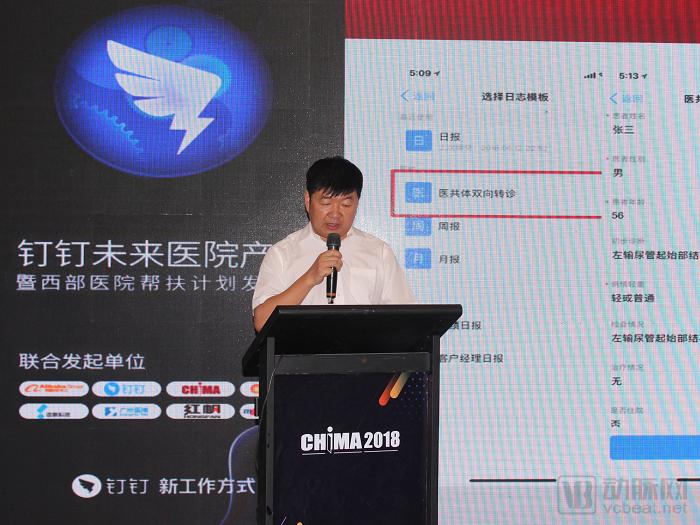
(Yang Weiquan, Director of the Health and Family Planning Commission of Tongren City, Guizhou Province, at the press conference)
According to Yang Weiquan, traditional home visits by family doctors involved a heavy workload and yielded low efficiency. The use of paper-based records during follow-ups prevented team members from sharing information. “We now use DingTalk, enabling residents requiring follow-up care to record their data via mobile devices. This allows team members to share data and integrate relevant information into the resident’s follow-up process.”
“Through online management systems such as DingTalk, we have achieved standardization across various entities and enhanced management standards, facilitating convenient sharing while ensuring information security,” said Yang Weiquan.
Winning Health: Collaborating with Hospitals to Develop AI-Assisted Bone Age Detection, Completing Over 5,000 Clinical Diagnoses
At this CHIMA conference, Shanghai Children's Hospital/Children's Hospital Affiliated to Shanghai Jiao Tong University and Winning Health jointly held a media briefing on "Medical AI – From Concept to Implementation."
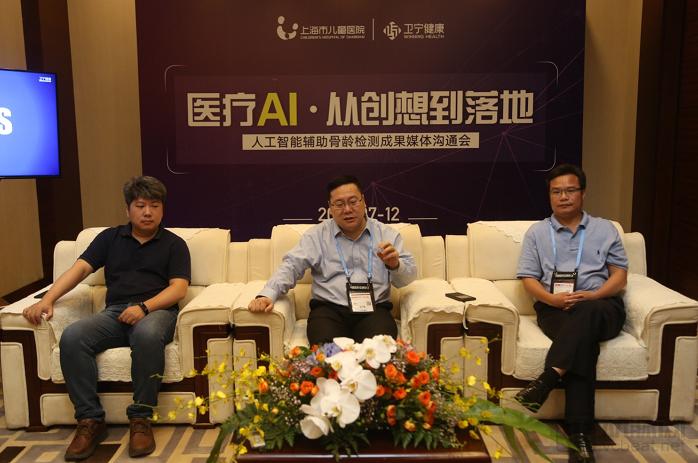
In February 2018, the “CHBoneAI – AI-Assisted Bone Age Assessment” system, jointly developed by Shanghai Children’s Hospital (Children’s Hospital Affiliated to Shanghai Jiao Tong University) and Winning Health, was officially launched. Starting parallel operations in early April, the system processed over 5,000 clinical pediatric bone age cases within just three months. It requires only 30 seconds to generate a bone age report from image reading, with a mean absolute error of merely 0.43 years and a diagnostic accuracy rate of 98%.
According to Mr. Yu Guangjun, President of Shanghai Children’s Hospital/Children’s Hospital Affiliated to Shanghai Jiao Tong University, “The application of artificial intelligence (AI) across various industries has become extensive, and its integration with medical imaging represents an excellent entry point, as it addresses a critical need in hospitals. We exercised due diligence in selecting our partners, seeking those who possess both robust scientific research capabilities and rich industry experience in the implementation of healthcare informatics. Our collaboration with Winning Health has yielded satisfactory results in AI-assisted bone age assessment, which has not only significantly improved the work efficiency of pediatric radiologists but also laid a gradual foundation for the disciplinary development of pediatric imaging and the establishment of a large-scale bone age database for healthy children in China.”
He revealed that, in the future, the hospital will collaborate with Winning Health to conduct more in-depth artificial intelligence exploration in additional fields, such as pathology, cytology, pediatric Kawasaki disease, and pediatric pulmonary infections.
Yang Xiujun, Director of the Department of Radiology at Shanghai Children’s Hospital (Children’s Hospital Affiliated to Shanghai Jiao Tong University), spoke with deep conviction when introducing the original intent behind launching this project. He noted that, unlike bone age assessment for adults, there is a substantial demand for pediatric bone age evaluation. However, traditional manual interpretation of X-rays for bone age determination is often time-consuming and lacks consistent accuracy. As a result, pediatric radiologists quickly wore out their copies of bone age atlases from frequent use.
Moreover, pediatric radiologists are a scarce resource, yet they face a vast number of pediatric patients. The hospital’s original intention in launching this project was to leverage artificial intelligence to liberate them from repetitive and tedious tasks such as comparative image interpretation, allowing them to focus more on delivering higher-quality medical care to patients.
“In August last year, we filed patent applications for our artificial intelligence solutions and algorithms. The project was initiated in 2017, and our team was the first in the industry to propose and implement the concept and algorithms combining AI with bone age assessment,” said Dr. Chen Xu, Head of the Winning Health AI Laboratory.
According to him, “Winning Health has two major advantages in its exploration of artificial intelligence. First, we have a large base of hospital clients, enabling us to promptly perceive and respond to their diverse needs. Second, as a provider of healthcare IT solutions, we aggregate various types of hospital data on our data integration platform, providing massive, multimodal datasets for research. Our laboratory has embedded AI algorithms as services into hospitals’ operational systems, offering comprehensive solutions to physicians—an innovation within the industry.”
United Imaging & United Innovation: Beyond Medical Devices—Smart Healthcare Cloud and Intelligent Medication Management
Like Tencent, Shanghai United Imaging Healthcare Co., Ltd. made its debut at the CHIMA Conference. At the event, the company unveiled its uCloud United Imaging Smart Healthcare Cloud, featuring eight cloud-based solutions: tiered diagnosis and treatment, intelligent cloud PACS, smart operating rooms, cloud-connected devices, intelligent diagnostics, cloud film, hospital-exclusive cloud, and a family doctor contracting platform.
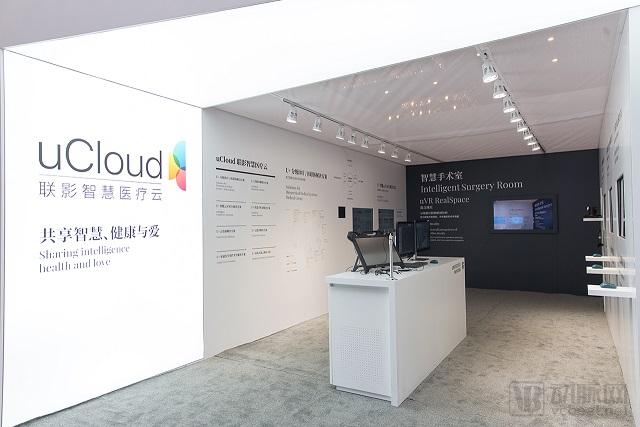
(United Imaging uCloud Smart Healthcare Cloud Product Showcase)
PACS is an information system used in hospitals to store and manage medical images generated by imaging equipment such as CT and MRI. However, with continuous technological advancements, traditional PACS can no longer meet the growing demands of the digital healthcare era.
1. Limited Storage Capacity: As the number of medical imaging devices in hospitals continues to increase, the storage capacity of the originally implemented PACS can no longer meet the growing demand for image storage, while expanding storage capacity incurs substantial costs for information infrastructure development.
2. Lack of interoperability between departments: As collaboration between clinical departments and radiology intensifies, traditional PACS systems fail to meet the need for transmitting medical imaging data from diagnostic departments to clinical departments via network.
3. Diagnostic efficiency and accuracy need to be improved: Medical imaging diagnosis has gradually evolved from a supplementary examination method into the most important clinical diagnostic approach in modern medicine. However, manual diagnosis is limited by speed and prone to misdiagnosis and missed diagnoses, creating an urgent need for intelligent diagnostic tools to assist physicians in enhancing diagnostic efficiency and accuracy.
UIH Intelligent Cloud PACS is cloud-based and intelligence-driven, featuring 17 advanced applications and 6 intelligent diagnostic applications hosted on the cloud. It helps enhance diagnostic efficiency and accuracy, establishing an intelligent, efficient, and convenient PACS system that covers the entire hospital.
1. Massive Storage: Building upon on-premises and cloud-based deployment models, a new hybrid deployment approach is proposed. This model enables daily clinical workflows to be executed on-premises while leveraging the cloud for storage purposes. It ensures the stability and reliability of in-hospital operations while fully utilizing the vast storage capacity of the cloud, thereby effectively combining the strengths of both on-premises and cloud-based deployments.
2. High-Speed and High-Efficiency: Utilizes multi-process synchronous transmission, enabling the storage of 1,000 CT images to cloud servers within one minute; employs "full-text search" technology, achieving second-level retrieval speeds across tens of millions of data entries; leverages preprocessing techniques to pre-process 3D images, thereby reducing loading time, allowing both 3D and 2D images to be rendered rapidly within one second.
3. Comprehensive Departmental Coverage: Fully covers the business workflows of all diagnostic departments, including radiology, ultrasound, endoscopy, and pathology. Provides clinicians with tools for viewing reports and browsing images, enabling one-click sharing of data between departments and clinical settings to facilitate timely access to original diagnostic information. Offers a unified HIS integration platform that enables rapid PACS deployment and seamless interfacing with the HIS, thereby achieving hospital-wide integrated systems and unrestricted, anytime-anywhere access to comprehensive patient imaging data.
4. Intelligent Diagnosis: Equipped with 17 advanced applications and 6 intelligent diagnostic applications, it comprehensively covers various image types such as DR, CT, MR, and PET-CT, including diseases in multiple body parts such as the cardiovascular system, intestines, lungs, brain, limbs, chest, and breasts, thereby improving doctors' diagnostic efficiency and accuracy.
In March 2018, United Imaging’s Intelligent Cloud PACS was put into use at Yichang Central People’s Hospital in Hubei Province. It currently covers one main campus and two branch campuses (Jiangnan Branch and Three Gorges Dam Branch). As of July, nearly 5,000 examinations had been uploaded to the United Imaging Intelligent Cloud PACS, including 1,333 radiology examinations and 4,220 ultrasound examinations.
In addition, United Imaging has customized an appointment management platform hosted on the United Imaging Intelligent Cloud PACS for the hospital, enabling patients to schedule examinations via mobile phones, and directly access examination reports and films, thereby eliminating the hassle of queuing and printing physical films.
Additionally, at this press conference, United Imaging highlighted its tiered diagnosis and treatment solution, which has achieved remarkable market success: tiered diagnosis and treatment projects facilitated by United Imaging for governments and hospitals at various levels have been implemented across 17 provinces, including Shanghai, Anhui, Fujian, Hubei, Shaanxi, Liaoning, Sichuan, and Tibet, covering more than 630 hospitals at all levels and serving a population of over 100 million.
Guizhou, the host province of this CHIMA conference, is one of the key regions where United Imaging’s tiered diagnosis and treatment solution has been implemented. In June 2016, Bozhou District in Zunyi City became one of the first pilot areas for telemedicine in Guizhou Province. With support from United Imaging, the “United Imaging–Zunyi Bozhou District Regional Imaging Center” was established. Centered at Bozhou District People’s Hospital, the network connects upward with Zunyi First People’s Hospital and downward with 19 township health centers. All imaging studies acquired at primary care facilities can be uploaded to Bozhou District People’s Hospital, where radiologists provide diagnostic interpretations. On average, patients at primary care institutions receive their diagnostic reports within 30 minutes.
This has effectively alleviated the difficulties and high costs associated with accessing medical care for patients in remote local areas, enabling them to enjoy services from higher-level hospitals right at their doorstep, while also effectively revitalizing primary healthcare institutions. Taking Yazhen Town in Bozhou District as an example, “Since the implementation of telemedicine two years ago, the number of DR imaging examinations at our health center has increased by 50% year-on-year, outpatient visits by 17%, and hospital admissions by 30%. Previously, we saw an average of only a dozen patients per day; now, we see up to 40–50 patients daily. Furthermore, the introduction of telemedicine has facilitated the acquisition of several new pieces of equipment for our health center, thereby enhancing the technical capabilities of the entire department,” said Shu Yuanzhi, Director of Yazhen Town Health Center.
According to statistics from the Yaxi Town Health Center, over 90% of local patients have voluntarily returned to the facility for medical care in the past two years. Furthermore, all follow-up examinations and check-ups for patients with serious illnesses can now be conducted locally, cumulatively saving residents more than RMB 500,000 in transportation costs and over RMB 34 million in hospitalization expenses.
Gao Chuan, Vice President of the Software Business Division at United Imaging Healthcare, stated, “A critical challenge in the development of imaging centers is the uneven proficiency across different regions and medical institutions, which leads to inconsistent image quality and prevents mutual recognition of imaging results among hospitals. Consequently, patients are often forced to undergo redundant scans. To address this, United Imaging has established effective communication mechanisms and a unified quality control platform for hospitals at all levels. This initiative helps standardize equipment configuration and operational protocols between higher- and lower-tier hospitals, ensuring consistent imaging outcomes for the same type of examination across different facilities. This not only spares patients from unnecessary repeat examinations but also significantly reduces medical insurance expenditures.”
He concluded that the successful establishment of imaging centers relies on both high-quality medical informatics software and premium medical equipment. Only through seamless integration between hardware and software, forming a systematic and holistic mechanism for daily operations and issue response, can the effective functioning of the entire tiered diagnosis and treatment system be ensured.
Furthermore, United Imaging has recently deployed three self-developed intelligent diagnostic applications—intelligent health checkup image interpretation, automated pulmonary nodule screening, and intelligent bone injury assessment—at the Bozhou District Telemedicine Center, assisting local physicians in performing diagnoses more efficiently and accurately.
As a sister company of United Imaging, Union Medical’s booth was positioned back-to-back with that of United Imaging. At this conference, Union Medical not only showcased its existing smart ward product series but also unveiled its latest self-developed products.
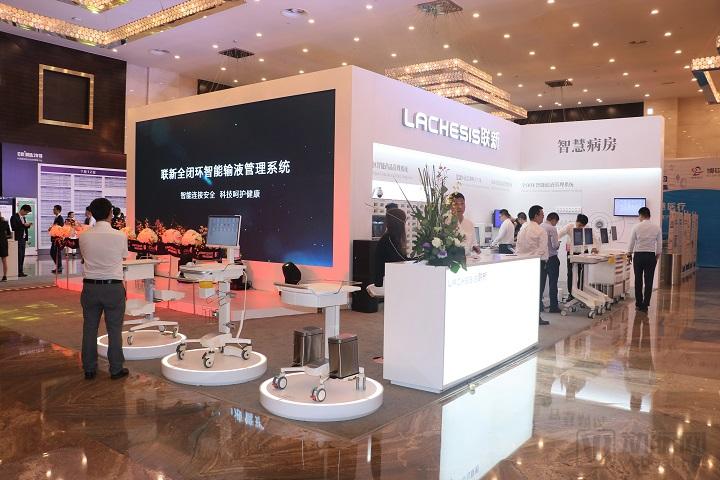
(Lianxin Medical Booth)
In the context of hospital informatization, the development of information technology and automation in pharmacy departments has lagged slightly behind. In some domestic hospitals, database management systems have been implemented for inventory control, and medication dispensing orders can be retrieved from electronic medical records. However, many tasks, such as drug distribution and management, still rely heavily on manual labor. Human errors in medication dispensing pose a serious threat to hospital interests. Therefore, there is significant room for improvement in the informatization and automation of hospital pharmacies.
During the conference, Lianxin unveiled a flagship product—the Intelligent Ward Medication Management System (hereinafter referred to as the “Smart Medication Cabinet”). Centered on ensuring medication safety, this system extends inpatient pharmacy services directly to hospital wards. Suitable for use in general wards and ICUs, it seamlessly integrates with Hospital Information Systems (HIS) to enable rapid access to medication information, remote management of secure storage, inventory, and expiration dates/batch numbers, as well as precise tracking and automated dispensing. This facilitates refined, closed-loop management of the “last 100 meters” of the hospital-wide medication process.
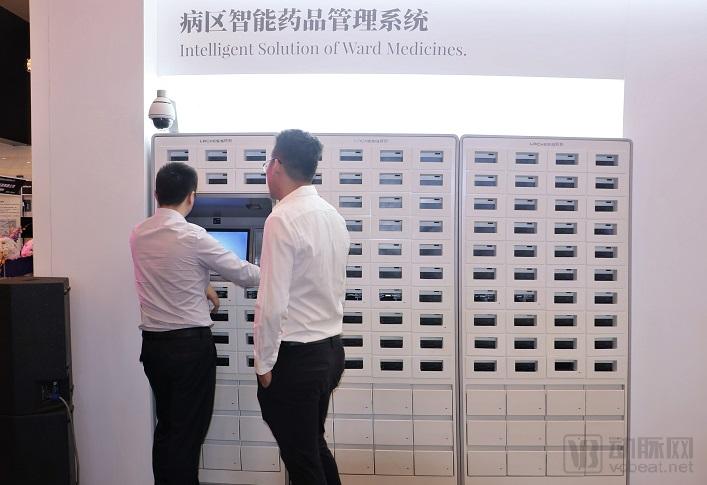
(LianxinIntelligent Medication Management System for Ward Areas)
Whether it was Tencent and United Imaging, attending the CHIMA conference for the first time, or established industry players such as Winning Health and Lianxin Medical, the 2018 landscape clearly demonstrated a trend toward the integrated development of information technology services among enterprises. Amidst the transformation driven by artificial intelligence and big data, the evaluation of companies will no longer rely solely on their innovation capabilities; it will also encompass their ability to integrate with and intelligently enhance traditional business operations, as well as their capacity to implement these newly integrated solutions in hospital settings. We may see more products with these attributes emerge next year.