

How Enterprises Implement Internet Hospitals and Overcome Key Challenges: Insights from Eight Internet Hospital Leaders
This week, Medlinker announced the completion of its RMB 1 billion Series D financing round, led by China Investment and Finance Capital, with participation from Sequoia Capital China, CEC Health Industry Fund, and China Renaissance New Economy Fund. China Renaissance served as the exclusive financial advisor for this round of financing.VCBeat also reported on this:[Exclusive] Another Internet Healthcare Unicorn Emerges: Medlinker Completes RMB 1 Billion Series D Financing
After four years of development, Medlinker has not only built a professional, real-name physician platform integrating academia, clinical practice, social networking, and gamification, but also pioneered the establishment of a patient-centric, comprehensive ecological closed loop covering disease screening, physician education, diagnosis and treatment services, pharmaceutical distribution, financial and insurance services, and patient management services.
Meanwhile, Medlinker has launched the “Internet Hospital+” model. Starting in Rizhao, Shandong Province, Medlinker Huafang leverages its offline entity, the Rizhao Huafang Traditional Chinese Medicine Branch, to clarify medical liabilities, ensure basic patient safety during consultations, and reduce unnecessary doctor-patient disputes.
Yang Yang, Vice President of Medlinker, stated, “The launch of the ‘Medlinker Huafang’ Internet Hospital marks the beginning of the strategic partnership between Medlinker and Huafang. In the future, Medlinker will continue to inject diverse medical resources into Rizhao, including leveraging its network of 500,000 physicians for multi-site practice via the Internet Hospital and building a Rizhao medical big data platform, thereby providing comprehensive smart healthcare solutions for Rizhao City.”
In fact, internet hospitals have attracted significant attention since their inception. The first internet hospital in China was established in Wuzhen in 2015, followed by the signing of agreements with 17 internet hospitals in Yinchuan, Ningxia, which propelled public interest in internet hospitals to a peak.
This year, as national leaders including Premier Li and Vice Premier Sun conducted successive inspections of internet healthcare—visiting institutions such as Shanghai Huashan Hospital and the First People’s Hospital of Yinchuan City—they expressed strong endorsement for the sector, leading to the issuance of multiple policies aimed at promoting the development of internet healthcare.
The most intensive period occurred in April 2018, when five policy documents related to internet-based healthcare and health services were issued successively. These policies prominently highlighted internet hospitals and aimed to accelerate their integration with physical medical institutions.
How can enterprises integrate with physical medical institutions? What changes have been made to these institutions during the collaboration process? How are internet hospitals currently operating, and what challenges have they encountered? What are the future plans for internet hospitals?
With these questions in mind, VCBeat interviewed relevant executives from eight companies, including DXY Internet Hospital, Chunyu Doctor Internet Hospital, Little Apple Internet Hospital, and 7LeKang Internet Hospital, aiming to reconstruct the pathway for building an internet hospital based on their experiences.
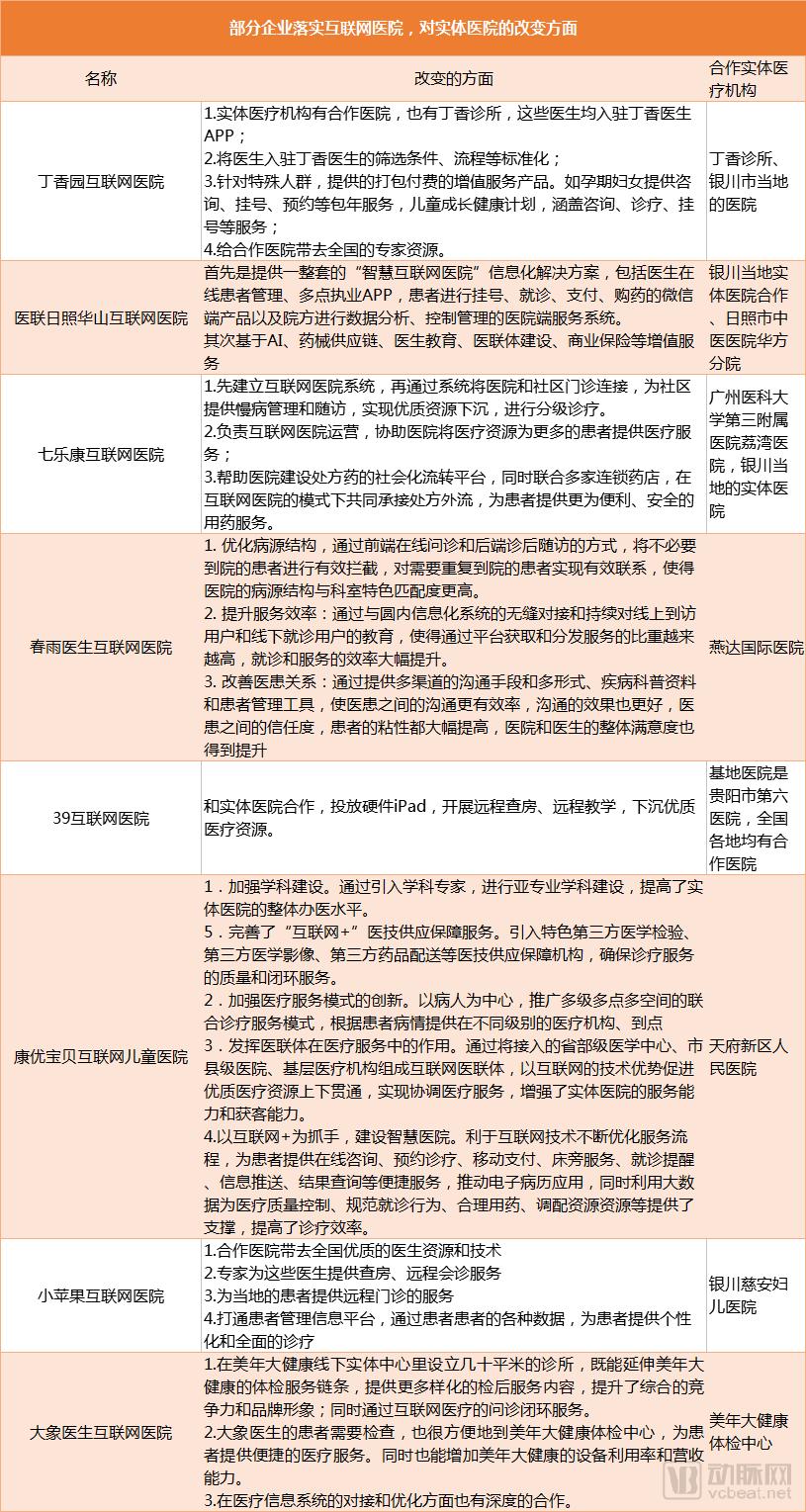
From this perspective, there are several key considerations for enterprises establishing internet hospitals:
First, there must be physical hospitals and base hospitals, including clinics and third-party medical service centers;
Second, the scope of business includes telemedicine, ward rounds, and health management, with appropriate investment in certain hardware facilities, such as iPads.
Third, internet hospitals aggregate experts from across China, enabling physical medical institutions to introduce these renowned physicians and facilitate the downward distribution of high-quality medical resources.
Taking Qilekang Internet Hospital as an example, it currently collaborates with physical hospitals primarily through a co-construction model. Under this arrangement, the physical hospital is designated as the entity bearing legal responsibility, while Qilekang retains the operational rights for the internet-based platform. Medical services delivered online are managed in strict accordance with the clinical standards and protocols of the partner physical hospitals. The integrated online and offline team comprises more than 300 personnel.
Qilekang Internet Hospital is positioned as a smart service platform for chronic disease management and has pioneered the construction of a closed-loop service ecosystem encompassing “medical care, pharmaceuticals, patients, diagnostics, and insurance.”Offline, Qilekang will also leverage its own physical pharmacies and partnerships with multiple well-known pharmacy chains to upgrade and transform traditional retail pharmacies. By establishing Internet Hospital service zones, the company aims to continuously expand the reach of its Internet Hospital, enabling in-store services such as physician consultations, electronic prescriptions, in-store medication pickup, and chronic disease management. This initiative seeks to empower offline retail pharmacies to become accessible healthcare and pharmaceutical service hubs for every community member.
Currently, Qilekang Internet Hospital has over 200,000 physicians who have completed real-name authentication. In 2017 alone, it provided more than one million consultations for patients with chronic diseases, saving them nearly RMB 300 million in medical expenses to date. It is currently the largest internet healthcare platform in China in terms of the number of physicians specializing in chronic disease management and the number of patients served.
Based on our analysis of the eight selected enterprises that have established internet hospitals, we observe diverse underlying business models: some operate pharmaceutical e-commerce platforms, others run physician networks, and still others provide online consultation services. A key question arises: after establishing an internet hospital, how can these companies synergize or integrate their new digital healthcare operations with their existing core businesses?
Chen Junsheng, General Manager of the Medlinker Doctor Platform, stated that the Medlinker APP has over 500,000 registered physicians, among whom more than 20,000 have signed up for service contracts. Relying on its smart internet hospital infrastructure, Medlinker provides physicians with a compliant online practice platform and offers patients services such as online consultations, follow-up management, and electronic prescriptions, thereby helping physicians earn transparent and legitimate income. Meanwhile, Medlinker’s pharmaceutical and medical device supply chain, AI-assisted diagnosis, and healthcare big data businesses help physical medical institutions control costs, enhance technological capabilities, and improve operational efficiency.
Shi Zhenyang, Founder and Chairman of 7lecare, believes that the pharmaceutical e-commerce and chain pharmacy businesses will fully leverage their existing advantages. By integrating with 7lecare’s internet hospital layout, they will provide robust support for the development of 7lecare Internet Hospital in areas such as drug supply and logistics distribution, thereby establishing an efficient, convenient, and nationwide three-dimensional smart service network for chronic disease management.
Within the “Doctor–Drug–Patient–Testing–Insurance” service closed-loop pioneered by Qilekang, drug supply and distribution are inevitably a critical component. As one of the first enterprises to obtain qualification for online drug sales, Qilekang not only operates on multiple third-party sales platforms but has also established its own proprietary platforms via its official website and mobile channels.Moreover, Qilekang is among the first batch of enterprises in China to obtain approval for piloting B2C pharmaceutical logistics. By leveraging electronic drug supervision codes as the core mechanism, it has achieved traceability management throughout the entire drug distribution process, thereby ensuring drug quality and safety during delivery.
Its e-commerce business boasts the industry’s most comprehensive pharmaceutical database, covering detailed information on more than 30,000 drugs and integrating all data related to drug safety and usage, as well as all information required for Good Supply Practice (GSP) compliance.Therefore, Qilekang will fully leverage its significant advantages in pharmaceutical supply chain and logistics distribution services to deliver higher-quality medication supply services for Qilekang Internet Hospital, thereby helping physicians provide patients with a more convenient pharmaceutical logistics experience.
As a pioneer in online medical consultations, Chunyu Yisheng’s Brand Director, Tan Wannian, believes thatInternet hospitals do not conflict with existing business operations. The original business system can operate independently, serve as an entry point and tool platform for internet-based services, and achieve seamless integration with internet hospitals through technological means.Internet hospital services operate in the same manner: they can function as a self-contained system or integrate seamlessly with existing operations.
Elephant Doctor, another player in the internet healthcare sector, has its founder Gou Zhengmeng stating that the company relies on the internet hospital built by Meinian Onehealth Healthcare Group.enrich its offline medical scenarios and massive traffic from medical entry points, and launch remote medical services,This is a brand-new business model, representing an exploration and significant contribution to the implementation of tiered diagnosis and treatment in China’s medical reform under the “Internet Plus” strategy.
Cong Lulu, Chief User Growth Officer at DXY, believes that there are extensive opportunities for integrating DXY Internet Hospital with DXY’s various business lines.First, over 2 million physicians on the DXY platform are screened and onboarded in accordance with the service standards of internet hospitals. Second, these online physicians are trained to provide services such as online consultations and prescription recommendations for patients. Finally, leveraging DXY’s influence and its years of accumulated user base, these services are promoted, with a portion of them being implemented in offline physical hospitals.
In the process of building internet hospitals, various enterprises have encountered countless problems, most of which are common across the industry. For instance, Chen Junsheng faced challenges due to the lack of uniformity among hospital information systems, which hindered the development of internet hospital information platforms; the previously leaked “Draft for Comments on Administrative Measures for Internet Medical Services” dealt a blow to the industry; and hospitals’ discouragement and prohibition of physicians practicing at multiple sites.He believes that with the favorable policies of “Internet + Healthcare,” internet healthcare will usher in new development opportunities, and new business models such as internet hospitals will become increasingly prevalent. In the future, every hospital may feature an “Internet +” presence.
According to Cong Lulu, the vision for Dingxiang Internet Hospital is not merely to serve as an online extension of physical hospitals, as that would not fundamentally change the status quo—patients would still need to register for consultations regardless of whether their conditions are serious or minor.Internet hospitals are designed to return to the core essence of medicine, upgrade and iterate medical services, and maximize the release of medical resources through online efficiency. DXY Internet Hospital, centered on the DXY Doctor app, achieves standardization, normalization, and efficiency in online consultations. By leveraging online platforms as traffic entry points for triaging and distributing medical services, it can truly address patients' needs.
In this process, the most challenging issue she encountered was screening and cultivating a group of physicians who possessed both service orientation and professional competence.Internet hospitals have, in fact, raised the bar for physicians. Patients often perceive medical services as unsatisfactory largely because offline outpatient physicians lack the bandwidth to provide additional support, and there are concerns about the uneven quality of doctors’ professional competencies. Currently, most physicians in China are constrained by this environment, gradually eroding their capacity to deliver comprehensive care. During visits to physical hospitals, aside from prescribing medications and ordering tests, doctors have little time left for meaningful communication with patients. In contrast, within internet hospitals, physicians can not only explain the causes of diseases but also offer lifestyle and dietary advice. They provide professional diagnostic and treatment recommendations while alleviating patients’ anxiety. Such services are difficult to obtain in offline settings, and physicians capable of delivering this level of care are equally hard to find.
Gou Zhengmeng believes that reaching a consensus on building a new model of “Internet + Healthcare” is both crucial and challenging.In the clinical setting of Elephant Doctor Internet Hospital, the entire patient journey strictly follows the workflow of physical hospitals, encompassing appointment scheduling, triage and consultation, laboratory and diagnostic testing, and pharmaceutical prescribing. Initially, it is not only necessary to clearly explain to partners and patients how to leverage Elephant Doctor to access high-quality medical resources in top-tier cities such as Beijing, Shanghai, and Guangzhou, but also to educate physicians on ordering diagnostic tests in accordance with hospital standards and conducting follow-up visits. Achieving consensus on these practices requires standardized service protocols, system upgrades and optimizations, extensive service operations, and rigorous quality control management.
Lu Bo, Founder of Little Apple Internet HospitalIt is believed that the greatest challenge facing internet hospitals at present is medical safety and risk. This is followed by the level of acceptance among doctors and patients, which requires a process of education and public awareness. Its business development will proceed in three steps:
Step 1: Establish a physician group to first secure core medical resources.Because doctors’ professional medical expertise constitutes the most core resource in the healthcare industry.
Step 2 is to establish the offline clinic., gradually becoming standardized and chain-operated.
The third step is, after obtaining the qualifications for an internet hospital, to transition from online to offline.Provide comprehensive, patient-centered medical services.
Moreover, Hu Anyu, the founder of Kangyou Baby Internet Children's Hospital in Chengdu, has encountered even more challenges, which he summarized in the following aspects:First, market promotion is challenging, as public awareness of internet hospitals remains in a hesitant phase.
Second, policies are conservative and have not achieved deep breakthroughs.Following the State Council’s issuance of the “Opinions on Promoting the Development of ‘Internet + Healthcare’” in April 2018, strong support was provided for the growth of internet healthcare. However, as this policy merely organized and addressed the existing state of internet healthcare without achieving substantial breakthroughs, further model innovations remain constrained by the current regulatory framework. Meanwhile, local governments have adopted a cautious wait-and-see approach; to date, aside from a few provinces and municipalities such as Yinchuan and Tianjin that have released implementation guidelines for internet healthcare, other local authorities have not taken further substantive actions.
Third, there are high demands for medical technical support, large quantity requirements, and heavy quality control tasks.Internet hospitals serve as platforms that must integrate the entire industry chain, including physicians, medical institutions, laboratory and diagnostic services, and pharmaceuticals. The multitude of stakeholders and heightened uncertainties make quality control significantly more challenging, necessitating greater efforts to ensure effective oversight.
Fourth, it is necessary to intensify institutional expansion efforts and achieve large-scale integration of shared service providers for outpatient care, laboratory testing, diagnostic imaging, and pharmaceuticals.Kangyou Baby Internet Children's Hospital in Tianfu New Area adopts an Online-Merge-Offline (OMO) healthcare model. Online, it provides users with convenient services such as online consultations, follow-up visits, precise referrals, health management, targeted recommendations, and electronic prescriptions. Meanwhile, based on users' medical conditions, it guides them to offline clinics for initial consultations, sub-specialty outpatient services, and specialized clinics. Furthermore, it offers home-based medical, nursing, and technical services tailored to individual user needs. By integrating online, offline, and home-based service models, it delivers convenient, efficient, and personalized care to users. However, the offline integrated clinics in this model are constrained by geographical location, resulting in relatively limited service coverage. Therefore, expanding the number of offline integrated clinics is necessary to better meet users' offline healthcare demands.
Fifth, the early-stage development requires a certain scale of capital investment.Across China, internet healthcare is currently in a development phase, with no mature business models yet established. Although Tianfu New Area Kangyou Baby Internet Children’s Hospital has developed a relatively innovative closed-loop model, it remains in the capital investment stage. Furthermore, as it is currently undergoing deep implementation of its business model and scaling up operations, it requires substantial financial input.
“When operating an internet hospital, the primary challenge we face is whether we can provide users with a high-quality experience in medical consultation, medication management, and health services, and whether we can effectively address their actual healthcare needs.”"Due to the unique nature of healthcare, the development of internet-based medical services has evolved from non-core activities such as appointment registration to core medical services including online diagnosis and prescription. This evolution demonstrates that internet hospitals have progressively addressed many user needs and gained widespread recognition. We believe the greatest challenge lies in enabling internet hospitals to effectively resolve the key pain points users encounter during medical consultations, which is precisely what our team strives to address through continuous product iteration and operational improvements."Shi Zhenyangadmitted frankly.
Despite the numerous challenges in establishing internet hospitals, their operational performance has been quite impressive. To date, the business team of Medlinker Internet Hospital comprises over 130 members, including approximately 30 online operations staff responsible for maintaining health consultation and follow-up services. The offline service team consists of around 100 personnel, handling tasks such as internet hospital contracting, business expansion, and supply chain management.
Meanwhile, Medlinker Smart Internet Hospital has more than 10,000 physicians who meet the filing requirements, with 57% coming from Grade A tertiary hospitals and 22% holding the title of associate chief physician or higher. The “Medlinker Huafang” Internet Hospital has attracted four National Medical Masters, including Professor Zhang Daning, to join its platform. These physicians basically cover all regions across China, providing users with services such as online consultations, remote consultations, appointments with renowned specialists, electronic prescriptions, and home delivery of medications.
Medlink Smart Internet Hospital will fully leverage its physician resources, information technology, supply chain capabilities, and medical big data to help physical medical institutions establish smart internet hospitals, generating revenue through technical service fees and business income sharing.
awaiting commercial monetization.
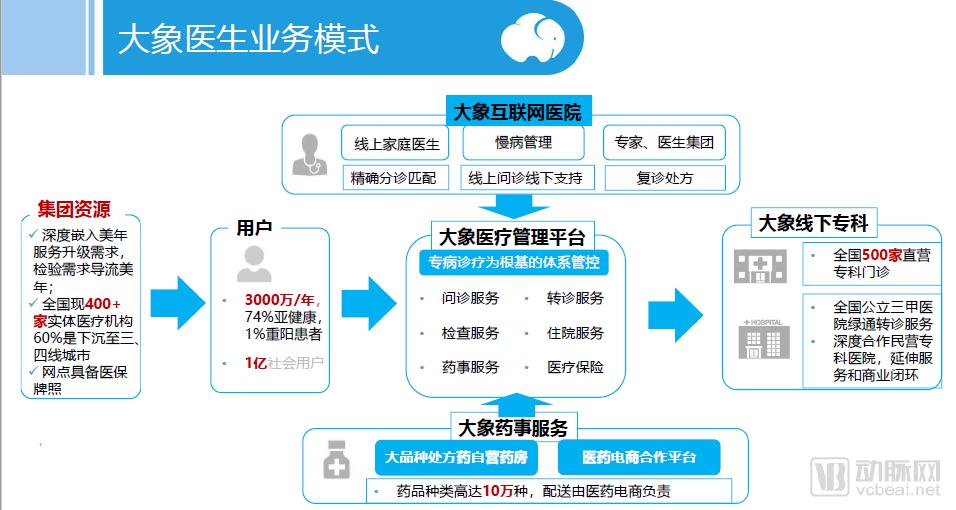
Daxiang Doctor Internet HospitalNot only are operations progressing smoothly, but the volume of business in service areas such as consultations, examinations, pharmaceutical services, and green-channel referrals continues to rise rapidly month by month.The construction of physical offline remote consultation rooms is becoming increasingly standardized and efficient, with a growing number of registered physicians and continuously enriched specialized operational services. Moreover, the diagnosis and treatment model of Daxiang Doctor Internet HospitalHighly aligned with physical healthcare operations, it generates revenue across multiple stages and achieves profitability in the shortest possible time.The current operations team comprises nearly 200 members, having initially taken shape.A Nationwide Internet+ Healthcare Network System,This model has also been investigated and affirmed by leaders of relevant departments under the State Council.(The business model is shown in the figure)
Qilekang Internet Hospital, which focuses on follow-up consultations for chronic diseases, currently collaborates with physical hospitals primarily through joint ventures. The team consists of approximately 300 members.Divided into two parts: offline and online,The physical hospital is the clearly defined entity responsible, while Qilekang holds the operational rights for the internet platform; online medical practices are managed in accordance with the medical standards and regulations of the physical hospital.
Offline, Qilekang will also leverage its own physical pharmacies and partnerships with multiple well-known pharmacy chains to upgrade and transform traditional chain pharmacies. By establishing Internet hospital service zones, the company aims to continuously expand the reach of its Internet hospitals, enabling in-store services such as physician consultations, e-prescriptions, in-store medication pickup, and chronic disease management. This initiative seeks to empower offline retail pharmacies to become accessible healthcare and pharmaceutical service hubs for the general public.
Chunyu Doctor’s Internet Hospital adopts a business model primarily based on revenue-sharing partnerships, with a highly flexible staffing structure. The size of the team varies depending on the number of partner institutions and their respective stages of collaboration. Currently, all partner institutions are operating normally.
Leveraging the DXY Doctor app, DXY Internet Hospital has accumulated over 3 million patient consultation records. It has also aggregated a resource pool of more than 50,000 high-quality physicians and integrated prescription capabilities to provide prescription recommendations for patients in need. Notably, all revenue generated on the platform is currently returned to the physicians, which significantly incentivizes them to deliver higher-quality services.
Pang Chenglin, Managing Director of 39 Internet Hospital, believes, Since the launch of the internet hospital in mid-2016, every step of its development has proceeded in accordance with the established roadmap. Various initiatives have been piloted in physical healthcare institutions, such as deploying mobile high-definition video systems and providing remote or on-site support from specialists to county- and city-level hospitals.
Over the past two years, we have expanded our network to include more than 100 hospitals and over 2,000 specialists, standardizing our business processes. This approach aligns with the strategy outlined in previously issued policies on internet healthcare, which emphasize integrating internet hospitals with physical medical institutions.
The base hospital selected by 39 Internet Hospital is Guiyang Sixth People's Hospital.Collaboration with other hospitals is primarily conducted through mobile telemedicine, facilitating the decentralization of teaching resources and enabling multidisciplinary consultations. This approach has also established a specialized medical alliance operational model under the China Urogenital Alliance’s “Smooth Access Project” Telemedicine Collaboration Network, thereby promoting the downward flow of high-quality medical resources to support grassroots healthcare facilities.Telemedicine primarily covers common diseases in cardiology, neurology, respiratory medicine, endocrinology, pediatrics, urology, orthopedics, and oncology. Services are routinely provided through various models, including remote ward rounds, remote consultations, joint remote expert outpatient clinics, imaging consultations, remote medical education, and on-site assistance, with fees paid by either patients or healthcare institutions.For example, in Qinghai, Sichuan, Anhui, Guangxi, and Henan, initiatives are launched by institutions, as well as by patients within these institutions through their physicians.Experts now maintain regular connections with corresponding departments at county- and city-level hospitals on a weekly basis, and the platform has currently accumulated nearly 100,000 cases.
Whether a patient’s diagnosis and treatment involve consultation and ward rounds by senior specialists, resulting in a strong consensus, is a hallmark of the downward allocation of high-quality national medical expert resources.During ward rounds conducted by senior experts, grassroots physicians can also enhance their clinical skills. Meanwhile, these medical records will be compiled into a standardized database, with visualization of diagnostic and treatment outcomes and comprehensive patient follow-up throughout the entire care continuum.With medical outcomes that reflect the essence of healthcare, payment issues will naturally fall into place; Pang Chenglin is not concerned about this.
As of June 30, 2018, Kangyou Baby Internet Children's Hospital had accumulated 113,000 case records.Its primary disease management spans multiple specialties, including pediatric internal medicine, pediatric surgery, child healthcare, traditional Chinese medicine pediatrics, neonatology, and imaging outpatient services. Currently, its clinical focus is on common and frequently occurring conditions in pediatric internal medicine and child healthcare.
Currently, seven types of services are offered, including online consultations, telemedicine, medical education, home visits, and offline outpatient appointment scheduling.
① Online Outpatient ClinicUsers consult and communicate with online outpatient physicians through text, images, and videos, thereby digitizing traditional outpatient services. Based on the diagnosis, online outpatient physicians may issue orders for medical technical examinations, electronic prescriptions, consultation requests, hospitalization applications, or other recommendations. Among these, electronic prescriptions are reviewed by pharmacists, after which users can collect their medications either by picking them up at designated locations or having them delivered to their doorsteps. Additionally, users can leverage Location-Based Services (LBS) to independently select cooperative medical technical institutions within the pediatric medical consortium, enabling access to nearby laboratory testing and diagnostic services.
② Home Visit Services, a professional home-visit service team composed of pediatricians, nurses, and infant care specialists. In the familiarity and comfort of their own homes, users can enjoy high-quality, one-on-one services provided by professional medical and technical staff, including home examinations, home testing, home healthcare, and home treatment. The offerings include 25 services such as in-home infant care, home neonatal jaundice screening, expert-led home child health check-ups, home vision screening for children by medical professionals, home lactation stimulation, home milk duct unblocking, home weaning care, home breast milk composition analysis, and pediatric genetic testing.
③ Remote online clinics, remote consultations, remote medical education, and remote live streaming.Leveraging internet technology, we have established a teleconsultation system centered on Tianfu New Area People’s Hospital, offering online outpatient consultations, remote consultations, distance education, and live streaming. This initiative provides users in grassroots areas with equitable access to high-quality pediatric medical resources and services, fully leveraging the intensive service capabilities of pediatric specialists.
④ Contracted Family Doctor Services for Children,Aiming to enhance children’s health management, this model establishes a long-term, stable, continuous, and accessible service relationship between pediatricians and children from contracted families through family-based contract services. It provides basic medical care, public health services, and personalized comprehensive child health services to children in contracted families. The services are categorized into two main types: “Online Pediatric Family Doctor Services” and “OMO (Online-Merge-Offline) Pediatric Family Doctor Services.” “Online Pediatric Family Doctor Services” primarily offer online health consultations and chronic disease management for contracted users. “OMO Pediatric Family Doctor Services” refer to the provision of basic medical care, public health, and health management services through an integrated online and offline approach.
⑤ Offline Outpatient Appointment,To provide appointment and consultation services for connected healthcare institutions, helping them improve patient flow management and enhance patient satisfaction.
⑥ Commercial Health Insurance, offering commercial health insurance for children covering single-disease conditions, critical illnesses, accidents, and more.
⑦ Other offerings include extended product lines such as children’s products, early childhood educational and cognitive development toys, and safe travel solutions.
In fact, internet hospitals have also undergone significant changes in recent years.
1. Improved user acceptance.Leveraging the convenience of internet technology, users can access end-to-end closed-loop services for common illnesses without leaving home, significantly reducing barriers to medical care; consequently, user acceptance of internet-based healthcare is gradually increasing.
2. Improved physician motivation.As the user base expands, demand for medical consultations remains robust. Meanwhile, with the improvement of medical technology supply, physicians face lower quality control risks and enjoy steady income growth, thereby boosting their enthusiasm to participate in internet healthcare.
3. Surge in the Volume of Family Doctor Contract Services for Children.As the country vigorously promotes family doctor contract services, targeted pediatric family doctor contract service products have been designed by leveraging user needs assessments and harnessing the advantages of internet technology to expand the scope and content of medical services. This has led to increased sense of gain and satisfaction among contracted users, with significant word-of-mouth promotion.
4. The policy environment is gradually improving.Over the past two years, the Chinese government has successively introduced policies related to internet healthcare. In particular, the “Guiding Opinions on Promoting the Development of ‘Internet + Healthcare’” issued by the General Office of the State Council in April 2018 has provided strong support for the development of internet healthcare.
These changes have also laid the foundation for the development of internet hospitals, prompting various institutions to actively formulate their own strategic blueprints for internet hospital operations.
For the Future,Hu Anyu aims to leverage internet technology to optimize hospital visit processes by reengineering key stages—including pre-consultation, consultation, diagnosis, prescription, and payment—thereby enhancing the patient experience.Integrate all entities within the medical consortium onto the internet hospital platform, leveraging it as a communication channel to facilitate the flow of regional medical resources and ensure orderly patient referrals, thereby effectively implementing tiered diagnosis and treatment. Utilize big data to establish cost-control systems and design targeted health insurance products, thus reducing patient expenses. Vigorously promote the application of artificial intelligence, ranging from intelligent consultation and clinical decision support to disease early warning and precise information push services, advancing AI integration within internet hospitals.
Cong Lulu hopes to continuously optimize the closed-loop service capabilities of internet hospitals, encompassing online consultations, e-prescriptions, medication delivery, and offline fulfillment.For instance, common conditions can be fully managed online; if examinations or specialist consultations are required, patients are referred to partnered physical medical facilities. Meanwhile, we will develop bundled service offerings, such as annual membership plans and maternity care packages. In the future, leveraging Hangzhou and Yinchuan as starting points, we will collaborate with physical healthcare institutions in cities across China.
Medlinker ushers in the era of internet hospital expansion.It is positioned to empower physical medical institutions by jointly building “Smart Internet Hospitals” through construction and outsourced operations, integrating with Medlinker’s existing services and business models to achieve commercialization. In the future, every physical hospital should have its own Smart Internet Hospital; Medlinker aims to assist all physical hospitals in constructing and operating their Smart Internet Hospitals on an outsourced basis.
Tan Wanneng does not pursue rapid, unchecked expansion or make empty promises regarding the growth of internet hospitals. Instead, he aims to transform them into platforms that genuinely meet the needs of all stakeholders, deliver a broader range of medical services, and generate greater revenue. On this foundation, he seeks to gradually build an offline healthcare service network covering China.
Gou Zhengmeng adopts a two-pronged approach, encompassing both online and offline phases, with the online phase focusing on physician resources., establish several influential physician groups and renowned specialist studios within various specialties in the field of chronic disease prevention and control; adhere to the principle of supply-demand matching and follow standardized clinical pathways for diagnosis and treatment; build a comprehensive service model encompassing routine outpatient visits, specialist consultations, remote consultations, and green-channel referrals; thereby enabling the vast grassroots population across China to access high-quality, appropriate medical services without leaving their cities or counties.The development of offline remote consultation rooms will align with the business expansion of Meinian Onehealth Healthcare Group, covering a broader geographic area and strengthening collaboration with primary healthcare institutions outside the Meinian system.
However, Shi Zhenyang regarded the internet hospital as the top priority for Qilekang’s development.The strategy also follows a two-pronged approach, encompassing both online and offline components. In strict adherence to the latest national policy requirements, we continue to expand our service footprint by leveraging our extensive operational experience accumulated in the early stages and through co-construction models with physical medical institutions. Offline, we collaborate with numerous chain pharmacies to upgrade and transform traditional retail outlets by establishing Internet Hospital service zones. Within these stores, we provide users with services such as physician consultations, electronic prescriptions, in-store medication pickup, and chronic disease management. This initiative aims to position offline retail pharmacies as accessible healthcare and pharmaceutical service hubs for the general public, thereby decentralizing high-quality medical resources to the grassroots level and further enhancing primary healthcare service capabilities.
The ultimate goal is for Qilekang Internet Hospital to build a closed-loop service ecosystem encompassing “medical care, pharmaceuticals, patients, diagnostics, and insurance.”By leveraging technologies such as big data and artificial intelligence, we continue to develop and integrate the entire value chain of chronic disease diagnosis and treatment services—spanning physicians, patients, pharmaceutical companies, commercial insurers, public health insurance programs, and diagnostic testing institutions. This approach maximizes the professional value of physicians while ensuring that patients with chronic conditions receive the most timely and appropriate care.
Lu Bo believes that Xiao Pingguo Internet Hospital should leverage the advantage of “strong specialties with comprehensive support,” establishing absolute dominance in obstetrics and gynecology and pediatrics, while building a complete business model integrating physician groups, internet hospitals, and chain clinics.“We remain highly confident that this market and its future are undoubtedly bright.”
Regarding future planning, he aims to continuously refine the operational model to achieve standardization, while also building a specialized internet-based brand for his medical specialty to pursue differentiated development.
From this perspective, there are six major directions in which internet hospitals can achieve profitability in the future:The first is the family doctor contract service.Integrate children's needs and offer comprehensive sales in the form of service packages. Based on users' disease conditions and service demands, basic medical care, health management, commercial health insurance, and home-visit services are bundled into contracted service packages, enabling the one-time sale of diverse products. Meanwhile, through proactive health management, the frequency of disease onset among served users is reduced, thereby lowering the service costs of the packages and increasing service revenue.
Second, diagnostic and treatment service fees. Fees for diagnostic and treatment services with independently determined pricing.Currently, the Chinese government has not established clear pricing standards for online diagnosis and treatment services. While some provinces have issued corresponding price guidance, the cost of online consultations is generally higher than that of offline visits. Furthermore, as certain services lack guided pricing, they are subject to market-based pricing, resulting in greater price flexibility. Meanwhile, the internet’s elimination of temporal and spatial constraints has reduced operational costs.
3. Medical technology fees, third-party medical technology service fees.Procure third-party medical technical services and earn service commissions from them.
4. Prescription Drug Costs.Integrate third-party pharmaceutical suppliers, such as chain pharmacies and drug manufacturers, to earn service commissions.
5. Personalized Post-Discharge Health Management Services.Design targeted, personalized service products based on users’ varying circumstances, such as post-discharge health management services and in-hospital admission guidance and care services.
6. Value-Added Services.such as children's health products, health education, early childhood education, and commercial health insurance.