

MICS 2018: Liu Shiyuan from Changzheng Hospital Highlights Ongoing Standardization of Medical Imaging Terminology, AI Recognition, and Annotation
The 5th Medical Image Computing Symposium (MICS 2018) was held at the Minggugong Campus of Nanjing University of Aeronautics and Astronautics on July 14–15, 2018.
The Medical Imaging Computing Seminar (MICS), established in 2014, aims to provide an academic exchange platform for young Chinese scholars in the field of medical imaging, foster mutual understanding and friendship, and facilitate their integration into the broader academic research community. MICS focuses on original research in medical image computing from the past two years, welcoming presentations of new theories, methods, and applications in medical image processing, computer vision, and artificial intelligence, as well as reports on breakthrough advances at the deep intersection of imaging with clinical and basic medicine.
During the event, VCBeat conducted an exclusive interview with Liu Shiyuan, Director of the Department of Diagnostic and Interventional Radiology and Nuclear Medicine, Chief Physician, and Professor at Changzheng Hospital Affiliated to Naval Medical University. The following article is compiled based on the interview.
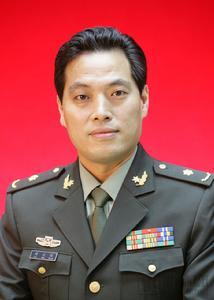
Professor Liu Shiyuan's Biography
Director of the Department of Medical Imaging and Nuclear Medicine, Changzheng Hospital, Naval Medical University; Professor; Chief Physician; Doctoral Supervisor. Engaged in medical imaging diagnosis.Over 30 years. Selected as a Shanghai Leading Talent, Outstanding Academic Leader, and One of the 21st Century’s Outstanding Talents.
President-Elect of the Asian Society of Thoracic Radiology; President-Elect of the Chinese Society of Radiology, Chinese Medical Association; Vice President of the Radiologists Branch, Chinese Medical Doctor Association; China Association of Medical EquipmentChairman of the CT Application Special Committee, Chairman of the Medical Imaging AI Industry-Academia-Research-Application Innovation Alliance, China Association for Promotion of Industry-Academia-Research Cooperation
Specializes in the imaging diagnosis of thoracic diseases, particularly lung cancer. Main research interests:1. Early screening, early diagnosis, and differential diagnosis of lung cancer; comprehensive interventional therapy for intermediate and advanced lung cancer; 2. Basic and clinical research on pulmonary opportunistic infections; 3. Functional imaging studies of chronic obstructive pulmonary disease (COPD); 4. Molecular imaging; 5. Application of artificial intelligence in medical imaging.
Related Introduction Websitehttp://www.shczyy.com/front/professorShow.aspx?id=209
The Foundation of Medical Imaging AI Must Be Solidified
Establish disease-centric standards for terminology, identification, and labeling
“Developing AI for medical imaging requires standardizing terminology as the first step,” emphasized Professor Liu Shiyuan. “It is akin to programmers using a universally recognized language to write code; otherwise, mutual understanding becomes impossible. Without this common ground, data and products cannot interoperate, as each party fails to comprehend what the other is doing.”
Professor Liu Shiyuan stated that the alliance is currently dedicated to promoting the formulation of basic rules for medical imaging AI, which include key components such as terminology, recognition, and annotation. Professor Liu mentioned that the draft of the expert consensus on the understanding and annotation of pulmonary nodule signs has been completed and is currently being refined, with its publication in a national core journal expected in the near future.
Professor Liu Shiyuan believes that current foundational efforts—such as the establishment of terminology, identification criteria, and annotation standards—represent a significant benefit to medical imaging AI companies. At present, many physicians are unaware of the data sources and methodologies used by some companies to develop their algorithmic models. While it is easy to achieve high accuracy in a closed environment, whether these models can withstand validation in real-world settings remains uncertain. With the improvement of data standards, iterative models in the next phase are likely to hold greater value.
Advancing Three Major Research Projects Targeting Physicians, Scientists, and Enterprises
White Paper on Requirements in the Field of Artificial Intelligence for Medical Imaging to Be Completed by Year-End
Professor Liu Shiyuan’s latest position is Chairman of the Board of Directors of the China Medical Imaging AI Industry-Academia-Research-Application Innovation Alliance.
On April 12, 2018, the China Alliance of Medical Imaging AI for Industry, Academia, Research, and Application (CAIMI) was officially established in Shanghai. The alliance is chaired by Shanghai Changzheng Hospital, and its members include more than 80 top-tier tertiary hospitals in China, 45 AI-focused enterprises, and over 20 research institutions.
The Alliance is dedicated to advancing China’s medical imaging AI sector and fostering technological innovation and development in related industries. It aims to effectively integrate resources across industry, academia, research, and clinical application; establish mechanisms for sharing resources along the industrial value chain, including information from industry-academia-research collaborations and intellectual property; create platforms for talent development and international cooperation; promote the establishment of diagnostic and treatment guidelines and operational standards; implement the national strategy of independent innovation; and achieve collaborative cooperation, drive innovation, and foster mutually beneficial growth.
In the words of Professor Liu Shiyuan, “The goal of deeply integrating new technologies, new business formats, and new models is to truly work together to address supply-side issues, thereby better serving more patients.”
Professor Liu Shiyuan revealed that the alliance has established a working group to advance the survey on physicians’ needs for AI in medical imaging. By designing and distributing questionnaires tailored to three types of stakeholders—hospitals, enterprises, and research institutions—and analyzing the responses, the group aims to understand the current status of AI-based medical imaging product adoption and future development trends. Based on this survey, a white paper on requirements will be compiled by the end of 2018.
Expectations for AI Products in Medical Imaging to Undertake Repetitive Tasks
Future Radiologists Will Shift Value Upstream
In radiology departments, physicians are constrained by high-intensity repetitive tasks, which limits their ability to fully leverage their expertise and value in areas such as disease pathology, patient communication, and multidisciplinary consultations. The advent of AI technology has the potential to significantly impact the workflow and focus of radiologists.
“Some tasks originally considered fundamental to physician training, such as identifying pulmonary nodules, may be replaced by AI,” pointed out Professor Liu Shiyuan.
Regarding the fields most suitable for the current adoption of AI in medical imaging, Professor Liu Shiyuan believes that entry should be made through clinical needs with high volume but relatively straightforward interpretation, such as chest X-rays, chest CT scans, and spinal examinations. “Taking pulmonary nodules and rib fractures as examples, AI in medical imaging is highly valuable in helping physicians reduce missed diagnoses in obscure areas, thereby effectively mitigating emergency department disputes.”
Furthermore, Professor Liu Shiyuan proposed constructing deep learning models using normal chest imaging to inversely identify potential pathological changes. This approach avoids the need to build multiple models for different diseases affecting the same anatomical region, thereby reducing computational burden and model complexity. Currently, no other companies have developed their AI products based on this paradigm.
Chinese Medical ImagingIntroduction to the AI Industry-Academia-Research-Application Innovation Alliance
The China Medical Imaging AI Industry-Academia-Research-Application Innovation Alliance, established on the morning of April 12, 2018, comprises members primarily including medical imaging experts, AI scientists, AI entrepreneurs, and relevant entities such as hospitals, research institutes, higher education institutions, and enterprises. Currently, it includes more than 80 Grade III Class A hospitals, over 40 companies specializing in medical artificial intelligence, and more than 20 universities and scientific research institutions.
Specific Next Steps for the Alliance: First, to promote Chinese medical imagingFirst, drive the innovation, translation, and application of AI products to establish industry development directions and standards; second, organize the compilation of white papers in the field of medical imaging artificial intelligence to introduce and evaluate the overall status of the industry; third, form disease-oriented professional collaborative groups to coordinate focused research efforts, thereby promoting the innovation of medical imaging AI products; fourth, serve as an advisor to the government by assisting relevant authorities in formulating standards for medical imaging AI products, and construct a standardized database for testing and validating AI product performance.