

Why Zhejiang Has Become the Fertile Ground for Medical AI Growth
In recent years, medical AI has become prevalent in nearly all Grade 3A hospitals across China, with Zhejiang emerging as one of the most active regions. Although Zhejiang does not have the largest number of medical AI companies nationwide, many Grade 3A hospitals in the province began embracing AI around 2016 and actively discussed its applications at various medical conferences, attracting a surge of medical AI firms to the region. At the 5th Qianjiang International Imaging Forum, a reporter from VCBeat (WeChat ID: vcbeat) conducted an exclusive interview with Professor Zhang Minming, leader of the Medical Imaging discipline at Zhejiang University and Director of the Radiology Department at the Second Affiliated Hospital of Zhejiang University School of Medicine, to explore why Zhejiang has become the most fertile ground for the growth of medical AI.
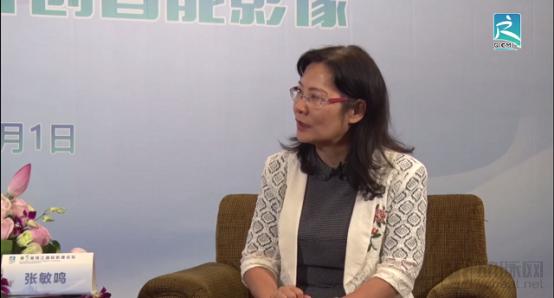
Prof. Zhang Minming
Zhejiang Medical Institutions Actively Embrace AI Products
Professor Zhang Minming has been engaged in this field for a considerable period. Since undertaking the National Key Construction Project under the “12th Five-Year Plan” many years ago, she has been dedicated to brain science research. For a time, many people questioned the use of imaging techniques in studying neurodegenerative diseases, arguing that such research could only lead to academic publications but was difficult to apply in clinical practice.
To deepen the research and facilitate its application, Professor Zhang Minming attempted to build computer-based models. By importing patient data into these models and integrating physicians’ clinical expertise, the system could directly provide predictive outcomes. This marked Professor Zhang’s early entry point into leveraging machine learning for research. As artificial intelligence technologies matured and computational power continued to increase, Professor Zhang recognized that combining these approaches could effectively translate medical imaging research into clinical practice.
Over the past two years, with the continuous improvement of AI technologies and products, many well-known Grade A tertiary hospitals in China have seen multiple AI products being refined in clinical settings. As a nationally renowned Grade A tertiary hospital, The Second Affiliated Hospital of Zhejiang University School of Medicine (SAHZU) naturally began collaborating with enterprises early on to discuss how to develop products better suited for clinical applications.
However, Professor Zhang Minming stated that the Second Affiliated Hospital of Zhejiang University School of Medicine maintains extremely stringent requirements for product admission. She does not wish for the hospital to become a marketplace contested by various enterprises; rather, she hopes that both companies and the hospital can focus their efforts on developing the most optimal AI products. Therefore, in selecting partners, the hospital prioritizes companies with outstanding performance in specific disease areas to avoid duplication of research efforts.
“In the interview, Professor Zhang Minming candidly stated that, in fact, the number of enterprises collaborating with the Second Affiliated Hospital of Zhejiang University School of Medicine is relatively low among many tertiary A hospitals. However, for any enterprise that partners with the hospital, the institution will actively cooperate and participate in product development, sparing no effort to advance this initiative.”
Professor Zhang Minming is well aware that radiologists who embrace AI with open arms will fare better, but the choice of which AI partner to collaborate with significantly impacts physicians. Given that doctors’ time and energy are limited and precious, she hopes that the effort they invest in AI will ultimately create value for healthcare; otherwise, it may lead to bias against AI products among physicians.
Strong R&D Foundation and High R&D Enthusiasm
When discussing current medical AI products, Professor Zhang Minming, the leading figure in the Department of Medical Imaging at Zhejiang University, noted that many products developed by medical AI companies exhibit significant homogenization. Numerous companies have focused their efforts on areas such as screening for pulmonary diseases and fundus diseases. In reality, the scope of AI applications is vast, and AI can assist in diagnosing a wide variety of conditions.
Therefore, in real-world clinical research, in addition to companies promoting their studies to hospitals, major Grade A tertiary hospitals in Zhejiang Province are independently conducting research in medical AI. For instance, as mentioned earlier, the Second Affiliated Hospital of Zhejiang University School of Medicine is conducting research on neurodegenerative diseases. These investigator-initiated studies have expanded the application of medical AI to other diseases and provided clear R&D directions for medical AI companies. Furthermore, through these independent research efforts, hospitals have cultivated a large pool of interdisciplinary researchers specializing in medicine-engineering integration. These professionals can fully comprehend corporate technologies and accurately articulate clinicians’ needs during subsequent collaborations with companies, thereby ensuring that products are better aligned with clinical practice.
Voluntarily Contributing Knowledge, Experience, and Time to Foster the Healthy Growth of Medical AI
During the clinical iteration of AI products, physicians must provide support in various forms, including knowledge, experience, and time. To ensure that these efforts are not wasted, Professor Zhang Minming requires companies to conduct product presentations when introducing their solutions to the Second Affiliated Hospital of Zhejiang University School of Medicine. These presentations address key questions such as: Why was this product developed? Which clinical challenges does it aim to solve in the future? What level of collaboration is required from physicians? Only after a thorough evaluation by the hospital will the product be implemented within specific departments. This approach maximizes the value contributed by physicians and avoids unnecessary resource expenditure.
Professor Zhang Minming believes that physicians’ involvement in the research and development of medical AI products is a social responsibility and obligation. Only with physician participation can medical AI products become more accurate and achieve greater long-term impact, thereby fulfilling a responsibility to public health.
Medical AI products developed without physician involvement may go astray, ultimately failing to meet clinicians’ needs. Only by recognizing physicians’ participation in the research and development of medical AI as a professional responsibility can the development of medical AI applications become more valuable.
Professor Zhang Minming also calls on physicians to be willing to invest their efforts in participating in the research and development of medical AI projects, which is beneficial both for themselves and for the industry.
Zhejiang is open and proactive.
When discussing why Zhejiang Province has become one of the most active regions for medical AI, Professor Zhang Minming stated that many peers have explored this topic with them, and numerous hospitals in Zhejiang are at the forefront of medical AI innovation.
The reasons behind this mainly stem from three aspects:
First, both the government and hospitals have provided substantial support. As a leading province in science and technology across China, Zhejiang’s government has offered significant assistance in introducing innovative technologies and talent. Universities headed by Zhejiang University have contributed extensively to industry development through talent and technical support; for instance, the Medical Artificial Intelligence Alliance, initiated and led by Zhejiang University, has greatly promoted the development of medical AI in Zhejiang.
Second, Zhejiang Province itself is home to many medical AI companies, whose development has been remarkably rapid.
Third, medical institutions and physicians in Zhejiang are highly open and proactive, generally adopting an inclusive attitude toward new technologies and products to foster their development, while providing fair platforms and clinical support throughout their growth process.
Embrace New Technologies with an Open Mindset
Professor Zhang Minming told VCBeat that Zhejiang is home to global tech giants like Alibaba and world-renowned universities such as Zhejiang University, demonstrating the province’s capacity and technological foundation to support and foster the implementation of new technologies.
In fact, it is not just AI technology; Zhejiang’s medical institutions will embrace any new technologies or models with a positive and open mindset, as long as they contribute to the development of the medical imaging industry. Zhejiang possesses such genes and soil.
We believe that Zhejiang Province’s talent attraction policies, AI technology support, the open and proactive attitude of physicians, and the active participation of most hospitals and academic leaders have collectively created an open, inclusive, and fair growth environment for companies. These are the key reasons why Zhejiang has become one of the most dynamic regions for medical AI in China.