

Uber and Lyft Enter Healthcare with Shared Ride Solutions for Medical Transportation
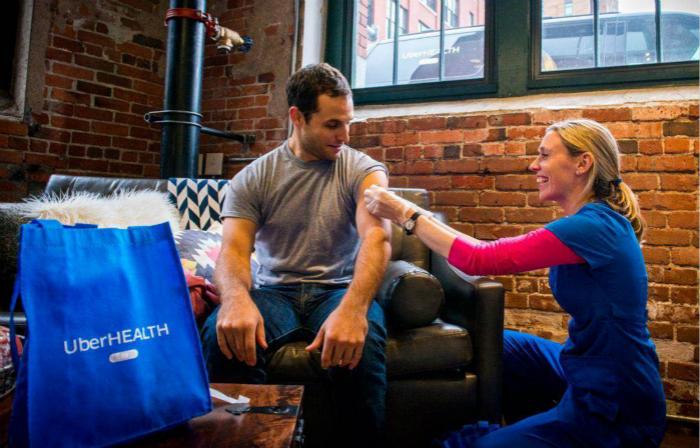
Image from the UberHEALTH official website
Data shows that approximately 3.6 million Americans miss or delay medical care each year due to a lack of reliable transportation, resulting in losses exceeding $150 million. Transportation issues have become a major barrier for Americans seeking medical care.
Against this backdrop, the U.S. Medicaid program has allocated $5 million for non-emergency medical transportation (NEMT) benefits to provide cost-effective transportation services, giving rise to shared mobility models for medical visits.
Lyft Partners with Multiple Healthcare Institutions
In May 2018, U.S. ride-hailing company Lyft partnered with the non-profit healthcare organization Hackensack Meridian Health to establish a shared mobility command center, providing Non-Emergency Medical Transportation (NEMT) services for patients requiring transportation to medical appointments.
On the one hand, Lyft can coordinate with patients, healthcare facilities, and care coordinators to ensure a smooth transportation experience, while Hackensack Meridian Health can better forecast travel demand; dispatchers can track trips in real time, and digital maps precisely pinpoint pickup and drop-off locations.
This is not Lyft’s first foray into the healthcare sector. As early as January 2016, Lyft announced a partnership with the National Medtrans Network to provide non-emergency medical transportation services for patients, such as transporting elderly individuals to medical check-ups.
As part of a pilot program, New York City residents can book rides through Concierge, a new website operated by Lyft. The advantage of this partnership lies in National Medtrans Network’s ability to provide an existing client base. Lyft stated that it provides approximately 25,000 ride-sharing trips per week in New York, with the new service accounting for 10% of that volume.
In March this year, Lyft also partnered with electronic health record company Allscripts to serve nearly 2,500 hospitals. Lyft stated that it has established partnerships with nine of the ten largest U.S. health systems, and all medical transportation providers are using Lyft.
Uber Launches B2B Healthcare Platform Uber Health
In May 2018, Uber also launched a service called Uber Health, providing a dedicated ride-hailing platform for medical institutions such as clinics, hospitals, and rehabilitation centers to better allocate vehicles for patients. This process does not require drivers to download the Uber app, and dispatch tasks can even be completed without a mobile phone. The value proposition of Uber Health is similar to that of UberCENTRAL, targeting business clients who wish to provide transportation services for their customers.
Meanwhile, it is also HIPAA-compliant, allowing customers to access related services simply by using a landline phone. Uber Health is designed to enable healthcare institutions to book rides on behalf of their patients. Through a simple web-based dashboard, staff can enter the patient’s name, phone number, and pickup/drop-off locations, and then select the type of vehicle offered by Uber. The patient will then receive relevant information, including the driver’s contact details, the scheduled pickup time and location, and a link to a real-time tracking map.
Furthermore, Uber is committed to enabling patients to receive information via voice. Healthcare providers will complete the relevant documentation and provide printed copies to patients upon their return home after medical visits. All trip-related data will be stored on HIPAA-compliant client servers, rather than on Uber’s own servers.
These records provide patients' basic information and travel history, making their review and export critical for healthcare institutions in billing and report generation.
As for the business model, Uber Health charges healthcare institutions only for individual ride fares, consistent with standard consumer pricing; access to the dashboard and medical reporting tools is provided free of charge. Since launching its private beta in the summer of 2017, the Uber Health platform has onboarded more than 100 healthcare institutions.
Shared Mobility Is Not the Optimal Choice
A study published in JAMA Internal Medicine indicates that ride-sharing services do not reduce the rate of missed or no-show appointments. Researchers provided free ride-sharing services to Medicaid patients at a healthcare institution in West Philadelphia. Medicaid patients were selected as the study population because they have a higher rate of missed appointments and often encounter barriers when traveling to medical appointments.
Researchers made three appointment reminder calls to them. Nearly 300 individuals answered the calls, but only 85% accepted the shared mobility service, indicating limited patient interest in this service model.
The study also found that the no-show rate for appointments was 36.5% in the experimental group and 36.7% in the control group, indicating that ride-sharing is not an ideal solution to medical transportation challenges and does not reduce the frequency of missed appointments by patients.
However, critics have pointed out flaws in the study’s design. The researchers only tested patients who were already affiliated with healthcare institutions and those currently receiving care. Both researchers and critics agree that the ride-sharing model may not be the optimal solution for addressing transportation barriers, as ride-hailing services such as Uber and Lyft typically do not accommodate patients who require wheelchairs or other assistive devices—precisely the population most in need of medical transportation services. Healthcare institutions and researchers should explore alternative, viable transportation options.
The New Model Demonstrates Significant Efficacy
Relevant studies indicate that many patients still opt for cost-effective and convenient ride-sharing services, such as Uber and Lyft, as an alternative to expensive transportation options like ambulances. A working paper from the University of Kansas pointed out that in 750 cities across 43 U.S. states, the availability of Uber and Lyft has led to an average 7% reduction in ambulance utilization.
It should be noted that the study’s authors, David Slusky and Leon Moskatel, stated that they did not investigate partnerships between healthcare institutions and Uber or Lyft; rather, they focused on patients who accessed medical care through ride-sharing services.
These patients can complete their medical travel through simple operations. Drivers from Uber or Lyft can take patients to the emergency department or urgent care clinics, eliminating the need for ambulances equipped with medical personnel and equipment. However, the authors also acknowledge that there are other reasons for the decline in ambulance usage. Ride-sharing services may reduce the occurrence of car accidents and drunk driving, thereby decreasing the number of ambulances required for medical assistance.
David Slusky and Leon Moskatel argue that, given the complexity of the evidence, their initial hypothesis is more likely to hold true: patients tend to choose Uber, which poses no life-threatening risks, over more expensive ambulances. This trend has positive implications for the healthcare industry, as it has long been striving to find solutions for better allocation of medical resources.
Slusky and Moskatel also noted that when other patients appropriately use Uber or Lyft, ambulances become more readily available for those with genuine emergency needs. Furthermore, the cost of using Uber or Lyft for patient transportation is relatively low and is often offset by the savings from necessary preventive screenings, thereby effectively reducing overall medical transportation costs.
An article published in JAMA (Journal of the American Medical Association) in September 2016 evaluated the effectiveness of the partnership between Lyft and CareMore. Researchers reported that this collaboration reduced the cost per ride by 30%. At the time of publication, the cost per patient transport ranged from $21.32 to $31.54. The study also noted that this model increased patient satisfaction by 80%, likely due to the ease of using Lyft and its low error rate.
Efforts to address transportation barriers in accessing medical care have only just begun. Although numerous studies indicate that the current landscape is promising, with new models enabling better resource allocation and reduced expenditures, further work is required to develop optimal solutions.
Innovations and Breakthroughs in Shared Healthcare
In 2016, the State Council issued the “Outline of the ‘Healthy China 2030’ Plan,” which explicitly stated: “Innovate models for the utilization, mobility, and service delivery of medical personnel, and actively explore independent practice by physicians, contracted services between individual physicians and medical institutions, or the formation of physician groups.”
Physician groups refer to alliances or organizational entities composed of multiple physicians, dedicated to providing platforms for multi-site and independent practice, addressing the healthcare needs of patients at the primary care level, and facilitating the sharing of medical resources. Since Shenzhen issued the first “physician group” license in 2016, such groups have emerged in large numbers across China.
In 2017, China’s first medical mall, Quancheng International Medical Mall, was launched in Hangzhou. The Zhejiang Provincial Health and Family Planning Commission approved a pilot program whereby “Hangzhou Quancheng Health Medical Outpatient Department provides shared services—including laboratory testing, pathology, ultrasound, medical imaging, and other clinical support departments, as well as pharmacies and operating rooms—to other medical institutions housed within the Quancheng International Medical Mall building.”
Medical Mall is a new type of medical shopping complex that integrates healthcare with retail, equipped with basic medical facilities and hosting renowned medical teams and clinics such as the Sir Run Run Shaw International Medical Center. Currently, shared “medical malls” have been established in cities including Shanghai, Wuhan, and Beijing, offering more options for medical consultations and achieving a balance between the supply and demand of medical resources.
In June this year, more than 20 “shared wheelchairs” appeared at China-Japan Friendship Hospital, marking the official launch of the “Healthy China Shared Wheelchair Public Service Innovation Project” in Beijing.
This project serves as a pilot initiative for the research topic “Development Research and Policy Recommendations on China’s Public Service System for Shared Wheelchairs,” jointly established by the Healthy China Promotion Working Committee of Xinhua News Agency and relevant national ministries and commissions. It aims to integrate the shared-economy model with medical devices, thereby providing more convenient mobility services for patients with special needs. Currently, the project is being piloted in hospitals in Shanghai, Beijing, Shandong, and other regions, with plans to expand to additional areas in the future.
Transportation services and shared mobility models driven by technological advancements have significantly reshaped consumer expectations. However, traditional non-emergency medical transportation (NEMT) services remain entrenched in legacy models, reluctant to adopt technological innovations within the medical transportation sector. To reduce costs and achieve substantial outcomes, the medical transportation industry must undergo reform.
Advancements Brought by the Shared Mobility Model for Medical Visits
In terms of consumer mobility, real-time GPS tracking and transparent systems that better adapt to supply and demand have established new standards. In the shared mobility model, the number of flexible, part-time vehicle owners fluctuates in response to changes in demand.
In the past, people hailing rides on busy Friday nights would wait nearly an hour for a car to arrive. Today, consumers needing transportation can simply track vehicles in real time on a digital map and secure a ride within five minutes. The Non-Emergency Medical Transportation (NEMT) program under Medicaid can draw lessons from this model, as consumers likewise demand transparency, reliability, and accountability.
# Prioritize Transparency
The scope and scale of Non-Emergency Medical Transportation (NEMT) programs vary across the United States. Many large Medicaid managed care organizations and state Medicaid agencies spend tens of millions, or even hundreds of millions, of dollars annually on NEMT services. This represents a substantial portion of the budget, making such expenditures particularly significant in the context of overall Medicaid budget management.
However, many taxpayers are unclear about the actual expenditures of this program and the impact of budgeting on patients. Although GPS technology and data analytics have permeated various industries, only a small fraction of Non-Emergency Medical Transportation (NEMT) vehicles have implemented real-time tracking. Information regarding usage details and operational metrics, such as on-time performance, remains scarce, ambiguous, and rarely reported. Funding programs of any scale or scope require real-time monitoring of all data and must ensure that relevant information is accessible at all times.
Showcasing New Technologies and Economic Benefits
The introduction of shared mobility models has significantly reduced consumers’ travel costs. By enabling private vehicles to temporarily provide transportation services, shared mobility is why Transportation Network Companies (TNCs) often charge fares that are only half those of taxis.
However, it is not designed to meet medical needs, nor does it comply with the federal government’s reimbursement criteria for Medicaid. By introducing this new model while adhering to healthcare industry regulatory requirements, the NEMT program can maximize economic benefits.
Controlling Waste Through Technology
As with other social services of comparable scale, some unscrupulous providers and individuals exploit the system by obtaining free rides or submitting claims for non-existent trips beyond the scope of authorized services. Traditional Non-Emergency Medical Transportation (NEMT) brokers still rely on paper-based records or their own self-reported data for trip activities, leaving them with limited visibility into the actual daily transportation landscape.
But now, advanced systems can search transaction data to identify suspicious anomalies; for instance, the technology can easily distinguish whether an individual was dropped off at a shopping mall rather than a doctor’s office.
Facilitating Seamless Communication Between NEMT Brokers and Providers
Even though shared mobility offers greater flexibility and can deliver higher economic benefits, traditional business models continue to dominate the non-emergency medical transportation (NEMT) sector, particularly for vehicles requiring specialized equipment, such as wheelchair-accessible vans.
NEMT brokers can help healthcare institutions modernize and share information, and create benefits through the use of technology, whether it is tablets or GPS positioning.
Many healthcare institutions operate their own scheduling systems, making it difficult for agents to effectively integrate relevant data from different organizations. As a result, this information remains fragmented, delayed, and incomplete.