

Shanghai Children's Hospital: Pioneering a New Era of Smart Hospital Logistics with Robotics
VCBeat (WeChat ID: vcbeat) has previously reported that, driven by Industry 4.0 and the “Made in China 2025” initiative, intelligent logistics has ushered in significant development opportunities. Beyond the industrial sector, hospitals have also emerged as a key area of interest for intelligent logistics. With the deepening of healthcare system reforms such as the separation of prescribing and dispensing, hospital administrators are increasingly focusing on optimizing internal hospital structures and reducing operational costs, alongside continuously enhancing their diagnostic and treatment capabilities.
Currently, the existing logistics systems in hospitals remain inefficient and costly. It is estimated that approximately 46% of hospital budgets in China are allocated to logistics-related expenses, with 27% spent on materials and equipment and 19% on labor. Furthermore, relevant studies indicate that nurses spend 10% of their time transporting items rather than providing patient care. This prolonged physical strain has led to significant burnout among nursing staff.
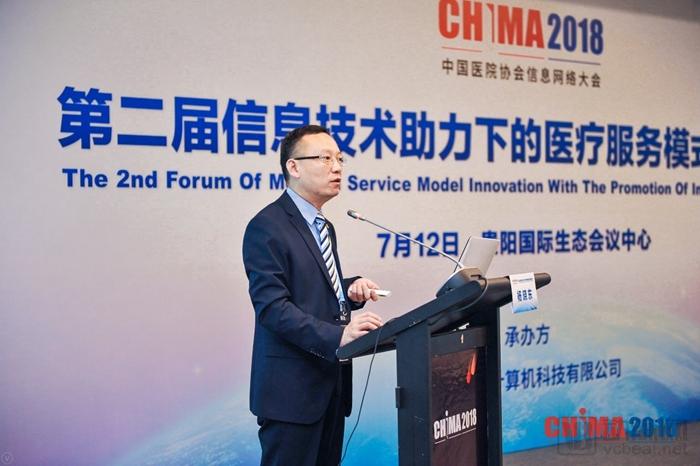
In the construction of smart hospital logistics, does intelligent logistics bring disruption or enhancement to hospitals? On July 12, Yang Xiaodong, Vice President of Shanghai Children’s Hospital, which had just achieved HIMSS Stage 7 certification, delivered an academic presentation at the “Forum on Innovation in Healthcare Service Models Empowered by Information Technology” during the Chinese Hospital Association Information Management Conference (CHIMA 2018), sharing his unique insights.
“The largest investment we have made in research and innovation for smart hospital development is in logistics infrastructure. As everyone knows, the most challenging aspect of hospital logistics is ensuring the safety of personnel and processes,” said Yang Xiaodong, Vice President of Shanghai Children’s Hospital.
In China, there are tens of thousands of hospitals, each employing a varying number of outsourced nursing assistants who primarily handle the most basic tasks, such as patient transport and accompaniment during medical examinations. Setting aside the industry’s widespread issues of high turnover and frequent staff changes, the work model for patient transport alone presents significant problems.
Humans are subjective beings and are inevitably influenced by emotions. From the perspective of closed-loop management for medical safety, the more human-involved steps there are and the greater the volume of items transported, the lower the safety and efficiency. For example, when nursing assistants transport medications from the Intravenous Admixture Services (IVAS) center to nursing stations, they pass through uncertain zones such as corridors, elevators, and passageways, where monitoring and performance evaluation are not feasible. Any minor oversight during this process can lead to severe consequences for hospital logistics management and medical safety.
Therefore, as China’s first specialized children’s hospital, Shanghai Children’s Hospital has consistently explored and evaluated hospital logistics solutions that enhance efficiency while ensuring safety. After studying advanced logistics management practices at renowned hospitals both domestically and internationally, and systematically conducting research and innovation initiatives, we ultimately selected hospital logistics robots—the most “cutting-edge” approach currently available.
Twelve years ago, I was sent by the Chinese government to study at the Medical University of Innsbruck in Austria, where I observed their use of a pneumatic tube system that could transport specimens to the laboratory center in an “instant.” At that time, such equipment was not yet available in China, so I found it quite novel.
With advancements in technology and concepts, China now offers solutions such as pneumatic tube transport systems, rail-guided vehicle transport systems, and vertical shaft logistics transport systems, presenting hospitals with a wide range of options.
From my personal research perspective, these mechanized logistics systems have their advantages but also exhibit significant drawbacks. First, the construction costs are high; second, they must be implemented concurrently with the planning of new hospital buildings, whereas for existing hospitals, such implementation would entail disruptive and structurally invasive renovations. Finally, payload capacities ranging from a few kilograms to several tens of kilograms cannot fully meet the material transportation demands of hospitals. Sacrificing through “high investment, long construction cycles, and low payload capacity” merely to replace manual transport appears to offer insufficient cost-effectiveness.
Humanity’s most significant evolutionary advancement lies in its proficiency with tools. The emergence of hospital logistics robots serves not merely as a tool to “assist with heavy lifting,” but also represents an additional option for the development of smart logistics systems. Based on our experience with the Noah Hospital Logistics Robot, it offers several key advantages:
First, it does not require support from physical infrastructure, meaning that no major physical renovations to hospital buildings are necessary. While software may incur costs, from a hardware perspective, Noah Hospital Logistics Robots do not require us to “break through walls” or create dedicated pathways for them, thereby avoiding additional expenditures;
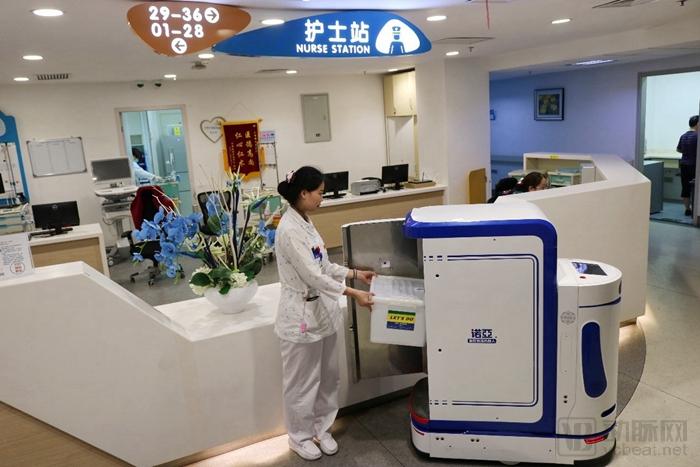
Second, logistics robots can automatically accept orders and perform deliveries, effectively acting as autonomous couriers. Taking the Pharmacy Intravenous Admixture Service (PIVAS) scenario as an example, nurses place orders and pack items at the originating location. Relying on their built-in advanced navigation systems, the robots independently operate elevators and open doors. Upon arriving at the nursing station, they proactively notify staff with a message such as, “Delivery complete; please retrieve your items,” allowing nurses to access medications by swiping a secure key card. This streamlined process ensures tight coordination between steps. As Noah Hospital’s logistics robots achieve fully automated delivery throughout the entire workflow, operational and maintenance costs are significantly reduced.
Third, it has a large payload capacity, with a maximum single-delivery weight of up to 300 kilograms, offering high cost-effectiveness;
Fourth, and most importantly, it operates 24/7 with on-demand availability. It executes commands precisely as instructed, without exhibiting emotional outbursts or making demands. While this advantage may appear modest, it significantly enhances operational efficiency in practice by reducing human-induced subjective error rates to zero;
Fifth, real-time recording of transportation data and real-time display of transport locations ensure full-process monitoring of material delivery, achieving the safety and precision of closed-loop management. The establishment of standardized processes has also effectively reduced inter-departmental conflicts.
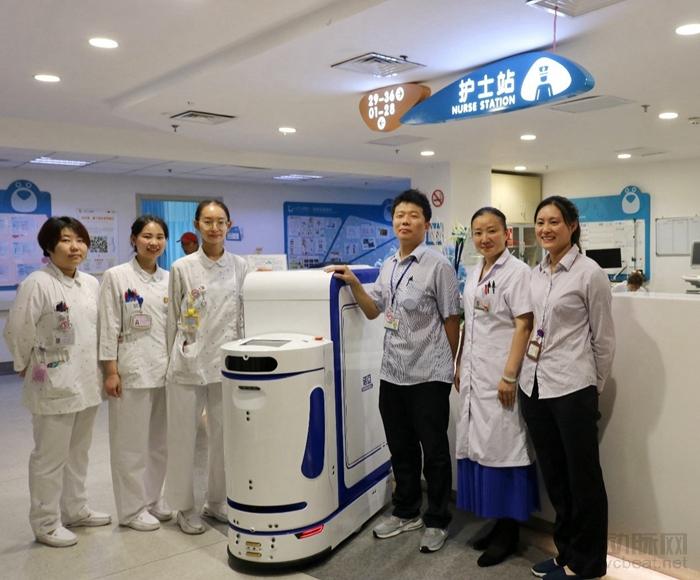
Based on preliminary observations from the deployment of Noah Hospital logistics robots at Shanghai Children's Hospital, their convenience is increasingly evident in such complex hospital environments.
The Chinese government is currently making substantial investments in medical research, and I am confident that it will further encourage the research, development, and promotion of applied innovative technologies such as intelligent medical robots. Therefore, the development of both surgical robots and hospital logistics robots is inevitably a prevailing trend.
I have high expectations for advancing smart logistics through robotic research and innovation. I hope that, through the joint efforts of hospitals and R&D enterprises, we can not only achieve the practical implementation and translation of innovative technologies but also leverage the advantage that Chinese companies have a deeper understanding of the workflows and environmental characteristics of Chinese hospitals. This will enable hospital logistics robots to better serve the development of smart support services, improve logistics transmission efficiency, ensure robust medical operations, ultimately enhance the level of hospital logistics management, and help align the medical and management standards of domestic hospitals with international benchmarks.
Our hospital is currently implementing a facial recognition system, which will represent a comprehensive upgrade once integrated. In the future, staff members will no longer need to use ID cards for authentication when interacting with Noah Hospital’s logistics robots; instead, facial recognition alone will suffice, marking a significant leap from “card swiping” to “face scanning.”