

E-Prescriptions Become the Standard for the Trillion-Yuan Prescription Diversion Market: How Internet Hospitals, Pharma E-Commerce Platforms, and Retail Pharmacies Are Strategizing
Recently, VCBeat (WeChat ID: vcbeat) learned through discussions with industry professionals that there is significant interest in electronic prescriptions within the sector. This attention primarily focuses on the origin, nature, standardization, and applications of electronic prescriptions, as well as their integration with businesses such as internet hospitals, pharmaceutical e-commerce platforms, retail pharmacies, and prescription-sharing platforms.
Previously, cities such as Xi’an, Chengdu, Chongqing, and Tianjin had already piloted policies allowing the sale of prescription drugs based on electronic prescriptions. At the corporate level, companies including Ali Health, JD.com, WeDoctor, 111.com, and Jianke have been exploring integrated models combining internet healthcare, electronic prescriptions, and pharmaceutical sales, thereby strengthening the link between electronic prescriptions and prescription outflow.
Rather than blocking, it is better to channel the flow; extending prescriptions beyond hospital walls is an inevitable trend. The application of electronic prescriptions can standardize rational drug use among pharmaceutical retail enterprises, facilitate prescription refills and medication purchases for patients—especially those with chronic diseases—and promote the separation of prescribing from dispensing. Meanwhile, the widespread adoption of electronic prescriptions will drive significant customer traffic to pharmaceutical retailers, generating incremental growth in prescription drug sales.
This article primarily addresses questions related to electronic prescriptions, including:
Are electronic prescriptions legally valid?
Which institutions are authorized to issue electronic prescriptions?
How to Ensure the Authenticity and Validity of Electronic Prescriptions?
How Are Electronic Prescriptions Circulated, Stored, and Regulated?
What Are the Forms of E-Prescribing Applications?
What Is the Correlation Between E-Prescriptions and Prescription Outflow?
Doctors at large hospitals see dozens of patients each day and lack the time to carefully write out prescriptions in neat, standardized handwriting. As a result, it is a common complaint within the industry that doctors’ illegible, scrawled handwriting is difficult to decipher or read at all, with handwritten prescriptions often referred to as “heavenly script.”
At this point, electronic prescriptions become particularly important. With just two mouse clicks, medication details, administration instructions, and dosages can be accurately displayed, ensuring medication safety. Especially after the enhancement of hospital informatization, computerized prescription writing has become a standard practice, as electronic prescriptions facilitate identification, storage, circulation, and regulatory oversight. Therefore, in theory, any prescription issued in digital form is referred to as an electronic prescription.
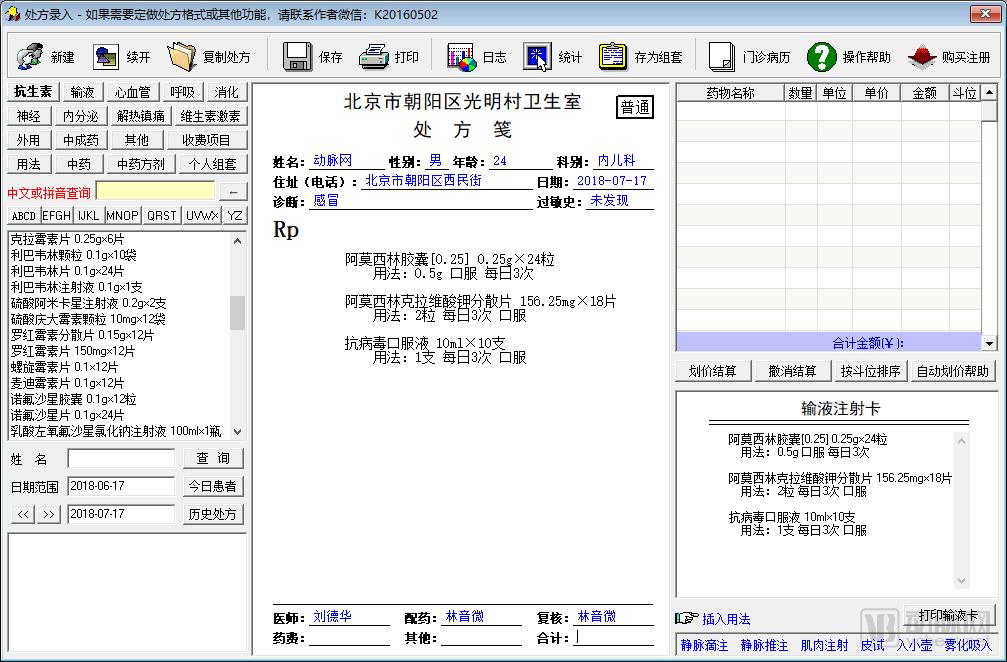
VCBeat Tests an Electronic Prescription System
According to the "Measures for the Administration of Prescriptions," a prescription refers to a medical document issued by registered physicians for patients during diagnosis and treatment activities, which is reviewed, dispensed, and verified by pharmacists who have obtained professional qualifications in pharmacy, and serves as proof of medication for patients. Prescriptions include medication order sheets for hospital wards.
This method also grants a certain degree of legal validity to electronic prescriptions: When physicians use computers to issue and transmit ordinary prescriptions, they shall simultaneously print out paper prescriptions in a format consistent with handwritten prescriptions; the printed paper prescriptions become valid upon signature or affixation of an official seal. When dispensing medications, pharmacists shall verify the printed paper prescriptions and dispense the medications only after confirming their accuracy. The printed paper prescriptions and the electronically transmitted prescriptions shall be retained together for future reference.
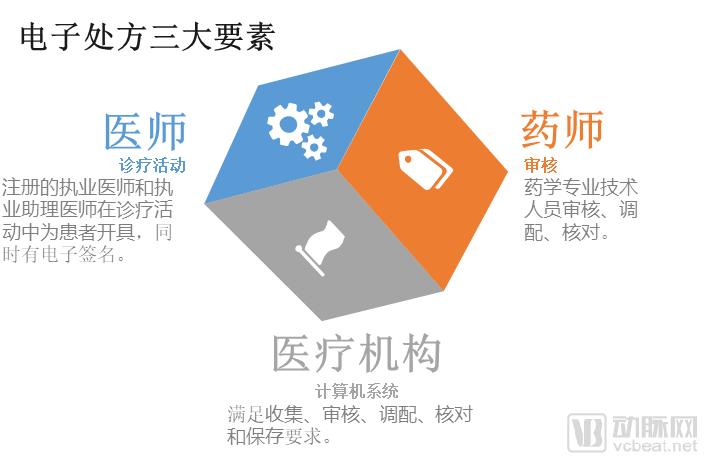
Therefore, whether in rural clinics or large tertiary hospitals in urban areas, physicians can use computers to prescribe for patients, transmit prescriptions, and complete dispensing and verification. Licensed physicians are authorized to issue electronic prescriptions at legally operated medical institutions, including remote prescriptions from internet hospitals.
However, there are no specific regulations defining what constitutes an electronic prescription, nor governing its issuance, review, and supervision. It is presumed that electronic prescribing has become a standardized practice, operating under existing regulatory frameworks, thus requiring no further elaboration.
Paper prescriptions can verify the prescriber and assign responsibility through handwriting and signatures. The same regulatory principle applies to electronic prescriptions, which require verification via electronic signatures.
As stated in the “Work Plan for Promoting Electronic Prescription Services by Drug Retail Enterprises (Trial)” issued by the Xi’an Food and Drug Administration, electronic prescriptions shall comply with the relevant regulations of the health and family planning authorities and bear the physician’s electronic signature.
The "Norms for Prescription Review in Medical Institutions" recently issued by the National Health Commission points out that normative review should pay attention to whether the prescription conforms to the prescribed standards and format, whether the prescribing physician's signature or special seal has been registered, and whether the electronic prescription has the electronic signature of the prescribing physician.
A major application scenario for electronic prescriptions is to facilitate prescription interoperability between medical institutions and retail pharmacies, thereby supporting pilot programs that allow the sale of prescription drugs at retail pharmacies based on electronic prescriptions. Specific provisions have also been established regarding the collection, review, and dispensing of electronic prescriptions.
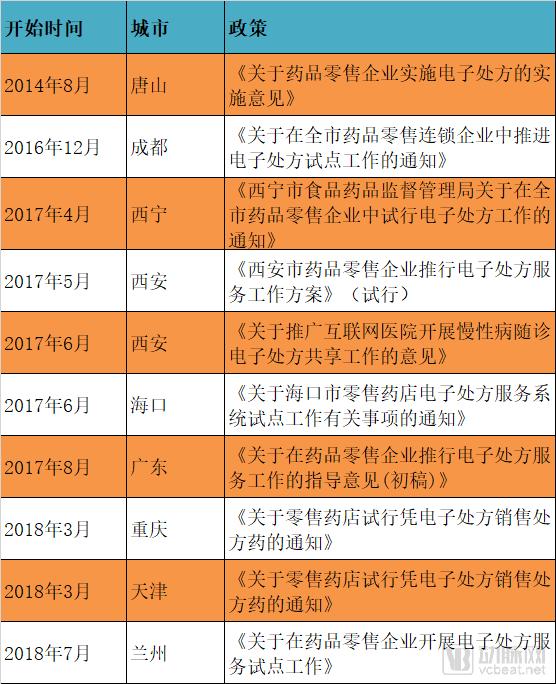
As pointed out in the notice issued by the Tianjin Municipal Commission for Market Regulation on March 29, 2018, retail pharmacies may sell prescription drugs based on paper prescriptions according to their operational needs, or may pilot the sale of prescription drugs based on electronic prescriptions leveraging their information technology infrastructure.
Retail pharmacies piloting the sale of prescription drugs based on electronic prescriptions shall adopt a system integrated with medical institutions, implementing computer networking to obtain electronic prescriptions from these institutions via information systems. They must properly collect, review, dispense, verify, and archive electronic prescriptions in accordance with regulations. The required signatures of personnel responsible for prescription review, dispensing, and verification on electronic prescriptions may be executed through electronic signatures or by maintaining audit trails within the information system.
Tianjin’s regulations are largely consistent with the standards in Chongqing, Xi’an, and other regions, representing the industry’s prevailing regulatory norms. It is evident that electronic prescriptions, like paper prescriptions, must comply with specifications for collection, review, and dispensing, and must be printed and archived to facilitate regulatory inspection.
In recent years, pilot programs have been launched in multiple regions allowing retail pharmacies to dispense prescription drugs based on electronic prescriptions.
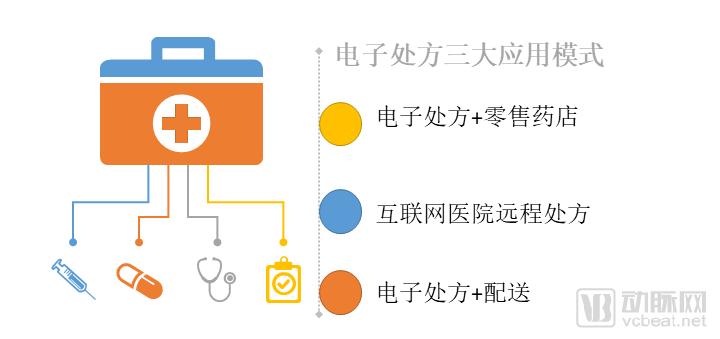
Currently, the application of electronic prescriptions mainly takes three forms: the model where retail pharmacies dispense prescription drugs based on electronic prescriptions, the remote prescribing model of internet hospitals, and the “e-prescription plus delivery” model.
From the perspective of prescription sources, they are basically divided into two categories: offline hospitals and internet hospitals; from the perspective of drug provision methods, they include pharmacy pick-up, third-party home delivery, and online purchase with mail delivery. These models slightly overlap with each other, depending on patient needs or drug supply capabilities.
Three Major Application Scenarios for Electronic Prescriptions
Electronic prescriptions help retail pharmacies sell prescription drugs in compliance with regulations and increase customer traffic.
Chain pharmacies are key participants in the electronic prescription pilot programs. First, they possess certain capabilities in drug supply assurance and pharmaceutical care services, enabling them to basically meet the demand for out-of-hospital medication dispensing. Second, electronic prescriptions help standardize the sale of prescription drugs in retail pharmacies, facilitating compliant and safe medication use for patients.
From the patient’s perspective, obtaining prescription refills for chronic conditions previously required returning to the hospital to queue and register anew, which was time-consuming and strained physician resources. By adopting a model combining remote consultations with electronic prescriptions, patients can bypass the hospital registration process, thereby improving the efficiency of healthcare resource utilization. Successful industry models include Guangdong Provincial Internet Hospital, WeDoctor Pharmacy Stores, and WeDoctor Consultations.
The Application of Electronic Prescriptions Drives a Transformation in the Consultation and Medication Dispensing Process
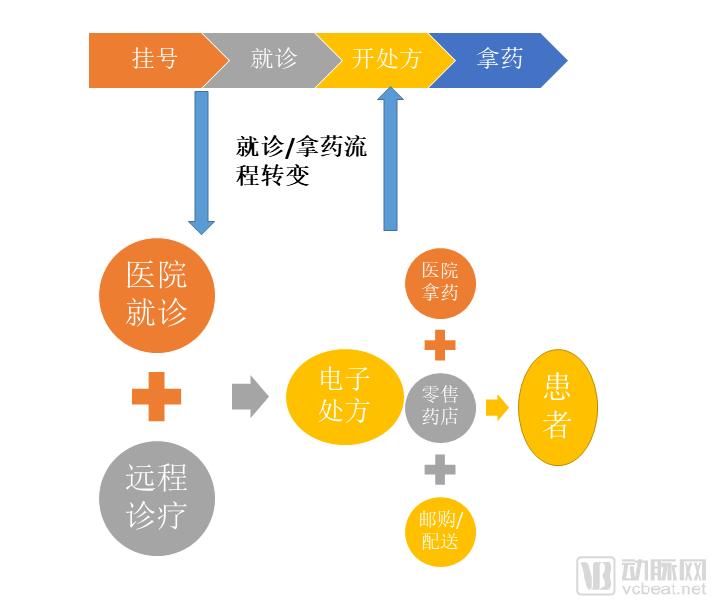
This model also provides pharmacies with a unique competitive edge through differentiation. Pharmacies that integrate internet-based medical consultations and e-prescriptions see increased foot traffic and greater patient retention. By offering a wider range of pharmaceutical care and health services, these pharmacies can be transformed into health management centers that are closely aligned with patients’ needs.
Prescription Sharing Platform + E-Prescriptions: Facilitating the Separation of Prescribing and Dispensing
Another major application scenario for e-prescriptions is prescription-sharing platforms, with companies such as WeChat, WeDoctor, Yi Fu Zhen, and Yao Shi Quan actively developing this business.
The prescription-sharing platform operates as follows: after patients complete their consultations at the hospital, the platform interfaces with the hospital’s system to share prescription data. Prescription information is then synchronized to patients via mobile apps, WeChat, and web portals, allowing them to choose whether to fill their prescriptions at in-house or external pharmacies.
Prescription Sharing Platform Workflow
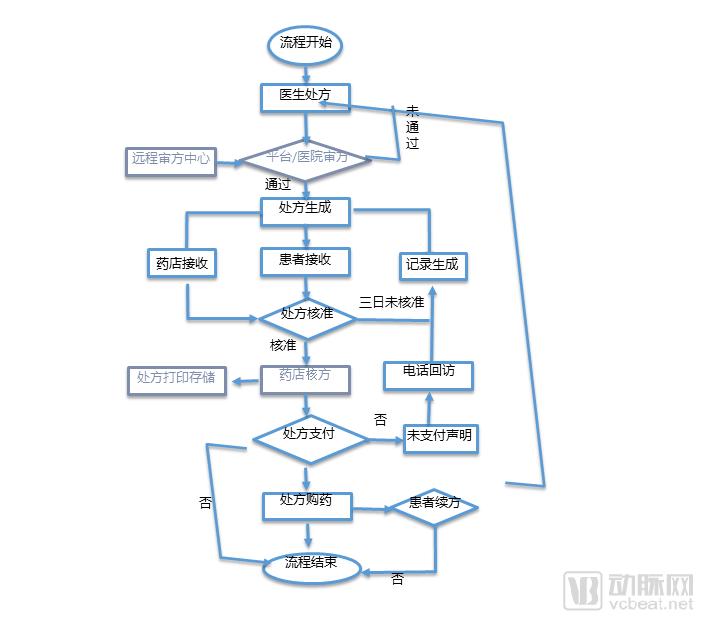
The prescription sharing platform addresses the operational pressure on hospital pharmacies under the "zero markup" policy, enables rational control of the drug-to-revenue ratio, improves hospital operational efficiency, expands and refines the drug formulary, and enhances patient satisfaction.
For patients, it provides diverse options for purchasing medications, saving unnecessary time spent on medical visits. In community pharmacies, patients can also enjoy more comprehensive and continuous pharmaceutical care services.
The core objective of prescription-sharing platforms is to ensure the authenticity, compliance, and validity of prescription information, thereby eliminating issues such as fraudulent prescriptions and the repeated use of a single prescription for multiple medication purchases. Some companies have integrated blockchain technology into these platforms, leveraging its decentralized, traceable, and tamper-proof features to ensure the compliant circulation of prescriptions.
Currently, the sources of prescriptions, medical insurance pooling, drug supply assurance, and pharmaceutical care service capabilities are the key factors limiting the development of prescription-sharing platforms. However, some regions have already piloted regional prescription sharing and integrated the medical insurance pooling fund. Prescription-sharing platforms are becoming an important implementation mechanism for the separation of prescribing and dispensing.
Widespread Adoption of E-Prescriptions Spurs the Rise of “Smart Pharmacy”
The e-prescription plus mail-order/delivery model includes the internet hospital plus pharmaceutical e-commerce model and the hospital prescription plus same-city delivery model. The former is represented by 111.com, Jianke, and JD Pharmacy, while the latter is represented by Shanghai Pharmaceuticals Cloud Health.
Case Studies of Internet Healthcare Companies
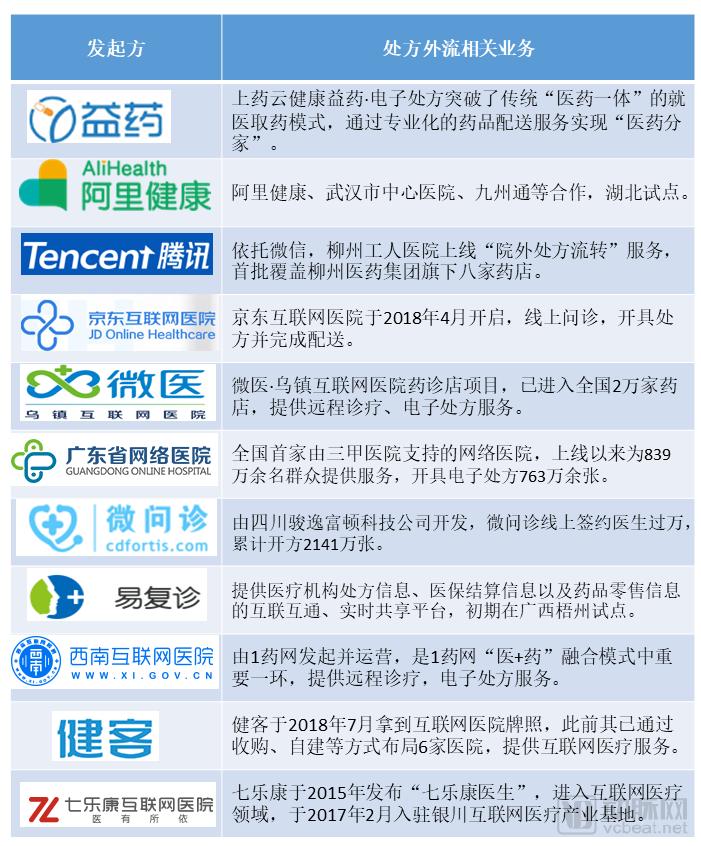
The pharmaceutical e-commerce industry is experiencing rapid growth, but its expansion into prescription drug SKUs has been constrained by restrictions on the online sale of prescription medications, limiting growth to over-the-counter (OTC) drugs and non-pharmaceutical products. The internet hospital model has been recognized as a new development pathway for pharmaceutical e-commerce, enabling companies to enter the online medical services sector through establishment or partnerships, thereby creating a closed-loop business ecosystem.
The “Internet + Pharmaceutical E-commerce” model represents an indirect pathway developed under restrictions on the online sale of prescription drugs. It not only resolves the issue of prescription sourcing for online prescription drug sales but also provides users with a seamless “medical care + pharmaceuticals” experience. This “medical care + pharmaceuticals” model is becoming a standard feature of Internet hospitals.
Shanghai Pharmaceuticals Cloud Health utilizes multiple pathways for electronic prescriptions. Leveraging Shanghai Pharmaceuticals’ pharmaceutical distribution network, it connects with medical institutions at all levels to obtain prescriptions and provide medication delivery services to patients. On the prescription fulfillment and delivery end, “Yi Yao · Cloud Pharmacy” serves as an innovative pharmaceutical warehousing and logistics distribution center. Located adjacent to transportation hubs such as airports, it radiates across China through an extensive transportation network, enabling rapid medication delivery services to hospitals and patients.
Data shows that Shanghai Pharmaceuticals Cloud Health’s coverage includes public hospitals, community health service centers, private clinics, and mobile healthcare providers across multiple major cities in China, processing over 2 million electronic prescriptions annually.
Internet Hospitals + Pharmaceutical E-commerce, and Electronic Prescriptions + Delivery share a commonality: the drug market information at the delivery end is unified, enabling access to comprehensive pharmaceutical market data, including drug utilization patterns, regional disparities, drug flow directions, and medication preferences.
For pharmaceutical supply companies, this enables market data analysis and the development of a “Smart Pharma” model. For pharmaceutical manufacturers, comprehensive market data also holds reference value—including market analysis, product analysis, and competitive product analysis—facilitating the adjustment of their market strategies.
Prescription outflow is an inevitable outcome under the policy framework of “separation of prescribing and dispensing.” Driven by a series of policies—including zero markup on drug sales, control of the drug revenue proportion, and healthcare insurance cost containment—prescription outflow has become a major trend in pharmaceutical retail. Electronic prescriptions represent an economical and efficient method for prescription circulation. The widespread adoption of electronic prescriptions is one of the prerequisites for prescription outflow; only when electronic prescriptions gain industry recognition can prescription outflow be fully realized.
Forms of prescription outflow fulfillment include hospital-adjacent pharmacies, specialized and new drug pharmacies, prescription sharing platforms, and “Internet +” pharmaceutical supply chains. All these models rely on the application of electronic prescriptions. As prescription outflow is gradually realized, it will significantly impact the current pharmaceutical retail landscape. Currently, the pharmaceutical retail sector is dominated by tiered hospitals, with retail pharmacies accounting for a relatively small share. In the future, community pharmacies will become the primary channel for pharmaceutical retail.
While the outflow of prescriptions is bringing hundreds of billions in incremental market value to community pharmacies, it is also driving a transformation in the industry, including the differentiation between general and specialized pharmacies, with pharmaceutical care capabilities becoming a key competitive indicator in the pharmaceutical retail sector. Amid intensifying competition and given the current high saturation of pharmacy stores, future mergers and acquisitions as well as refined management will become the main themes of the industry.
Electronic prescriptions are, in fact, an inevitable outcome of technological advancement; however, they have played a more significant role within the policy context, serving as a critical link between healthcare services and the pharmaceutical industry. Facilitated by this digital bridge, online and offline medical services have converged, as have healthcare delivery and drug supply chains. This integration has enhanced the operational efficiency of the healthcare system and continuously improved accessibility to high-quality medical services and medications.