

Ziyun Cloud Computing Reshapes Pharmaceutical Logistics with No-Asset Carrier Model and Blockchain-Based Drug Traceability
In recent times, neither third-party logistics (3PL) companies nor truck drivers have had it easy. Small 3PL providers, constrained by their credit disadvantages, often face the risk of capital chain ruptures. Meanwhile, truck drivers in the pharmaceutical distribution sector are burdened by high platform commission fees and struggle with the persistent issue of empty return trips. All parties involved require a stable and effective supply chain solution to break through the current impasse.
To address this challenge, Ziyun Shares has been striving to build a comprehensive supply chain service solution to tackle the difficulties in the circulation of pharmaceuticals and food products. A reporter from VCBeat (WeChat ID: vcbeat) interviewed Luo Jianhui, Chairman of Ziyun Shares, in an effort to uncover the key to resolving these issues.
Ziyun Shares is a subsidiary of Henan Ziyun Cloud Computing Co., Ltd. Registered in 2002, it is a high-tech service provider dedicated to the forefront of IT development, with a corporate governance framework centered on Western economic and business management systems, integrated with the philosophy and spirit of Chinese Qiankun and De-Dao culture.
Henan Ziyun Cloud Computing Co., Ltd. was formerly the E-Government Business Division of Tsinghua Unisplendour Software Group. During its development, the company’s management recognized the value of big data and cloud computing in the context of the internet trend. In 2012, the company pivoted to “Internet Cold-Chain Cloud Services” and established the Cloud Computing Engineering Technology Research Center.
In the field of internet cloud services, Henan Ziyun Cloud Computing Co., Ltd. has launched the Ziyun Cold Chain Logistics Cloud Service Platform. This platform provides food and pharmaceutical enterprises with third-party cloud services for real-time monitoring and cold chain logistics business management, addressing the need for seamless end-to-end monitoring and traceability in the cold chain. It ensures high-quality and premium delivery of food and pharmaceutical products throughout the cold chain process, strictly controlling every stage of circulation to guarantee the safety of food and pharmaceutical products during distribution.
Ziyun Cold Chain Cloud Service Platform, in addition to providing cloud services for temperature and humidity monitoring and business management in cold chain logistics, also offers value-added services such as intelligent load planning for cold chain vehicles, cargo, and cold storage facilities, as well as cold chain logistics financial services.
In the field of big data services, to further support the development of small and medium-sized enterprises (SMEs), Henan Ziyun Cloud Computing Co., Ltd. has launched a cloud-based enterprise competitive intelligence service powered by big data. This service provides businesses across various industries with tendering and bidding intelligence, competitor intelligence, brand monitoring, and industry policy insights, thereby enhancing their competitiveness and operational standards. Meanwhile, the company stands as the first in China to offer a transactional sharing platform for enterprise competitive intelligence.
In 2017, the total value of China’s medical logistics market reached RMB 3.02 trillion, representing a year-on-year increase of 11.3%. Meanwhile, market demand for pharmaceutical cold-chain products requiring low-temperature storage also rose accordingly. Relevant data show that sales of pharmaceutical cold-chain products—including vaccines, injectables, tinctures, oral medications, topical drugs, and blood products—accounted for approximately 10% of the total sales revenue of pharmaceutical distribution enterprises in China. The promising market prospects have attracted numerous medical logistics companies to compete for participation, but this has also exposed underlying issues within the sector.
For the industry as a whole, the lack of logistics standards, coupled with an excessive number of market participants, has resulted in a highly fragmented and disordered market, further exacerbated by the absence of effective entry barriers. Although the Chinese government issued the Technical Specification for Performance Qualification of Temperature-Controlled Facilities and Equipment in Cold Chain Logistics of Pharmaceutical Products (GB/T 34399-2017) to address these issues, the overall domestic technological capability remains insufficient, meaning it will take some time to achieve the desired standards. During this transition, the industry requires high-quality platforms to help streamline and standardize operations across the sector.
This is a widespread issue in supply chains, not limited to pharmaceutical distribution. Small and medium-sized enterprises (SMEs) generally lack assets for mortgage or pledge and have insufficient capital. Many small and medium-sized third-party logistics companies are not publicly listed, and their daily financial management is often non-compliant with standard practices, making it difficult for them to obtain unsecured credit lines from banks. Regarding accounts receivable, contractual models restrict the conduct of factoring businesses. Since transportation contracts are typically annual agreements without specific contracts defined for each month’s shipments, the confirmation process for accounts receivable cannot be executed in accordance with bank regulations.
On the other hand, hub-and-spoke logistics enterprises are unable to secure capital market investments due to their limited scale, forcing them to seek out financial products with higher interest rates. Particularly during periods of tight liquidity, some companies have no choice but to resort to usurious loans to prevent a break in their capital chains, imposing additional burdens on logistics firms that already operate on thin profit margins.
Due to the unique nature of pharmaceutical products and the geographical isolation of recipients, empty return trips in drug transportation are typically more severe than those for ordinary goods.
Luo Jianhui of Ziyun Shares told VCBeat, “The load factor in pharmaceutical logistics is only 30%, meaning 70% of vehicles fail to realize their full value, while return trips are essentially 100% empty. Some vehicles are dispatched to remote areas such as suburbs for delivery; when the volume of medicines is small, the costs become even higher.”
Fourth-party logistics platforms are relatively well-developed in the United States, whereas they remain in their infancy in China. However, to address the various challenges encountered during pharmaceutical transportation, a robust resource integration platform is essential to consolidate the currently fragmented and disorganized resources.
There are many reasons for China’s persistently high logistics costs, but one of the primary factors is the insufficient sharing of logistics resources and inadequate business coordination between upstream and downstream segments of the industrial chain. The future development path for China’s logistics industry must focus on maximizing resource sharing and enhancing business coordination capabilities. Whoever can achieve this goal more effectively and swiftly will emerge as the leader in the industry.
Ziyun Shares has established the Ziyun Cold Chain Non-Asset-Based Carrier Platform, rooted in the pharmaceutical and food sectors, to provide customers with logistics management, real-time traceability, intelligent delivery, and cold chain supply chain financial services. By integrating and sharing information between hospitals and partnered third-party logistics companies, the platform offers truck drivers more options. Its subsidiary, Huoanbao Cloud Service Platform, performs large-scale order aggregation upstream, facilitates business automation across the upstream and downstream, and enables massive order matching, thereby making business collaboration more convenient and enhancing resource sharing.
Chairman Luo Jianhui stated, “The most pressing issue at present is the proliferation of platforms, coupled with the lack of information interoperability among them. Therefore, we are approaching this challenge by restructuring our information systems to facilitate smoother business data flow. Furthermore, reverse logistics represents a key direction for our development. Hospitals, in fact, have substantial volumes of expired medications that require disposal. Through our platform, hospitals can prepare these items in advance, thereby reducing the empty return rate for truck drivers to 70%. This constitutes a net value-added process.”
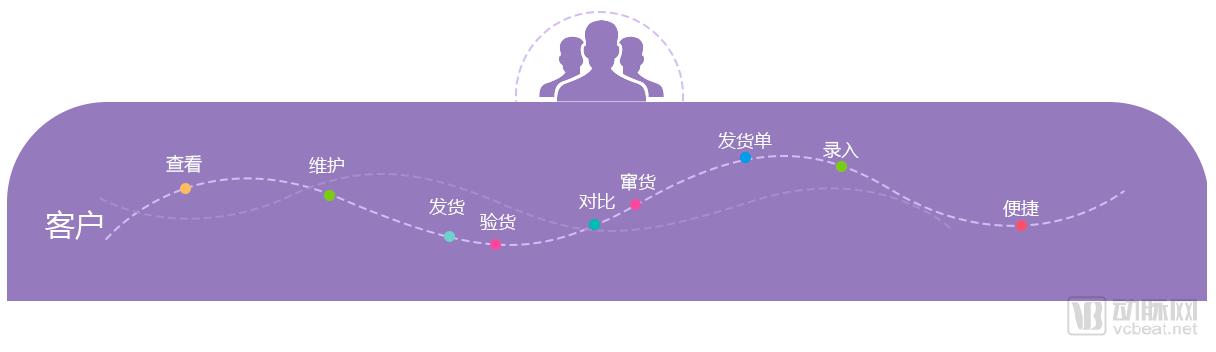
Customer Management
In March 2017, Ziyun Shares obtained the road transport qualification issued by the transportation authorities. Leveraging the Ziyun Cold Chain Logistics Cloud Service Platform, the company provides professional fourth-party logistics (4PL) services to major enterprises through a non-asset-based carrier model. By securing substantial upstream resources via competitive bidding, Ziyun has attracted a large volume of downstream partners to its cloud platform, thereby achieving business synergy and resource sharing across the supply chain and delivering greater value to enterprises. Following this milestone, Ziyun Shares consecutively won logistics contracts with companies such as Shuanghui, Hengan International, Meibang Pharmaceutical, Beileng Pharmaceutical, and Bangren Pharmaceutical, with the total contract value reaching tens of millions of yuan within two weeks. Subsequent data analysis indicates that Ziyun’s platform reduced logistics costs for these enterprises by 3 to 5 percentage points.
Unlike food, pharmaceuticals carry critical importance in terms of quality and safety. The illegal vaccine case in Shandong highlights the significance of tracing vaccine origins, while the core features of blockchain technology are traceability and immutability.
If every step of the pharmaceutical distribution process is recorded on a blockchain, supply chain information will become more transparent; in the event of cargo damage, insurers can quickly use blockchain records to identify the stage where the issue occurred.
Meanwhile, recording drug-related data on the blockchain can integrate existing information resources and address the current issue of numerous platforms lacking interoperability. Consolidating such information onto a single blockchain facilitates users’ access to valid data.
Ziyun Shares positions blockchain technology as the core of future supply chain traceability, leveraging it to build a highly available, secure, and efficient pharmaceutical traceability system that addresses data encryption and product tracking and traceability challenges.
In fact, “supply chain + blockchain” has become one of the primary application scenarios for blockchain technology. It not only addresses the shortcomings of existing supply chain circulation but also integrates with supply chain finance to leverage blockchain’s original financial capabilities. Therefore, putting pharmaceutical information on the blockchain aligns well with the future development needs of supply chains, and Ziyun Shares stands at the forefront of this evolution.
Recently, the patent application filed by Ziyun Shares for a blockchain-based traceability and anti-counterfeiting label and processing technology application service platform has been accepted by the China National Intellectual Property Administration. Chairman Luo Jianhui believes that blockchain will become a disruptive force, not only in the supply chain sector but also permeating various industries, thereby transforming people’s understanding of data.
From a financial perspective, Ziyun Shares has not yet turned a profit. Strategic losses incurred from abandoning traditional businesses to undergo transformation are unavoidable, but what lies ahead is a vast, untapped market brimming with potential.