

AI and VR Innovations Reshaping Autism Therapy for the Global 1%: A Breakthrough in Non-Pharmacological Intervention
Children with autism are often referred to as “children of the stars.” In film and television, they are portrayed as aloof yet warm-hearted geniuses, akin to Raymond, the mathematically gifted character played by Dustin Hoffman in Rain Man. Like solitary stars shining alone in the sky, children with autism appear inherently isolated. However, not every child with autism is so fortunate. In reality, many retreat into their own inner worlds, remaining unresponsive to both reason and emotion.
Although they have been silenced in the public sphere, the steadily rising figures remind us that autism is a population that cannot be ignored.
In China, the "Guidelines for Diagnosis, Treatment, and Rehabilitation of Childhood Autism" issued by the National Health Commission in 2010 indicates that children with mental disabilities caused by autism account for 36.9% of those aged 0–6 years with mental disabilities, representing approximately 41,000 individuals. When expanding the age range to 0–14 years, statistics from the "Report on the Development Status of China's Autism Education and Rehabilitation Industry" show that, as of 2017, the number of individuals with autism in China had exceeded 10 million, with more than 2 million affected children aged 0 to 14 years.
In the United States, data from the Centers for Disease Control and Prevention (CDC) indicate that the prevalence of autism is 1 in 68. From 2000 (1 in 150) to 2010 (1 in 68), the prevalence of autism among children in the U.S. increased by 119.4%. Autism has become the fastest-growing developmental disorder.
They shine like stars in the sky, yet at times, due to an imperfect support system and inadequate treatment conditions, they are also like handfuls of shattered glass held in their parents’ hands. Regarding the current state of autism, the challenges lie not only in the gap between reality and public perception but also in the lagging standards of care.
1. The absence of early screening leads to a waste of medical resources.
The primary reason for the challenges in autism rehabilitation and treatment is that many patients do not receive timely screening. Abroad, approximately half of individuals with autism are not diagnosed early.
The American Academy of Pediatrics recommends that parents have their children undergo early screening for multiple developmental disorders between 9 and 36 months of age, with autism spectrum disorder being the most critical condition to screen for. Early screening can effectively prevent missing the golden window for intervention. Once this opportunity is missed, the impacts of these developmental disorders are likely to persist throughout the patient’s life.
The lack of public awareness regarding autism treatment not only exacerbates family tragedies but also intensifies the burden on the healthcare system, leading to significant waste of medical resources.
In developed countries such as the United States, although annual healthcare expenditures for autism exceed $230 billion, nearly 75% is spent on adult services, while annual medical spending on children with autism amounts to only $61–66 billion.
2. Current diagnostic and treatment methods are time-consuming and labor-intensive, delaying timely intervention.
The internationally recognized “gold standard” for autism screening comprises two scales: the Autism Diagnostic Interview-Revised (ADI-R) and the Autism Diagnostic Observation Schedule (ADOS). The former is administered to parents, collecting developmental and symptomatic information about the child through interviews; physicians in training typically require 2–3 hours to conduct this assessment, whereas well-trained clinicians can complete it in 1–2 hours. The latter is directed at children, involving structured interactive play scenarios to observe their abilities and deficits, and generally takes 1–2 hours to administer.
Associate Professor Guo Yanqing, Director of the Training Department at the Beijing Autism Rehabilitation Association, once stated: “In China, there are only a handful of physicians proficient in these two assessments. Most children are diagnosed based on clinicians’ clinical impressions, the accuracy of which depends on the number of actual autism cases the clinician has encountered. The fewer cases observed, the more limited the clinical impression becomes, leading to a higher likelihood of missed diagnoses and misdiagnoses.”
In China, there is a severe shortage of professional autism intervention institutions and physicians. Data from the Report on the Development Status of the Autism Education and Rehabilitation Industry in China indicates that fewer than 300 doctors specialize in autism.
Moreover, some children with severe intellectual developmental delays and those in a dissociative state require a certain period of follow-up and real-time observational assessment for a definitive diagnosis.
How to Popularize Early Autism Screening Through Cost-Effective MeasuresVCBeat (WeChat ID: vcbeat) has found that the most mature approach abroad to unlocking the door to autism care is AI-assisted early screening. This method can improve the quality of life for the 1% of the global population affected by autism while reducing healthcare costs. In caring for children with autism, robots may outperform humans. Digitalization is permeating the entire autism rehabilitation industry chain, helping to transform the current landscape.
In the field of auxiliary autism screening, the most mature company is Cognoa. Headquartered in California, Cognoa offers an app that enables AI-based autism screening. After parents download and register for the app, they first enter basic information about their child, then answer 15 to 20 behavior-related questions based on the child’s specific circumstances. Finally, the system automatically generates a screening report, which is typically available within an average of 15 minutes.
If the system fails to provide a clear screening result after completing the above steps, parents may upload one or two additional videos of their child’s daily life. These videos will be analyzed by professional pediatricians. Although the entire process is simple and convenient, it is underpinned by deep learning algorithms supported by medical AI technologies from Harvard University and Stanford University. The founder, Dr. Dennis Wall, has over five years of clinical experience. During this period, his team tracked the conditions of more than 100,000 children with autism at Harvard Medical School and Stanford Medical School.
In February this year, Cognoa announced that its deep learning-based behavioral health app for children had received FDA clearance and was classified by the FDA as a Class II diagnostic medical device for autism diagnosis. Data from Cognoa shows that the company currently serves more than 250,000 families.
Having obtained FDA clearance, Cognoa may be taking further steps to expand into the B2B market. The company stated that, in addition to benefiting families, its products are positioned as a means for healthcare payers and similar organizations to reduce long-term behavioral health costs. The company also noted that its application can alleviate clinicians’ workload and support their diagnostic processes.
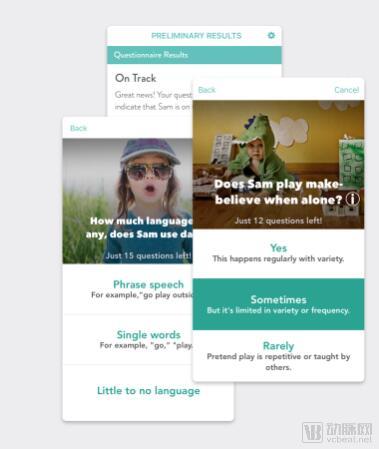
Cognoa Autism Screening App Interface
In addition to promoting early autism screening, Daniel Coury, CEO of Cognoa, stated, “Cognoa has completed several well-designed clinical trials and engaged in early collaboration with the FDA. Excitingly, Cognoa will empower primary care physicians to make preliminary diagnoses and refer children directly for treatment, significantly reducing the time from diagnosis to meaningful intervention and leading to better outcomes.”
In March last year, Cognoa raised $11.6 million in a funding round led by the Chinese private investment group Morningside, bringing the company’s total fundraising to over $20 million.
Autism is currently a lifelong condition, affecting approximately 1% of the global population. Individuals with autism do not convey their emotions and expressions through the language or facial cues commonly used by neurotypical individuals. Creating a better living environment for people with autism remains a significant challenge. In the United States, there are no schools exclusively dedicated to children with autism; children across all levels of autism severity can attend public schools. However, they are placed in separate classes and do not share classrooms with neurotypical peers.
However, data from Autism Speaks indicates that only about 50,000 children with autism are currently able to attend school. Furthermore, there is no accurate survey data on the exact number of adults living with autism in the United States.
In China, there is a severe shortage of professional autism intervention institutions and physicians. Data from the Report on the Development Status of China’s Autism Education and Rehabilitation Industry shows that fewer than 300 doctors specialize in autism. Moreover, China lacks a mature and robust system for training and supplying qualified autism care professionals.
Bionic robots are often criticized by humans for being overly mechanical and clumsy, yet this very characteristic can provide a sense of security to children with autism, patiently guiding them without fatigue. AI technology enables interactive feedback with children on the autism spectrum, integrating feedback data to support the development of personalized treatment plans.
First is Kaspar, developed by the Adaptive Systems Research Group at the University of Hertfordshire. It leverages AI robotics to promote socialization in children with autism. Its primary tasks are twofold: first, to serve as a mediator facilitating communication between children with autism and those they interact with daily; second, to educate and train individuals in the children’s surroundings—including typically developing peers, parents, and teachers—on how to effectively communicate with children with autism.
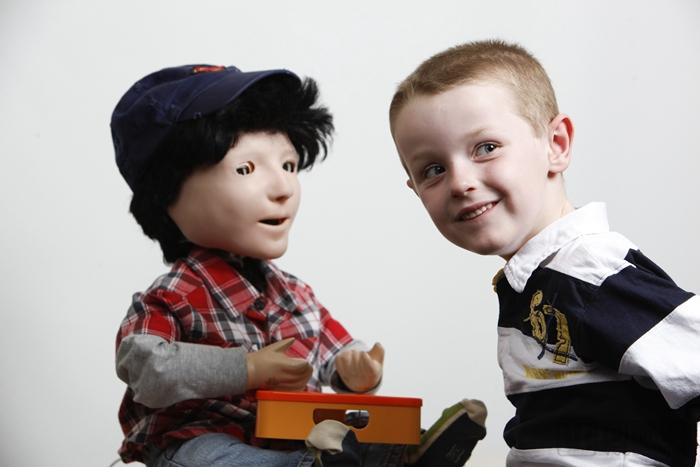
Kaspar, a humanoid robot, has the appearance of a three-year-old boy. To our eyes, its look may seem somewhat unusual, even reminiscent of a creepy doll. However, this facial design was specifically crafted by the research team for children with autism, based on nearly a decade of clinical studies. The minimalist facial features reduce the extent to which Kaspar conveys its own characteristics through facial expressions, thereby granting children with autism greater freedom for self-imagination and definition. Paradoxically, this robotic face, distinct from typical human faces, can provide children with autism with a heightened sense of security.
Kaspar has also launched a customized version, offering greater flexibility to meet a wider range of needs. Kaspar is not an autonomous robot; rather, it relies on human intervention when serving as a social mediator and therapeutic tool. Current experiments have demonstrated that Kaspar successfully engages children with autism in more interactions, including activities such as imitation, eye contact, and sharing, which these children previously rarely participated in.
When children with autism make mistakes, Kaspar does not respond with disdain or criticism; instead, it gently corrects them in a non-startling manner and encourages them to learn challenging social behaviors. Some children with autism have difficulty understanding complex vocabulary consisting of more than three words. Kaspar speaks slowly and avoids using complex words. Equipped with sensors in its head and body, Kaspar reacts with signs of pain when a child with autism applies excessive force during social interactions.
Researchers conducted extensive field trials in schools and homes, demonstrating that long-term interaction with KASPAR has a positive impact on children with autism. Currently, the UK’s National Institute for Health and Care Research (NIHR) is funding a two-year trial under its Patient Benefit Programme to evaluate the effectiveness of KASPAR as an intervention in clinical practice.
This early-stage trial was conducted in partnership with the Hertfordshire Community NHS Trust, with the aim of informing the development of a large-scale trial; if successful, Kaspar would be deployed across the entire NHS.
A research team at Brigham Young University (BYU), the third-largest private university in the United States, has developed a robot named Benni, with the hope that it will become a friend to children with autism. Resembling BB-8 from Star Wars, the robot is designed to complement therapy for children with autism.
This robot is like a large electronic pet that plays educational games with children. It can be controlled via an app and is designed for independent use without parental supervision.
According to the researchers: “Our goal is to have children engage in interdependent play, ask and answer questions, and cultivate their empathy.”
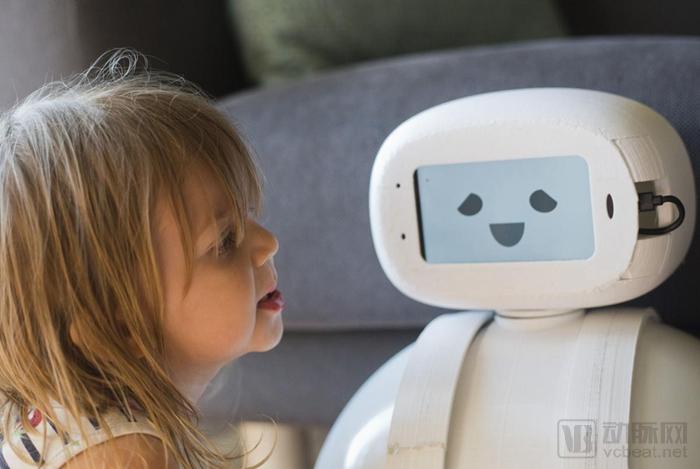
Benni Robot Appearance
This study was funded by the Social Venture Academy at Brigham Young University’s Ballard Center for Economic Self-Reliance.
Benni is not a completely independent treatment modality; rather, its efficacy relies on integration with existing therapeutic approaches.
Another robot toy of the same type is Leka, described by its designers as a “robotic companion.” Shaped like a ball with an adorable “face” capable of changing expressions, it interacts with users through customizable games using sound, light, and color to enhance cognitive and motor skills. Caregivers and educators can program the toy with a range of activities to guide children with autism, helping them improve communication and learn how to connect with their surroundings and the people around them.
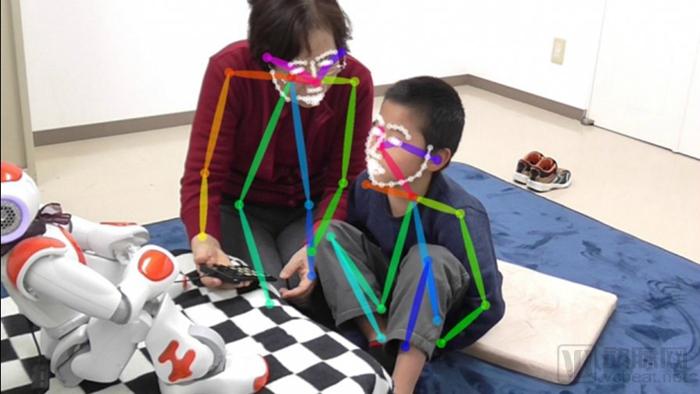
MIT researchers have developed a deep-learning robot to address the difficulty children with autism face in recognizing facial expressions. Children with autism spectrum disorder often struggle to identify facial expressions and emotions in others. In response, some experts have created a robot capable of displaying facial expressions, enabling children with autism to learn through imitation during interactive sessions.
However, for this approach to achieve its maximum potential, robots must be capable of interpreting the facial expressions of children with autism. To address this challenge, the MIT Media Lab has developed a robot named NAO, which can assess the attention and engagement levels of children with autism during therapy. In addition to its “mind-reading” capabilities for children with autism, NAO can leverage feedback data to help clinicians tailor rehabilitation plans to the individual needs of each child.
Currently, NAO can even surpass experts in interpreting the facial expressions of children with autism. In a report published on June 27 in *Science Robotics*, researchers stated that within this personalized “deep learning” network, the robot’s perception of children’s responses was consistent with assessments by human experts, achieving a score of 60%. The average scores for human experts ranged from 50% to 55%.
“With precise capabilities, NAO can better assist experts. ‘The long-term goal is not to create robots that will replace human therapists, but to provide critical information for physicians’ diagnoses and treatments. For robots, therapists can use personalized treatment content to make interactions between the robots and children with autism more natural and engaging,’ explained the study’s lead author.”
Robot-assisted therapy for autism typically operates as follows: A human therapist displays a photograph of a child or flashcards depicting various faces to represent different emotions, teaching children how to recognize expressions of fear, sadness, or happiness. The therapist then programs the robot to exhibit the same emotions and observes the child’s interactions with the robot. The child’s behavior provides valuable feedback, facilitating ongoing learning for both the robot and the therapist.
“The therapist said that asking children to stay still for a few seconds was a major challenge, whereas robots could capture their attention,” the researchers explained why robots are useful in this type of therapy. “Moreover, humans vary their expressions in many different ways, but robots always do so in the same manner, which is less frustrating for children, as they learn expressive behaviors in a highly structured way.”
Researchers stated that the most challenging issue in applying artificial intelligence to autism treatment remains data heterogeneity. Conventional AI methods tend to fail; however, researchers have applied this personalized deep learning technology to other fields and found similar progress in pain monitoring and Alzheimer’s disease prevention.
For therapeutic robots, Rudovic and his colleagues went a step further by developing a personalized framework capable of learning from data collected for each child. The researchers captured each child’s facial expressions, head and body movements, postures and gestures, audio recordings, heart rate, body temperature, and electrodermal activity (skin sweat response) from the wrist.
Children with autism struggle to connect with the real world, while neurotypical individuals often find it difficult to decode the meaning behind their behaviors. In addition to AI, VR can also serve as a bridge between these two groups.
VR Applications in Autism Treatment: There are numerous ways to apply VR in the treatment of autism. Its therapeutic value lies in providing individuals with autism spectrum disorder (ASD) with more customized, safe environments, thereby reducing their defensiveness and facilitating the analysis of the underlying meanings of their behaviors.
As early as 2014, a study equipped children with autism spectrum disorder (ASD) with head-mounted display devices. These devices were capable of capturing every facial expression of the children and mapping them onto virtual avatars. The virtual characters interacting with them in the game served as the digital avatars of their therapists.
One or more physicians will interact with patients with autism in everyday life scenarios, such as job interviews, meeting new neighbors, or blind dates. The physicians will help them master the skills and key points of social interaction. Therapeutic interactions also include helping children with autism recognize implied meanings and share perspectives appropriately.
The study results indicate that the cognitive systems of individuals with autism exhibit significant plasticity. In brain scans conducted after training, researchers observed that brain regions associated with social understanding became active in unprecedented ways. These findings were published in the journal NEUROSCIENCE.
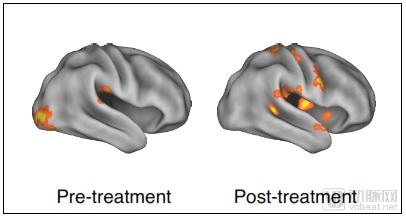
Following virtual reality training, brain regions associated with social understanding in young people with autism showed increased activation.
Although approximately 1% of the global population is affected by autism spectrum disorder (ASD), there is currently no lifelong cure, and its pathogenic mechanisms remain unclear. Autism-related genes play a crucial role in the treatment of ASD. Google has collaborated with Autism Speaks, a prominent organization dedicated to autism advocacy and research, to establish an autism gene repository. This repository collects and sequences whole-genome data from 10,000 children with autism and their families worldwide, creating a database that is accessible to autism research institutions around the globe.
The application of AI in disease screening is a significant direction in current medical development, as it can improve diagnostic and treatment efficiency and outcomes while conserving medical resources. However, AI screening relies on the support of massive amounts of data. AI requires large volumes of structured data for training; although existing hospitals possess vast quantities of data, much of it is unutilizable. The heterogeneity and diversity of real-time data flows, along with issues such as lack of standardization and poor scalability, remain major challenges for AI in disease treatment, and autism spectrum disorder is no exception.
BioSymetrics is such a company specializing in healthcare big data, leveraging leading data science expertise to strengthen and drive medical research, development, and innovation.
BioSymetrics has developed big data tools for automated preprocessing, integrated analysis, and predictive modeling. These technologies can serve health and hospital systems, biopharmaceuticals, new drug R&D, and precision medicine. In other words, BioSymetrics enables the integration of diverse biological data types and performs predictive analytics on the combined datasets.
Their experimental data have already predicted genes associated with autism. BioSymetrics used its analytical model to analyze 1.2 million disease-associated variants in 155 patients in under 12 minutes. During the analysis, BioSymetrics identified a significant association between specific genetic variants and autism, and subsequently determined brain region-specific differences in patients carrying these variants.
BioSymetrics’ advantage lies in its ability to analyze integrated datasets—including genomics, laboratory data, medical imaging data, and EMR/EHR data—rather than focusing on single-source data, thereby enabling multi-variable predictive modeling.
We need to have more patience with individuals with autism, and even greater patience regarding autism treatment methods. It is evident that technologies such as AI, VR, and telemedicine are fundamentally reshaping the therapeutic approach to this condition, spanning from addressing its root causes to comprehensively improving patients’ quality of life.
Digital transformation is reshaping the entire diagnostic and treatment process for autism. Telemedicine and AI technologies are expanding the reach of autism screening to more patients, improving diagnostic and therapeutic efficiency while reducing medical costs. Previously, the diagnosis and treatment of autism required specialists with specialized training. Parents had to spend significant amounts of money waiting for a definitive result. Some families even missed the optimal window for intervention before they were aware of the issue.
A multitude of emerging diagnostic and therapeutic technologies have improved the quality and efficiency of healthcare while reducing costs. Furthermore, with the maturation and development of technologies such as artificial intelligence, mobile applications, and sensors, the diagnosis and treatment of autism are moving toward precision medicine. Diagnostic and therapeutic approaches are shifting from excessive reliance on physicians’ experience to evidence-based medicine, no longer depending solely on highly trained, prohibitively expensive specialists for autism diagnosis.
Meanwhile, with the advancement of virtual brain and gene technologies, the diagnosis and treatment of autism are still exploring the true causes of the disease, providing precise diagnostic and therapeutic techniques based on the etiology. At the same time, personalized diagnosis and treatment plans are being developed for each patient individually.