

AI-Powered Stroke Detection Company Viz.ai Secures $21M Series A Led by KPCB and GV
Viz.ai
Clinical Intelligent Medical Software Developer
VCBeat (WeChat: vcbeat) has learned that, according to Mobihealthnews, AI startup Viz.ai completed a $21 million Series A financing round on July 18 U.S. time. The round was led by KPCB, with participation from GV, Alphabet’s venture capital arm (formerly Google Ventures).
Note: In 2015, Google restructured into Alphabet, making AI the core of nearly every department’s strategy.
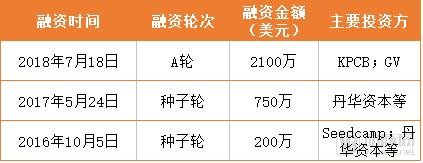
Viz.ai’s Historical Funding Rounds (Source: Crunchbase)
Prior to this, Viz.ai had raised approximately $10 million, bringing its total funding to $31 million with this latest round. The company plans to use the newly raised capital to expand into new markets and broaden the range of diseases covered by its AI-powered diagnostic technology.
According to data from the U.S. Centers for Disease Control and Prevention (CDC), stroke is the fifth leading cause of death in the United States and a primary cause of serious disability among adults. Approximately 795,000 people in the United States suffer a stroke each year, with one stroke occurring every 40 seconds. Each year, 140,000 people die from stroke, and those who survive often experience long-term disabilities, resulting in varying degrees of functional impairment.
One of the fundamental challenges in effectively treating stroke is the difficulty in diagnosis; it cannot be predicted before symptoms appear. Some patients may experience transient ischemic attack (TIA) symptoms in the early stages, such as dizziness, transient limb numbness, and weakness.
Stroke typically has an acute onset, with most cases occurring during rest or sleep. Patients present with clinical symptoms such as facial deviation, speech impairment, and hemiplegia. If timely treatment is not administered after a stroke, the risk of disability or death increases significantly over time.
AI-Powered Stroke Detection, FDA-Cleared
Viz.ai was founded in 2016 and is headquartered in San Francisco, United States. The company is dedicated to leveraging deep learning algorithms to automatically analyze CT neuroimaging for the detection of stroke-related indicators, thereby providing clinical decision support. Viz.ai’s flagship products are the Viz LVO and Viz CTP platforms, both of which have received FDA approval and are marketed in the United States.
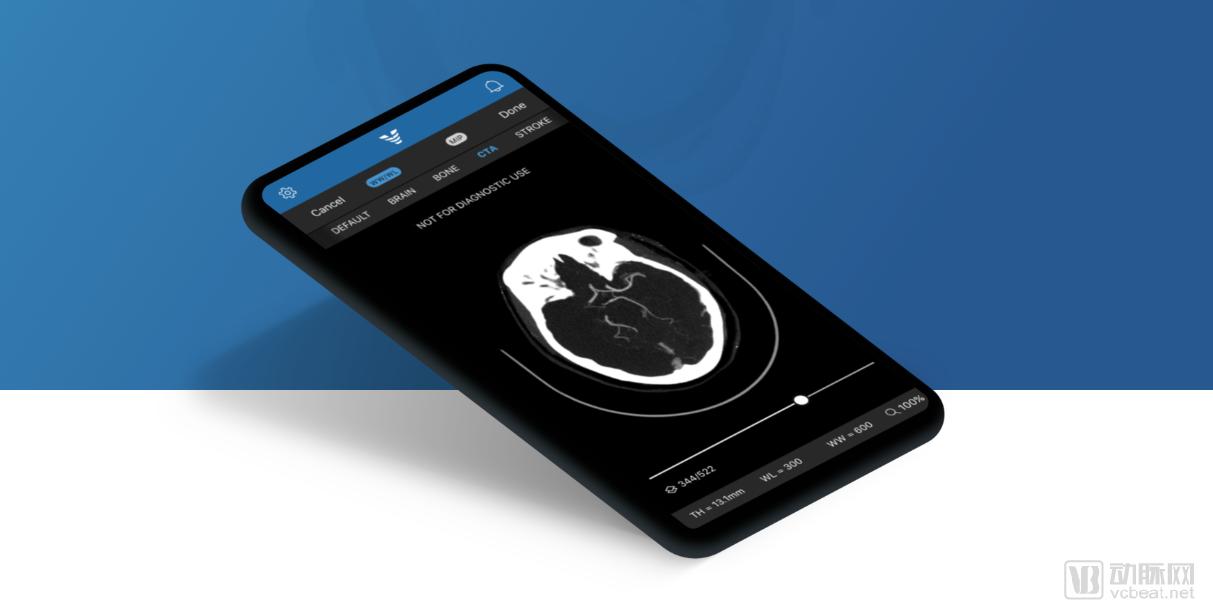
Viz LVO Platform (Image source: Viz.ai official website)
Viz LVO uses artificial intelligence to automatically detect large vessel occlusion (LVO) in patients with suspected stroke. Notifications of suspected LVO are sent to neurologists and interventional specialists, who can view the patients’ CTA images on mobile devices. The time from image acquisition to notification is less than 6 minutes. Stroke specialists can initiate patient transfer to an interventional center through integration with existing emergency call systems.
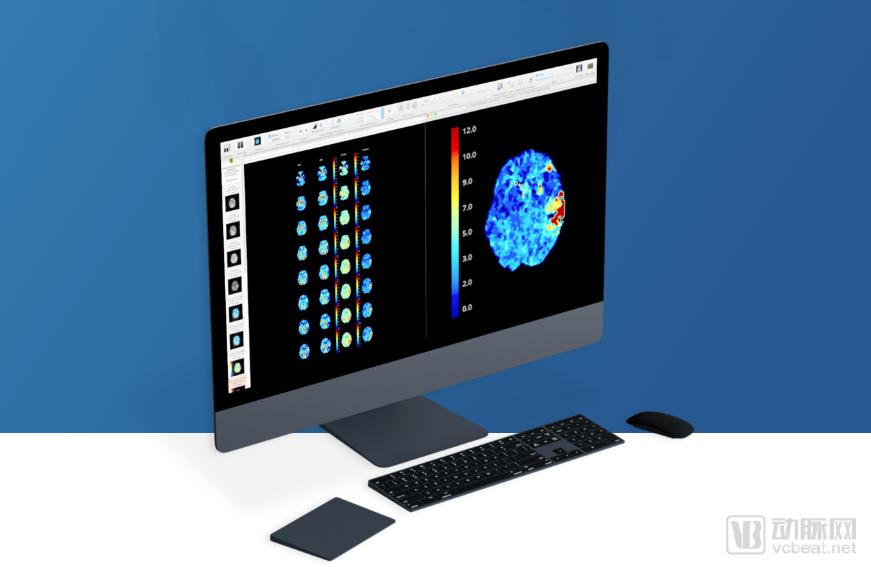
Viz CTP Platform (Image source: Viz.ai official website)
Another platform, Viz CTP, uses advanced processing technology to automatically analyze CT perfusion neuroimaging and generate parametric perfusion color maps. In accordance with the recent AHA/ASA guidelines that extend the treatment window for mechanical thrombectomy from 6 hours to 24 hours, this brings a new window of appropriate treatment for stroke patients.
For selected patients within this treatment window, perfusion imaging is recommended to identify and select candidates suitable for mechanical thrombectomy.
Furthermore, the software is compatible with existing CT technology and requires no new or additional hardware. Processed outputs are automatically pushed to standard PACS and other DICOM-compliant devices for viewing.
Using deep learning algorithms, Viz.ai’s software analyzes CT scans to detect stroke indicators and automatically alerts stroke specialists. Diagnosis time can be reduced to seconds, gaining precious treatment time for stroke patients.
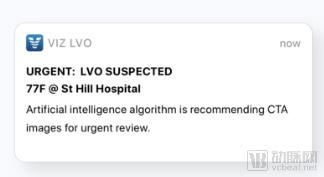
Advances in artificial intelligence and deep learning have made it possible to rapidly and accurately analyze medical imaging. The ALADIN multicenter trial demonstrated the retrospective accuracy, consistency, and speed of Viz LVO in detecting large vessel occlusion (LVO) in suspected stroke patients across 875 CTA images. For LVO detection spanning from the terminal internal carotid artery (ICA-T) to the M1 segment of the middle cerebral artery (MCA-M1), Viz LVO achieved a sensitivity of 90% and a specificity of 86%. Consequently, Viz LVO is considered the most accurate LVO detection algorithm currently available in the United States.
For stroke patients, time is life.
The use of the Viz LVO platform during diagnosis enables timely intervention by stroke specialists, potentially extending the treatment window for IV tPA and mechanical thrombectomy while ensuring that only appropriate patients are transferred.
Dr. Chris Mansi, co-founder of Viz.ai, stated, “For stroke patients, every minute counts. Our goal is to fundamentally transform healthcare by making it proactive rather than reactive. By integrating Viz, we believe healthcare systems can increase access to life-saving treatments and reduce treatment times across their referral networks.”
Viz.ai Obtained New 510(k) Clearance in February for the Viz.ai Contact Application. “Stroke can cause severe and irreversible harm to patients. This software device can benefit patients by reducing treatment time through earlier notification of specialists. Faster treatment may mitigate the severity or progression of stroke,” said Dr. Robert Ochs, Acting Deputy Director for Radiological Health in the Office of In Vitro Diagnostics and Radiological Health at the FDA’s Center for Devices and Radiological Health.
The Viz.AI Contact application is a computer-aided triage software that uses artificial intelligence algorithms to analyze images of indicators associated with stroke. The AI algorithm is a clinical decision support software that can help providers determine the most appropriate treatment plan for a patient's disease or condition. The FDA is currently developing a regulatory framework for these products, encouraging developers to create, adjust, and expand the functionality of their software to assist providers in diagnosing and treating diseases and conditions.
The Viz.AI Contact application is designed to analyze CT images of the brain and send text notifications to neurovascular specialists when a suspected large vessel occlusion is identified. The algorithm automatically notifies specialists while first-line providers conduct their standard review of the images, potentially engaging experts earlier than the usual standard of care, in which patients wait for radiologists to interpret the CT scans and then notify neurovascular specialists. Notifications can be sent to mobile devices, such as smartphones or tablets, but specialists still need to review the images on a clinical workstation.
The Viz.AI Contact application is primarily intended for use by neurovascular specialists. This application is limited to the analysis of imaging data and should not be used as a substitute for a complete patient evaluation or relied upon exclusively to make or confirm a diagnosis.
In terms of investment institutions, GV has a long history of investing in life sciences, with recent investments in Owkin, a machine learning startup for medical research; Science 37, a clinical trial technology company; and SpyBiotech, a next-generation vaccine development startup. Last year, Google announced Gradient Ventures, a new artificial intelligence venture capital fund, which made its inaugural investment in medical science this year by participating in BenchSci’s $8 million financing round to accelerate discoveries in biomedical research.
Furthermore, KPCB has invested in numerous artificial intelligence and healthcare startups, making it a natural fit for KPCB to serve as the lead investor in Viz.ai. Mamoon Hamid, a partner at KPCB, stated, “Many new medical technology solutions struggle to gain traction with hospitals because these products often fail to align with existing diagnostic and treatment protocols, necessitating changes to physicians’ clinical workflows. In contrast, physicians and their teams are driving the adoption of the Viz.ai platform, as this software does not disrupt the existing infrastructure of healthcare institutions and can be seamlessly integrated into hospitals’ current PACS systems.”
References:
https://www.mobihealthnews.com/content/vizai-secures-21m-kleiner-perkins-google