

Exclusive Interview with Zhai Gang of Sharelink Venture Capital: "No Winner-Takes-All in Biomedical Investment—Beware the 'Unicorn' Bubble"
From Anuobeide (CAR-T) to Qitian Gene (RAA), and from Shengsheng Logistics (medical cold chain) to Hongxun Biotech (gene editing), Xie Li Investment has successively completed investments in leading enterprises across several niche sectors of the biomedical industry over the past few months. To date, Xie Li Investment’s portfolio in the biomedical sector comprises nearly 20 companies.
“In our view, there is no ‘winner-takes-all’ dynamic in biomedical investment, and caution is warranted against a ‘unicorn’ bubble.” In an interview, Zhai Gang, founder of Xie Li Investment, shared this perspective with VCBeat.
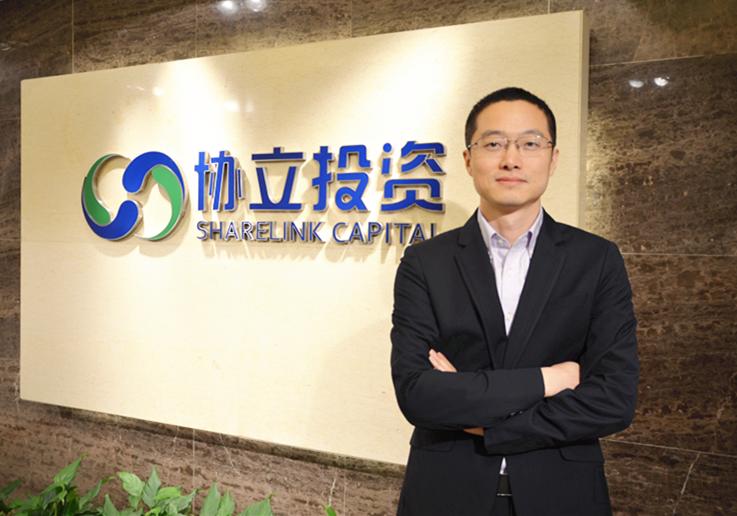
Zhai Gang, Founder of Xieli Investment
Since the beginning of 2018, initial public offerings (IPOs) on China’s A-share market have presented a stark contrast: while the approval rate for ordinary companies in the queue has dropped significantly, certain corporate giants have set astonishing records for the speed from application to approval.
In a short period, the market has widely interpreted the current policy direction as aiming to attract overseas “unicorns” to return and support domestic “unicorns” in prioritizing growth and expansion through capital markets. It seems that as long as a company is a “unicorn,” it has access to a green channel for IPOs, enabling investors to quickly share in the benefits of the capital market.
Therefore, in recent months, so-called “unicorn” projects have been in the ascendant, with a flood of unicorn-themed ventures saturating the market. The internet is awash with lists of official and quasi-unicorns at various levels, of dubious authenticity, prompting many investment firms to follow these lists in their deal sourcing.
This phenomenon also exists in the field of biomedical investment.
“We are clearly observing that capital is increasingly concentrated in leading ‘unicorn’ companies,” he pointed out. Notably, the biomedical investment sector is currently showing early signs of a “unicorn” bubble.
“According to our analysis, there are primarily two underlying forces driving this phenomenon,” he added.
First, the market’s expectation and demand for “special treatment” in backend exits have driven capital to flow into “unicorn” companies.
As previously mentioned, many policy analysts believe that A-shares will offer a “green channel” for various “unicorn” companies, including those in the biomedical sector.
Specifically in the biomedicine industry, apart from companies whose financial data within a foreseeable period can meet the IPO standards of A-shares and thus still prefer A-share IPOs, there has recently emerged a special “window of opportunity” for Hong Kong stock market IPOs in the biomedical investment sector.
“Biomedical companies that are unlikely to generate substantial revenue or profits in the short term are actively planning initial public offerings (IPOs) on the Hong Kong stock market,” he disclosed to VCBeat. Although the new policies in the Hong Kong market do not require biotechnology companies to have revenue for an IPO, they impose clear requirements on expected market capitalization and R&D stages. This has, to some extent, driven capital to concentrate on biomedical projects with valuations in the billions. Only such enterprises can IPO on the Hong Kong stock market at the fastest speed, seizing the first-mover advantage and making quick profits.
“The fundraising difficulties faced by VC/PE firms since 2018 have further exacerbated the situation,” he continued. Against the backdrop of challenging capital raising, some institutions opted to invest in unicorn companies at a premium to attract LPs, aiming to label their portfolios with “star companies + rapid exits.”
Second, "hot money" that flooded into the biomedical investment sector too rapidly adopted incorrect investment strategies in this field.
“Over the past three years, a large influx of ‘hot money’ has poured into biomedical investment, creating a heavily ‘speculative’ atmosphere in the sector,” pointed out Zhai Gang.
According to Zero2IPO data, the total venture capital investment in the biomedical and healthcare sector in 2017 was nearly four times that of 2014. A large number of institutions that had not previously invested in this sector began to make tentative entries into the biomedical and healthcare field.
Biomedical investment has now become virtually a “standard configuration” for venture capital firms of all sizes in China. Yet prior to 2014–2015, it remained a niche area that only a handful of institutions were willing to explore. This is because biomedical investment demands deep professional expertise; without thorough research and substantial accumulated knowledge, it is difficult to grasp its investment dynamics.
Interestingly, in recent years, a significant amount of “hot money” flowing into the biomedical and healthcare sector has adopted investment behaviors and logic akin to those of the internet industry. Specifically, this approach involves pouring capital into the “leaders” of specific tracks, under the belief that the ultimate winner will “take all.” This has led to an anomaly: the valuation benchmarks for certain star projects at the top continue to rise, while a large number of high-potential, early-stage projects with lower valuations struggle to secure financing.
These two underlying forces are intertwined and mutually reinforcing, rapidly driving up the valuations of “unicorns” and “quasi-unicorns” in the biomedicine sector, with mega financing rounds becoming frequent in 2018.
"Some individual financing rounds are so large that they even leave many publicly listed companies in awe," he revealed to VCBeat. "However, we need to pour cold water on this wave of enthusiasm."
"In recent years, the policies governing exit strategies for public listings have been adjusted frequently. Blindly pursuing venture capital investments based solely on these policy directives is not a sound strategy."
“There is no guarantee that the market’s current interpretation of the policy is correct,” he stated. He believes that the special policies for “unicorns” are likely to be very short-term, temporary measures, primarily targeting a small number of overseas companies returning to China. Furthermore, even if the current interpretation is accurate, there remains the possibility of future policy adjustments after investments in these “unicorn” enterprises are made.
This is evident from the once-hot thematic investment in the “New Third Board” over the past few years, as well as the resurgence of Pre-IPO investments in 2017. “Blindly chasing such trends may ultimately leave nothing but ‘a mess of chicken feathers,’” he emphasized.
Furthermore, he believes that the “internet-style” approach to investing “hot money” in biomedicine has been shown, through years of observation and practice, to be at odds with the objective laws governing the biomedical industry.
“We believe that the ‘winner-takes-all’ phenomenon, akin to a specific track in the internet industry where ultimately only one company prevails, does not exist in China’s biomedical sector,” stated Zhai Gang. Against the backdrop of rapid income growth and consumption upgrading in China, the primary contradiction in the biomedical field remains the insufficient supply of high-quality resources, characterized by a shortage of competent physicians and effective medicines.
Patient needs are becoming increasingly diverse and stratified, making it difficult for one or two companies to fully meet market demands. As a result, in the biomedical sector, as long as companies possess distinctive features and differentiation, the same niche can often accommodate four, five, or even more enterprises developing simultaneously.
Given that the biomedicine sector remains largely a “blue ocean,” the widespread practice of pouring capital into so-called top-tier projects and accepting their exorbitant valuations could lead to an inversion between primary and secondary market prices in the future, resulting in investment losses.
“Therefore, we believe that venture capital investment in biomedicine should return to the essence of value investing and avoid a speculative mindset,” he stated. Since 2012, Xeli Investment has consistently avoided chasing Pre-IPO deals and “unicorn” companies. Instead, it has focused on positioning itself around high-quality early-stage and growth-stage biomedical enterprises. Currently, it has invested in nearly 20 companies in fields such as biopharmaceuticals, minimally invasive diagnosis and treatment, and specialized hospitals, with its primary investment stage being around Series A.
“These projects maintain overall valuations at sound levels, with an emphasis on cost-effectiveness in investment,” said Zhai Gang. “From a medium- to long-term perspective, adopting a value-investment mindset for early- and mid-stage biomedical investments will naturally yield strong returns.”