

Icecold Technology Files IPO Prospectus: Pioneering Non-Pharmaceutical Sleep Solutions with Light Therapy Ecosystem
When it comes to the sleep industry, there is always this question: just how big a business is modern people’s sleep?
Product categories range from sleep-tracking buttons to comprehensive bedroom sleep solutions. The global sleep medicine market comprises two major segments: products and services. In 2015, the total size of the sleep medicine market reached $254.09 billion, with the product segment accounting for 88% of the overall market and the service segment making up the remaining 12%.
Innovators in this trillion-yuan market all fall under a unified category known as “Sleep Technology.” In 2016, CES launched its first dedicated Sleep Technology zone, promoting the development of technology-driven solutions for sleep improvement and monitoring.
2015 marked the beginning of the development of sleep technology. In its early stages, only a handful of companies were involved. Binghan Technology, dedicated to developing non-pharmacological treatment solutions, also officially entered the sleep market that year by launching the “PEGASI” optical sleep glasses (a brand under Binghan Technology). What sets Binghan Technology apart in the sleep market? Recently, VCBeat (WeChat ID: vcbeat) interviewed Chi Jing, founder of Binghan Technology.

Chi Jing, Founder of Binghan Tech
Chi Jing is a typical serial entrepreneur who co-founded the unicorn company “Yangmatou” in the United States. She earned her master’s degree from the School of Medicine and Public Health at the University of Wisconsin–Madison and holds an MBA from the University of California, San Diego.
In 2011, Chi Jing joined Shenzhen Mindray, China’s largest listed medical device company, where she was responsible for the global defibrillator market and group-level market analysis and strategy.
The core team of Binghan Mdt comprises R&D professionals from institutions such as the Johns Hopkins University School of Medicine, the University of California, and the University of Science and Technology of China, as well as Fortune 500 companies including Mindray and Huawei.
Chi Jing believes that it is the team’s medical expertise that distinguishes Binghan Technology’s solutions from other sleep-improvement products.
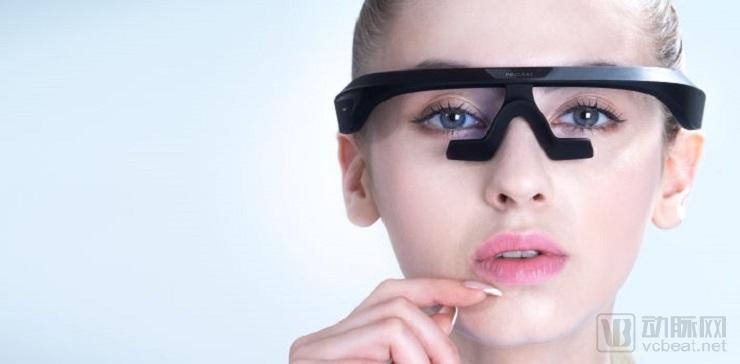
PEGASI (BeiJiaShui) Generation 1 Smart Sleep Glasses (Source: Company-provided image)
PEGASI (Bei Jia Shui)’s “optical light-emitting module” technology originates from Johns Hopkins School of Medicine, the top-ranked medical school in the United States. With 16 years of research accumulation, this technology improves sleep quality by regulating the secretion of endogenous hormones in the human body through light exposure.
This suite of non-pharmacological therapeutic techniques emerged from both the vast market potential of the sleep industry and the practical needs of patients.
The vast majority of individuals with insomnia do not suffer from severe symptoms and therefore do not seek hospital-based diagnosis and treatment. The cumbersome nature of clinical procedures and the poor experience associated with hospital diagnostic tests deter most patients with mild-to-moderate sleep disorders from seeking medical care, leading them to opt for technology-driven interventions available on the consumer market.
“There is a lack of a heavyweight product in the mass market or consumer market, which represents a very promising market gap.”
Furthermore, prolonged use of existing hypnotics and melatonin can lead to drug dependence and diminished therapeutic efficacy. In this sense, pharmacological treatment is essentially a last resort for patients and merely addresses the symptoms rather than the root cause.
As of 2017, the sales volume of hypnotics in China reached 1,670.51 tons, representing a year-on-year increase of 4.7%, while the global market size for hypnotics had already reached $80 billion. Behind the substantial market capacity for sleep medications lies precisely the opportunity for non-pharmacological treatment solutions.
Currently, the treatment of insomnia remains largely confined to the use of synthetic sedatives and hypnotics. Due to the propensity for these medications to induce tolerance, dependence, and withdrawal symptoms, as well as their inherent adverse effects, the search for non-pharmacological solutions for insomnia has become a significant topic in academic research.
Binghan Technology primarily offers optical sleep optimization products and quasi-medical-grade sleep monitoring devices. While collecting big data on sleep, Binghan Technology is also committed to evaluating multiple physiological signs during users' sleep periods and providing disease warnings. The company is gradually establishing connections with the healthcare system and modifying living environments to create an ecosystem of smart sleep home furnishings.
A pair of optical sleep glasses, a sleep-tracking wristband, and a smartphone together form Binghan Technology’s closed-loop sleep ecosystem. Chi Jing explained that this system is a training-based improvement solution built on a multidimensional sleep data platform. “It can be understood as the concept of a ‘high-dimensional closed loop,’ from which numerous sleep treatment protocols can be derived.”
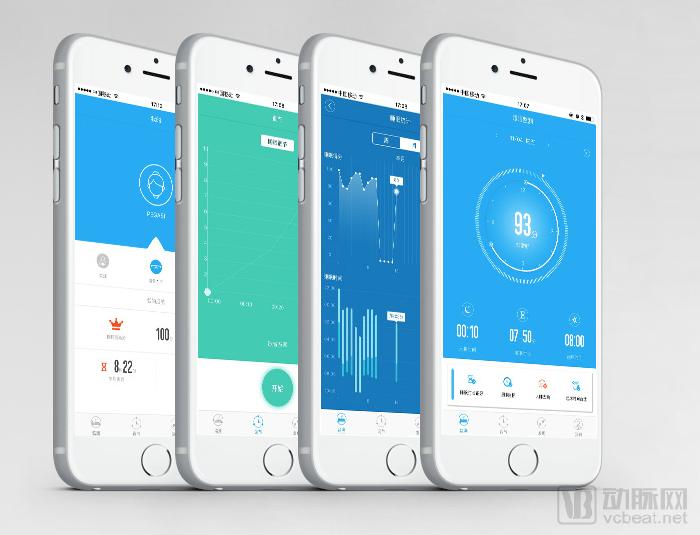
PEGASI Monitoring System (Source: Corporate Website)
Among sleep disorders, the most common treatment plans target insomnia and sleep apnea, “covering 90% to even 95% of sleep disorders.” A more intuitive statistic from a WHO survey indicates that 38.2% of the Chinese population suffers from sleep disorders, which translates to approximately 500 million people. More than half of these individuals experience insomnia, representing a vast market.
From a technical perspective, PEGASI glasses incorporate a non-imaging visible-light emission module that operates at specific wavelengths. The light emitted by this module irradiates the retina to regulate the user’s energy levels over a subsequent period. To enhance the efficiency and efficacy of photic stimulation, Shenzhen Qianhai Binghan Mdt InfoTech Ltd has collected thousands of experimental data points and developed multiple algorithmic models to precisely control parameters such as the intensity, frequency, and duration of the module’s light output.
Binghan Technology possesses inherent technical advantages in the field of sleep, rooted in its core expertise, and holds 11 international PCT patents for technologies such as dual-wavelength emission, light-emitting modules, and adaptive photosensitivity.
In terms of algorithm optimization, the process based on big data platforms can essentially be viewed as a "virtual doctor" concept: after collecting user data through monitoring tools, it analyzes existing symptoms to identify the optimal solution.
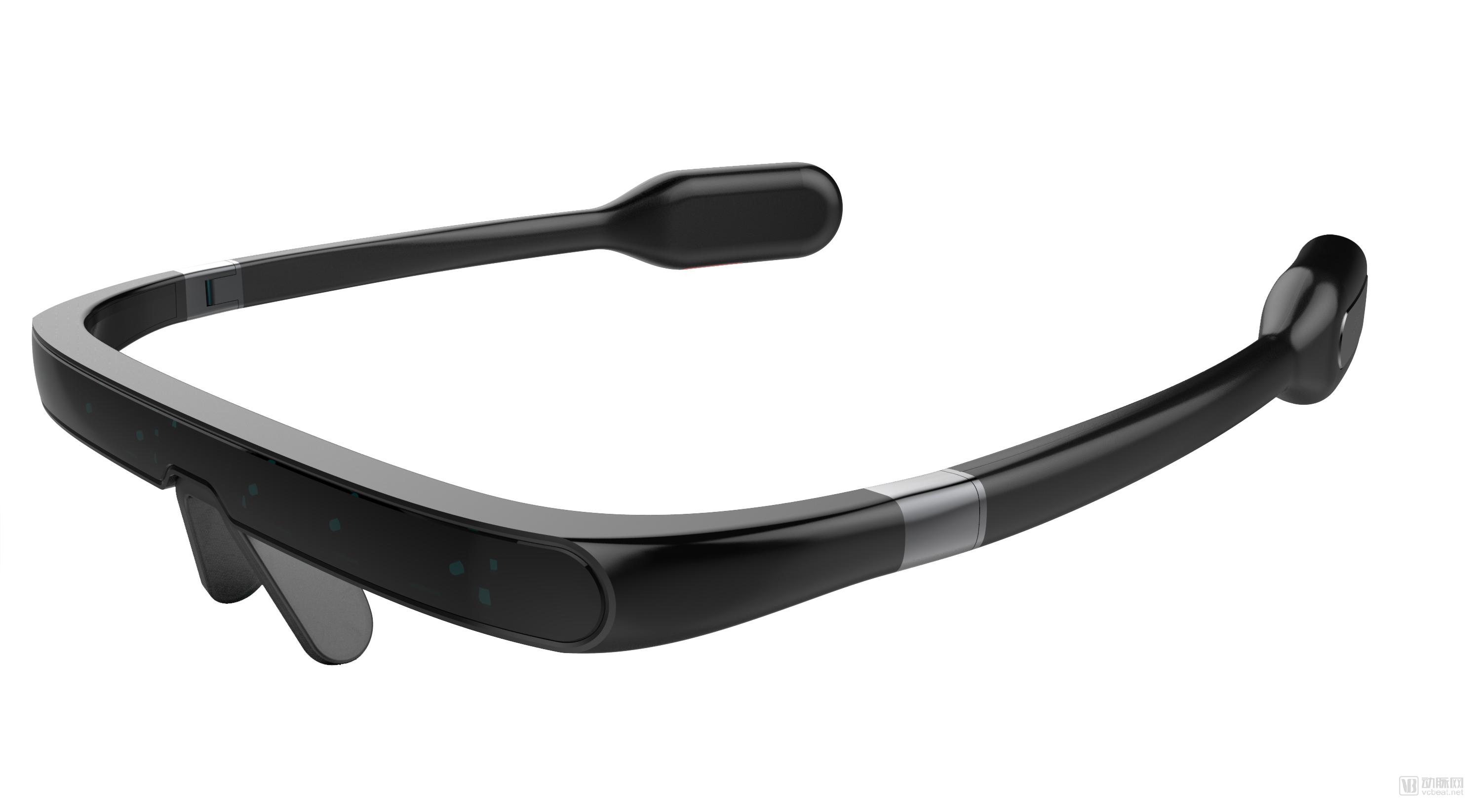
PEGASI (BeiJiaShui) Generation 2 Dream Glasses, Dream Mirror Edition (Source: Provided by the company)
Chi Jing stated that while artificial intelligence can increase the efficacy of certain treatments, such as phototherapy, from 60% to 90%, it cannot raise the efficacy of a completely ineffective intervention from zero to 1%. Laboratory measurements have shown that PEGASI optical glasses can reduce users' sleep latency by 37%. Furthermore, the product is currently applying for certification from the China Food and Drug Administration (CFDA) and is undergoing concurrent clinical trials at medical institutions including Shenzhen Second People's Hospital.
In addition to the concept of virtual doctors, Binghan Technology’s products connect with expert consultants from the Sleep Research Society on the server side, providing targeted treatment plans for complex issues reflected in user data and ensuring the scientific rigor of these plans.
Products positioned to treat sleep disorders typically opt for patient referral through hospitals or physicians, but Chi Jing believes that the consumer market remains the segment most receptive to innovative sleep technologies.
At the time of its product launch, Binghan Technology primarily focused on leveraging the fan economy, converting user engagement into sales through precision marketing targeted at members of its insomnia community.
In its later-stage promotion, it has forged a path of continuous optimization from fan base to distribution channels. In addition to online sales on e-commerce platforms such as Tmall and JD.com, Binghan Technology has entered more than 2,000 offline trendy product stores. Among these, positive feedback for online products has exceeded 99%.
Furthermore, sales data on overseas e-commerce platforms in countries such as Japan and the United States have also shown continuous growth. For instance, PEGASI glasses have achieved a quarterly sales growth rate of approximately 30%–50% on Amazon.
Binghan Technology has currently amassed nearly 100,000 product fans, with sales of its PEGASI (Beijiashui) light therapy glasses also approaching 100,000 units. A significant proportion of these users suffer from severe insomnia disorder.
Its revenue ratio between the consumer (C-end) and business (B-end) segments is approximately 7:3, with the B-end generating profits through technical collaborations with eyewear manufacturers as well as producers of smart pillows and mattresses. According to Chi Jing, Binghan Technology’s revenue target for 2018 was around RMB 100 million.
Unlike other positioning therapy products that typically rely on hospitals and physicians for customer acquisition, Chi Jing believes that even if the technology is introduced into hospitals, the target customers do not seek care in hospital settings, making it ultimately impossible to reach them. Therefore, the product’s final positioning remains in the professional “consumer market.”
Currently, in addition to phototherapy solutions, Binghan Technology is also developing a series of new product lines, including its anti-snoring ring.
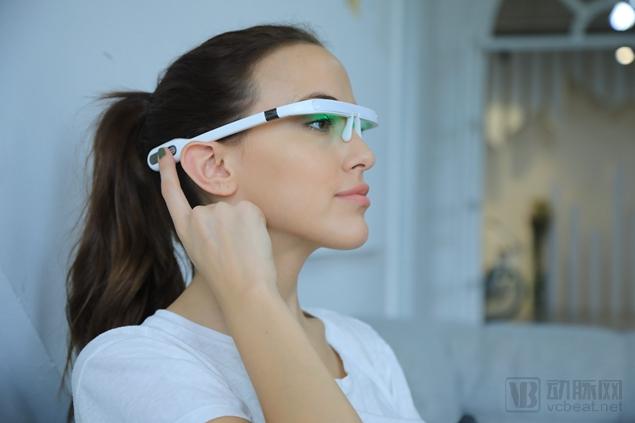
Regarding the emphasis on ecosystem-based and holistic solutions in today’s sleep market, Binghan Technology’s ecosystem encompasses a closed-loop insomnia solution platform based on smart glasses, as well as an intelligent bedroom solution driven by multidimensional data. Chi Jing believes that while some companies’ so-called “ecosystems” merely amount to product stacking, Binghan Technology emphasizes the intrinsic connections within its ecosystem—connections that are precisely reflected in how data feeds back into and enhances solutions. “This is achieved through a closed loop between data and intervention methods; for instance, the resolution of sleep-related issues improves as more data is accumulated, ultimately yielding more effective solutions.”
Binghan Technology has secured angel investment from Oriental Chenxing and tens of millions of yuan in Series A financing from China Equity Group, with its Series B round now completed.
In recent years, the sleep industry has been booming both internationally and domestically. Major corporations such as Apple and Nokia have engaged in mergers and acquisitions, directly drawing domestic capital’s attention to this market, which is now on the verge of an explosive growth phase. Sleep-focused companies like Xiangshui and Chengyi Jiaren have successively secured financing. For startups, the increasing capital interest in the sleep market presents both opportunities and challenges.
Capital markets do not believe in bubbles. For sleep-tech startups, a critical consideration when accepting investment is how to rapidly validate their business models under capital constraints. Amidst homogeneous sleep-improvement products, the key to achieving differentiated competition lies in rapid product iteration and demonstrated efficacy in real-world scenarios.