

'Dying to Survive' Sparks Policy Action: Premier Urges Faster Price Cuts for Life-Saving Cancer Drugs
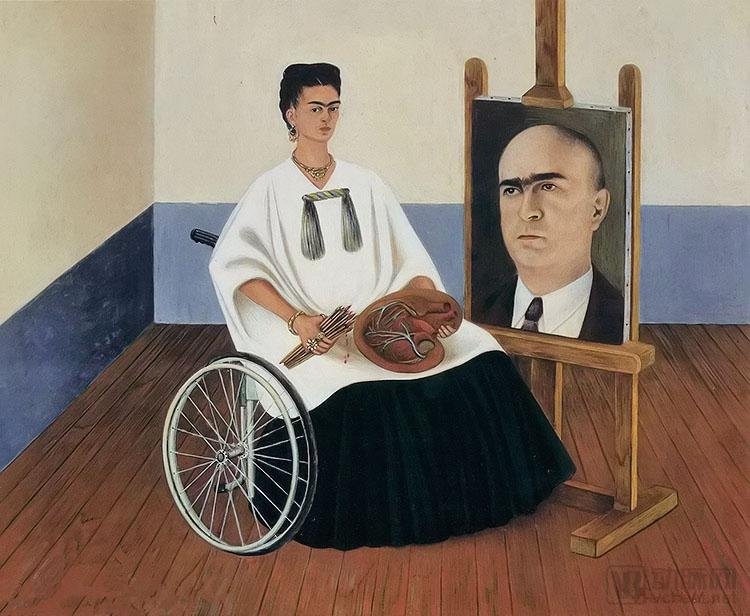
Works | Self-Portrait with the Portrait of Dr. Farill
Author |Frida Kahlo
Medical History in Pictures | Issue 20180722
In 1950, Frida’s health deteriorated, and she underwent seven surgeries that year. She wrote in her diary, “Dr. Farill saved me; he gave me the joy of life…” She then created this painting and presented it to Dr. Farill to express her gratitude. As Frida herself stated, she painted with her heart and blood: the brush drips blood, and the palette is shaped like a heart. It was crafted with utmost sincerity.
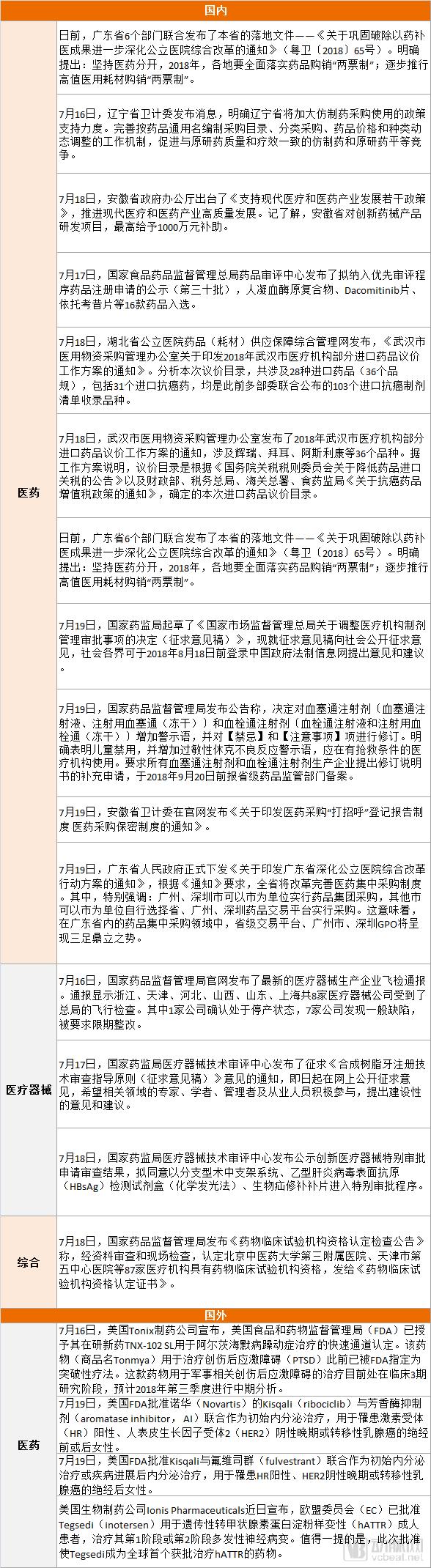
Premier Li Keqiang recently issued instructions in response to the widespread public discourse sparked by the film “Dying to Survive,” urging relevant departments to accelerate the implementation of measures aimed at reducing prices and ensuring the supply of anticancer drugs. “The appeals from patients with serious illnesses such as cancer—who face difficulties affording, delaying, or obtaining imported ‘life-saving medications’—highlight the urgency of addressing drug price reductions and supply guarantees,” the Premier stated in his instructions. “Measures determined by the State Council’s executive meetings must be implemented promptly, with every possible effort made to expedite the process.” In response, local government agencies across the country have actively responded and introduced corresponding adjustments; details of these changes are provided in the “Policy Updates” section below.
VCBeat predicts that the future medical informatics industry will no longer be dominated by pure-play leaders in traditional medical informatics, IT giants offering only peripheral products, or standalone medical device unicorns. Instead, it will be shaped by comprehensive solution providers that integrate innovation with traditional services—including companies specializing in industry-wide data disaster recovery and cloud security. This implies that the medical informatics sector, alongside the intelligent transformation of hospitals, is poised to enter a new round of competition characterized by cross-industry integration.
Given the broad range of products approved by the FDA, encompassing pharmaceuticals, medical devices, and consumables, this article focuses solely on the subset of approved products that involve digital innovation, with the aim of identifying emerging trends and patterns.
Wednesday| New Drug Development: Ten Years, $1 Billion—Where Did the Time and Money Go?
VCBeat has outlined the general process of new drug development and aims to reconstruct the cost structure of new drug development through a combination of data and case studies. The main points of this article are:
1. New drug development is generally divided into four phases, taking an average of more than 10 years, with a success rate of less than 1 in 10;
2. Innovative drug R&D is a key strategy for pharmaceutical companies to enhance their competitiveness; leading multinational pharmaceutical companies have an average R&D-to-sales revenue ratio exceeding 20%;
3. Domestic cases reveal that Chinese pharmaceutical companies have already demonstrated a certain level of innovative capability, and innovative drugs enjoy a broad market;
4. In the cost structure of innovative drug development, clinical trials are the most capital-intensive, followed by personnel compensation and equipment costs; Phase IV study costs are also substantial.
5. China is accelerating efforts to address gaps from policy to market, with significantly enhanced innovative drug R&D capabilities; the results will gradually materialize in the coming years.
Integrating a company’s resources, processes, and profit models into a proprietary system to meet consumers’ long-standing demand for dental services is the essence of competitive advantage. What pain points are currently facing China’s dental service market, particularly dental chain clinics? And what characteristics of the U.S. and European dental service markets might offer valuable lessons? VCBeat has attempted to outline, discuss, and interpret these issues.
Friday |As the Wind Rises Again: The Second Wave of Digital Healthcare
The second cohort of the Future Healthcare Academy’s “New Healthcare Transformation: Innovators’ Evolution Camp” is about to launch, with a primary focus on digital innovation in hospitals. We will invite pioneering hospital presidents to join the program’s mentor team and engage more hospital presidents, directors of information departments, and startup companies in collaborative learning and exchange.
July 15
Hengrui’s 19K Officially Launched: The First Long-Acting G-CSF Formulation in China to Demonstrate Superior Efficacy
Jiangsu Hengrui Medicine Co., Ltd. (hereinafter referred to as “Hengrui”) announced the official market launch of its independently developed innovative biologic, pegylated recombinant human granulocyte colony-stimulating factor (peg-rhG-CSF), branded as Aiduo® (also known as 19K), for the treatment and prevention of non-myeloid neutropenia following cancer chemotherapy. Notably, pegylated rhG-CSF is an innovative biologic independently developed by Hengrui Medicine and represents the first long-acting G-CSF formulation in China to demonstrate superior efficacy compared to imported short-acting G-CSF products.
July 16
The Era of Appointment-Based Medical Consultations Is Here! Full Appointment System for General Outpatient Clinics at Major Tertiary Specialized Hospitals
Huashan Hospital, Fudan University's Department of Dermatology has begun piloting a fully appointment-based system for general outpatient services. It is reported that this is the first department in the hospital to eliminate on-site registration for general outpatient visits and implement a full appointment system. The Department of Dermatology is also the most frequently visited department at the hospital.
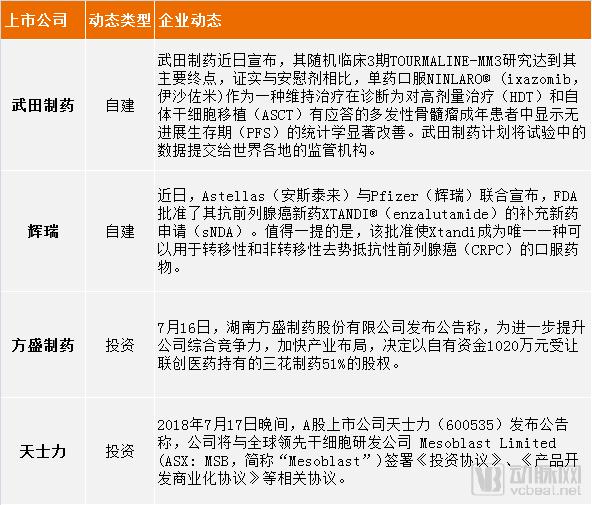
Fangsheng Pharmaceutical Acquires 51% Stake in Sanhua Pharmaceutical for RMB 10.2 Million
Hunan Fangsheng Pharmaceutical Co., Ltd. announced that, to further enhance its comprehensive competitiveness and accelerate industrial layout, it has decided to acquire a 51% equity stake in Sanhua Pharmaceutical from Lianchuang Medicine for RMB 10.2 million using its own funds.
July 17
Tasly Invests $20 Million in Mesoblast Limited to Enter the Stem Cell Industry
Tasly (600535) announced that the company will sign an “Investment Agreement,” a “Product Development and Commercialization Agreement,” and other related agreements with Mesoblast Limited (ASX: MSB, referred to as “Mesoblast”), a global leader in stem cell research and development.
Under the agreement, Tasly will subscribe to USD 20 million worth of its common shares (approximately 14,464,259 shares) and introduce two of its stem cell products currently in FDA Phase III and Phase II clinical trials, respectively. Among them, MPC-150-IM is indicated for the treatment of congestive heart failure, and MPC-25-IC is indicated for the treatment of acute myocardial infarction.
July 18
Pharmacies in Multiple Regions Banned from Selling Food and Daily Necessities
According to People’s Daily Online, Dalian City has just issued the “Notice on Strengthening the Administration of Designated Retail Pharmacies for Medical Insurance,” which explicitly requires that, effective August 1, 2018, designated medical insurance pharmacies are prohibited from displaying or selling food, cosmetics, daily necessities, and other such products.
July 19
Kangmei Pharmaceutical’s Subsidiary Acquires 100% Equity Stake in Boen Medical
Kangmei Pharmaceutical announced that its wholly-owned subsidiary, Shanghai Kangmei, recently signed an Equity Transfer Agreement with Li Jiyin and Xin Jianping in Shanghai, acquiring 100% equity interest in Bo'en Medical for a total consideration of RMB 5.1109 million. Upon completion of this acquisition, Shanghai Kangmei will hold 100% equity interest in the target company.
Laobaixing Acquires 55% Stake in Sanpintang for RMB 33 Million
Laobaixing Pharmacy issued an announcement stating that its controlling subsidiary, Baijiahui Suhe, intends to sign an Equity Acquisition Agreement with the natural person Kong Shunhu to acquire his 55% equity stake in Wuxi Sanpintang using its own funds, at an acquisition price of RMB 33 million.
July 20
Novartis Invests Over $1.1 Billion to Advance R&D of New Drugs for Inflammatory Diseases
Galapagos NV, headquartered in Mechelen, Belgium, and MorphoSys AG, headquartered in Munich, Germany, announced that they have entered into a global exclusive agreement with Novartis to jointly develop and commercialize the collaborative program MOR106 for inflammatory diseases.
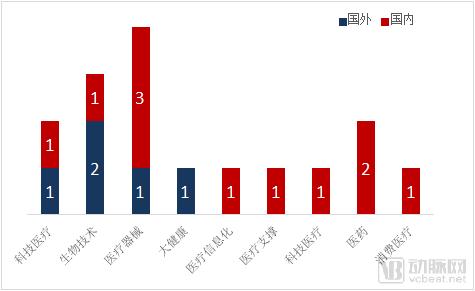
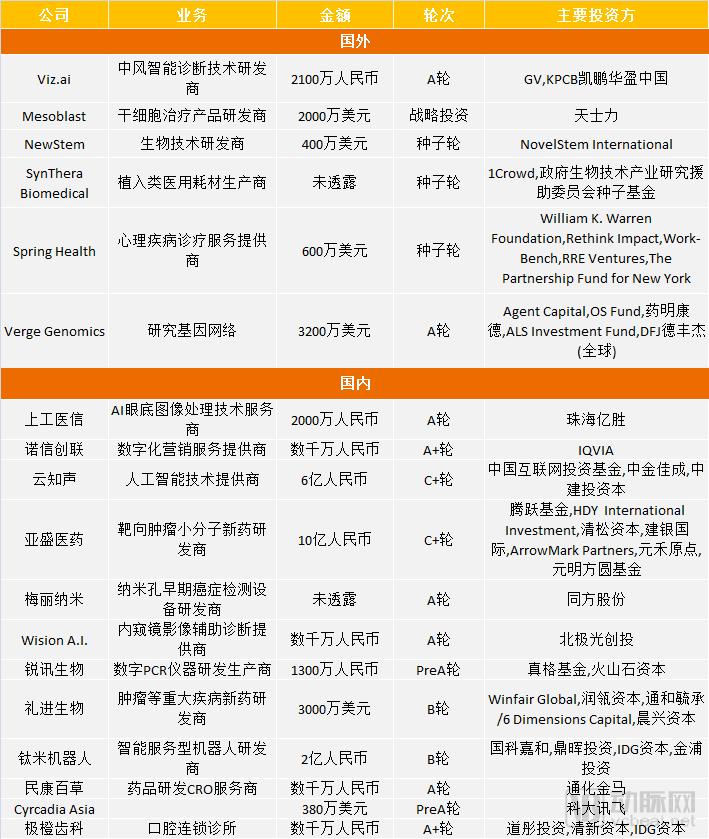
This Week, 18 Financing Deals Occurred in the Domestic and International Healthcare Sectors。
Huagai Capital, Xu Xiaolin
Our investment logic in the healthcare sector focuses on companies with mature products that have already received approval from the National Medical Products Administration (NMPA). We target healthcare enterprises that hold a relatively leading position in China and possess a comprehensive pipeline of products pending approval. Our key areas of focus are biopharmaceuticals and medical services. ... The companies we have invested in within these two segments may not yet have fully realized their profit potential, but they have completed their R&D cycles, finalized their product portfolios, and established their market presence. They are poised for takeoff, which is precisely the stage most favored by investors. To capitalize on this investment phase, investors must conduct long-term tracking of enterprises; there are no shortcuts to this process. (Source: Investment Circle)
US Organ-on-a-Chip Technology Is Set to Launch into Outer Space
Last year, the National Center for Advancing Translational Sciences and the Center for the Advancement of Science in Space jointly provided funding to send chip technologies from five research teams into space. These projects were carried out in two spaceflight missions: the first took place in November, and the second is scheduled for February of next year. According to Dr. Dongeun (Dan) Huh, a bioengineer at the University of Pennsylvania, this marks the first time that organ-on-a-chip devices have been sent into space for testing, positioning these projects as pioneers in organ-on-a-chip technology. “Organ-on-a-chip” systems can replicate the functions of human organs using microchips, thereby simplifying medical experiments.

Source: www.genengnews.com
Medical Devices: Cybersecurity Firm CyberMDX Raises $10 Million in Series A Funding
CyberMDX, a company bridging medical devices and clinical cybersecurity, announced on July 17 that it had completed a $10 million Series A financing round. The round was led by Pitango Venture Capital, with additional support from OurCrowd Qure. Amir Magner, CEO of CyberMDX, stated that the company’s MDefend software technology has been deployed across major network providers. This tool features non-intrusive capabilities and does not install any software on the protected devices. CyberMDX emphasized that this security technology is particularly crucial in the era of healthcare networking.

Source: www.mobihealthnews.com
Walmart and Microsoft Join Forces to Sign AI and Cloud Technology Agreement, Competing with Amazon
Walmart and Microsoft signed a five-year engineering collaboration agreement on Tuesday, intensifying their competition with e-commerce giant Amazon in areas such as artificial intelligence, cloud computing, and retail. The two companies are committed to achieving breakthroughs in healthcare and have already engaged Amazon on multiple fronts. Senior executives from Walmart and Microsoft stated that engineers from both sides will collaborate to develop new architectures aimed at better serving consumers.

Source: www.healthcareitnews.com
Safety Planning Intervention (SPI) Can Effectively Reduce Suicidal Behaviors
According to a study published in JAMA Psychiatry on July 11, suicidal patients who received Safety Planning Intervention (SPI) followed by telephone check-ins exhibited reduced suicidal behaviors. The intervention was also found to increase the likelihood of patients engaging in outpatient mental health treatment within the subsequent six months. Meanwhile, plans are underway to accelerate the implementation of this program in emergency departments to facilitate preventive measures against suicidal behaviors.

Source: www.physiciansbriefing.com
PwC Strategy&: Robot Doctors, Are You Ready?
The report indicates that we are entering the era of “New Healthcare,” where emerging technologies such as artificial intelligence (AI) and robotics will deliver higher-quality, faster, and more accessible medical services in the future. China is also promoting the development of New Healthcare at the governmental level. In July 2017, the State Council issued the Development Plan for Next-Generation Artificial Intelligence, which set forth the goal of “promoting and applying new AI-driven models and methods for treatment, and establishing a rapid and precise intelligent healthcare system.” In November, the Ministry of Science and Technology announced the “First Batch of National AI Open Innovation Platforms,” with medical imaging selected as one of the inaugural four major AI platforms.
The World Bank: The Necessity of Universal Health Coverage
The report indicates that issues such as misdiagnosis, medication errors, inappropriate or unnecessary treatments, inadequate or unsafe clinical facilities or procedures, and insufficient training and expertise among healthcare personnel exist in all countries. The situation is most severe in low- and middle-income countries. For instance, although hospital-acquired infections can be easily prevented through better hygiene practices, improved infection control measures, and appropriate use of antimicrobial drugs, 10% of hospitalized patients in low- and middle-income countries may acquire infections, compared to 7% in high-income countries. Meanwhile, in high-income countries, one in ten patients suffers harm during medical care.
Huaxia Jishi: In-Depth Research Report on Unicorns in the Healthcare Industry, 2018
This report primarily covers the following aspects: by organizing and analyzing fundamental corporate data, it summarizes the characteristics, growth conditions, and development environment of healthcare unicorns; through a multi-dimensional comparative study of Chinese and U.S. unicorns, it identifies the gaps between healthcare unicorns in the two countries and draws key insights; by examining representative case studies from specific sub-sectors, it distills the critical success factors for unicorns and the patterns underlying their evolution into industry giants. Finally, the report outlines the opportunities, challenges, and trends facing the future development of unicorns.
VBInsight: 2018 Market Research Report on Tumor Genetic Testing
With the rapid advancement of gene sequencing technology, China’s genetic testing industry peaked in 2015, leading to intensified market competition and a gradual expansion in the scope of genetic testing applications. Currently, BGI Genomics and Berry Genomics have leveraged reproductive health genetic testing services, such as non-invasive prenatal screening (NIPS), to go public in 2017 one after another, emerging as leading companies in this niche sector. However, the market landscape in the field of oncology genetic testing remains unstable.