

Kuaiwen TCM: Building China's First Internet-Based Traditional Chinese Medicine Hospital with 300,000 Consultations in Two Years and Monetizing Renowned Doctor IPs
In ancient times, human ancestors lived in caves and the wilderness. During their search for food, they discovered that certain foods could alleviate physical discomfort, while others caused poisoning and death. While using heated stones for warmth, they found that applying these stones to different parts of the body surface could also relieve some ailments, and striking specific areas with bone needles could even eliminate pain.This represents the earliest form of Traditional Chinese Medicine (TCM), characterized by herbal prescriptions and moxibustion therapy, which have been continuously practiced to this day.
Since modern times, frequent wars and recurring epidemics have led to the gradual replacement of Traditional Chinese Medicine (TCM)—characterized by the diagnostic methods of inspection, auscultation and olfaction, inquiry, and pulse-taking, as well as syndrome differentiation and treatment—by modern medicine, which excels in surgical procedures. Consequently, modern medicine has come to play a significant role in people’s healthcare.However, traditional Chinese medicine (TCM) has never exited the historical stage. It is a common practice among many Chinese people to consult experienced TCM practitioners for folk remedies in the treatment of typhoid and miscellaneous diseases.
With the widespread adoption of the internet, traditional Chinese medicine (TCM) has also gone “online,” presenting age-old practices in a new format. Kuaiwen TCM is one such example. As a typical online TCM hospital, Kuaiwen TCM integrates the entire process of consultation, prescription, and medication delivery through its WeChat official account, subscription account, and mobile app. Since2015Year9Since its launch, Kuaiwen TCM has cumulatively completed30Over 10,000 Patient Consultations, Successfully Established100Renowned PhysiciansIP。Recently, the internet has been discussing Kuaiwen TCM's founder andCEOZeng Yuya conducted an exclusive interview, hearing him discuss how Kuaiwen TCM has rapidly “captured market share.”
In February 2016, the State Council issued the Outline of the Strategic Plan for the Development of Traditional Chinese Medicine (2016–2030). Premier Li Keqiang explicitly called for relaxing market access policies for traditional Chinese medicine services, marking a new round of concentrated policy efforts to support the sector.
In July 2017, the TCM Law came into effect, stipulating that individuals who have studied traditional Chinese medicine (TCM) through apprenticeship or who have demonstrated specialized expertise through years of clinical practice may obtain TCM physician qualification upon passing practical skills and efficacy assessments organized by the TCM administrative departments of the people’s governments of provinces, autonomous regions, and municipalities directly under the Central Government.
In September 2017, the former National Health and Family Planning Commission issued the Interim Measures for the Record-filing Administration of Traditional Chinese Medicine (TCM) Clinics, commonly known as “Document No. 14,” which stipulates that entities establishing TCM clinics may commence professional activities after filing with the local county-level administrative department of traditional Chinese medicine regarding information such as the clinic’s name, address, scope of diagnosis and treatment, and staffing.The “filing system” era for TCM clinics has begun, significantly reducing preparation time and policy risks.
Furthermore, since the beginning of this year, multiple regions, including Harbin and Fujian, have introduced policies to encourage renowned and experienced TCM practitioners to establish clinics. In April, Jilin Province proposed in the “Regulations on Traditional Chinese Medicine (Draft for Comment)” to encourage licensed TCM professionals to practice at multiple locations.Despite persistent skepticism surrounding the liberalization of Traditional Chinese Medicine (TCM), policies governing TCM drug registration, practitioner qualifications, and clinic establishment have continued to outpace those of modern medicine, providing robust support for the development of TCM.
Market Side, through open and standardized development, traditional Chinese medicine (TCM) consultations have become an important component of the supply side of China's healthcare services.。On the one hand,,The number of patients receiving Traditional Chinese Medicine (TCM) diagnosis and treatment has increased year by year, with a compound annual growth rate (CAGR) of 9.16%. Meanwhile, the proportion of TCM patients among the total number of medical visitors also shows an upward trend.
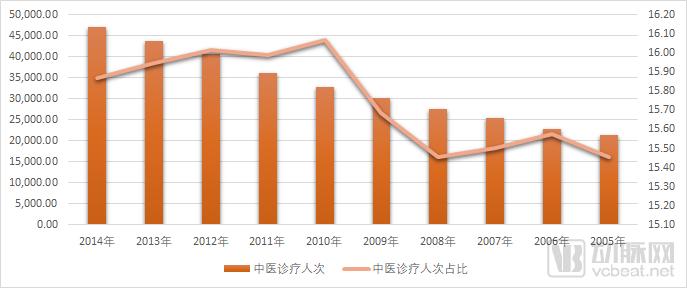
National TCM Outpatient Visits and Their Proportion, 2005–2014
Data Source: East Money Choice Data
Zeng Yuya is a classically trained practitioner of Traditional Chinese Medicine (TCM), though he embarked on a career in prescription drug sales after graduation. Prior to founding Kuaiwen TCM, Zeng held regional management positions at GlaxoSmithKline and AstraZeneca. Years of experience in the market have honed his keen insight. Regarding his return to his original field, his explanation was concise and rational: First, TCM diagnosis does not rely heavily on extensive instrumentation, making its light-medical model easy to replicate; second, entering the market through TCM allows one to avoid direct competition with giants in the general practice platform sector. “Of course, I have unwavering confidence in the efficacy of TCM.” His accumulation of foundational theoretical knowledge and pharmaceutical industry experience has enabled Zeng to understand TCM more objectively.
In 2015, Zeng Yuya recruited Wang Suyu, former R&D Director at Tencent, to launch an internet-based traditional Chinese medicine (TCM) hospital. Kuaiwen TCM integrates online consultations, remote patient intake, prescription review, and approved dispensing into a seamless workflow, enabling shared access to renowned TCM practitioners.
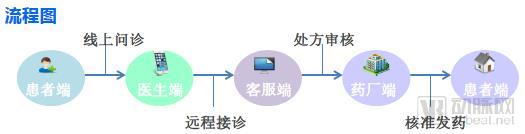
Image provided by Kuaiwen TCM
Online Consultation:Patients can follow the Kuaiwen TCM WeChat Official Account and submit questions to doctors after entering their basic personal information. Kuaiwen TCM provides access to a pool of renowned TCM practitioners offering various service types, including “Free Consultation,” “Online Consultation,” “Offline Consultation,” and “Application Available,” for patients to choose from.
Remote Consultation:For follow-up patients who select the "Free Consultation," "Online Consultation," or "Offline Consultation" services, real-time communication with physicians is available, and physicians will issue electronic prescriptions remotely. The "Online Consultation" service is charged at RMB 20–200 per session, while the "Offline Consultation" service is charged at RMB 100–300 per session, with specific fees determined by the physician’s professional rank. If patients opt for the "Application-Based" service, Kuaiwen TCM will adopt a prepayment model to contact physicians registered on the platform and arrange consultations.
Prescription Review:Upon completion, electronic prescriptions will be transmitted to the backend and to pharmacists at brand suppliers’ TCM pharmacies for unified review.
Approved Dispensing:Kuaiwen TCM selects brand-name Chinese medicine manufacturers approved by public Grade 3A hospitals as suppliers and distributors, strictly controlling quality and timeliness in the medication dispensing process. Delivery times include same-day delivery within the same city, two days within the province, and 2–3 days nationwide.
In Zeng Yuya’s view, integrating the entire operational workflow of an internet-based TCM hospital is not difficult; the real challenge lies in controlling each step and building trust among renowned TCM practitioners, patients, and the platform. Zeng believes that, unlike Western medicine, which often produces near-immediate results, TCM does not offer such rapid effects. Coupled with the asset-light operation model of internet hospitals, the foundation of trust is inherently weak. To address this, Zeng Yuya and his team have undertaken extensive, meticulous efforts to build “renowned physician IPs.”
User Education
Kuaiwen TCM’s user base comprises patients and experts. Among patients, the age range spans from 2 to 90 years, with those aged 30 to 60 accounting for 90% of this group; these individuals demonstrate higher acceptance and adaptability toward internet-based tools. For elderly and pediatric patients, family members assist in completing the necessary operations.
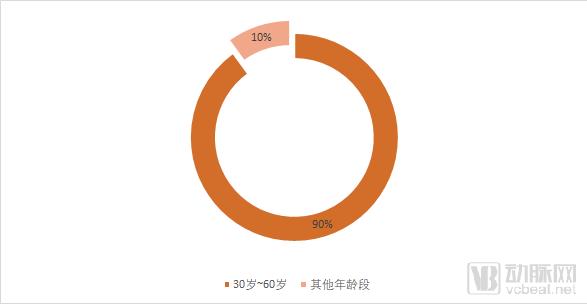
Data provided by Kuaiwen TCM; compiled by VCBeat
The main challenge in user education lies with the expert side. The physician resources integrated by Kuaiwen TCM consist primarily of senior specialists who have retired or are about to retire from Grade 3A hospitals, and they lack inherent adaptability to the internet hospital model. Zeng Yuya and his team conducted one-on-one visits to these senior experts, providing hands-on assistance with smart devices, and held regular group exchange sessions to ensure that Kuaiwen TCM effectively empowers renowned TCM practitioners. To date, the platform has assembled more than 6,000 real-name verified senior TCM physicians.
Consultation Management
Zeng Yuya emphasized that Kuaiwen TCM has focused exclusively on follow-up consultations since its inception. “Although initial TCM consultations do not require medical equipment, the four diagnostic methods—inspection, auscultation and olfaction, inquiry, and palpation—are all indispensable.” Zeng firmly believes that accurate diagnosis is the foundation of therapeutic efficacy. Three years after Kuaiwen TCM went online, when the Chinese government first issued policy guidelines encouraging the development of internet hospitals, it explicitly stipulated that internet hospitals could only provide follow-up consultations—a provision that aligned perfectly with Zeng’s original vision.
Within the framework of providing follow-up consultations only, the design of flagship products is inherently constrained. To address this, Kuaiwen TCM has shifted the focus of its consultation services to sub-health conditions, intractable diseases, and chronic disease management, further implementing differentiated consultations and standardized services tailored to patients with each specific condition.
“High consultation fees, low drug prices” is Kuaiwen TCM’sA Distinctive Feature, patients pay approximately RMB 400 per visit for medical expenses, yet the portion allocated to services provided by renowned TCM practitioners is two to three times higher than that in public hospitals. By compressing medication costs, Kuaiwen TCM incentivizes the intrinsic value of physicians’ work, thereby stimulating their motivation without increasing the financial burden on patients.
Regular Follow-up
According to Zeng Yuya, among the 10 patients who consulted through Kuaiwen TCM, six opted for paid consultations, with more than two of them making repeat purchases. Zeng Yuya attributes the high user conversion rate largely to Kuaiwen TCM’s regular follow-up mechanism.
As part of Kuaiwen TCMSecond Feature, the platform’s physicians will establish a regular follow-up registry among users who have paid for and experienced the services. Customer service representatives will conduct timely follow-ups, and a family private physician service will be introduced. In addition, the platform will automatically assist physicians in building a case database that records patients with more than three follow-up visits. The medical record database operates using intelligent algorithms to provide effective service recommendations based on patients’ actual conditions and the timeliness of physicians’ services.
Currently, the Kuaiwen TCM platform has over 100 "Famous Doctor IPs" with monthly revenues exceeding RMB 10,000.
When discussing the business model, Zeng Yuya shared Kuaiwen TCM'sThird Feature, namely the integration of online and offline services. In December 2015, just four months after the launch of the Kuaiwen TCM WeChat official account, the first Shared Studio for Renowned TCM Practitioners was established.
Kuaiwen TCM’s shared studios activate idle resources through a sharing model. According to Zeng Yuya, Kuaiwen TCM’s shared studios are classified as traditional Chinese medicine (TCM) clinics, designed to provide physical settings for offline consultations between patients and practitioners. However, unlike conventional TCM clinics, these shared studios operate without pharmacies, pharmacists, or inventory; they do not provide treatments or sell medications, adopting an entirely asset-light operational model. By March 2017, Kuaiwen TCM had established seven such shared studios.
By integrating online and offline operations, Kuaiwen TCM has established a comprehensive closed-loop internet TCM hospital ecosystem, building a clear business model centered on pharmaceutical sales and the provision of diagnostic and treatment services. Currently, Kuaiwen TCM has completed its Series A financing. According to Zeng Yuya’s plans, Kuaiwen TCM will partner with more than 10 public hospitals in third- and fourth-tier cities, increase the number of registered renowned TCM practitioners on its platform to 20,000, and expand its shared studio network to 50 locations.