

Eidos Therapeutics Submits IPO Filing for AG10, a Novel Oral TTR Stabilizer Targeting Transthyretin Amyloidosis
Eidos Therapeutics
Small Molecule Drug Research and Development Manufacturer
Due to the low incidence of rare diseases, research resources available for them are extremely limited. Driven by economic considerations, some pharmaceutical companies lack interest in investing in the research and development, manufacturing, or introduction of drugs and medical foods for rare diseases. Furthermore, the scarcity of cases makes studying these conditions particularly challenging. Even when targeted therapies are developed, their prices are astonishingly high due to the relatively small patient market, placing them well beyond the financial reach of most patients.
Palo Alto, US-based biopharmaceutical company BridgeBio Pharma announced the establishment of a new subsidiary, Eidos Therapeutics (“Eidos”), into which BridgeBio Pharma will inject $27 million in capital.
Eidos, founded in 2013, is a clinical-stage biopharmaceutical company led by industry veterans. It focuses on addressing transthyretin-mediated amyloidosis (ATTR), a rare disease with unmet medical needs, by stabilizing TTR to treat this condition.
What Are TTR and ATTR?
The primary function of transthyretin (TTR) is to maintain normal levels of thyroxine and retinol-binding protein (RBP) in the human body, transporting approximately 15% of thyroxine under normal physiological conditions. TTR levels can reflect changes in protein synthesis and content within the body following injury. Clinically, TTR plays a significant role in the detection, prognosis, and assessment of treatment efficacy for various diseases.
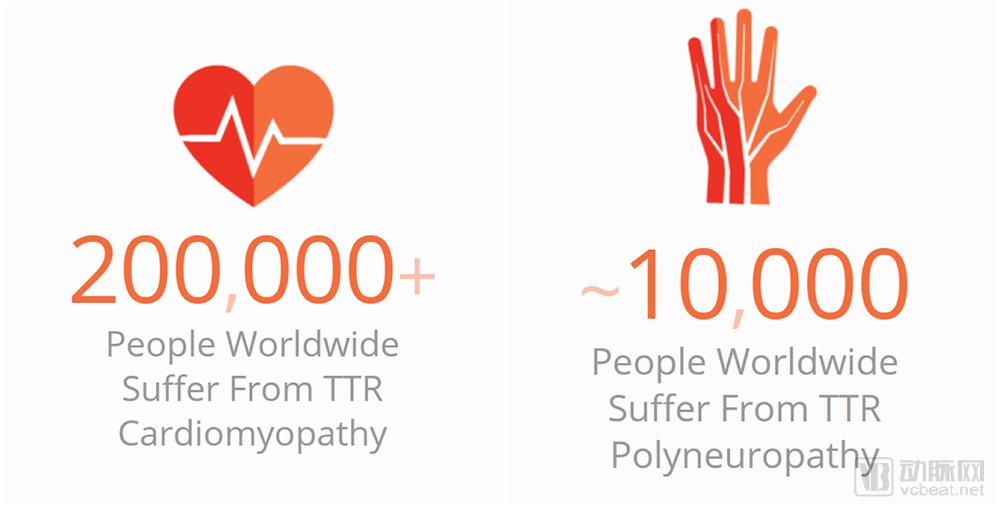
ATTR is caused by amyloid deposits resulting from various etiologies; their accumulation in the intercellular spaces of organs throughout the body leads to polyneuropathy and cardiomyopathy. Amyloidosis involves the deposition of large amounts of soluble fibrillar proteins (amyloids) that impair normal tissue function, thereby causing progressive failure of affected organs. Globally, approximately 250,000 people develop cardiac and neurological disorders due to TTR amyloidosis each year, with the risk increasing as the population ages.
By stabilizing TTR and preventing the formation of toxic amyloid fibrils, Eidos developed the candidate drug AG10 to combat the disease and has been progressively conducting clinical trials.
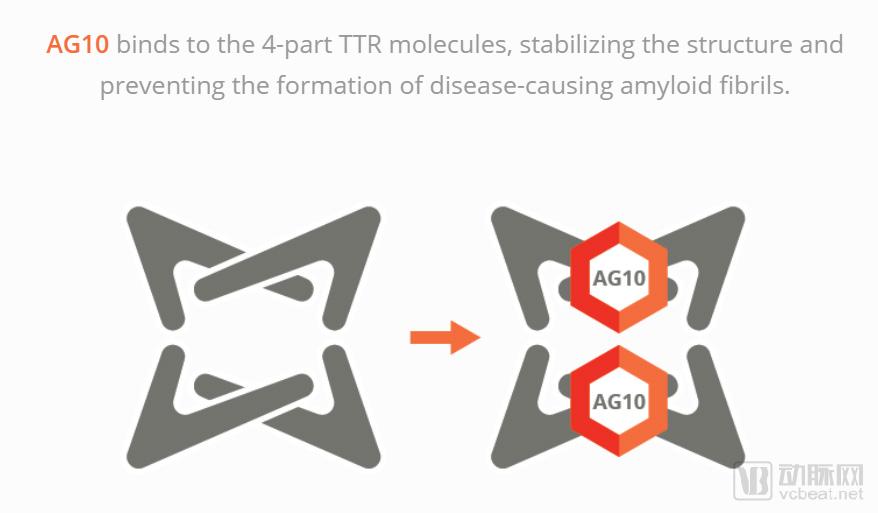
According to VCBeat (WeChat ID: vcbeat), AG10, developed by Eidos Therapeutics, is an orally administered small molecule designed to effectively stabilize transthyretin (TTR) tetramers, thereby blocking the cascade of molecular reactions that lead to ATTR amyloidosis at its source. By binding to TTR tetramers, AG10 forms strong molecular bonds at the T119M mutation site, rendering TTR “hyper-stable” and improving patient survival rates.
Eidos (NASDAQ: EIDX) CEO Neil Kumar purchased 1,000,000 shares of EIDX stock at an average price of $17 per share on June 22, 2014. The total cost of this purchase was $17 million.
In April 2018, Eidos Therapeutics completed a $64 million Series B financing round. The round was led by RA Capital Management and included participation from Eidos’s parent company, BridgeBio Pharma, as well as new investors Janus Henderson, Viking Global Investors, Aisling Capital, Perceptive Advisors, Cormorant Asset Management, and Amzak Health Investors.
Eidos stated that the proceeds from this financing will be used to advance its small-molecule candidate, AG10, into Phase 2 clinical trials and to prepare for Phase 3 studies. Recently, the company filed an application with the U.S. Securities and Exchange Commission (SEC) for an initial public offering (IPO) to raise $115 million.
Learning and R&D in Precision Medicine Become Valuable Experience
“Our clinical data demonstrate that AG10 has a favorable safety and tolerability profile, achieving 100% plasma TTR stabilization at peak concentration and maintaining an average steady-state stabilization of >95%,” said Dr. Neil Kumar, Chief Executive Officer (CEO) of Eidos. “Given that progressively higher levels of stabilization have been associated with stepwise improvements in clinical outcomes in prior trials, our near-complete stabilization suggests that AG10 has the potential to become a best-in-class solution. By stabilizing TTR, we target the root cause of ATTR, an approach validated by both genetic and clinical data.”
Since March 2016, Dr. Neil Kumar has served as CEO and a member of the Board of Directors of Eidos Therapeutics. In September 2014, Dr. Kumar founded BridgeBio Pharma and serves as its CEO, focusing on the research and development of therapies for genetic diseases and precision medicines. The company primarily provides drug candidates for cardiology, neurology, oncology, dermatology, and endocrine disorders. BridgeBio Pharma was incorporated in 2015 and is headquartered in Palo Alto, California.
From 2012 to 2014, Dr. Kumar served as Interim Vice President of Business Development at MyoKardia, a biotechnology company headquartered in South San Francisco, USA, dedicated to exploring novel molecular strategies targeting heart disease. The company’s small-scale yet potentially groundbreaking cardiac research yielded the proof-of-concept efficacy data it had anticipated. In August 2017, MyoKardia’s stock price surged by 81%.
Furthermore, from 2007 to 2012, Dr. Kumar held senior leadership positions at Third Rock Ventures and McKinsey & Company. As a world-leading global management consulting firm, McKinsey & Company has been helping premier organizations achieve significant and sustained improvements in operational performance since its founding in 1926, while building exceptional institutions capable of attracting, developing, and motivating outstanding talent. The firm operates more than 80 offices across 44 countries and employs over 7,000 consultants worldwide.
Dr. Kumar earned his bachelor’s and master’s degrees in chemical engineering from Stanford University, and received his Ph.D. in chemical engineering from the Massachusetts Institute of Technology.
Since October 2016, Dr. Jonathan Fox has served as President and Chief Medical Officer (CMO) of Eidos Therapeutics. Concurrently, Dr. Fox oversaw therapeutic development and strategic guidance in the areas of cardiovascular and renal diseases at BridgeBio Pharma. From March 2013 to March 2017, Dr. Fox held the positions of CMO and Senior Advisor at MyoKardia, accumulating extensive practical experience in medical consulting and corporate management.
From 1993 to 2013, Dr. Fox served on the faculty of the Perelman School of Medicine at the University of Pennsylvania and currently holds an adjunct faculty position at the Stanford Cardiovascular Institute. He earned his B.A. in Biology, as well as his M.D. and Ph.D. in Pathology, from the University of Chicago, and completed his residency in Internal Medicine and fellowship in Cardiology at Duke University. Dr. Fox is board-certified in Cardiovascular Disease by the American Board of Internal Medicine (ABIM) and is a Fellow of the American College of Cardiology.
How Does AG10 Address TTR Amyloidosis?
“TTR amyloidosis is a progressive, fatal disease for which there are currently no FDA-approved therapies. At present, patients and their families can only rely on supportive care, which neither cures the disease nor alters its progression,” said Jonathan Fox, President of Eidos Therapeutics. “Eidos is committed to developing a safe and effective medication to address TTR amyloidosis, and AG10 has the potential to help the company fulfill this mission.”
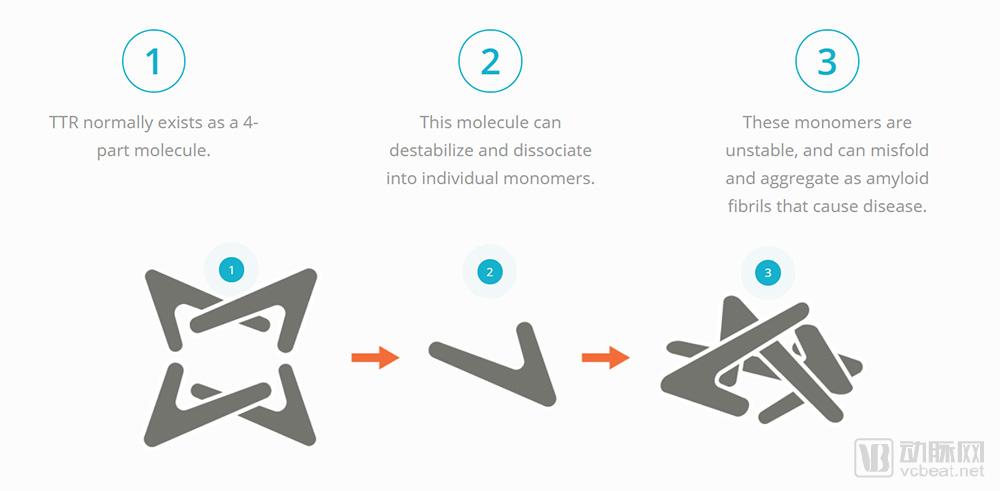
TTR typically exists as a tetramer, which can dissociate into four monomeric units. These unstable monomers undergo aberrant folding and subsequently aggregate to form amyloid fibrils, ultimately leading to disease.
Eidos’ scientific co-founders leveraged Stanford Medicine’s TRAM and SPARK programs to harness cutting-edge medical technologies for drug discovery, with the ultimate goal of developing AG10. AG10 binds to and stabilizes transthyretin (TTR) in the blood in a small-molecule manner, preventing amyloid formation and maximizing the potential to halt disease progression. The therapeutic candidate was developed under the joint guidance of Eidos’ experienced scientists and clinicians and entered Phase I clinical trials in 2017.
Documents filed by Eidos with the U.S. Securities and Exchange Commission state: “In Phase 1 clinical trials, after healthy volunteers received the highest tested dose of AG10, we observed that overall TTR stability averaged more than 95%, reaching 100% at peak plasma concentrations of AG10. In contrast, in our preclinical studies, tafamidis at doses of 20 mg and 80 mg achieved only 45% and 60% stability, respectively, at peak levels. We believe these observations are attributable to the advantages of AG10’s binding mode and its specific binding to TTR rather than to other plasma proteins.”
In May 2018, Eidos administered AG10 to the first patient with ATTR cardiomyopathy in a Phase 2 trial. The company plans to enroll 45 patients with symptomatic ATTR cardiomyopathy in a randomized, double-blind, placebo-controlled trial. At least 30% of the patients in the trial will have hereditary (mutant) ATTR cardiomyopathy, while the remainder will have wild-type ATTR cardiomyopathy. Patients will be randomized in a 1:1 ratio to receive either placebo or one of two different doses of AG10. If well tolerated, the treatment regimen is expected to be maintained for 28 days.
Comparison of Eidos Therapeutics with Competitors
1. Comparison Between Eidos and Avrobio
Avrobio, a company dedicated to treating rare diseases, is among the first to enter the clinical stage with a focus on gene therapies for lysosomal storage disorders. Patients with these conditions primarily lack the genes encoding enzymes or proteins essential for critical metabolic functions. These disorders include Fabry disease, Gaucher disease, cystinosis, and Pompe disease.
The company applies its proprietary lentiviral gene therapy to lysosomal storage disorders, as well as a broad range of other diseases that can benefit from gene therapy. Lentiviral vector technology enables the stable addition of genes to patients’ own cells and their integration into the permanent genome, providing durable, lifelong therapeutic effects.
Avrobio has designed an advanced third-generation 4-plasmid lentiviral vector platform, a highly efficient and validated gene transfer system that enables stable integration of genes into patients’ own CD34+ stem cells. Avrobio’s platform encompasses proprietary technologies, unique manufacturing processes, and specialized expertise and tools for gene therapy.
In contrast to Eidos, Avrobio helps patients with rare diseases restore normal gene function through a therapy involving gene transfer, cell extraction and isolation, and lentiviral gene transduction. This mechanism differs significantly from Eidos’s molecular therapy. In February 2018, Avrobio secured $60 million in Series B financing and planned an initial public offering (IPO) on the NASDAQ in the United States, aiming to raise $86.25 million.
2. Comparison Between Eidos and Arrowhead Pharmaceuticals
Arrowhead Pharmaceuticals is a biopharmaceutical company headquartered in Pasadena, California, with 104 full-time employees, primarily engaged in the research and development of novel therapeutics for intractable diseases. Arrowhead’s Targeted RNAi Molecule (TRiM™) platform leverages ligand-mediated delivery to achieve structurally simple, tissue-specific targeting for innovative drug development.
Arrowhead’s clinical-stage pipeline includes ARC-520, an RNAi-based therapy for the treatment of chronic hepatitis B virus infection, and ARC-AAT, which incorporates a novel unlocked nucleic acid analog based on RNAi therapeutics for the treatment of diseases associated with alpha-1 antitrypsin deficiency. The two drugs are currently in Phase IIb and Phase Ib clinical trials, respectively. Compared with Eidos Therapeutics, Arrowhead has a longer operating history, more extensive clinical research results, and revenues that are nearly $22.2 million higher than those of Eidos.