

Call9 Files IPO Prospectus: Revolutionizing Geriatric Emergency Care with Remote Bedside Intervention

Call9
Emergency Care Company
Data shows that there are 136.3 million emergency department (ED) visits annually in the United States, with 16.2 million patients admitted to the hospital through the ED each year. The Centers for Medicare & Medicaid Services (CMS) points out that two-thirds of ED visits are unnecessary (resulting in approximately $4 billion in wasted funds), and 10% of patients visiting the ED come from nursing homes.
In the United States, the average wait time for a medical ambulance is approximately 15 minutes (with potentially longer waits in special circumstances). The transport time from boarding the ambulance to waiting outside the emergency department is about 40 minutes. During the 65 minutes patients spend waiting for emergency care, they often miss the optimal window for treatment.
To address industry pain points, Call9 has launched telemedicine services, enabling patients to receive professional medical care from doctors in a short amount of time while significantly saving on manpower, material resources, and financial costs. How does Call9 achieve this? It allows patients to remain more comfortably in their nursing home beds, saves 78% of the time, and objectively reduces healthcare system costs by 94.4%.
Call9 is the brainchild of two physicians: Celina Tenev, a postdoctoral fellow in radiology at Stanford University, and Timothy Peck, formerly a professor of emergency medicine at Harvard Medical School. The two met while working part-time for a startup (now dissolved) and jointly explored issues they encountered in emergency departments—namely, the treatment of many unnecessary cases, ten percent of which originated from nursing homes.
To gain deeper insights, Dr. Peck lived and worked alongside caregivers and the elderly in a nursing home for three months, identifying three causes behind this phenomenon:
1. The ratio of direct care staff to patients is 1:5;
2. Staff at nursing homes lack diagnostic capabilities;
3. Physicians and other senior clinical practitioners do not provide 24/7 services.
In nursing homes, sick residents are cared for by nurses; however, due to limited diagnostic equipment and a shortage of physicians trained in emergency care, patients must be transferred to the emergency department in the event of an emergency.
They began to seriously consider how to solve this problem. With the help of Xiao Songmu, a Stanford University computer science graduate and technical co-founder, they developed an application designed to help patients in need of emergency medical care receive treatment as quickly as possible.
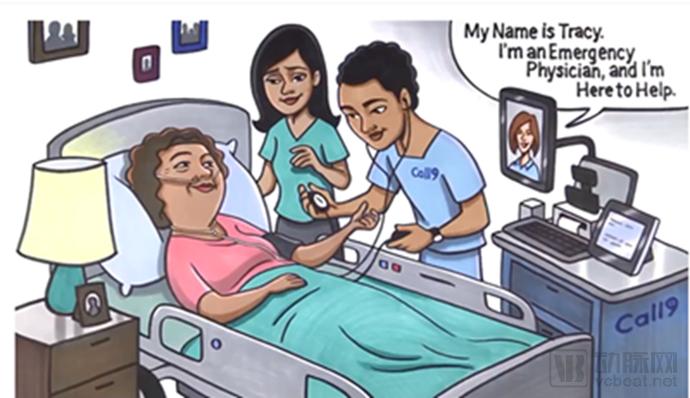
Patient receiving Call9 treatment (Image source: YouTube video, compiled by VCBeat)
Call9 is an alternative to 911 (the U.S. emergency number) in nursing homes. When a resident experiences a medical emergency, caregivers activate Call9, prompting a specialized nurse stationed at the facility to rapidly respond to the patient’s bedside. Through Call9’s HIPAA-compliant secure technology platform, the nurse connects with an emergency physician, who can quickly assess the condition and propose a treatment plan. Call9 provides technical support for physicians to monitor patients’ vital signs, enabling the physician to determine whether treatment should be administered by the specialized nurse under medical guidance or if the patient requires further care at a hospital.
Call9 assigns three to eight specialized nurses to each partnered nursing home, working in rotating shifts to ensure 24/7 availability for rapid bedside patient care. Leveraging Call9’s technology and under physician guidance, these nurses provide timely medical attention. Surveys indicate that 80% of patients treated through Call9 receive care directly at their nursing home beds, thereby avoiding unnecessary, costly emergency room visits that often delay optimal treatment.
Call9, founded in 2015, is a telemedicine platform that provides care to patients during emergencies. As of September 2017, the company had raised over $34 million across three funding rounds in just two years.

Call9 Financing and Investment Status (Data Source: Crunchbase)
According to records, Tenev and Peck joined the Y Combinator incubator in June 2015. According to Tenev, Call9 treated its first patient on July 15. In a three-month pilot involving approximately 264 patients, Call9 successfully prevented 55% of them from visiting the emergency room. Prior to its Series A financing round, Call9 had already been launched in three nursing homes in New York and claimed to have saved three lives.
Call9’s Series A financing was led by Index Ventures, whose co-founder Neil Rimer subsequently joined Call9’s board of directors to jointly advance the deployment of Call9’s services in more nursing homes.
Call9’s Series B financing round took place in September 2017, raising $24 million. The company intends to use these funds to expand its new roadmap, develop and establish a new technology platform, and formulate go-to-market strategies for new locations.
Currently, Call9 has approximately 200 to 300 employees and has gradually established its own business model over three years of development.
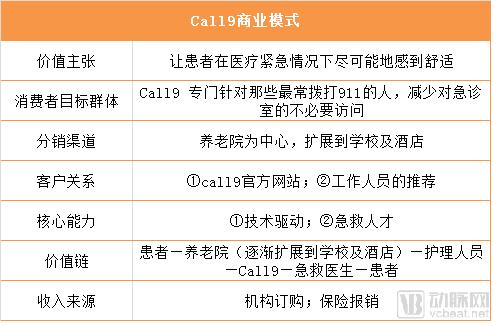
For every patient, Call9 is committed to approaching care with empathy. The focus is on maximizing patient comfort during medical emergencies and ensuring that treatment coordination across multiple parties remains centered on the patient’s wishes. Call9 employs its own user experience designers to safeguard patient comfort in this regard. Additionally, palliative care is a key component of Call9’s training curriculum, helping patients alleviate symptoms, reduce suffering, and improve their quality of life.
In recent years, due to high hospital admission rates from nursing homes, the government has imposed penalties on facilities that repeatedly send patients back to the hospital within 30 days. Some government officials believe that such readmissions are not only costly but also indicate that the facility has failed to provide adequate care for its residents. Nursing homes have adopted Call9 devices as a measure to reduce these penalties; meanwhile, the medications, diagnostic services, and nursing care provided to patients through Call9 are reimbursed by insurance companies under contract with Call9.
At the core of Call9 are its specialized nurses, who serve as on-site first responders. These professionals are primarily trained medical personnel, including emergency department physicians, physician assistants, and medical students, all of whom are competent in managing emergency situations. Additionally, Call9’s Medical Director, Kevin Biese, specializes in geriatric emergency medicine and provides bi-monthly continuing education in geriatrics to the specialized nurses.
Another aspect of core competencies is technology-driven devices. When physicians receive notifications, they can access Call9’s proprietary detailed dashboard via the Call9 app, which includes electronic medical records, patient workflows, remote monitoring data, and diagnostic results. While communicating with patients through tablets, physicians can simultaneously access multiple camera feeds. Telemetry is displayed in the upper-left corner, allowing real-time monitoring of patients’ electrocardiograms (ECG), pulse rate, and heart rate through the dashboard to assess vital signs.
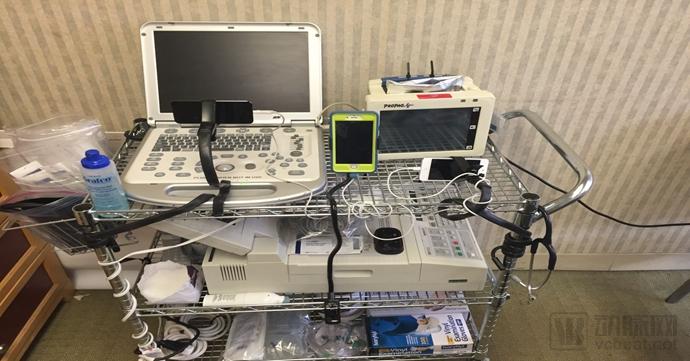
(Image source: CNBC website; compiled by VCBeat)
Call9 also retrofitted nursing home medical vehicles to meet practical needs, equipping them with top-tier devices such as portable electrocardiograms for detecting abnormal heart rhythms, pulse testers, and ultrasound equipment to facilitate remote consultations.
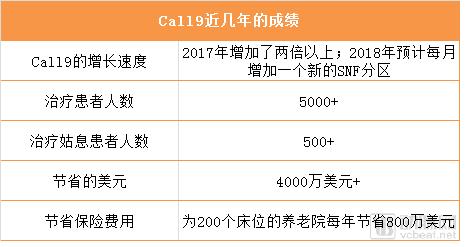
(Source: Call9 official website; compiled by VCBeat)
In the U.S. healthcare system, emergency room visits represent one of the most expensive medical expenditures. According to data from the Missouri Hospital Association, the average charge for treating minor medical conditions in Missouri hospital emergency rooms is as high as $372, with some hospitals charging up to $1,300.
With an iPhone and its accompanying devices, Call9 can save healthcare systems and taxpayers more than $40 million, while also keeping patients out of hospitals and conserving medical resources.
Since Call9 operates in the field of elderly care, this article selects companies involved in senior care for analysis.
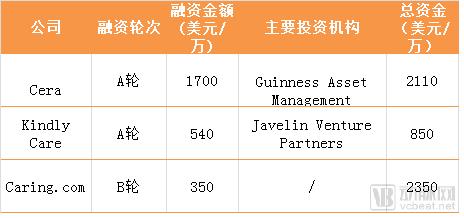
(Source: Compiled by VCBeat from Crunchbase data)
Cera
CeraFounded in November 2016, Cera is a home care platform leveraging internet and artificial intelligence technologies to provide elderly individuals with care and support within their communities. Its services encompass elderly care, palliative care, and dementia care. Co-founded by Dr. Ben Maruthappu and Marek Sacha, the company utilizes Cera’s automated matching and scheduling system to respond to patient needs within one hour, delivering same-day care in 96% of cases. Compared to traditional care agencies, Cera operates with lower administrative overhead, pays its caregivers 50% above the industry average, and still offers affordable pricing to clients.
Kindly Care
Kindly CareFounded in 2014, Kindly Care is a leading U.S. senior care platform that matches elderly individuals in need of assistance with suitable caregivers and collaborates with family members to manage care services. Use the Kindly Care mobile app to manage caregivers, monitor tasks, and process payments.
Caring.com
Caring.com, established in 2007, is an online platform dedicated to providing information and support to clients, helping them save time and money while reducing feelings of isolation and stress when facing the many challenges of caregiving.Caring.com offers personalized one-on-one guidance, providing seniors with articles on home care and wellness, as well as convenient tools.
In summary, Call9 is distinctly different from the aforementioned companies. As an organization providing emergency care within nursing homes, Call9 specializes in emergency medical services for acute incidents and offers palliative care at the patient’s bedside, effectively filling a gap in the market. Its entry point addresses a critical pain point in elderly care: the lack of capacity to respond to sudden emergencies. With the U.S. government continuing to improve its emergency medical system, Call9 is poised to enter a blue ocean market.
In the field of elderly care, China has seen initial development; however, there is virtually a gap in emergency care services. According to previous reports by VCBeat (WeChat ID: vcbeat), with the accelerating process of population aging, domestic elderly care platforms have also achieved certain progress. This article selects several typical elderly care platforms for analysis.
Qingsong Care
Qingsong Rehabilitation and Nursing Group (hereinafter referred to as “Qingsong Care”) was established in 2004, pioneering home-based functional rehabilitation and nursing care in China. Over the past decade, it has developed into an integrated elderly health industry chain comprising Qingsong Care Network, Qingsong Health+, Qingsong Academy, and Qingsong Select. The group specializes in providing professional and standardized long-term care and rehabilitation nursing services to seniors and individuals with disabilities residing at home or in communities, as well as patients in post-illness or post-surgical recovery. Clients can contact Qingsong Care through online applications; subsequently, Qingsong conducts in-home physical assessments, formulates personalized care plans, and delivers in-home services provided by its certified rehabilitation nurses.
Xiaobai Home Care
Xiaobai Home Care, established in 2015, is a professional elderly care operations company originating from the United States and based in Ningbo. Leveraging an internet technology platform, it primarily provides in-home nursing care and professional hospital companionship services for the elderly, as well as conducting training for professional caregivers. Using the internet as its foundation, Xiaobai Home Care integrates online and offline operations to establish a complete, industry-leading digitalized transaction process and management philosophy. It has developed a comprehensive core service workflow that includes classified management of service providers, intelligent demand matching, online nursing logs, and pathological data collection. By applying internet-centric thinking, the company addresses key pain points in the traditional professional in-home care market, such as information asymmetry between supply and demand, lack of service standards, difficulty in evaluating outcomes, and opaque pricing.
Qingmeng Elderly Care
Qingmeng Elderly Care was established in 2014. Guided by the principles of “model innovation, cross-sector integration, professional services, and mutually beneficial cooperation,” the company integrates elderly care health talent education, elderly care health services, high-tech R&D for elderly care health, and an O2O platform for elderly care health.
Qingmeng Care’s system has achieved full IT standardization across all business operations. The elderly profiling system precisely characterizes seniors using over 1,000 indicators, providing personalized care plans that are updated monthly. Caregivers receive nursing tasks via a mobile app and deliver services accordingly. These activities generate care logs, which are sent daily to the seniors’ children to provide peace of mind. Additionally, the system tracks seniors’ physical health metrics on a daily basis, presenting monthly changes in chart form to visualize care outcomes and offer an intuitive understanding of improvements in physical function.