UP Clinic's Shanghai Launch Sells Out Within a Week, Validating Its Innovative Rehabilitation Model
Yesterday, VCBeat(WeChat: vcbeat)Following the announcement of UP Clinic’s completion of its Series A+ financing, VCBeat promptly interviewed its founder, Sun Xiaoyi, to uncover the secrets behind the rapid profitability of UP Clinic, the offline brand under Yishu. What gap in the market does this leading domestic orthopedic rehabilitation clinic, which integrates rehabilitation and surgical services, fill?
On July 16, 2018, marked the first day of the soft launch for UP Clinic’s chain of rehabilitation outpatient centers, a project that had been in preparation for six months. On that day, 16 patients with appointments visited the clinic, with an average spending of 1,600 yuan per visit. Notably, the clinic also received its first surgical patient who had come specifically due to its reputation, thereby validating Sun Xiaoyi’s assessment of the orthopedic rehabilitation sector.
As a serial entrepreneur, Sun Xiaoyi has transformed from a lawyer and founder of dental and medical aesthetics clinics into the founder of Yishu, a company focused on orthopedic rehabilitation services.
She told VCBeat that since the start of its soft launch, appointments for the following week had already been fully booked. She projected profitability within the first month, a phenomenon she described as “quite alarming.”
“The market demand is substantial; it’s just that no one has undertaken this in a systematic manner.”
From the online orthopedic platform YiShu to the offline outpatient clinic UP Clinic, the demand for orthopedic rehabilitation has driven the service upgrade of YiShu. Founded in 2014, YiShu is a mobile health product specializing in the field of orthopedics.
Currently, the Yishu APP serves over 20,000 orthopedic surgeons across more than 3,800 hospitals nationwide. The platform has aggregated 800,000 vertical users in the orthopedics sector. Its content library includes over 300 rating scales, 2,800 exclusive rehabilitation videos, and more than 3,000 patient education guidelines and care plans for specific orthopedic and rehabilitation conditions.Gradually establish standardized clinical pathways for postoperative rehabilitation, and leverage patient data to create intelligent, cloud-based clinical follow-up plans for physicians tailored to each patient.
Leveraging its accumulation of medical capabilities based on medical data and its online operational expertise, UP Clinic has become a leading provider of sports medicine and orthopedic rehabilitation services in China, offering patients comprehensive mid-to-long-term solutions that integrate in-hospital and out-of-hospital care, as well as online and offline services.
With the Yishu Platform having aggregated a base of vertical users and accumulated a massive volume of orthopedic rehabilitation data, the underlying market demands became clearly visible to Sun Xiaoyi.
According to the National Health Services Survey conducted every five years, as recorded in the China Health and Family Planning Statistical Yearbook, the prevalence of musculoskeletal and connective tissue diseases among residents aged 15 and above in China reached 3.73% in 2013, up from 2.31% in 2003, showing a gradual increase over this period. Conservatively estimated, the number of new orthopedic cases in China exceeds 2 million annually.
According to statistics from the Chinese Journal of Surgery, there are as many as 20 million cases of orthopedic trauma in China each year, of which 79.35% require surgical treatment.Although orthopedics is a surgery-oriented department, surgical intervention is not the only treatment option. Among patients with diseases affecting muscles, bones, and connective tissues, a significant proportion are non-surgical candidates who can receive conservative treatments through rehabilitation, interventional procedures, and other modalities.
Most orthopedic surgeons rarely refer patients to the rehabilitation department. Hospital-based rehabilitation units also seldom have dedicated staff for postoperative rehabilitation, with their focus primarily on neurological rehabilitation. Consequently, a large number of patients with conditions requiring such care are left without access to appropriate treatment.
Data from the Yishu platform reveals that over 70% of outpatient visits in the market are for patients whose conditions can be treated without surgery.
Sun Xiaoyi stated, “There is significant patient attrition within healthcare institutions for this group, and currently, no type of institution specifically provides integrated services combining conservative orthopedic treatment with orthopedic rehabilitation. The loss of patients with non-surgical orthopedic needs is not merely a business setback; rather, these patients are left unattended, as existing healthcare institutions fail to address their problems.”
Currently, rehabilitation institutions in the market are categorized by their operational models into three main types: rehabilitation hospitals, rehabilitation centers, and small-scale rehabilitation and wellness facilities.
Most orthopedic patients do not require long-term hospitalization after surgery; instead, they primarily need home-based rehabilitation under professional guidance. Consequently, services provided by rehabilitation hospitals are skewed more toward neurological rehabilitation, with fewer orthopedic patients. Although rehabilitation center services fall within the scope of rehabilitative medicine, these institutions typically do not have surgical clinical departments and thus have limited integration with surgical clinical diagnosis and treatment. Furthermore, small-scale rehabilitation and wellness institutions in the market operate in a regulatory gray area, lacking medical qualifications and exhibiting highly variable quality.
Therefore, to address the pain points of clinical-rehabilitation separation and medical-technical separation in Grade A tertiary hospitals, establishing an integrated clinical-rehabilitation system centered on orthopedics and sports medicine experts has become a priority. In the fourth year of its digital healthcare operations, the platform underwent a “turnaround of the elephant”—the offline UP Clinic was launched.
Pioneering the Concept of “Whole-Person Healthcare” in China, Led by “Data-Driven Needs”
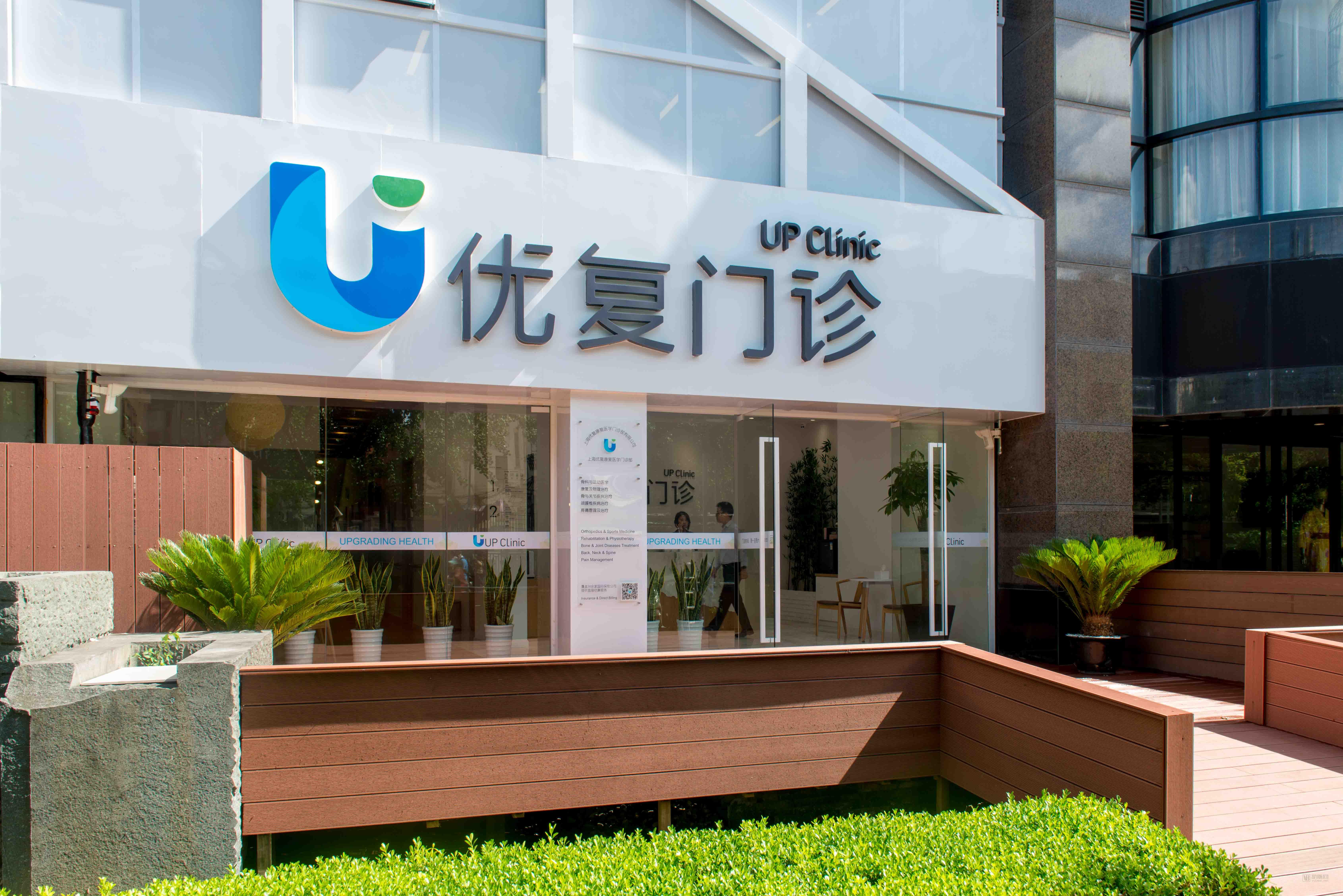
UP Clinic, prominently displaying its name on the storefront sign, adheres to the mission of “Upgrading Health.” It is dedicated to sports medicine, musculoskeletal rehabilitation, and the diagnosis and treatment of orthopedic conditions, providing professional medical services to sports enthusiasts, orthopedic patients, postoperative individuals, and those in a sub-health state.
UP Clinic was the first in China to propose the concept of whole-person care centered on “Quality Medical Care, Quality Rehabilitation.”Sun Xiaoyi explained that whole-person medical care refers to helping individuals with healthcare needs find the most appropriate treatment options for them.Advocating for whole-person medicine means viewing the patient as an integrated whole, rather than merely addressing a specific lesion through surgical intervention.
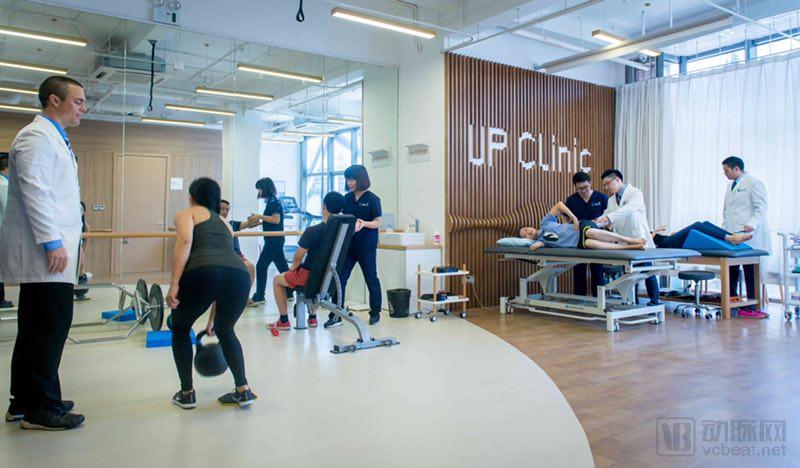
Based on the combined diagnoses from orthopedic surgeons and rehabilitation physicians, there are numerous approaches to addressing patient issues, extending beyond mere surgery or medication, or solely manual therapy and physical therapy. The treatment received by patients is"Diversified."
Sun Xiaoyi stated, “Through multidisciplinary consultations, each patient’s treatment plan will be tailored differently, and their experiences will vary accordingly.”
Even if surgery is unavoidable, UP Clinic has its own partner surgical centers. Patients can be smoothly referred by our in-clinic physicians to hospitals for surgery, but will invariably be integrated into UP Clinic’s comprehensive rehabilitation treatment plan thereafter.
Furthermore, in addition to outpatient treatment, patients’ rehabilitation needs are primarily met at home during the days following therapy. After formulating a treatment plan, physicians at UP Clinic assign each patient a tailored digital health solution. This facilitates physician-led patient management and supports home-based rehabilitation, thereby creating a closed-loop “Internet + Healthcare” rehabilitation ecosystem that integrates online and offline services.
Regarding city selection, there is a distinct methodology for deciding where to launch “UP Clinic.” Drawing on her prior entrepreneurial experience with dental and medical aesthetics clinics abroad, Sun Xiaoyi understands that rashly introducing a new business model in a high-consumption, high-cost city like Shanghai would multiply operational costs.
Therefore, leveraging YiShu’s nationwide physician and patient resources, Sun Xiaoyi adheres to two principles:First is “selecting the right people,”Based on data observations from the Yishu Platform, the platform can monitor physician activity levels in specific regions; areas with higher overall patient engagement will be prioritized.Next is “Site Selection”, select the city based on patient needs and comprehensive operating costs.
“At the time, headquarters selected the three districts with the highest physician engagement levels and then identified the most cost-effective site among them. This is because establishing an outpatient clinic is not simply a matter of securing premises, attracting patients, and obtaining medical practice licenses; when patient volume is not a constraint, the more critical factor is actually the management team,” said Sun Xiaoyi.
In selecting physician partners, Sun Xiaoyi adheres to a set of “rigorous” criteria. She evaluates not only their medical expertise but, more importantly, their level of care and compassion toward patients. The assessment of potential partners can largely draw upon data available on the Yishu Platform.
“I use Yishu to better select physician partners. Every offline clinic under Yishu has physician partners, and this partnership is not merely based on capital investment or willingness to collaborate; rather, it requires an assessment of their activity level on the Yishu platform, demonstrating how diligently they care for patients on Yishu.”
As UP Clinic continues its expansion, the search for physician partners in every city is ongoing.
Standardized End-to-End Process: UP Clinic’s “Operational Playbook”
In terms of actual operations, Sun Xiaoyi and her team have developed a standardized model spanning from the preparatory phase to management and daily operations of outpatient clinics, forming UP Clinic’s“Operations White Paper”。
According to her, each outpatient clinic has a scale of400 to 600 square metersUP Clinic features departments such as Rehabilitation and Surgery, typically staffed by 12 physicians and support personnel. All partners of UP Clinic are from renowned Grade A tertiary hospitals in China, supplemented by full-time experts from the United States and Japan. The clinic specializes in orthopedics, sports medicine, and musculoskeletal rehabilitation, with a clinical focus on the treatment and rehabilitation of sports injuries, post-operative orthopedic rehabilitation, and other common chronic orthopedic pain conditions.
Unlike the prevailing tendency in other outpatient settings to prioritize medication over laboratory testing,UP Clinic is equipped with the necessary medical devices. In contrast, as non-surgical treatments are encouraged, medications typically serve as a “fallback option” within the clinic.
Outpatient clinics are typically equipped with devices such as shockwave therapy units, laser therapy units, ultrasound therapy units, and deep muscle stimulators. Furthermore, Sun Xiaoyi emphasized that UP Clinic is the first outpatient clinic in China to offer musculoskeletal ultrasound services.
Musculoskeletal UltrasoundMusculoskeletal ultrasound is an emerging ultrasonography technique that has gained prominence in recent years. It utilizes high-frequency ultrasound to diagnose diseases of the musculoskeletal system, providing clear visualization of superficial soft tissue structures—including muscles, tendons, ligaments, and peripheral nerves—as well as pathological changes such as structural abnormalities caused by inflammation, tumors, trauma, or congenital deformities. When combined with relevant medical history and clinical symptoms, this approach enables accurate ultrasonic diagnosis for the majority of soft tissue conditions.
This equipment is predominantly used by professional basketball and football clubs abroad, as well as specialized hospitals. Utilizing such advanced devices during the outpatient phase enables rapid, clear, and reliable diagnostic assessments for patients. These tests can be performed directly in the consultation room, thereby eliminating the inconvenience of visiting third-party medical institutions or hospitals for testing.
In terms of customer acquisition, Sun Xiaoyi believes the ideal state is that in the future, 30% of the customer base will be referred by the Yishu platform, 30% through word-of-mouth, and 30% from nearby transient populations.
Under the standard of covering a 3-5 kilometer radius, outpatient clinics are typically located in commercial centers within densely populated areas or near residential communities. In these high-traffic zones, it is essential to ensure visible branding for UP Clinic to establish its rehabilitation brand identity.
Patient care typically follows a bundled service model, wherein each treatment cycle includes diagnosis, therapy, follow-up, and subsequent visits with surgeons, interspersed with multiple rehabilitation sessions. The cost per session generally ranges from RMB 1,200 to 1,600. While the outpatient clinic can accommodate up to 77 patients per day at full capacity, this number is currently capped at approximately 35 to ensure a positive patient experience.
The pre-consultation appointment system, post-consultation patient management and follow-up, and home-based rehabilitation guidance are all integrated into the patient’s diagnosis and treatment journey through the Yishu Platform, delivering an excellent customer experience.
In addition, the clinic has established partnerships with over 30 international insurance companies, allowing patients to have their treatment expenses reimbursed through commercial insurance.
Prior to this, UP Clinic in Shenyang reached its break-even point just four months after opening. This trial operation in Shanghai further demonstrates the value of UP Clinic. According to Sun Xiaoyi’s current planning, the demand in Shanghai is not something that a single outpatient clinic can fully satisfy.
It is reported that following this round of financing, UP Clinic will continue to deepen its presence in the Yangtze River Delta region. Building on its existing outpatient services, the company is preparing to establish an UP Surgical Center and will further replicate and expand its service model to first- and second-tier cities across China, including Beijing, Guangzhou, Shenzhen, and Chengdu.
In 2015, Yishu received angel investment from Kindly Medical, a publicly listed orthopedic company. In 2016, it secured Series A funding from Yonghua Capital. In 2018, Yishu closed its Series A+ round, led by Matrix Partners China and participated in by ZhenFund. More importantly, UP Clinic is expanding rapidly, with multiple new clinics scheduled to open in the second half of this year. Founder Sun Xiaoyi sincerely invites like-minded professionals in the industry to join forces in creating a new model for rehabilitation services. Please long-press the QR code below and note “Job Application” when adding.