

Chaoyang Health Cloud Surpasses 40,000 Users Within Six Months, Empowering Doctors to Manage Patients Anytime, Anywhere
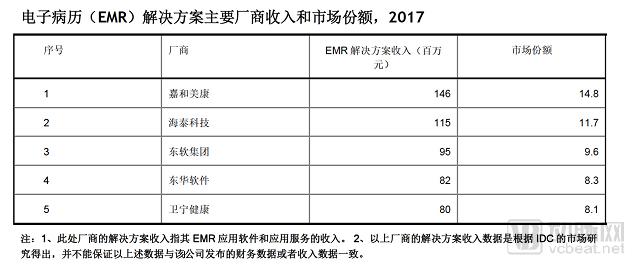
In IDC’s 2017 market research, Jiahe Meikang ranked No. 1 in China’s electronic medical record (EMR) market with a 14.8% market share.
Although it has long been the industry leader, Jiahe Meikang has been continuously exploring how to leverage electronic medical records (EMRs) to provide extended services for hospitals and patients. It was not until September 2017 that a product named “Chaoyang Health Cloud APP” was launched.
Beijing Chaoyang Hospital is one of the first users to upgrade its Jiahemed Electronic Medical Record (EMR) system from version V5 to V6. During the long-term collaboration on EMR systems with Beijing Chaoyang Hospital, the hospital gradually developed needs for certain research projects and innovative service models. Building on this foundation of cooperation, and with the strong support of Dr. Gao Li, President of Beijing Chaoyang Hospital, and Liu Yuhong, Director of the Information Center, the “Chaoyang Health Cloud APP” project was launched.
Cloud-Based Electronic Health Records in the Era of Interconnectivity
“Chaoyang Health Cloud APP” is a customized solution built upon Jiahe Meikang’s “Yirui Cloud Electronic Medical Record (EMR).” As a data-driven medical service platform, its primary objective is the collection, dissemination, and sharing of objective medical records. By integrating data from healthcare institutions, medical consortia, or entire regions, it establishes a patient-indexed, full-lifecycle medical record-sharing platform. While fully ensuring the security of medical information, it provides patients, healthcare professionals, and other stakeholders with medical data-sharing services, as well as extended internet-based medical services built upon this foundation.
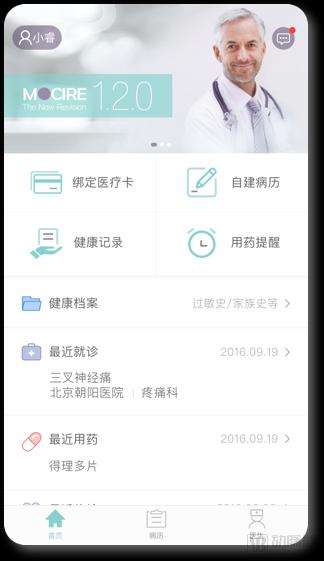
“Yirui Cloud Medical Record” APP Interface
According to Cai Ting, head of the “Chaoyang Health Cloud APP”: “In the past, the vast majority of internet healthcare companies adopted a model of extending from outside hospitals into their internal operations. After observation, we believe that this model is not suitable for Jiahe Meikang.”
He believes that Jiahe Meikang’s strength lies in its large base of electronic medical record (EMR) users and its established presence within hospitals. Internet healthcare companies often encounter information system bottlenecks when expanding their services into hospital settings. Therefore, for Jiahe Meikang to develop follow-up extension services and products for its EMR offerings, the ideal scenario would be to extend its reach from inside hospitals to outside settings.
“Hospitals’ adoption of cloud-based electronic medical records (EMRs) not only entails corresponding costs but also exposes them to certain risks, resulting in relatively limited willingness to embrace such solutions. In particular, hospitals remain deeply concerned about ensuring information security after patient data is made accessible to patients. Undoubtedly, the Chaoyang Health Cloud APP is a remarkably forward-looking product,” said Cai Ting.
In July 2018, the National Health Commission and the National Administration of Traditional Chinese Medicine jointly issued the “Notice on Deepening the Implementation of ‘Internet + Medical Health’ Convenience and Benefit Activities.”
The Notice requires that by 2020, interoperability and integration between the electronic health record (EHR) database and the electronic medical record (EMR) database be achieved to comprehensively document and manage residents’ health information. Residents will be able to conveniently access their consultation records across different healthcare institutions and, through dynamic linkage with their EHRs, better manage their own health. By 2020, sharing of EHRs and EMRs within medical consortia and mutual recognition of examination and test results are to be realized, thereby avoiding redundant testing for patients. Thus, from a policy perspective, opening medical record data to patients and sharing it within medical consortia represents an industry trend.
The “Notice” further requires that, while ensuring medical quality and information security, healthcare providers actively offer online follow-up consultation services for certain common and chronic diseases, along with follow-up management and remote guidance, gradually enabling patients to undergo rehabilitation at home. Once physicians have access to patients’ medical records, they are permitted to issue online prescriptions for certain common and chronic conditions for follow-up patients. In the past, during internet-based preliminary consultations, it was difficult for physicians to obtain first-hand data or complete patient medical records. With the “Chaoyang Health Cloud APP,” physicians can now conduct online clinical services in the form of follow-up visits, leveraging patients’ historical medical data and established trust relationships.
In September 2017, the “Chaoyang Health Cloud APP” was officially launched and promoted at Chaoyang Hospital. As of May 2018, the Chaoyang Health Cloud APP had accumulated nearly 40,000 registered users, with over 16,000 monthly active users and an average of nearly 190,000 monthly launches.
Doctors manage patients anytime, anywhere, providing them with the best medical care.
According to Liu Yuhong, Director of the Information Center at Chaoyang Hospital, Chaoyang Hospital and Jiahe Meikang have been collaborating on the development of the “Chaoyang Health Cloud APP” for approximately two years. In the early stages, both parties were continuously conducting tests and modifying functional requirements, with the app officially launching only this year.
“We hope to integrate the ‘Chaoyang Health Cloud APP’ as part of mobile healthcare, enabling physicians to monitor and manage patients’ conditions at any time, both within and outside the hospital, including alerts for critical values. This allows doctors to provide optimal medical services to patients without being constrained by geography or time,” said Director Liu.
Director Liu stated that while this product cannot replace the hospital’s existing electronic medical record (EMR) system, it can serve as a tool to complement the hospital system in terms of functionality and application scenarios.
Currently, the documentation of clinical progress notes, consultation records, and physician ward round notes has been implemented through the “Chaoyang Health Cloud APP,” all of which are customized requirements of Chaoyang Hospital.
In addition to the patient-facing version, the “Chaoyang Health Cloud APP” also offers a physician-facing product. The core features of the physician version include management of in-hospital patients, medical records, physician orders, and laboratory and imaging reports during hospitalization. It also facilitates communication across different campuses and departments within and between hospitals.
“Taking consultations as an example, we define this feature of the Chaoyang Health Cloud as an informal, expedited consultation service. It can send meeting reminders and, upon approval, schedule the consultation at a designated time. Physicians can discuss medical cases online via the app, enabling highly efficient consultations,” said Cai Ting.
Data Quality and Security: The Most Challenging Issues in the Project
During the launch of the “Chaoyang Health Cloud APP,” Jiamei Hekang not only integrated system data into the app but also screened the data to address issues such as inconsistency, disorganization, and loss. Cai Ting stated, “No matter how well a hospital builds its information systems, it will always encounter workflow design flaws and system bugs. The erroneous data generated by these issues will accumulate in the system over time.”
For Jiahe Meikang, the greatest challenge lay in helping Chaoyang Hospital organize and troubleshoot its data. At times, the technical team even had to reverse-engineer issues to identify their root causes. If a problem stemmed from a software bug, the vendor needed to be notified to patch the bug and vulnerabilities. “Of course, this significantly enhances the integrity, consistency, and robustness of the hospital’s information systems,” said Cai Ting.
Regarding the issues of data security and sharing, Cai Ting believes they can be discussed from two perspectives: sharing and security. These fall into two distinct layers: information security and privacy protection.
In terms of information security, Jiahe Meikang primarily enhances system security through firewalls and access control policies. Access controls are implemented during data transmission to reduce system vulnerabilities and mitigate the risk of attacks. In the event of an attack, the system is designed to be robust and resilient enough to withstand such threats.
In terms of architecture, the “Chaoyang Health Cloud APP” adopts a private cloud deployment, with all data servers located within the hospital premises, thereby maximizing data security. Regarding privacy protection, the “Chaoyang Health Cloud APP” employs robust authentication mechanisms to address these concerns.
To ensure consistency between app users and their real-world identities, Jiahe Meikang employs multi-factor authentication to determine whether access to user information is authorized. For instance, Jiahe Meikang may verify identity using questions based on the patient’s social security card details, medical visit card information, national ID number, and even the department where the patient most recently received care. Furthermore, after activating their identity account, patients retain the autonomy to grant or deny physicians’ requests to access their medical records via the app, as well as to specify the duration of such access permissions.
Authentic and Valid Outcome Data
In the past, data generated within various information system platforms required mutual API integrations for access, with the data remaining in their original systems. In contrast, “Yirui Cloud Medical Record” is a medical data sharing platform that stores result-oriented data.
For instance, in the case of data such as prescriptions, if no charges are incurred after a prescription is issued, "Yirui Cloud EMR" will treat this data as invalid. The data will be included in the result dataset only when the prescription has been fully paid for and not refunded by the patient.
For data generated during hospitalization, once the medical records are archived after patient discharge, this information is incorporated into the outcome data. The outcome data consist primarily of objective data, such as laboratory and diagnostic test reports.
Of course, these data categories are quite diverse. According to Cai Ting, Jiahe Meikang has established numerous classifications and supports both structured and unstructured data. Unstructured data is presented in electronic format within the patient-facing app, ensuring that the content and formatting of the original paper records are fully consistent with their electronic counterparts.
The data types in “Yirui Cloud EMR” are generally categorized into six major classes:
1. Laboratory test data, such as routine clinical laboratory results and microbiological data;
2. Examination data, including endoscopy, ultrasound, pathology, and other diagnostic data, can be collected by Jiahua Meikang as long as the system has corresponding data interfaces;
3. Prescription data, primarily outpatient prescriptions;
4. Health examination data: Since some hospitals have health examination centers, data from these centers can also be collected;
5. Imaging data, depending on the hospital's equipment investment;
6. Medical record data, including outpatient and inpatient medical records.
“Yirui Cloud EMR” data updates and iterations depend on the current status of hospitals’ health IT infrastructure. Some hospitals have already established integration platforms and data centers, enabling real-time data sharing. Consequently, the data published externally by Yirui Cloud EMR is relatively more up-to-date.
However, under normal circumstances, if the conditions for an integration platform are not met, Jiahewechal will set the data update cycle to within 24 hours. Of course, data updates can also be categorized based on actual scenarios. For instance, outpatient services support real-time updates, while laboratory and examination results support delayed updates. In addition, hospitals can control the extent of data accessibility; for example, only data generated after January 2017 may be made accessible to patients, with earlier data remaining inaccessible.
During the development of non-integrated platform solutions, data interfaces involving other healthcare IT enterprises will continue to rely on traditional interface methods, incurring corresponding costs that are naturally passed on to product pricing.
From Hospital-Level to Regional-Level
On April 28, the General Office of the State Council issued the “Opinions on Promoting the Development of ‘Internet + Medical Health’” (hereinafter referred to as the “Opinions”). The “Opinions” state that hospitals at Level II and above shall improve the functionalities of their hospital information platforms, integrate various internal system resources, and enhance hospital management efficiency. Tertiary hospitals are required to achieve interoperability and sharing of medical service information within their institutions by 2020, and hospitals with the necessary conditions should accomplish this as soon as possible.
In light of the current situation where many Grade A tertiary hospitals operate not only as standalone institutions but also engage in medical consortium activities, Jiahua Meikang has developed the regional-level “Yirui Cloud EMR” based on its hospital-level solutions.
“Information sharing” and “interconnectivity” serve as the foundational technical support for the operation of medical consortia and the implementation of tiered diagnosis and treatment policies. However, at present, the level of informatization and technical capabilities of medical institutions are not yet sufficient to fully support information sharing among institutions within medical consortia.
A Regional Medical Data Sharing Platform for Cloud-Based Electronic Health Records: Based on the current state of informatization in medical institutions and addressing the challenges of sharing electronic health records within medical consortia, this platform builds upon hospital-level medical data publishing systems. By leveraging cloud computing and big data technologies, it establishes a regional cloud-based platform for medical data sharing across entire regions or medical consortia, providing comprehensive technical solutions and application frameworks to support the development of city-level health clouds.
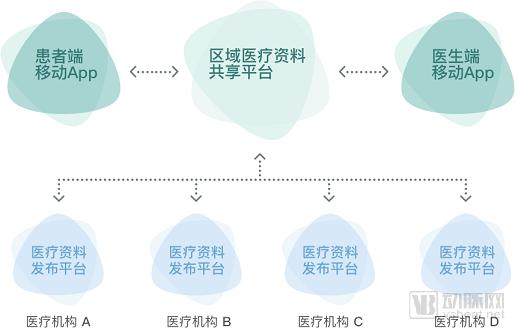
Regional Healthcare Data Sharing Platform enables unified management, storage, and distribution of healthcare data. It performs centralized verification of medical record data retrieval requests initiated by physicians or patients, and initiates search and access requests to the healthcare data sharing platforms of various institutions within the Medical Consortium. Encrypted transmission and logging are implemented through security technologies.
The key features of this platform are as follows:
1. Systematize data from all medical institutions within the medical consortium, establish a unified patient index, and create structured associations between patient visit records and reports.
2. Patients within a medical consortium maintain continuous electronic health records, and institutions across different consortia can share regional medical record and health information indexed primarily by patient identity.
3. It is possible to establish a city health cloud and a healthy city mobile app based on a regional medical data sharing cloud platform.
4. Leveraging the data platform provided by cloud-based electronic medical records, technical support can be offered to medical consortia for services such as appointment scheduling, bidirectional referral, health management, and telemedicine.
Whether at the hospital or regional level, Jiahe Meikang’s “Yirui Cloud EMR” serves as a revolutionary product. As hospitals accelerate their digital transformation, this solution is poised to gain greater visibility among more healthcare institutions and patients.