

How Talkspace, a Husband-and-Wife Startup, Disrupted Psychotherapy with Remote 'Text Therapy': An Iterative Journey

Talkspace
Mental Health Telemedicine Service Provider

SoftBank
Multi-Stage Venture Capital Firm

Spark Capital
Venture Capital Firms
As we come to realize that the brain is nearly the most complex entity in the known universe, a multi-billion-dollar market spanning from physical health to mental well-being awaits exploration.
Amid the mental health needs of 250 million people, VCBeat has recently launched a special series on the Mental Health Industry. From enterprises to markets, and from China to overseas, challenges and opportunities coexist. We will conduct a comprehensive scan of this sector. If you are part of this industry, you are welcome to engage with the authors at any time; for media coverage requests, please contact VCBeat directly.
“I haven’t left my room for five consecutive days. I asked myself whether it was still necessary to go on living. I know I am the strongest person, yet I feel profoundly vulnerable.”
—Michael Phelps
By entering the digital behavioral health sector with its unique “text therapy” approach, Talkspace quickly gained a foothold and continued to innovate boldly, becoming a disruptor in the psychotherapy industry. Founded in 2012 by the married couple Oren Frank and Roni Frank, Talkspace has undergone several iterations and has now grown into a leading provider of remote mental health services in the United States. Statistics show that the platform has over 1 million individual users alone, employs more than 2,000 licensed psychotherapists, and holds a 10% market share in the U.S.

U.S. Swimmer Michael Phelps Shares His Experience Using Talkspace
In May 2018, Talkspace enlisted swimming legend “The Shark” Michael Phelps as its spokesperson, challenging the public perception that psychotherapy is a secretive, even somewhat stigmatized, private activity. In June of the same year, Talkspace expanded into prescription medications, becoming one of only two digital behavioral health service providers globally with prescribing privileges, thereby disrupting the conventional business model of online psychotherapy platforms.
In fact, Talkspace, now six years old, has been continuously driving various disruptions since its inception. However, in its early stages, Talkspace was merely a “mom-and-pop” operation imbued with a strong sense of individual heroism.
In 2011, Roni, a software engineer at Amdocs, underwent a series of professional psychotherapy sessions after discovering issues in her intimate relationship with her husband. During therapy, Roni learned that the conflicts between her and her husband stemmed from individual differences arising from each person’s unique needs, and that these differences, when addressed through effective communication, often contribute positively to intimate relationships.
Subsequently, Roni began pursuingMaster’s degree in Psychoanalysis and Psychotherapy from the New York Graduate School of Psychoanalysis. During this period, she discovered that although nearly 20% of Americans are diagnosed with varying degrees of psychological disorders, more than 70% of these patients receive no professional treatment at all due to prohibitive costs.
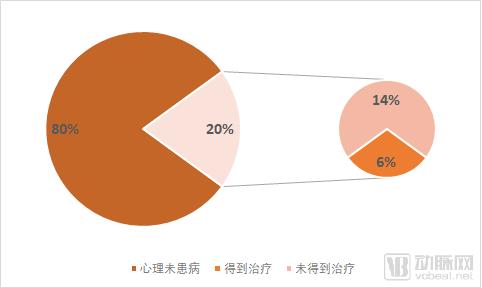
Source: MobiHealthNews; Chart by VCBeat
Thus, in 2012, Roni and her husband Oren co-founded Talkspace, with their initial goal being to make psychotherapy more accessible to a broader population. Roni once stated, “I want to dedicate my life’s work to improving the accessibility of psychotherapy.” Since then, Talkspace has embarked on a path of rapid iteration, marked by each round of financing.
Six Funding Rounds in Six Years: No Short Span of Time
Currently, Talkspace has completed its Series C financing, raising a total of nearly $60 million across six funding rounds. VCBeat (WeChat ID: vcbeat) has compiled Talkspace’s financing timeline.
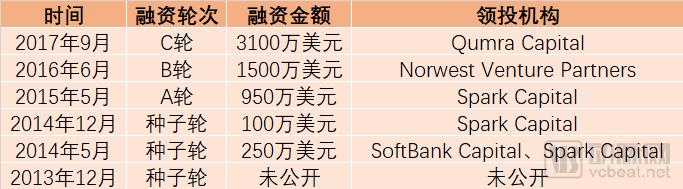
Data source: Crunchbase, compiled by VCBeat
Looking back from 2018, the year 2012 can be regarded as Year One of digital behavioral health. It was then that Ginger.io, Happify, and Headspace—companies that would later become dominant forces in the field—were just getting started; Calm and Talkspace emerged almost simultaneously; and the founding of Lyra Health and Quartet was still to come. Digital behavioral health companies, characterized by light-touch medical services and asset-light operations, place particular importance on refining their products and business models. Recently, Lantern, also founded in 2012, announced that it would cease operations effective August 1, 2018. In fact, six years is long enough for companies such as Talkspace, Calm, and Lantern to undergo significant changes.
Clear the Ice: Unlimited Remote Text-Based Therapy
Initially, Talkspace’s business model was quite simple: on one hand, it sourced medical resources from registered psychotherapists, and on the other hand, itThe patient-facing approach addresses unmet treatment needs and establishes a communication platform for both parties.
Talkspace’s inaugural product, Unlimited Messaging Therapy™, enables users to consult with designated remote therapists via unlimited text, voice, and video messages. Therapists formally practicing on Talkspace must hold at least the Licensed Mental Health Counselor (LMHC) credential. In the United States, obtaining LMHC licensure requires a master’s degree, a minimum of 1,500 hours of supervised clinical experience, and successful completion of relevant examinations. This requirement constitutes a key competitive advantage for Talkspace over its rival, 7 Cups of Tea, which does not impose stringent qualifications on its counselors.
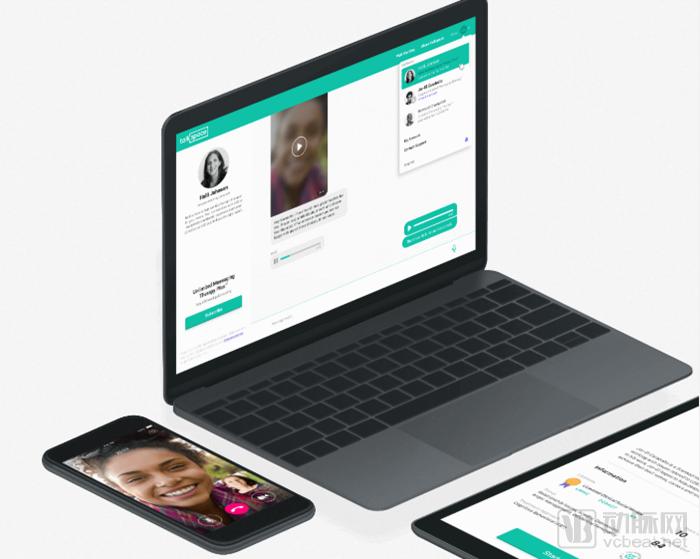
Image from Talkspace's official website
Unlimited Messaging Therapy™ is offered on a subscription basis, with fees ranging from $12 to $49 per week, depending on whether users choose annual or weekly billing.Talkspace’s fees are slightly lower than those of its competitor BetterHelp, and compared with traditional psychotherapy, it can save users up to 80% in treatment costs. However, Talkspace’s drawback at the time was that it had not yet integrated with health insurance. For digital behavioral health companies, integrating with health insurance is both a shortcut and a minefield—a topic to be addressed later.
In December 2013, Roni’s husband-and-wife startup secured its first round of financing, but they did not disclose any details of the funding.
In May of the following year, Talkspace announced for the first time that it had secured $25 billion in financing, with investors including SoftBank Capital and Spark Capital.。At that time, Quartet had just been founded, and Talkspace’s remote unlimited messaging therapy model was beginning to attract capital attention. Roni and his wife used the funding to expand their therapist network and migrate their services to mobile platforms, enabling people to receive therapy on the go via iPhone or iPad.
That same year, Ran Harnevo, former Audio Director at AOL (America Online), a prominent internet service provider, joined the board of directors of Talkspace. His appointment marked the beginning of improvements to Talkspace’s user experience. In July 2016, driven by Ran’s efforts, Talkspace announced a partnership with Agora.io, a global leader in Communications-as-a-Service (CaaS), to provide high-quality real-time audio and video services.
At the time, a key obstacle for many users in choosing remote psychotherapy services was the inability to interact with therapists in a face-to-face setting, which prevented the capture of nonverbal cues such as facial expressions, eye contact, and body language. With the integration of Agora.io’s services, the user therapy experience has been optimized.
Previously, Talkspace collaborated with researchers from Columbia University to conduct an experiment that verified the efficacy of its remote psychotherapy is no less than that of traditional care. The study demonstrated that: 1) patients achieved better outcomes after 3.86 months of Talkspace remote psychotherapy compared to traditional treatment; 2) the stability of the therapeutic alliance in remote psychotherapy was comparable to that in traditional care; and 3) Talkspace significantly reduced patient wait times, with platform responses within five minutes of online help requests and replies from assigned therapists provided within three hours. Talkspace offers patients greater comfort, affordability, and convenience.
In May 2015, Talkspace completed its Series A financing round, raising $9.5 million, similarlyFromSoftBank Capital and Spark Capital. At that time, Talkspace already had 100,000 users in the United States, Canada, and Australia. After the completion of its Series A financing, Roni and his wife set ambitious goals for Talkspace, targeting a user base of 1 billion and planning to enter the European and Asian markets before 2016. This marked the beginning of the first major transformation of Talkspace’s business model.
Talkspace has attempted to bridge the gap with a B2B business modelThe vast difference between 100,000 users and 1 billion users. They partnered with veterans’ organizations to provide remote psychotherapy services to veterans with post-traumatic stress disorder (PTSD), an initiative that did not break the ice for Talkspace at the time. However, a general partner at Spark CapitalAlex FinkelsteinHowever, this has revealed the potential for fission in Talkspace’s business model, leading him to believe that Talkspace should pursue a B2B strategy.
One year later, in June 2016, Talkspace announced the completion of its Series B financing round, led by Northwest Venture Partners, with previous investors continuing to participate. The round raised $15 million. At that time, Talkspace’s user base had expanded to 300,000.
As envisioned by Roni, Talkspace will explore a new business model. This model seeks to establish a virtual group therapy platform where one therapist serves a group of five patients. Roni hopes this approach will enable Talkspace to extend its services to students and corporate employees, althoughDue to the privacy that Talkspace has long touted, group therapy has faced some skepticism, despite having played a significant role in the initial divergence of Talkspace’s business model.
In the same year, Dr. Linda Sacco, who had ten years of experience at Barnabas Health, joined Talkspace as Associate Director of Behavioral Health Services, overseeing the clinical network. Subsequently, Talkspace optimized its backend system and incorporated outcome measures to enhance therapist-patient communication and monitor therapist performance. The platform conducts a quantitative assessment of therapists every 23 days. While shifting its focus toward exploring B2B business models, Talkspace has maintained stringent standards for product quality.
In September 2017, Talkspace announced the completion of its Series C financing round, raising $31 million, led by Qumra Capital. In a subsequent phone interview, Oren stated that Talkspace would continue to explore B2B business models and recruit more therapists. At that time, 90% of Talkspace’s sales revenue came from consumer-facing (C-end) services, and management hoped to change this situation within the next few months. Additionally, Oren was planning international expansion, with intentions to extend operations to Africa, Europe, and Latin America in the following year.
Subsequently, Talkspace streamlined its pricing model: $128 per month for users receiving one therapy session per day, and $156 per month for those receiving two sessions per day. Unlike Lantern, which focuses on partnerships with health insurance providers, Talkspace’s B2B clientele is relatively diversified.
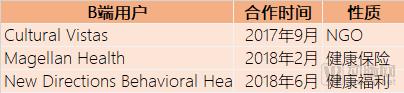
Data source: Public information, compiled by VCBeat
September 2017,TTalkspace has partnered with Cultural Vistas to provide services to the latter’s members as part of its standard health insurance plan.CCultural Vistas is a nonprofit organization providing immigration services, serving over 6,000 students and professionals annually.
In February 2018, Talkspace became a partner of Magellan Health, a major health insurer ranked 475th on the 2018 Fortune 500 list. Following the partnership, Magellan Health members gained insurance coverage for using Talkspace.
In June 2018, Talkspace announced a partnership with New Direction Behavioral Health. Under this collaboration framework, eligible users of New Direction can access Talkspace’s services through the Employee Assistance Program (EAP). New Direction is a comprehensive behavioral health service provider serving millions of users in Kansas and other regions.
This June, Talkspace made another bold move by offering psychiatric treatment services to patients. Through independent collaborations with psychiatrists, the platform enables these specialists to work alongside its psychotherapists in determining whether users require medication, with prescriptions issued electronically by the psychiatrists. Roni believes that this new feature allows Talkspace to serve a broader user base. Prior to launching psychiatric services, Talkspace faced numerous competitors; however, after stepping into the realm of combination drug therapy, its only remaining rival is Quartet, the “giant” of the digital behavioral health industry. In the next article, VCBeat will provide an in-depth analysis of Quartet.
Although Talkspace has never seemed to glance at the passing scenery while sprinting forward, having reached its current position by stepping over the corpses of competitors plagued by either inferior products or flawed business models, the increasingly focused external competitive landscape will inevitably have a significant impact on the innovative decisions made by Roni and his wife. We will wait and see how Talkspace continues to disrupt the industry.
Mental Health + Case Series Special Report:
Selected Reports on the Mental Health Industry:
【AI + Mental Health】Widespread Anxiety: Can AI-Driven Cognitive Behavioral Therapy Be of Use?