

Optimizing the Entire Medical Imaging Workflow with Informatics Tools: Insights from Dr. Wang Xiaoying of Peking University First Hospital at MICS 2018
VCBeat / Bi Yuanfeng, Zhao Hongwei, Xiao Peiling
The 5th Medical Image Computing Youth Symposium (MICS 2018) was held at the Minggugong Campus of Nanjing University of Aeronautics and Astronautics on July 14–15, 2018.
Medical Imaging Computing Seminar (MICS), established in 2014, aims to provide an academic exchange platform for young Chinese scholars in the field of medical imaging, foster mutual understanding and friendship, and facilitate their integration into the broader academic research community. MICS focuses on original research in medical image computing from the past two years, welcoming presentations of new theories, methods, and applications in medical image processing, computer vision, and artificial intelligence, as well as reports on breakthrough advances at the deep intersection of imaging with clinical and basic medicine.
During the event, VCBeat conducted an exclusive interview with Dr. Wang Xiaoying, Director of the Department of Medical Imaging at Peking University First Hospital, who delivered a speech at the conference. The following content is compiled by VCBeat based on the interview.
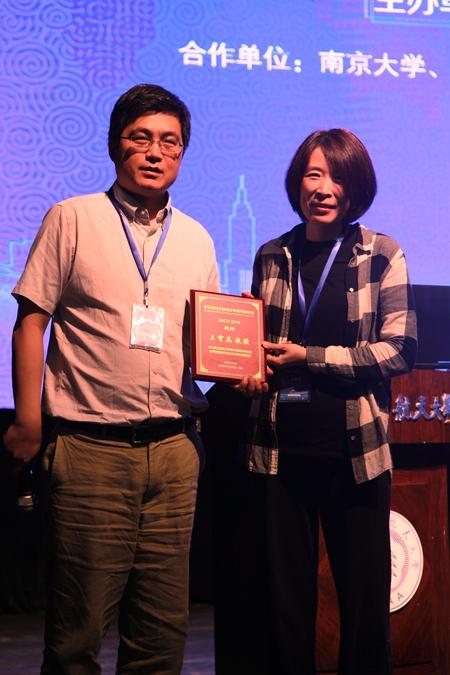
Zhang Daoqiang (left), Co-Chair of the 2018 MICS, presents a medal to Director Wang Xiaoying (right).
Technological advancements should focus on whether patients and physicians truly benefit.
“Although AI has been a frequent topic of discussion in recent years, our work has not yet seen substantive application of true artificial intelligence. We have employed conventional information technologies to address practical issues encountered in certain workflow stages; these tools can only be described as digital or informational instruments,” said Director Wang Xiaoying.
Patients are the primary beneficiaries of technological advancements. “When patients come to our department for imaging examinations, physicians typically assess the patient’s current condition and select an appropriate imaging modality. If the most suitable examination is chosen, yielding useful diagnostic imaging results, clinicians can then make accurate clinical decisions based on these findings. Conversely, if the selected imaging modality is inappropriate, the diagnostic information provided to physicians will remain limited, regardless of subsequent improvements in our medical imaging and AI technologies,” stated Director Wang Xiaoying.
Director Wang Xiaoying emphasized, “Starting from the patient’s actual condition and combining it with the latest technological advancements to select an appropriate examination method is a shared responsibility of radiologists and clinicians. We must not only optimize every aspect of internal operations within the Department of Medical Imaging but also focus on whether patients obtain valuable diagnostic information through imaging examinations. The ultimate benefit to the patient should be the criterion for judging the value of improvements in our various technologies.”
Beneficiaries of technological advancements inevitably include physicians. The primary anticipated benefits of AI for radiologists are to alleviate their diagnostic burden and improve diagnostic accuracy; however, AI must be integrated into clinical workflows to maximize its utility. “Our department has adopted various innovative informatics tools that are gradually assuming some of the simpler, repetitive tasks from physicians,” said Director Wang Xiaoying. “Taking the writing of imaging diagnostic reports as an example, ideally, when a physician opens the report page, part of the content will have already been populated by AI. Physicians can then reject, modify, confirm, or accept the AI-generated results based on their professional expertise, thereby making the final comprehensive diagnosis.”
Subsequently, Director Wang Xiaoying stated, “If AI tools do not provide interfaces for integration into clinical workflows and remain merely standalone third-party products, they will not fully align with the actual workflow of current radiology departments based on PACS/RIS, resulting in inefficient utilization of AI outputs. Improving these data interfaces and workflow components is not particularly difficult; it simply requires that product design aligns with real-world needs.”
Rational Selection of Imaging Examinations and Risk Prediction for Contrast-Induced Nephropathy: Two Examples of Optimizing Medical Imaging Workflows Using Informatics Tools
“Leveraging new technologies to enhance the value of imaging examinations in a patient-centered manner involves not only using AI to improve image quality and provide auxiliary diagnosis, but also extending to the use of information technology tools to optimize the entire workflow of medical imaging.” During the interview, Director Wang Xiaoying used two examples beyond image diagnosis to illustrate her point.
Rational Selection of Imaging Examinations: The Department of Medical Imaging offers a wide variety of imaging services tailored to different clinical scenarios. Regarding how information technology tools can assist physicians in selecting appropriate examinations, Director Wang Xiaoying described the underlying design logic as follows: “By integrating current evidence-based medical knowledge with patients’ clinical information, we establish a logical mapping among ‘patient status–evidence-based guidelines–imaging modalities.’ Natural language processing (NLP) is used to extract key patient information from medical records and match it against clinical guidelines, ultimately determining the most suitable imaging examination for each patient. This straightforward clinical improvement requires neither advanced technical sophistication nor significant additional healthcare costs; in my view, it may be even more important than image interpretation.”
Risk Prediction for Contrast-Induced Nephropathy: Contrast-enhanced CT requires intravenous administration of contrast media. As one of the most commonly performed clinical examinations, contrast-enhanced CT is utilized for the detection and qualitative diagnosis of numerous diseases. Compared with non-contrast CT, contrast-enhanced CT often significantly improves diagnostic accuracy; however, the risks associated with contrast media must be carefully considered.
Director Wang Xiaoying explained, “There are certain risks associated with contrast agent injection; for instance, a small number of patients are at risk of developing contrast-induced nephropathy. Dozens of known risk factors can affect kidney function, making it difficult for healthcare providers to determine the specific risk for each individual patient. Therefore, we have compiled long-term follow-up data from patients undergoing contrast-enhanced CT scans and used machine learning to build a model that predicts the risk of adverse reactions to contrast agents for each patient. Before receiving the injection, patients only need to answer a set of specific questions. By inputting these answers into the software, the level of risk can be predicted. For patients identified as high-risk, healthcare providers will proactively issue alerts and enhance monitoring—for example, by arranging a serum creatinine test 48 hours after the contrast-enhanced CT scan—to enable early detection of potential kidney damage and prompt treatment. Patients who receive timely intervention generally have favorable prognoses.”
Director Wang Xiaoying stated, “Contrast-enhanced CT scans offer excellent diagnostic efficacy and are widely used in clinical practice; however, the risks associated with contrast agents must be simultaneously mitigated. Relying solely on physicians’ experience makes it difficult to quantitatively assess patients’ risk levels. By employing predictive models, high-risk patients can be identified, thereby ensuring they receive better protection.”
Feeding AI Systems That Continuously “Grow” with Real-World Data
“AI must continuously evolve in the real world. When AI systems are first applied to clinical workflows, their capabilities may be limited and the models imperfect. However, by integrating them into actual work processes and continuously ‘feeding’ them with real-world data, they will steadily improve.” This is how Director Wang Xiaoying described the cultivation of AI systems.
“The deployment of an AI system in clinical practice does not mark the end of the R&D process, but rather the beginning of AI iteration. For all cases processed by AI, we continuously follow up on patients’ clinical courses and incorporate information on clinical outcomes into our database to create new training sets, enabling continuous iterative improvement. Through this iterative process, the performance of the AI system continually improves, thereby providing increasingly substantial support to physicians within their actual workflows.”
Director Wang Xiaoying stated, “AI systems should not only output auxiliary diagnostic information but also integrate clinical data to assist clinicians in decision-making. For instance, in the case of a tumor patient, besides medical imaging data, clinicians need to consider the patient’s medical history, family history, overall health status, and family economic situation, among other factors, and communicate with the patient to jointly make medical decisions. We can aggregate these known pieces of information and provide recommendations to physicians based on algorithms, which serves as an excellent tool for the comprehensive utilization of information.”
“I believe it is possible to integrate single-disease data from start to finish; the key lies in ensuring physician participation and benefit. If physicians are not involved, the trained AI will struggle to align with their clinical needs.”
AI systems are not only poised to become the core “partners” of future physicians but also serve as vital assistants in hospital or departmental management.
Director Wang Xiaoying cited a small-sample experimental case: “Among physicians using computer-aided diagnosis (CAD) for prostate cancer, one group demonstrated improved diagnostic accuracy after adopting the CAD system, while another group experienced a decline in accuracy. Therefore, prior to CAD implementation, such physicians should be identified and provided with targeted training; moreover, differentiated CAD outputs could be tailored based on physician categorization. If artificial intelligence (AI) is employed to profile and classify physicians, AI may gradually evolve into a manager of the healthcare service delivery system.”
Director Wang Xiaoying has also analyzed data from standardized residency training programs, noting that log files from structured reporting systems can be used to analyze residents’ workflow. “The reporting system allows for a retrospective analysis of the process by which radiology residents draft imaging reports, with every action taken by the physician during report generation being recorded. Analysis of these procedural data can yield insights into each resident’s performance and proficiency, which can inform their teaching and mentorship. However, the use of such data to profile healthcare professionals should be subject to restrictions; while ensuring privacy and employing the data in a good-faith and appropriate manner, it is essential to remain fully aware of the associated risks.”
Redefining the Future Role of Radiologists
With the advancement of AI systems, they can serve not only as the “brain” for physicians but also as the “brain” for hospitals and even the entire healthcare system.
Director Wang Xiaoying has mentioned on more than one occasion, “I always tell the young professionals in our department that we must not only understand medical imaging but also gain a deep understanding of diseases, patients, technology, our peers, and the times. The advent of new technologies is transforming the healthcare service system. While the core value represented by the medical profession remains constant, the scope and methods of clinical practice will be redefined.”
“Anxiety” is the word most frequently mentioned by Director Wang Xiaoying. “Several colleagues from our Department of Medical Imaging attended this learning event (the 2018 MICS), including young physicians, graduate students, and outstanding technologists from our department. I deeply feel that the career planning of our young imaging professionals is facing significant challenges. If we do not understand and engage in the development of new technologies now, our future careers will be at great risk. We must keep pace with this trend, as it waits for no one. I hope that in the coming years, we can establish a solid foundation for data flow and structured reporting within the microenvironment of the Department of Medical Imaging at Peking University First Hospital. This will create an environment where young staff can learn and leverage new technologies, enabling outstanding individuals to seize opportunities for personal growth amid the wave of technological advancement and contribute to the development of the imaging discipline.”
“This is a significant opportunity. In the future, whoever masters clinical scenarios, data, and tools will be the ‘DOCTOR,’” said Director Wang Xiaoying. “The future direction for radiologists involves not only becoming experts in the diagnosis and treatment of specific diseases and playing a key, even leading, role in multidisciplinary consultations, but also learning and mastering new technologies to become pioneers in integrating these innovations into clinical workflows.”