

Chinese Tech Giants Respond to Vaccine Safety Crisis: Tracing Systems, Profitability, and Digital Health Solutions
The vaccine scandal continues to escalate, keeping the public on edge.
Major internet giants, including Alibaba Health, Tencent, Sogou Medical, and Baidu, promptly launched features for querying problematic vaccines.
Following the incident, it not only caused some public anxiety but also led to panic and distrust among certain users toward vaccines, vaccination facilities, and healthcare providers administering the shots. Meanwhile, it exposed loopholes and issues in the current production and distribution processes, particularly concerning vaccine regulation, safety, traceability, and accessibility of vaccination services.
Not only in China, but also in the United States, problems arose during the mass application of polio vaccines in the 1950s, bringing vaccine safety issues into the public spotlight. This became a turning point for the establishment and development of the U.S. vaccine regulatory system.
In the wake of the vaccine incident, how can distribution and traceability regulation be improved? Are domestically produced vaccines generating exorbitant profits? What issues has the “Internet + Vaccination” model addressed? VCBeat (WeChat ID: vcbeat) interviewed industry experts to provide a comprehensive analysis and interpretation of these questions.
In terms of vaccine safety regulation and the convenience and accessibility of vaccination, this section primarily introduces the U.S. Centers for Disease Control and Prevention (CDC)’s regulatory model for vaccine safety and the methods of vaccine administration.
Let us first look back at history. In 1955, the “Cutter Incident” occurred in the United States. Cutter Laboratories, a family-owned pharmaceutical company based in California, announced that it had successfully developed the Salk polio vaccine. However, problems arose during its large-scale application. Investigations ultimately traced the issue to the vaccine manufacturer: due to failure to effectively inactivate the virus, the vaccine caused 40,000 children to contract polio, resulted in varying degrees of paralysis in 200 children, and led to the deaths of 10 children.
The “Cutter Incident” had an unforeseen impact on the entire U.S. vaccine market. It also marked a turning point in the history of vaccine development in the United States, after which a comprehensive vaccine safety system was gradually established and regulatory oversight was strengthened.
In 1964, the U.S. Public Health Service formally established the Advisory Committee on Immunization Practices (ACIP) to fill the previous gap in the United States regarding an institutional body for vaccine policy formulation. The ACIP is designed to assist in the prevention and control of infectious diseases and to provide recommendations on vaccine use for U.S. citizens, which serve as public health guidelines for safe vaccination.
In 1986, then-U.S. President Ronald Wilson Reagan signed the “National Childhood Vaccine Injury Act” (NCVIA). The NCVIA requires all healthcare providers who administer vaccines to provide a “Vaccine Information Statement” (VIS) to the vaccine recipient or their guardian prior to each vaccination.
These vaccines include DTaP, polio, measles, mumps, rubella, hepatitis B, Haemophilus influenzae type b (Hib), and varicella. Each VIS contains a brief description of each disease prevented by the vaccine, as well as the risks and benefits of vaccination. The U.S. CDC developed the VISs and distributes them to state and local health departments, as well as healthcare facilities such as hospitals.
The main body of the bill comprises three parts:
First, the Vaccine Adverse Event Reporting System requires all healthcare institutions to report all adverse events caused by vaccine use through this system.
After a vaccine is approved for public use, its safety continues to be monitored. The FDA requires all vaccine manufacturers to submit samples from each batch before it is released to the market, and vaccine manufacturers must also submit their test results on the safety, efficacy, and purity of the vaccine to the FDA. Each batch must be tested because vaccines are sensitive to environmental factors such as temperature and may become contaminated during the production process.
VAERS was jointly established by the U.S. CDC and FDA in 1990. This system is used to collect and analyze adverse reactions associated with all vaccines currently approved in the United States. Although VAERS provides useful information on vaccine safety, its data are limited; therefore, researchers have increasingly turned to large-scale databases such as the Vaccine Safety Datalink (VSD) in recent years.
Second, Vaccine Information Statements. The law requires all healthcare providers to present a Vaccine Information Statement (VIS) to vaccine recipients, or their parents or guardians, prior to administering any vaccine. These statements disclose the vaccine’s name, provide a brief overview of the targeted virus, and outline the benefits and potential risks of vaccination. Each VIS is issued by the Centers for Disease Control and Prevention (CDC) and distributed to state and local health regulatory agencies as well as healthcare institutions.
Third, establish a National Vaccine Program Office under the U.S. Department of Health and Human Services. This office is responsible for coordinating all healthcare institutions involved in epidemic prevention activities, including the Centers for Disease Control and Prevention (CDC), the Food and Drug Administration (FDA), the National Institutes of Health (NIH), and the Health Resources and Services Administration (HRSA).
Under the legislative framework of the National Childhood Vaccine Injury Act (NCVIA), the U.S. Department of Health and Human Services established the “National Vaccine Injury Compensation Program” in 1988, a mechanism designed to provide protection for both vaccine providers and recipients.
Specifically, the NVICP functions similarly to a compensation fund, with awards based on a “no-fault” principle. “No-fault” means that claimants are not required to prove that their injuries resulted from negligence by healthcare providers or vaccine manufacturers. The NVICP covers all routinely recommended childhood vaccines. Compensation is determined according to the Vaccine Injury Table, which summarizes adverse reactions associated with vaccines. This table was established by a panel of medical experts based on their review of the medical literature. The United States has established a vaccine injury compensation trust fund based on this table.
By imposing a $0.75 tax per vaccine dose, collected by the U.S. Department of the Treasury from vaccine manufacturers, the program covers most routine childhood vaccines as well as certain adult vaccines. Data show that from its establishment in 1988 through 2017, the National Vaccine Injury Compensation Program (NVICP) received a total of 17,281 claims, of which 6,085 were deemed compensable and 11,196 were dismissed, with total compensation amounting to $3.9 billion.
The above discussion focuses on vaccine safety regulation. In terms of accessibility and convenience of vaccination, the United States also offers valuable lessons. Although the CDC’s official website may host less accumulated data than China’s, its advantages in information technology infrastructure, coupled with a robust legal and regulatory framework, ensure highly effective implementation.
In the United States, both adult and pediatric vaccines can be administered directly at pharmacies, or appointments can be made and vaccine-related information accessed through apps such as Shots by STFM, CDC Vaccines, ACP Immunization Advisor, PneumoVaccines, and Vaccine Handbook.
Family doctors can also administer vaccinations at patients’ homes. In China, however, individuals must queue at qualified vaccination sites. Moreover, vaccination awareness among some Chinese consumers remains low, particularly regarding adult vaccines. In the United States, individuals seeking flu vaccinations can typically find notices posted at local pharmacies. After registration, pharmacy data is immediately uploaded to the Centers for Disease Control and Prevention (CDC) website, eliminating multi-layered reporting procedures. Authorized entities can directly access the website to view specific county-level vaccination statistics within each state, ensuring greater transparency.
In principle, the end-to-end traceability of vaccine distribution is divided into several stages: from raw materials to finished product ex-factory; from manufacturers to Centers for Disease Control and Prevention (CDCs); from CDCs to vaccination sites; from vaccination sites to individuals; and the monitoring and traceability of Adverse Events Following Immunization (AEFI) post-vaccination.
It can be seen that end-to-end supply chain supervision and traceability primarily encompass the production and distribution processes. The production process refers to the stage from vaccine manufacturers’ procurement of raw materials to the manufacture of finished vaccine products, while the distribution process refers to the flow of finished vaccines from manufacturing enterprises to provincial and municipal Centers for Disease Control and Prevention (CDCs) and their subordinate units.
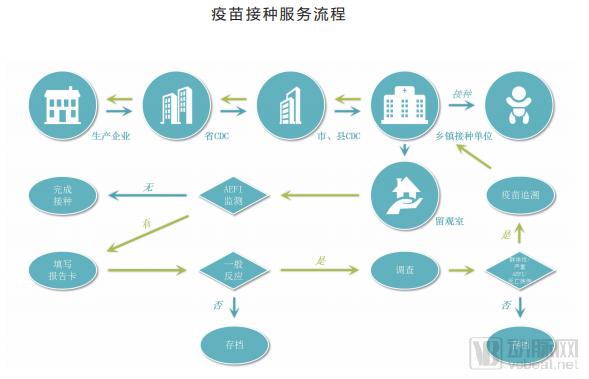
Vaccination Service Process
From a holistic process perspective, there may be regulatory blind spots in the production process. Generally, the procurement department maintains records of raw material purchases, while inspectors document finished products. Given that vaccine manufacturing is a highly complex process, there may be gaps in the documentation of the production process.
On the other hand, the entire vaccine production process is an integrated system composed of countless individual steps. Personnel involved in specific stages can only evaluate the quality of their own work and struggle to analyze the overall process, which hinders internal correction mechanisms; that is, employees are unaware that they are producing substandard vaccines. Even if technical staff possess knowledge of the entire workflow, comprehensive process reviews are difficult to sustain due to constraints such as cost and manpower.
Due to various factors, problematic vaccines are difficult to detect during the production stage, making it naturally one of the key sources where such vaccines originate.
As can be seen from the vaccine distribution diagram, the time vaccines spend in external circulation is actually very short. Upon leaving the manufacturing enterprise, they are immediately transferred to provincial Centers for Disease Control and Prevention (CDCs), which are under strict control. Compared with pharmaceutical transportation, vaccine transport management requires stricter oversight, particularly regarding cold-chain temperature control and shelf life. Vaccine transportation necessitates specialized refrigerated vehicles, whose chassis and cargo box structures differ from those of standard refrigerated trucks converted from ordinary vehicles. Third-party logistics providers such as SF Express and Snowman Group have developed specialized cargo boxes and integrated refrigeration units specifically for cold-chain logistics.
During transportation, numerous risk factors can compromise vaccine quality: improper cold-chain packaging, traffic congestion, and vehicle breakdowns may lead to excessive transit times; prolonged storage on the tarmac; and an insufficient number of temperature monitors, which fail to track temperatures at all locations within the shipping containers.
The aforementioned risk factors can all lead to vaccine quality degradation. In the absence of strict monitoring and feedback mechanisms, compromised vaccines may continue to be distributed down the supply chain until random inspections are conducted by lower-level Centers for Disease Control and Prevention (CDCs) prior to use, at which point damage issues may be detected. With efficient monitoring and feedback systems in place, refrigerated trucks exhibiting temperature anomalies can be promptly investigated. This approach not only facilitates timely detection and prevents compromised vaccines from reaching patients but also allows for the immediate suspension of logistics operations, thereby reducing logistical costs.
In terms of distribution, following the “Shandong Illegal Vaccine Incident” in 2016, the State Council immediately initiated revisions to the Regulations on the Administration of Vaccine Circulation and Preventive Vaccination. The revised regulations strengthened institutional oversight, imposed strict controls on vaccine distribution, and sought to establish a full-process traceability system for vaccines from production to administration. They also improved mechanisms for compensation for adverse events following immunization (AEFI). Clear provisions were made regarding the responsibilities and requirements for disease prevention and control institutions, vaccination units, and healthcare personnel.
Article 18 stipulates that disease prevention and control institutions shall, in accordance with the regulations of the health administrative department under the State Council, establish authentic and complete records of procurement, storage, distribution, and supply, ensuring consistency among invoices, accounts, goods, and payments, and retain such records for at least two years beyond the vaccine’s expiration date for future reference. When receiving or procuring vaccines, disease prevention and control institutions shall request temperature monitoring records covering the entire storage and transportation process; vaccines for which complete temperature monitoring records cannot be provided, or whose temperature control fails to meet requirements, shall not be accepted or procured, and the matter shall be immediately reported to the drug regulatory authority and the health administrative department.
Article 23 stipulates that vaccination units, when receiving Category I vaccines or purchasing Category II vaccines, shall request temperature monitoring records for the entire storage and transportation process, establish and maintain authentic and complete records of receipt and purchase, and ensure consistency among invoices, accounts, goods, and payments. Vaccination units shall not accept or purchase vaccines if full-process temperature monitoring records are not provided or if temperature control fails to meet requirements, and shall immediately report such cases to the drug supervision and administration department and the health authority of the local people's government at the county level.
Article 25 states that healthcare professionals shall administer vaccinations to recipients who meet the vaccination criteria, and shall, in accordance with the regulations of the health administrative department under the State Council, record details such as the vaccine type, manufacturer, identification information of the smallest packaging unit, expiration date, time of administration, the healthcare professional who administered the vaccine, and the recipient. Vaccination records shall be retained for no less than five years.
Notably, the newly added Article 54 explicitly highlights the urgency and necessity of establishing a national system for full-process vaccine traceability. The drug regulatory department under the State Council, in conjunction with the health administrative department under the State Council, shall formulate unified technical specifications for the vaccine traceability system. VCBeat has learned that, regarding vaccine traceability, the initial step—recording vaccination details for recipients, specifically documenting the manufacturer and batch number of the administered vaccine—is not yet implemented in most regions. This is particularly true for adult vaccinations, where such vaccination certificates or records are generally unavailable.
The head of Yue Miao, an information platform specializing in adult vaccination appointments, revealed to VCBeat that while the traceability system for pediatric vaccines in China is already relatively well-established, the traceability system for adult vaccines still requires improvement.
YueMiao stated that it had established adult vaccination records from the outset of its strategic layout. The backend system is equipped with comprehensive data entry and reception interfaces for vaccine information, enabling the direct display of relevant vaccination history on the user side. Technically, YueMiao has already achieved this capability.
In the aftermath of the vaccine scandal, Tencent promptly launched the “Tencent Anxin Plan” mini-program. A relevant executive from Tencent told VCBeat that prior to developing this query portal for problematic vaccines, Tencent had already been building a food and drug safety traceability platform based on consortium blockchain technology, connecting consumers through WeChat.
Building on its previous traceability services for enterprises and regulatory management, Tencent believes that it should—and indeed can—better connect with consumers. This requires the joint participation of food and drug companies, regulatory authorities, Tencent, and consumers in this alliance. Food and drug companies will write data related to raw materials, production, and logistics transportation onto the consortium blockchain, allowing governments and users to access this data through interfaces. Meanwhile, governments can record information on inspection, quarantine, and regulatory penalties onto the consortium blockchain. Tencent will display this information to end consumers through the Anxin Plan platform.
On July 22, Ali Health launched features for QR code-based inquiry and recall alerts for rabies vaccines, followed by subsequent functionality updates. By July 24, users could verify whether they had received problematic vaccines by scanning QR codes or entering batch numbers through multiple Alibaba-affiliated apps, including Taobao Mobile, Alipay, and Ali Health.
Wang Peiyu, Vice President of Alibaba Health and Head of the Traceability Code Division, told VCBeat that over 95% of vaccine manufacturers in China have joined the traceability platform built by Alibaba Health. This enables the rapid deployment of QR code scanning and batch number query functions, ensuring “one item, one code” for quick verification upon scanning. Basic vaccine information is provided by manufacturers when they join the traceability platform. According to the “Ma Shang Fang Xin” (Code Assured) service agreement signed between Alibaba Health and participating enterprises, Alibaba Health is authorized to provide the public with query and verification services for coded products during the term of the agreement.
Product traceability technology can play a role throughout the entire process of vaccine regulation, production, distribution, and usage. For instance, tracking non-compliant batches can prevent problematic vaccines from entering the market; linking traceability with conditions such as temperature and humidity during vaccine transportation enables real-time monitoring to ensure the safety of vaccine transport.
However, Wang Peiyu also pointed out that although the traceability system has achieved comprehensive coverage among vaccine manufacturers, it has not yet been fully implemented within the disease control and prevention system. Establishing a traceability system within this framework may involve hardware costs and software upgrades, requiring joint efforts from government agencies and enterprises to drive its adoption.
“Changchun Vaccine Scandal” has once again placed blockchain technology in the spotlight, positioning it as a candidate solution for traceability systems. RFID technology has already been applied to vaccine traceability and cold chain management with favorable results, while blockchain also offers its own distinct advantages.
Blockchain technology features decentralization and immutability, two attributes not inherent to cloud platform management. Here, “decentralization” actually refers to weak centralization under regulatory oversight. Taking Beijing Yilian Technology as an example, the blockchain it co-developed with the government is non-profit-oriented and supports government-led on-chain data recording to ensure vaccine and pharmaceutical safety. The company retains the authority to access on-chain data when performing inspection duties.
Regarding the production phase, MedChain Technology told VCBeat: “Blockchain cannot solve the problem of counterfeit drugs, but it can enhance the deterrent effect of oversight. Only companies with issues would refuse to join the blockchain, while companies on the blockchain have no possibility of tampering with data, which constitutes a fairly powerful deterrent force.”
“Traditional production process supervision is challenging; however, blockchain technology can record R&D and manufacturing process data on-chain. By having professionals audit the feedback processes associated with this on-chain data, non-compliant operations can be identified and traced.”
In the distribution sector, blockchain technology offers limited advantages over traditional technologies. Protecting vaccines during distribution primarily relies on physical measures, such as increasing the number of thermometers in cold storage units; optimizing logistics to avoid excessively long transportation times; strengthening regulatory oversight throughout the distribution process; and conducting timely quality inspections of vaccines when temperature fluctuations occur.
This is an additive process. To enhance transparency throughout the entire workflow, R&D data can be recorded on a regulated blockchain during production. This approach requires no upgrades to existing RFID tags or associated software, representing a relatively simple and low-cost solution that yields a more transparent and secure vaccine production process.
In summary, preventing such issues in the distribution chain relies primarily on strengthened regulatory oversight, which encompasses both technological measures and stricter penalties, thereby ensuring vaccine safety throughout the entire process from research and development to distribution. Furthermore, beyond technical solutions, greater emphasis should be placed on achieving data interoperability, as well as enhancing data accuracy and timeliness.
Prior to the 1990s, China’s vaccine market was subject to strict regulatory control, with vaccine products primarily supplied by the six major biological products institutes under the former Ministry of Health (located in Beijing, Changchun, Chengdu, Lanzhou, Shanghai, and Wuhan) as well as the Kunming Institute of Biological Products. As administrative restrictions were gradually relaxed, private enterprises and multinational foreign companies actively entered the vaccine market. Consequently, the pediatric vaccine sector evolved into a dual structure: Category I vaccines, characterized by relatively low profit margins and an oligopolistic market, and Category II vaccines, marked by high gross margins and intense competition.
According to data from VCBeat’s Eggshell Research Institute, the approved and released volumes of most domestically produced vaccine categories currently significantly exceed those of imported vaccines. With vaccine varieties remaining largely stable, and as the R&D and production capabilities of Chinese vaccine manufacturers continue to improve, domestically produced vaccines now basically cover all vaccine types. The emergence of domestic competitors for most imported vaccines has led to a continuous decline in the vaccine import rate.
Against the backdrop where domestically produced vaccine varieties have essentially covered those marketed in developed countries, what are the differences between domestic and imported vaccine enterprises from the perspectives of market, R&D, and profits?
In recent years, the global vaccine market has achieved a compound annual growth rate (CAGR) of approximately 2.8%. According to EvaluatePharma estimates, the market size was approximately $27.55 billion in 2015, accounting for 3.4% of the global pharmaceutical market. Global vaccine sales are projected to reach $30 billion in 2017 and $34.7 billion in 2020.
According to a research report by Essence Securities, the global vaccine market is characterized by an oligopolistic competitive landscape. In recent years, the combined sales of the top four vaccine giants—GlaxoSmithKline, Sanofi, Merck & Co., and Pfizer—have accounted for more than 80% of the total global market. In 2017, the vaccine businesses of these four companies generated sales of $6.65 billion, $5.76 billion, $6.16 billion, and $5.6 billion, respectively, with a combined total of $24.17 billion.
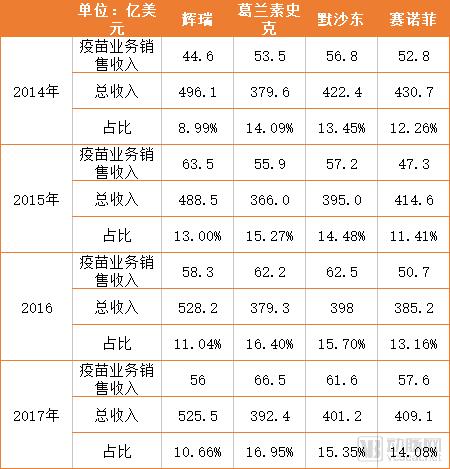
Sales Data of the Four Major Global Vaccine Giants Over the Past Three Years (Data Source: Corporate Annual Reports; Compiled by VCBeat)
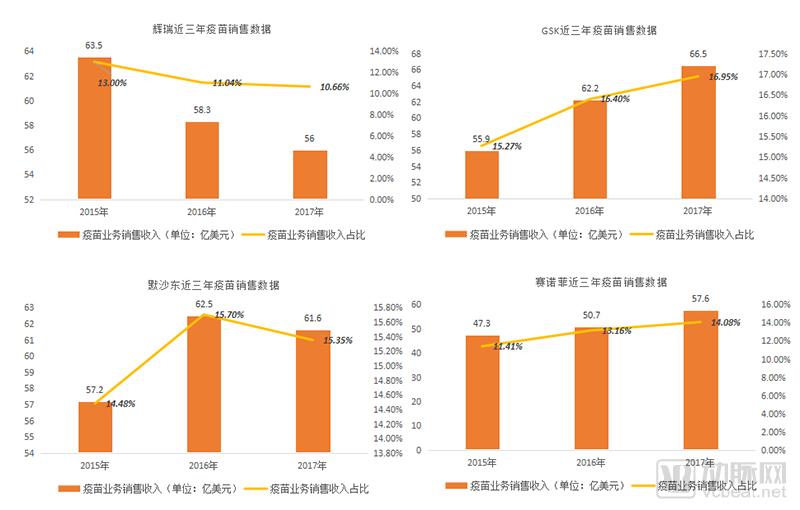
Proportion of Vaccine Sales Revenue for the Four Major Global Vaccine Giants Over the Past Three Years (Data Source: Corporate Annual Reports; Compiled by VCBeat)
The four global pharmaceutical giants account for 80% of the vaccine market. As shown in the table, the annual revenues of these four vaccine leaders have ranged from $36 billion to $50 billion in recent years. However, this revenue is not entirely attributable to vaccines; vaccine sales contribute only about 10%–15% to their total income. This is because vaccine pricing is low in foreign markets, squeezing profit margins, and vaccines are typically not treated as a core business by pharmaceutical companies.
In contrast, in China, VCBeat reports that the proportion of vaccine sales revenue to total operating revenue for listed vaccine companies ranges from 60% to 90%. Specifically, Changsheng Biotechnology’s vaccine sales accounted for 99.10% of its total operating revenue in 2017; CanSino Biologics derived 100% of its revenue from vaccine sales; Zhifei Biological Products’ revenue from self-developed and distributed vaccine products reached 97.75% in 2017; even Walvax Biotechnology, which had the lowest ratio, still generated 78.25% of its revenue from self-developed vaccine sales.
The vaccine industry is capital-intensive, with substantial funding requirements across every stage of research and development, manufacturing, and sales. It is characterized by high capital input, high risk, high value-added potential, and high returns. According to an analysis by Minsheng Securities, the vaccine industry generally exhibits the common features of “high barriers to entry, high investment, long cycles, and high gross margins.”
In the research and development (R&D) phase, vaccine development typically takes more than 10 years due to the involvement of novel pathogens, new pathogenic mechanisms, and assessments of protective efficacy. This process requires substantial financial strength in the early stages to support R&D efforts, while also entailing the risk of development failure.
In the vaccine production process, stringent requirements are imposed on manufacturing workshops and equipment, with rigorous process controls in place, resulting in relatively high capital investment.
In the distribution phase, since vaccine products all require low-temperature storage and cold-chain transportation, subsequent costs cannot be reduced.
Compared with the traditional Chinese medicine and chemical drug industries, biologics involve more advanced technologies. Furthermore, regulatory authorities impose stringent oversight on vaccines; these rigorous standards and requirements result in an average vaccine development cycle of over 10 years. Without substantial financial backing and robust research and development capabilities, vaccine manufacturers cannot survive in the market.
In the early stages of China’s vaccine market, a “public-sector-dominated” landscape prevailed. Category I vaccines were produced and supplied by six major biological products institutes located in Beijing, Shanghai, Changchun, Lanzhou, Chengdu, and Wuhan, with state-owned enterprises holding a dominant position in the Category I vaccine market—a trend that has persisted to this day. During the initial development phase, vaccine products were primarily imitations, such as polio vaccines and diphtheria-pertussis-tetanus (DPT) combination vaccines.
Prior to the 1990s, the vaccine market was characterized by high administrative barriers for both foreign companies and other domestic research entities. After the 1990s, as the state promoted independent innovation, these administrative barriers in the vaccine industry were dismantled, prompting numerous private enterprises in China to enter the vaccine sector. Major global vaccine manufacturers, including GlaxoSmithKline, Sanofi Pasteur, Merck, Wyeth, and Novartis Pharmaceuticals, also entered the Chinese market.
With the implementation of the Regulations on the Administration of Vaccine Circulation and Vaccination, the scope of eligibility for distributing Category II vaccines has been expanded, and the diversification of vaccine market entities will foster a more open and fair competitive environment in the vaccine industry.
According to Essence Securities, China is the world’s largest producer of human vaccines. Data disclosed by the National Institutes for Food and Drug Control (NIFDC) show that China approves and releases 500 million to 1 billion vials (doses) of vaccines annually, ranking first globally. From 2012 to 2015, due to the lack of blockbuster vaccine products launched domestically, the output value of the vaccine industry remained at approximately RMB 15 billion, leading to stagnant industry growth.
In fact, following the successive approvals and launches of major vaccines—including the DTaP-Hib quadrivalent vaccine in 2013, the AC-Hib trivalent vaccine in 2014, the EV71 vaccine and bivalent HPV vaccine in 2016, the quadrivalent HPV vaccine and 13-valent pneumococcal conjugate vaccine in 2017, and the nonavalent HPV vaccine, pentavalent oral rotavirus vaccine, and quadrivalent influenza vaccine in 2018—the industry widely believes that the market for Category II vaccines in China is poised for a new round of expansion as other domestically produced blockbuster vaccines come to market in the coming years.
Furthermore, foreign-funded enterprises have leveraged their advantages in capital, research and development (R&D), and management to establish their own agencies in China, thereby entering the Chinese vaccine market. Meanwhile, domestic vaccine companies are continuously strengthening their capabilities; through independent innovation and new drug development, and by combining cost and market advantages, the market competitiveness of Chinese-made vaccines is steadily increasing.
The 2016 market downturn can be traced back to the “Shandong Illegal Vaccine Case.” On March 18, 2016, Shandong police cracked a major case of illegal vaccine operations, in which 25 types of Category II vaccines, with a total value of RMB 570 million, were sold to 24 provinces and municipalities without strict cold-chain transportation. The case sparked strong attention from all sectors of society. As a result, China’s domestic vaccine industry, particularly the Category II vaccine segment, rapidly entered a severe downturn. According to data from the National Institutes for Food and Drug Control (NIFDC), the total number of vaccine batches released for distribution was 740 million doses/vials in 2015, but dropped directly to 550 million doses/vials in 2016, a decline of 22%. In 2017, as the impact of the “Shandong Jinan Illegal Vaccine Series Cases” gradually subsided, a total of 590 million doses/vials were released, the market gradually “recovered,” and the industry’s growth potential became evident.
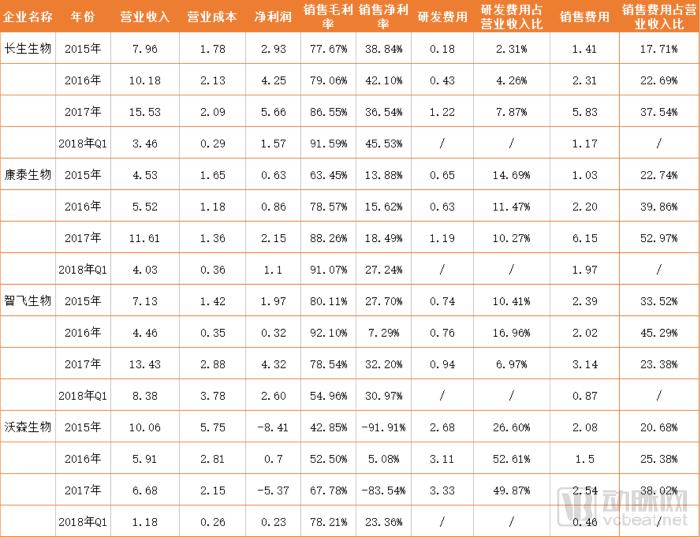
Financial Data of China’s Top Four Vaccine Companies (Unit: RMB 100 million) (Source: Corporate Annual Reports; Compiled by VCBeat)
From the data, Zhifei Biological Products, Kangtai Biological Products, and Changsheng Biotechnology have shown significant performance growth. Among them, Zhifei Biological Products achieved an operating revenue of RMB 1.343 billion in 2017, representing a year-on-year increase of 201.06% compared to RMB 446 million in 2016; its net profit surged from RMB 32 million in 2016 to RMB 432 million, marking a year-on-year increase of 1,229.25%.
In addition, Kangtai Biological and Changsheng Biotechnology reported operating revenues of RMB 1.164 billion and RMB 1.553 billion, respectively, in 2017, representing year-on-year increases of 110.95% and 52.60%; their net profits were RMB 217 million and RMB 565 million, respectively, up by 152.32% and 32.95% year on year. Walvax Biotechnology, meanwhile, incurred substantial losses, although the net profit contribution from its proprietary vaccine products showed significant growth.
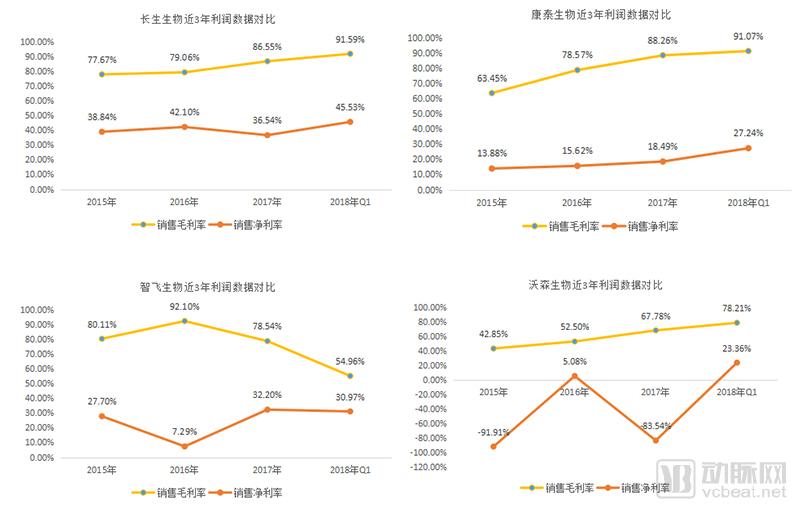
Comparison of Profit Data for China’s Top Four Vaccine Companies Over the Past Three Years (Data Source: Corporate Annual Reports; Compiled by VCBeat)
In fact, data from Hithink RoyalFlush shows that the average gross profit margin for the 52 A-share listed companies with vaccines as their core products exceeded 50% in the first quarter of 2018.
Among the four representative vaccine companies listed by VCBeat, the average gross profit margin in the first quarter of 2018 reached 78.9%, with Changsheng Biotechnology and Kangtai Biological Products reporting gross profit margins of 91.59% and 91.07%, respectively, in Q1 2018. The increase in demand for vaccines was the primary driver behind the rise in gross profit margins for vaccine companies.
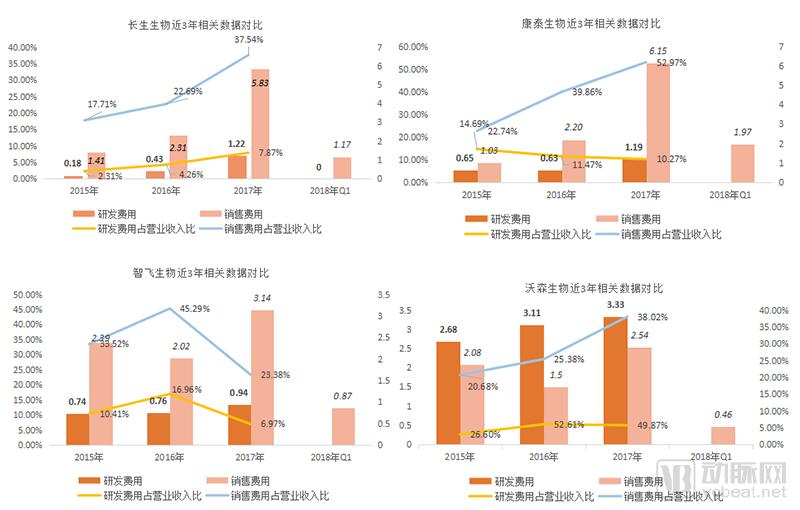
Comparison of R&D and Sales Expenses of China’s Top Four Vaccine Companies Over the Past Three Years (Unit: 100 million yuan; Data Source: Annual Corporate Reports; Compiled by VCBeat)
Beyond financial gains, the vaccine incident has largely drawn criticism toward certain vaccine manufacturers for their high proportion of sales expenses, high gross profit margins (with the gross margin in the first quarter of 2018 reaching as high as 91.59%), and low investment in research and development.
As shown in the figure above, the R&D expenditure of Zhifei Biological Products and Kangtai Biological Products accounted for approximately 10% of their operating revenues, a figure significantly higher than the 2.31%, 4.26%, and 7.87% recorded by Changsheng Biotechnology.
Furthermore, in 2015, Changsheng Biotechnology’s expenditures on marketing and sales were nearly 7.8 times its R&D investment. Watson Pharmaceuticals maintained a more balanced ratio between R&D and sales expenses.
Based on the aforementioned data, the average R&D expenditure of these four enterprises over the past three years was RMB 132 million, with the average ratio of R&D expenses to operating revenue standing at approximately 15.85%. The average sales and marketing expense was RMB 214 million, accounting for approximately 31.65% of operating revenue. This implies that for every RMB 10 generated from vaccine sales, RMB 1.5 is allocated to R&D and RMB 3 to marketing promotion, with the latter being nearly double the former.
It is generally believed that the sales expenses of human vaccine companies commonly exceed 10%. In 2017, the ratios of sales expenses to operating revenue for Changsheng Biotechnology, Kangtai Biological Products, Zhifei Biological Products, and Walvax Biotechnology were 37.54%, 52.97%, 23.38%, and 38.02%, respectively.
Furthermore, selling expenses are growing faster than operating revenue, indicating excessive marketing spending, ineffective marketing strategies, and a disproportionate return on investment. From this perspective, one can also assess whether the company is engaging in “over-marketing.”
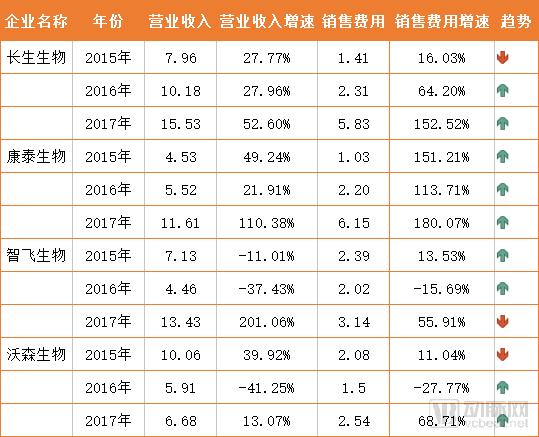
Comparison of Revenue Growth Rate and Sales Expense Growth Rate Trends, Unit: RMB 100 Million (Data Source: Corporate Annual Reports; Compiled by VCBeat)
In the table above, trends marked with green arrows indicate that the growth rate of selling expenses exceeded the growth rate of operating revenue for that year. The data above reveal that, in many years, the growth rate of selling expenses for the aforementioned enterprises was higher than that of their operating revenue, suggesting that these companies incurred substantial costs in marketing and promotion for vaccine sales but did not achieve satisfactory results.
In Changsheng Bio-technology’s annual report, the increase in selling expenses was attributed to “primarily higher promotional fees, market service fees, conference expenses, and transportation costs resulting from the impact of the Vaccine Circulation Regulations on its marketing model.”
New Fortune magazine detailed the rationale behind this investment in its report: Under the 2016 revision of the Regulations on the Administration of Vaccine Circulation and Vaccination, vaccine manufacturers are prohibited from selling vaccines to distribution companies. Consequently, their sales targets have shifted from distributors to county- and district-level Centers for Disease Control and Prevention (CDCs), and all vaccine procurement must be conducted through provincial public resource trading platforms.
This change shifted the markup previously applied by distributors and CDCs directly to vaccine manufacturers, leading to a significant increase in Changsheng Bio-technology’s advertising and promotional expenses in 2017.
Overall, compared with foreign vaccine-related companies, China’s vaccine manufacturers have more focused business operations. We cannot determine whether domestic vaccine profits are excessive; we can only outline the trends.
Furthermore, from a pricing perspective, many vaccines in China are priced very low. For instance, Category I vaccines such as those for meningococcal disease, Japanese encephalitis, measles, and diphtheria-tetanus-pertussis (DTP) are highly affordable, and the prices of most Category II vaccines in the country are also relatively modest. However, vaccine profitability should not be assessed solely based on the direct costs from raw materials to finished products. The vaccine development lifecycle is lengthy (typically 8–10 years, requiring three phases of clinical trials prior to approval), involves numerous uncertainties, and demands stringent requirements for production, storage, and transportation. All these factors must be accounted for in cost calculations.
However, it is evident that throughout the vaccine development process, many companies have underinvested; in other words, they are more inclined to focus on marketing their products than on funding research and development.
The public outcry over this vaccine incident has escalated to its current scale largely due to information asymmetry. Parents lack convenient channels to access information on vaccine production, testing, and distribution, leading to feelings of insecurity. Compounded by insufficient knowledge about vaccines among many parents, this has triggered excessive anger and panic fueled by public opinion.
Following the incident, parents became more aware of the importance of information symmetry. Coupled with the launch of vaccine inquiry features by major platforms such as Ali Health, Tencent, Sogou Medical, and Baidu, public attention to this issue began to rise.
However, it is important to note that user queries regarding the vaccines involved pose a low technical threshold, as the batch numbers of these vaccines are publicly available. Additionally, information such as the expiration dates of other vaccine batches can be retrieved. These data sources include the National Institutes for Food and Drug Control (NIFDC), the National Immunization Program Center of the Chinese Center for Disease Control and Prevention (China CDC), and official corporate websites. In contrast, the timeliness and accuracy of data from traditional immunization information systems remain insufficient. In some regions, vaccine information is entered into the system retrospectively by physicians, leading to inaccuracies. Furthermore, certain systems do not provide batch number search capabilities, resulting in data discrepancies that adversely affect the user query experience.
The core pain point in the vaccine vaccination industry is information asymmetry, and the internet serves as the connector to address this issue. In July this year, the National Health Commission and the National Administration of Traditional Chinese Medicine jointly issued the "Notice on Deepening the Implementation of 'Internet + Medical Health' Convenience and Benefit Activities," which has charted the course for the next phase of development in the Internet + vaccination sector: focusing on children included in the National Immunization Program as key service recipients, integrating existing vaccination information platforms, conducting public education and outreach on vaccination knowledge, and encouraging regions with the necessary conditions to offer services such as online vaccination appointments and reminders.
Vaccination + Internet: Compared with previous models, its most distinctive feature is the timely exchange of information, which improves efficiency for both parties. For instance, online appointment scheduling can be specified down to a particular time slot on a given day, allowing physicians to arrange their work according to actual circumstances, optimize workflows, and enhance productivity; meanwhile, users can accurately plan their schedules based on their individual situations. Online payment, consultations, and inquiries further boost efficiency for all stakeholders. By building such an information bridge via the Internet, vaccination providers and users gain greater mutual understanding, thereby strengthening trust between them.
According to statistics, in 2017, there were 19 enterprises in China developing apps for vaccination services, an increase of 5 from 2016, with a rapidly growing trend in the number of associated children. Enterprises with more than 100,000 users include Shenzhen Sandairen Technology Co., Ltd., Shensu Company, Nanjing Zhongweixin Company, Hebei Shichuang Company, and Zhuhai Site Company.
As China’s largest vaccination service platform, Xiao Dou Miao leverages its robust product technology and operational capabilities to optimize the entire vaccination process through a suite of features, including the electronic vaccination certificate, appointment scheduling, vaccination reminders, and online payment services.
The head of Xiaodoumiao told VCBeat that following the incident, there was a surge in backend inquiries, customer service call volumes, and user traffic on the Xiaodoumiao platform. In response, the operations team established a temporary task force and urgently launched a special feature on the “problematic vaccine incident” to ensure that user inquiries received immediate feedback. The initiative also aimed to help parents quickly access authoritative responses and explanations from local Centers for Disease Control and Prevention (CDCs), gain a comprehensive understanding of the situation, and prevent vaccine refusal due to excessive parental concern, thereby promoting scientific vaccination practices.
A representative from YueMiao revealed to VCBeat that users’ attitudes have shifted significantly following the recent vaccine incident. Previously, YueMiao users primarily focused on practical questions such as vaccine availability and administration procedures when scheduling appointments. In the aftermath of the incident, however, greater emphasis has been placed on vaccine sourcing. Some users have also developed fear and distrust toward vaccines, vaccination facilities, and healthcare providers administering the shots.
The head of Sogou Medical told VCBeat that from July 17 to July 24, the period when the “vaccine scandal” erupted, vaccine-related search volume on Sogou Search experienced explosive growth, increasing approximately 20-fold in just eight days and reaching nearly ten million searches.
“Internet + Vaccination” is a challenging path to pursue. Although the market is substantial, products require significant investment before establishing a viable business model. The awareness and willingness of local health authorities to adopt “Internet + Vaccination” will, to some extent, influence the pace of market expansion.
Addressing the integration of vaccination and the Internet presents no significant technical barriers; the primary challenge lies in the absence of unified standards for technical implementation and promotional adoption.
A viable approach is to start with immunization by providing online services throughout the entire vaccination process. By obtaining authorization from the Centers for Disease Control and Prevention (CDC) and integrating data, this approach connects the information chain among the CDC, outpatient clinics, and parents, forming a closed-loop service. It ultimately extends to child health management services, thereby facilitating family health management.
Authors: Gao Daolong, Li Yanyu, Zhao Hongwei, and Gao Kangping.
References:
Deep Web | How the “Cutter Incident,” Which Paralyzed 200 Children, Spurred the Establishment of the U.S. Vaccine Regulatory System
How Is Vaccine Safety Regulated in the United States? | The Intellectual