

Magenta Therapeutics Files IPO Prospectus to Advance Stem Cell Transplant Innovations

Magenta Therapeutics
Developer of Treatment Technologies for Immune Diseases, Blood Cancers, and Genetic Disorders
In recent years, the number of patients undergoing bone marrow transplantation worldwide has increased year by year. Advances in bone marrow transplantation have significantly improved patient survival rates. Although bone marrow transplantation has been used clinically for many years, it remains a high-risk treatment modality, primarily indicated for patients with autoimmune diseases, hematologic malignancies, and rare genetic disorders.
Bone marrow transplantation, also known as hematopoietic stem cell transplantation, is a therapeutic approach that involves the intravenous infusion of hematopoietic stem and progenitor cells to reconstitute the patient’s normal hematopoietic and immune systems, thereby treating a range of diseases.
Hematopoietic stem cell transplantation has largely replaced the term “bone marrow transplantation,” because hematopoietic stem cells are derived not only from bone marrow, but also from peripheral blood mobilized by hematopoietic growth factors, as well as from umbilical cord blood; all of these sources of hematopoietic stem cells can be used to reconstitute the hematopoietic and immune systems.
Magenta Therapeutics (hereinafter referred to as “Magenta”) is developing safer and more effective stem cell transplantation technologies, aiming to address critical unmet needs in transplant medicine. The company primarily utilizes antibody-drug conjugates to precisely target and ablate existing hematopoietic stem cells, and employs chemokines to mobilize stem cells more rapidly and efficiently. Magenta states that the addition of a small molecule called HSC835 to the culture medium can expand hematopoietic stem cells by 400-fold.
By pioneering innovative therapies, Magenta conducts in-depth research primarily in four areas: pre-transplant patient conditioning, stem cell expansion, stem cell collection, and post-transplant complications. Their goal is to maximize the application of bone marrow transplantation therapy, providing treatment assistance and improving cure rates for patients with multiple sclerosis, scleroderma, acute myeloid leukemia, myelodysplastic syndromes, inherited metabolic disorders, and sickle cell disease.
What has Magenta Therapeutics accomplished to date?
According to VCBeat (WeChat ID: vcbeat), Magenta, based in Cambridge, Massachusetts, previously raised a total of $98.5 million in its Series A and B funding rounds. With its ambitious goal of improving stem cell transplantation, Magenta has attracted significant attention in the Boston area.
In April 2018, Magenta secured $52 million in Series C financing, led by Casdin Capital, and was oversubscribed by Ecor1 Capital, Eventide Asset Management, Watermill Asset Management, and other long-term institutional investors. Mr. Eli Casdin, Chief Investment Officer of Casdin Capital, stated that he believes “the golden age of bone marrow transplantation” is just around the corner.

Magenta stated that the funds will be used to advance its drug development portfolio, including targeted bone marrow transplant conditioning regimens, stem cell mobilization, and stem cell expansion programs.
Furthermore, Novartis highly recognizes the significant efficacy of Magenta’s umbilical cord blood stem cell therapy and has entered into a mid-stage drug licensing agreement with the company. Under the agreement, Magenta has the rights to utilize MGTA-456, a best-in-class allogeneic stem cell therapy.
In March 2018, Magenta partnered with the German biotechnology company Heidelberg Pharma to develop a bone marrow research and development agreement. The agreement stated that if Magenta exercised all target options and achieved its milestones, Heidelberg Pharma would receive up to $334 million in revenue. This collaboration will combine Magenta’s stem cell platform and proprietary antibodies with Heidelberg Pharma’s Antibody-Targeted Amanitin Conjugate (ATAC) platform to jointly achieve their goals.
Experience + Academia = A Comprehensive Understanding of Stem Cell Transplantation

Dr. Jason Gardner, CEO, President and Co-founder of Magenta
“We are deeply grateful for the strong support from both new and existing investors, who share our vision of enabling more patients with debilitating diseases to benefit from bone marrow transplantation,” said Dr. Jason Gardner, CEO, President, and Co-Founder of Magenta Therapeutics. “This financing provides us with additional capital to continue advancing our clinical research and development efforts.”
Dr. Jason Gardner joined Atlas Venture in November 2015. As an entrepreneur-in-residence, he co-founded Magenta Therapeutics with Third Rock Ventures. Dr. Gardner has over 20 years of experience in stem cell science and industry leadership roles.
Since 2005, Dr. Gardner has been with GSK, embarking on an 11-year career journey. He has successively served as Assistant Director of Clinical Development, Vice President of the Center of Excellence for External Drug Discovery (CEEDD), Vice President of the Regenerative Medicine Center, and Head of Boston Satellite R&D.
Dr. Gardner established and led the Regenerative Medicine department, forging partnerships with the Harvard Stem Cell Institute and the Telethon Institute of Gene Therapy, which culminated in the approval of Strimvelis™, their first stem cell therapy. Prior to this, as the leader of CEEDD and a member of the clinical project team, Dr. Gardner collaborated to complete the late-stage development of Tykerb™ for breast cancer, securing approval of its New Drug Application (NDA).
“This is the first time a company has sought such a comprehensive understanding of stem cell transplantation,” said Dr. Gardner. Their goal is to facilitate discussions on the risk-benefit profile of this therapy, thereby driving technological advancements and quality improvements. Magenta’s mission is to shift the focus of these conversations more toward the benefits that stem cell transplantation brings to patients, rather than amplifying its associated risks.
From 1995 to 1997, Dr. Gardner completed his postdoctoral research in hematopoietic stem cells alongside Professor David Scadden at Harvard Medical School. Prior to this, he was educated in the United Kingdom, where he earned both a Bachelor’s and a Master’s degree in Natural Sciences (Biochemistry) from the University of Cambridge, as well as a Doctorate in Molecular Medicine from the University of Oxford.
As Chairman of the Board of Magenta Therapeutics, Mike Bonney also serves as CEO of Kaleido Biosciences and was formerly a Partner at Third Rock Ventures. Kaleido Biosciences is a U.S. biomedical technology company dedicated to discovering and developing novel small-molecule drugs that modulate microbiome-mediated organ function. The company is independently developing microbiome-derived metabolic therapies, with therapeutic areas covering rare genetic diseases, metabolic disorders, oncology, and other conditions.
From 2003 to 2014, Bonney served as CEO and Director of Cubist Pharmaceuticals. Under his leadership, Cubist Pharmaceuticals evolved from a struggling micro-cap company into a world-leading antibiotics company. In early 2015, the company was acquired by Merck & Co. for $9.5 billion.
In addition, Bonney, a native Bostonian, graduated from Bates College before entering the pharmaceutical industry. He was hired by Biogen in 1995 and eventually became the company’s Vice President of Sales and Marketing.
During his tenure at the company, Bonney developed Avonex. Avonex is a beta-interferon drug that delays the progression of multiple sclerosis and reduces the likelihood of clinical deterioration. MarketWatch, a financial information website headquartered in New York, has described it as one of the most successful drugs in the history of biotechnology.
Four Stages of Stem Cell Transplantation and Drug Development

“Hematopoietic stem cells have a remarkable ability to generate new cells within our blood and immune systems; over the past 50 years, more than one million patients have undergone cell transplantation,” said Dr. Gardner, CEO of Magenta. “Limitations in technology and science have made stem cell transplantation a last resort for treating life-threatening diseases, but new scientific advances are now ready to enter clinical practice, fundamentally paving the way for novel therapies for patients with early-stage cancers, blood disorders, and autoimmune diseases, including multiple sclerosis and scleroderma.”
Magenta stated that their novel targeted therapy can reduce post-transplant complications, such as graft-versus-host disease (GVHD).
Graft-versus-host disease (GVHD) occurs when T lymphocytes from the allogeneic donor graft, stimulated by a series of "cytokine storms" initiated by the recipient, markedly enhance their immune response against recipient antigens. These cells launch cytotoxic attacks targeting recipient cells, with the skin, liver, and gastrointestinal tract being the primary targets. The incidence of acute GVHD ranges from 30% to 45%, while the incidence of chronic GVHD is lower than that of the acute form.
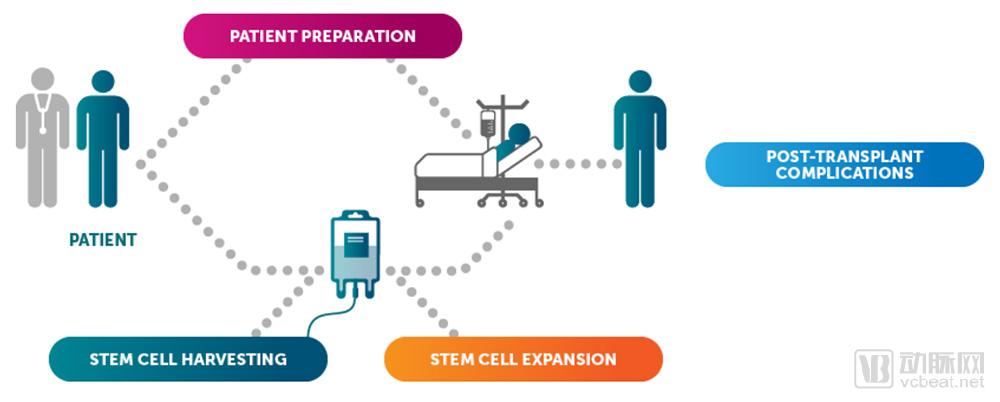
Patient Pre-Transplant Preparation
Magenta Therapeutics scientists have demonstrated that, by leveraging relevant drugs, they can identify stem cell antibodies and selectively eliminate stem cells and diseased cells under safe conditions.
Magenta stated that the improved targeted conditioning regimen could expand the use of bone marrow transplantation to patients who are currently ineligible for the therapy, as well as those for whom bone marrow transplantation is considered too risky.
During the pre-transplant preparation phase for patients, Magenta’s drugs in preclinical development include C100 (for depleting hematopoietic stem cells and immune cells) and C200 (for depleting hematopoietic stem cells), while C300 (for depleting immune cells) is currently under discovery.
Stem Cell Expansion
Magenta is dedicated to developing novel methods that not only expand stem cells but also preserve the functional capacity required for cell transplantation. These approaches enable the delivery of an optimal number of healthy stem cells to patients, significantly improving outcomes following stem cell-based therapies.
Magenta leverages its most advanced clinical-stage program, MGTA-456, for evaluation in various transplant settings. By expanding the number of umbilical cord blood stem cells, MGTA-456 holds significant potential to improve patient survival rates and enable more patients to access high-quality, HLA-matched umbilical cord blood units.
MGTA-456 is a cord blood expansion product obtained by culturing umbilical cord blood stem cells for 15 days in a medium containing substances such as aryl hydrocarbon receptor antagonists, SCF, Flt-3L, IL-6, and TPO. In April 2018, MGTA-456 received orphan drug designation from the U.S. Food and Drug Administration (FDA) for use in patients undergoing bone marrow transplantation.
MGTA-456 has obtained proof-of-concept clinical evidence in Phase 1 and Phase 2 clinical trials involving 36 patients with hematologic malignancies. Clinical trial data showed that all 36 patients treated with MGTA-456 achieved successful engraftment, while the average time to engraftment recovery was accelerated.
During the stem cell expansion phase, Magenta’s drug for clinical treatment is MGTA-456 (for ex vivo expansion of umbilical cord blood stem cells), and its drug for preclinical development is MGTA-E200 (for ex vivo expansion of stem cells for gene therapy/editing).
Stem Cell Collection
Magenta Therapeutics has developed a novel model capable of stably mobilizing large quantities of stem cells into the bloodstream within a single day, thereby providing a high-quality source of stem cells for a broader patient population. Stem cells possess the potential for proliferation and differentiation, as well as the capacity for self-renewal and replication, enabling them to generate highly differentiated functional cells.
During the stem cell collection phase, Magenta’s preclinical drug candidate is MGTA-M100 (for mobilizing hematopoietic stem cells).
Post-Transplant Complications
Magenta is seeking new therapies that can target T-cell donors for GVHD, reducing the incidence of acute GVHD without compromising the beneficial effects of the donor graft.
According to VCBeat (WeChat ID: vcbeat), graft-versus-host disease (GVHD) mediated by donor T-cell immune responses is a significant factor affecting patients’ quality of life after transplantation and a major cause of complications and post-transplant mortality.
Among post-transplant complications, Magenta is currently developing G100 (to attenuate alloimmune responses).
Differences Between Bone Marrow Transplantation and Peripheral Blood Hematopoietic Stem Cell Transplantation
Both procedures aim to collect and transplant hematopoietic stem cells into the patient to maintain their hematopoietic and immune functions. However, bone marrow transplantation requires the collection of approximately 750–1000 mL of bone marrow under anesthesia, causing certain pain and inconvenience to the donor.
Since the discovery that hematopoietic stem cells can be mobilized into the bloodstream and collected via apheresis, peripheral blood hematopoietic stem cell transplantation has become the predominant method for most transplants. Compared with bone marrow transplantation, it offers the advantages of faster hematopoietic recovery, easier collection, and less donor discomfort, making it more acceptable to donors and having no adverse impact on their health.